

The Smart Homeowner’s Guide to Balanced Lawn Care
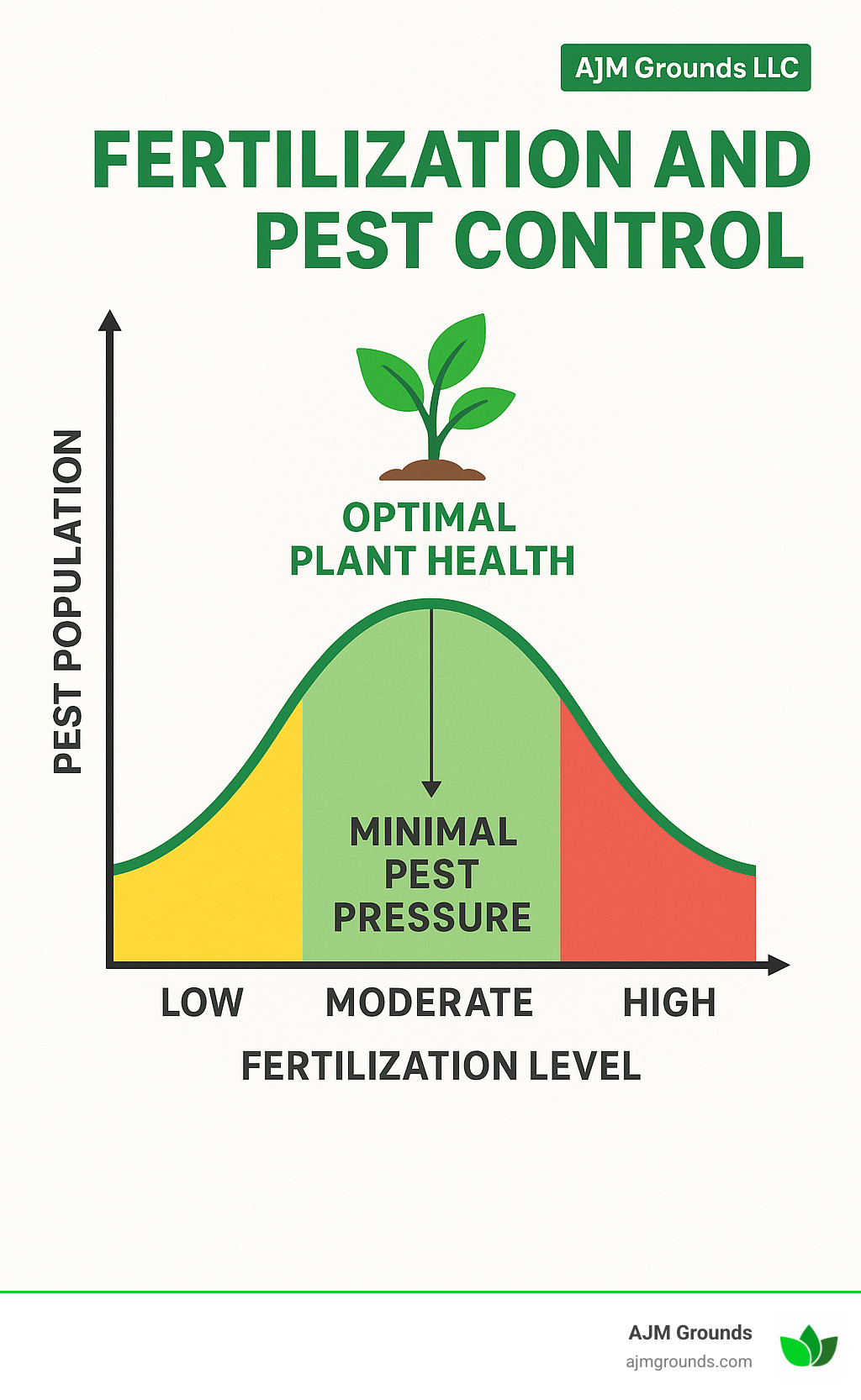
Fertilization and pest control are interconnected aspects of lawn maintenance that, when properly balanced, create a resilient, beautiful landscape. Here’s what you need to know:
| Key Aspect | Best Practice |
|---|---|
| Fertilization | Use slow-release nitrogen, apply at 50% recommended rate to reduce pest pressure |
| Pest Control | Focus on prevention through soil health rather than reactive treatments |
| Timing | Apply fertilizer during active growth periods, avoid rain events |
| Balance | High nitrogen levels increase susceptibility to pests like aphids and spider mites |
Most homeowners don’t realize that over-fertilization actually increases pest problems. Research shows that reducing fertilizer inputs by 30-50% can significantly decrease pest populations while maintaining plant quality. This approach not only saves money but creates a healthier ecosystem in your yard.
When you apply too much nitrogen, you’re essentially setting out a welcome mat for pests. Plants with excess nitrogen develop soft, succulent growth that’s irresistible to sap-sucking insects like aphids and spider mites. In contrast, plants with balanced nutrition develop stronger cell walls and natural defense compounds.
The good news? You don’t need to choose between a green lawn and a pest-free one. The solution lies in understanding how these systems work together.
I’m John Caplis, owner of AJM Grounds LLC, and I’ve spent years helping Massachusetts homeowners implement effective fertilization and pest control strategies that build soil health while minimizing pest pressure.
Fertilization and pest control terms to learn:
– average cost of lawn fertilization service
– fertilization and weed care
Why Fertilization and Pest Control Are Two Sides of the Same Coin
When I chat with homeowners in Bedford, Burlington, and across Massachusetts, I notice they often think of fertilization and pest control as completely separate lawn care tasks. In reality, they’re more like two sides of the same coin—deeply interconnected parts of your lawn’s ecosystem.
This isn’t just garden theory, but backed by solid science. A comprehensive 50-year research review found 135 studies showing increased plant damage and higher numbers of leaf-chewing insects or mites in nitrogen-fertilized crops. Fewer than 50 studies showed fertilizer reducing pest damage. The evidence is clear!
“Think of your lawn as a living community rather than just a green carpet,” as our lead horticulturist often says. “Everything you do affects multiple parts of that system. When you dump excessive fertilizer on your lawn, you’re not just feeding your grass—you’re essentially setting the table for pests to come feast.”
This balanced approach isn’t just healthier for your lawn—it’s gentler on your wallet too. Take Ran Pro Farms in Texas, who cut their fertilizer use by 30% and pocketed $6,000 in annual savings while maintaining plant quality. The Antique Rose Emporium achieved potential savings up to $12,000 yearly with a 50% fertilizer reduction.
How Excess Nitrogen Feeds the Enemy — fertilization and pest control
The science here is fascinating. When plants receive too much nitrogen (especially from quick-release synthetic fertilizers), they produce soft, succulent growth with thin cell walls and higher free amino acid concentrations in their sap. It’s essentially creating an all-you-can-eat buffet that pests can’t resist.
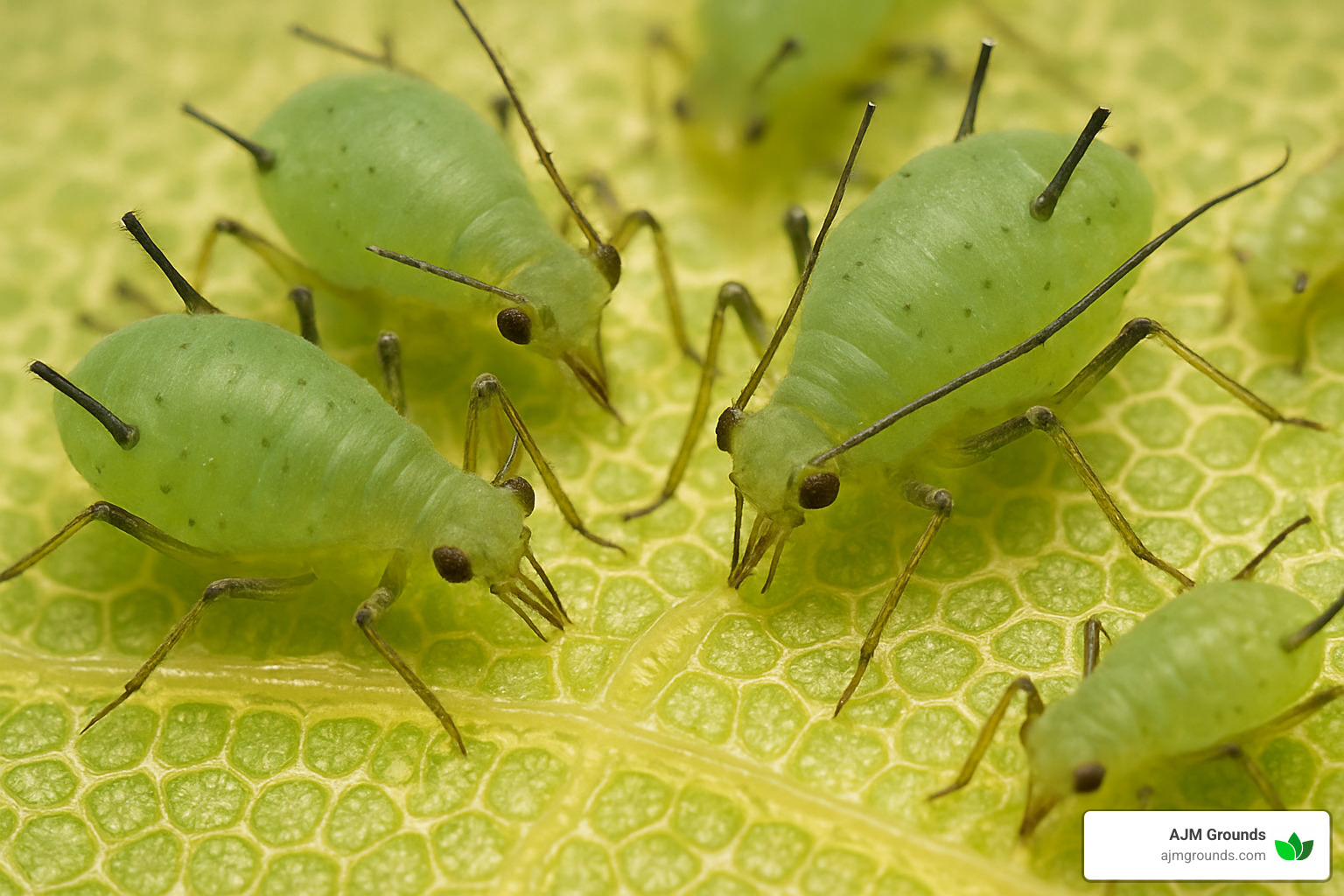
Research findings consistently support this connection:
- Four weeks after infestation, twospotted spider mites and their eggs were twice as numerous (or higher) on roses fertilized at 100% recommended levels versus those at just 33% or 50%.
- Japanese studies found significantly fewer whitebacked planthoppers in organic rice fields compared to conventional ones, partly due to lower nitrogen content in the organically farmed crops.
- Even European corn borers preferred laying eggs on chemically fertilized sweet corn over organically fertilized plants in Ohio greenhouse trials.
“When we reduce nitrogen inputs to about half the conventional recommendation, we see dramatic drops in pest problems without sacrificing lawn quality,” our turf specialist often points out. “The grass might grow a bit slower, but it develops stronger cell walls and better resilience to both pests and environmental stresses.”
The Nutrient-Pest Feedback Loop
Understanding this feedback loop is key to effective lawn management. Here’s how it typically plays out:
Plants under stress (including from nutrient imbalances) emit specific chemical signals that actually attract pests. These pests have evolved to detect these stress signals, guiding them straight to vulnerable plants. Once they find these nitrogen-rich buffets, they reproduce faster thanks to all those easily digestible nutrients. Meanwhile, synthetic pesticides often kill beneficial predators along with the pests, disrupting nature’s own pest control system. As this cycle continues, homeowners typically respond with—you guessed it—more fertilizer and pesticides, making everything worse.
One of our Massachusetts clients was caught in this frustrating cycle for years. “I was applying heavy fertilizer every spring and fighting chinch bugs every summer,” she told me. “It never clicked that the two might be connected until AJM Grounds helped me understand the relationship.”
After switching to our balanced approach, she saw a remarkable 70% reduction in pest problems in just one season, while still maintaining a lawn that made the neighbors green with envy.
The takeaway? Fertilization and pest control aren’t separate tasks—they’re part of the same holistic approach to lawn care. Get the balance right, and you’ll save money while enjoying a healthier, more resilient lawn.
Building Healthy Soil to Prevent Pest Outbreaks
If you want to outsmart lawn pests before they ever show up, your most important weapon isn’t a spray bottle—it’s your soil. Healthy, living soil is the secret to a resilient, pest-resistant lawn. At AJM Grounds, we believe what happens beneath the grass blades matters much more than what you see on top.
As soil ecologist Dr. Elaine Ingham says, “Healthy soils high in organic matter and with a biologically diverse food web support plant health and nutrition better than soils low in organic matter and soil microbial diversity.” In plain English: if you feed the soil, the soil will protect your lawn.
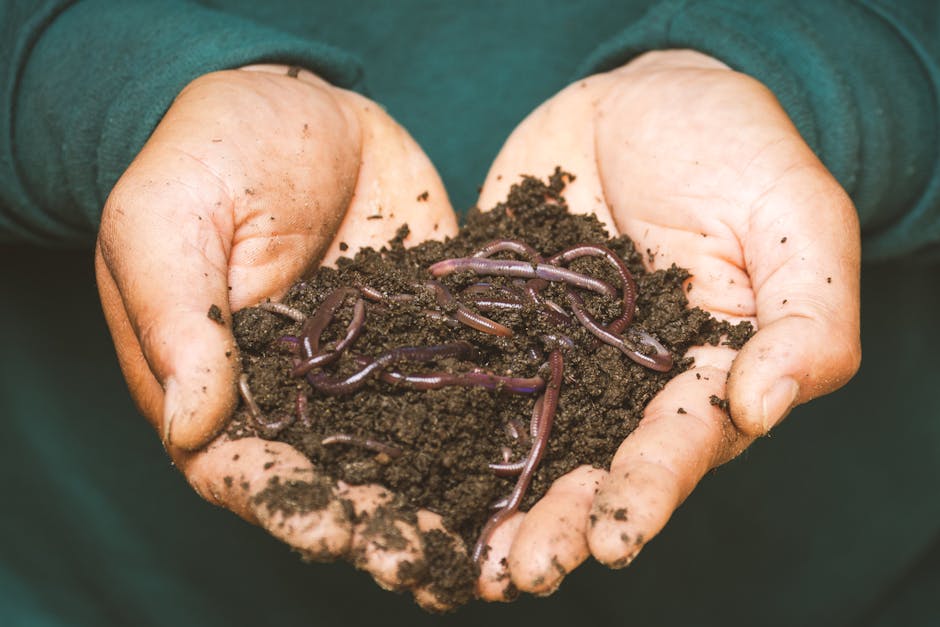
In Woburn, Lexington, and nearby towns, we see the same pattern: lawns with healthy, loose, and rich soil have fewer pest problems, bounce back from drought, and look better all season. To get here, we recommend working more organic matter into your soil each year—topdressing with a thin layer of compost, aerating to reduce compaction, using compost teas to boost the good microbes, and always watching your pH (most grasses are happiest between 6.0 and 7.0). Don’t forget drainage—poorly drained soil turns into a pest playground.
Our team often finds that when we help clients build up their soil with these practices, they see fewer pests, stronger roots, and a greener lawn—with much less fertilizer and fewer chemicals.
Soil Food Web 101
Beneath your grass, there’s a busy underground city. Seriously—one teaspoon of healthy soil holds billions of bacteria, yards of fungal threads, thousands of tiny protozoa, and even predatory nematodes (the good guys!). These creatures make up the soil food web, and their job is to:
- Break down organic matter so plants can use it
- Create crumbly soil structure, making it hard for roots to get compacted
- Defend plant roots against disease-causing pests
- Cycle nutrients efficiently, so you don’t have to over-fertilize
- Store carbon and help your lawn hold more water
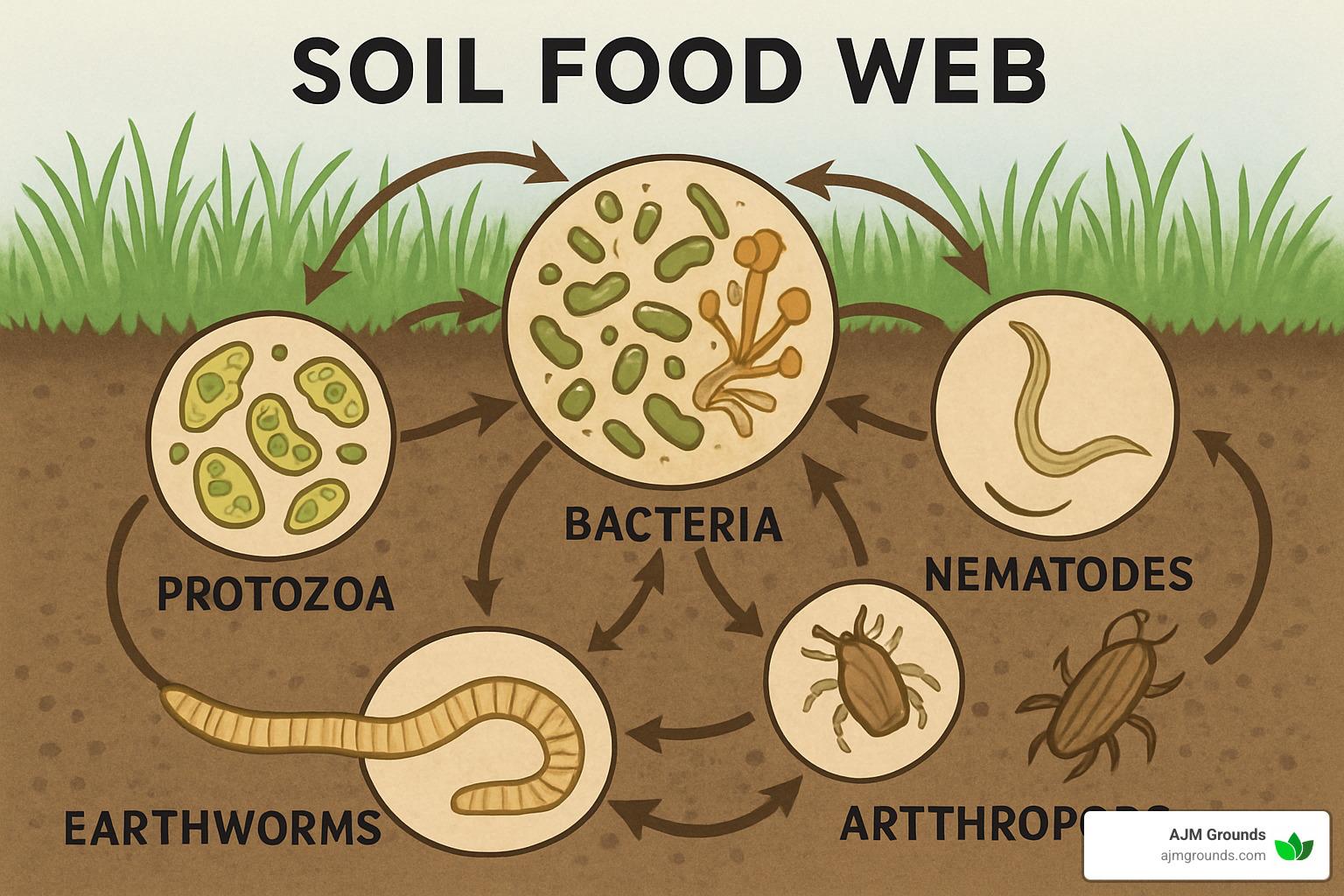
Think of this web as your lawn’s built-in immune system. When it’s healthy, it keeps pests in check. For example, beneficial nematodes in the soil prey on over 250 types of pest insects, from fleas to chinch bugs to fungus gnats. A living soil teeming with these helpers means you can use far fewer chemicals—and get far better results. Learn more about the importance of soil health from the USDA Natural Resources Conservation Service.
Smart Nitrogen Management
Let’s talk about nitrogen—the fuel for green growth, but also, if you’re not careful, a magnet for pests. The trick is to give your lawn just what it needs, no more and no less. Here’s how we handle nitrogen at AJM Grounds:
We use slow-release fertilizers so the grass gets a steady meal, not a sugar rush. Instead of dumping it all on at once, we split up the year’s nitrogen into several smaller feeds—usually three or four. We aim for about half the typical “recommended” rate, since research (and our experience) shows this keeps grass strong but less appealing to pests.
Timing matters too: we fertilize only when the grass is actively growing, never before heavy rain, to avoid runoff. And we always recommend a soil test before adding anything, especially phosphorus. Too much phosphorus can cause all kinds of issues, from weak roots to blocked nutrients.
In many Massachusetts lawns, potassium is the real need, especially in the fall—it helps grass build strong cell walls and better survive both pests and drought. For instance, a client in Burlington came to us after years of using high-phosphorus “starter” fertilizer. Their soil test showed sky-high phosphorus but a potassium deficiency. By switching them to a custom blend focused on what the soil actually needed, we solved their pest problem and gave them a lawn that survived summer heat with ease.
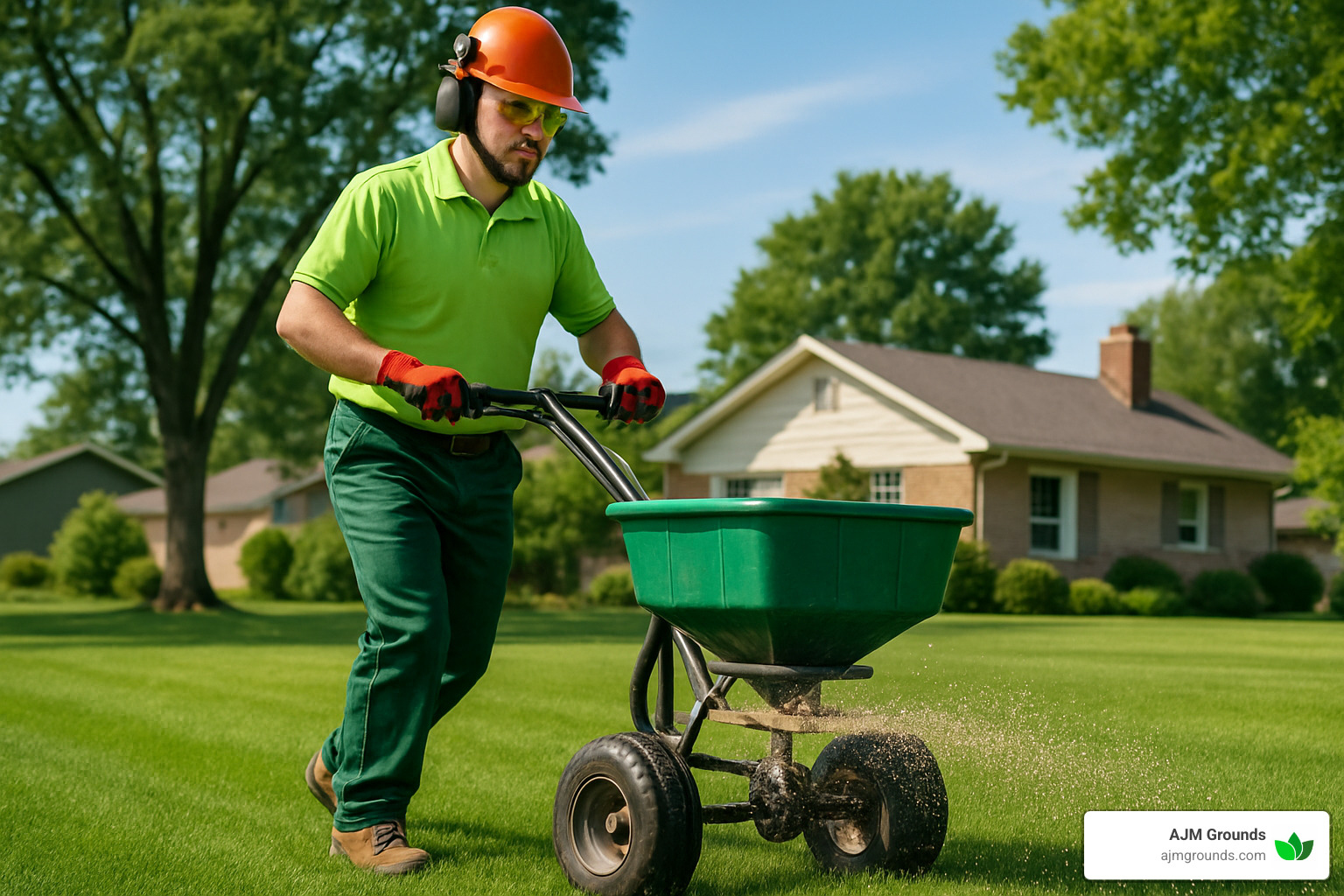
Building healthy soil is the heart of effective fertilization and pest control. Want to know more about choosing the right lawn seed, or best practices for smart fertilizing? Check out our tips for successful lawn seeding and overseeding and fertilization and weed care guide. At AJM Grounds, we’re here to help you grow a lawn that’s green, tough, and low on pests—starting from the ground up.
Organic vs Hybrid vs Traditional Programs: Which Fits Your Lawn?
When homeowners in Bedford or Burlington call us at AJM Grounds, one of the first questions they ask is: “What’s the best approach for my lawn?” The truth is, there’s no one-size-fits-all answer. Each lawn has unique needs, and each homeowner has different priorities when it comes to fertilization and pest control.
We offer three distinct approaches, and understanding the differences helps you make the best choice for your family, pets, and property.
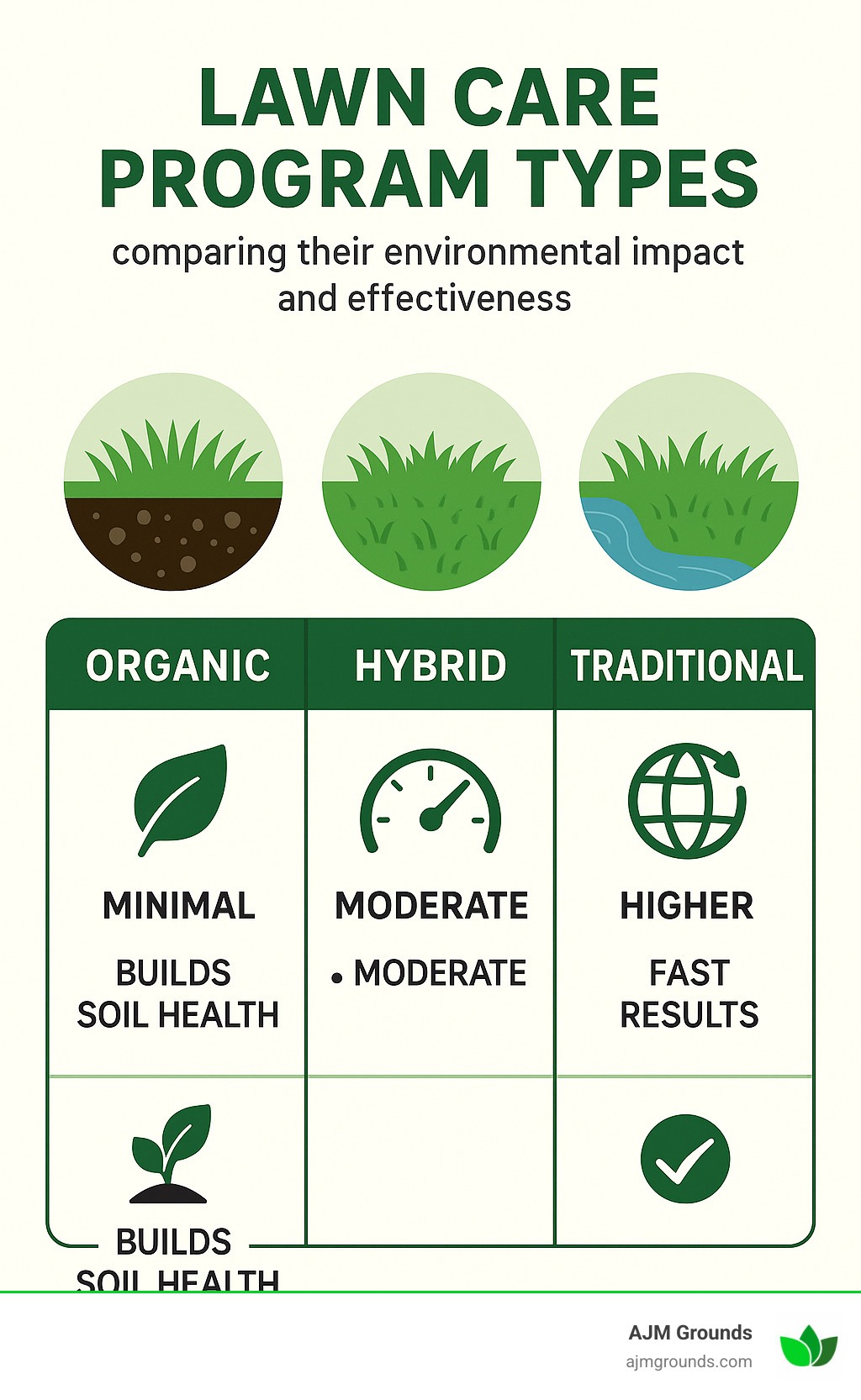
| Program Type | Key Ingredients | Weed Control | Environmental Impact | Results Timeline | Average Cost Range* |
|---|---|---|---|---|---|
| Organic | Compost, biochar, natural minerals, microbial inoculants | Corn gluten, hand removal, dense turf | Minimal, builds soil health | 1-2 seasons for full results | $250-$750+ per season |
| Hybrid | Reduced synthetic fertilizers, organic soil amendments | Spot treatment with selective herbicides | Moderate, reduced chemical use | 2-3 months for visible results | $200-$600+ per season |
| Traditional | Synthetic fertilizers, pre-emergent herbicides | Broadcast herbicide applications | Higher potential for runoff, soil biology impacts | 2-4 weeks for visible results | $150-$450+ per season |
*These costs reflect internet research on average pricing and are not specific to AJM Grounds services. Actual costs vary based on lawn size, condition, and specific program details.
Organic Programs
“Think of organic lawn care as a long-term relationship rather than a quick fling,” jokes our lawn care specialist. “It takes a bit more time to develop, but it’s much more sustainable.”
Organic programs focus on building vibrant soil life. Instead of feeding your grass directly, we nourish the complex web of organisms in your soil that then provide balanced nutrition to your lawn naturally. Your grass becomes stronger, more resilient, and naturally resistant to pests and diseases.
The secret weapons in our organic arsenal include compost tea rich in beneficial microorganisms, natural fertilizers from sources like alfalfa and feather meal, and biochar that creates permanent homes for beneficial microbes. We also rely on corn gluten meal as a natural pre-emergent and focus on creating thick, dense turf that naturally crowds out weeds.
A client in Lexington who switched to our organic program told us: “The first season required some patience, but by year two, my lawn was healthier than ever. Now my grandkids and golden retriever can roll around in the grass without me worrying about chemicals. That peace of mind is priceless.”
Hybrid Programs
Our hybrid approach strikes a balance for homeowners who want to reduce chemical use but aren’t ready to go fully organic. Think of it as the “best of both worlds” option.
“Some of our most satisfied clients use our hybrid program,” shares John from our fertilization and pest control team. “They get quicker green-up than with fully organic methods, but they’re still building soil health and using far fewer chemicals than conventional programs.”
With hybrid programs, we use reduced rates of synthetic fertilizers—typically half of conventional recommendations—while incorporating organic soil amendments to improve long-term soil health. Rather than broadcast spraying entire lawns with herbicides, we spot-treat problem areas and use biological controls for common pests whenever possible.
A Wilmington homeowner who had battled crabgrass for years switched to our hybrid approach last spring. “The targeted treatment made all the difference,” he told us. “Instead of dousing my entire property with chemicals, AJM identified trouble spots and treated just those areas. By fall, my lawn looked better than ever, and I feel better about what I’m putting into the environment.”
Traditional Programs
While we emphasize the benefits of organic and hybrid approaches, we recognize that some situations call for more conventional methods. Our traditional program uses standard fertilizers and pest control products, but with a thoughtful approach that minimizes unnecessary applications.
Even in our traditional program, we’re not just blindly applying chemicals. We start with soil testing to determine exactly what your lawn needs, apply pre-emergent herbicides only when and where they’re needed, and use insecticides according to Integrated Pest Management principles—not as preventive “just in case” treatments.
For commercial properties in Bedford with specific appearance requirements or for homeowners who need quick results for a property they’re preparing to sell, our traditional program offers the fastest visible improvements while still being mindful of environmental impact.
“I needed my lawn looking perfect for my daughter’s graduation party,” explains a client in Reading. “AJM Grounds got it looking lush and weed-free in just three weeks with their traditional program. Now that the party’s over, we’re transitioning to their hybrid approach for the long term.”
No matter which approach fits your needs, all our fertilization and pest control programs are designed with your lawn’s long-term health in mind. We’re always happy to discuss the options and help you find the perfect fit for your property, priorities, and budget.
Integrated Pest Management Playbook for Lawns
Integrated Pest Management (IPM) is a systematic approach to pest control that minimizes economic, health, and environmental risks. At AJM Grounds, we’ve adapted IPM principles specifically for New England lawns.
The core principles include:
1. Prevention First: Create conditions that discourage pest problems
2. Regular Monitoring: Identify problems early before they spread
3. Accurate Identification: Know exactly what you’re dealing with
4. Action Thresholds: Only treat when pest numbers reach damaging levels
5. Multiple Tactics: Use cultural, biological, and chemical controls in that order
6. Evaluation: Assess results and adjust strategies accordingly
“IPM isn’t about eliminating all insects—that would be ecologically disastrous,” explains our pest management specialist. “It’s about managing pest populations below damaging thresholds while protecting beneficial organisms.”
Scout → Identify → Act
The foundation of effective IPM is regular monitoring or “scouting.” For homeowners in Winchester, Woburn, and surrounding areas, we recommend:
- Weekly Lawn Walks: Take 10 minutes to walk your lawn in a zigzag pattern, looking for:
- Discolored patches
- Chewed leaf edges
- Insect activity
- Unusual growth patterns
- Simple Tools: Keep a magnifying glass, small trowel, and white paper cup handy. The cup can be used to collect and examine insects, while the trowel helps check root health and soil conditions.
- Record Keeping: Note observations in a simple lawn journal or smartphone app, including:
- Date and weather conditions
- Areas of concern
- Insects observed and approximate numbers
- Treatment applications and results
“Many pest problems can be addressed before they cause visible damage if you catch them early,” notes our turf specialist. “For example, seeing a few chinch bugs doesn’t necessarily warrant treatment, but it does warrant closer monitoring of that area.”
Beneficial Insects & Biological Controls
Nature has provided an army of allies in pest management—if we learn to recognize and support them.
Key beneficial insects for Massachusetts lawns include:
- Lady beetles (ladybugs): Both adults and larvae consume aphids, scale insects, and mites
- Ground beetles: Active at night, they feed on soil-dwelling pests like cutworms and root maggots
- Parasitic wasps: Lay eggs in or on pest insects; their larvae then consume the host
- Predatory mites: Feed on pest mites and small insects
- Green lacewings: Larvae (called “aphid lions”) voraciously consume aphids and other soft-bodied pests
“When we reduce synthetic pesticide use, these beneficial populations naturally increase,” explains our IPM specialist. “We can also introduce specific beneficial organisms when needed.”
Biological controls we sometimes employ include:
- Beneficial nematodes: Microscopic worms that attack soil-dwelling pests like white grubs
- Bacillus thuringiensis (Bt): A naturally occurring bacteria that controls caterpillars when ingested
- Predator mites: Released to control pest mite populations
- Milky spore: A naturally occurring disease that specifically targets Japanese beetle grubs
One client in Reading had struggled with Japanese beetle grubs destroying sections of her lawn for years. After implementing a milky spore application combined with beneficial nematodes, she saw a 90% reduction in damage the following season, without resorting to chemical insecticides. For more information on biological control methods, check out the University of California’s guide to biological pest control.
Timing & Application Best Practices for fertilization and pest control
Timing is everything in effective fertilization and pest control. Here’s our guide to optimal timing for New England lawns:
Spring (April-May)
– Apply first fertilizer when soil temperatures reach 55°F and grass begins active growth
– Use pre-emergent herbicides before soil temperatures reach 55°F to prevent crabgrass
– Apply beneficial nematodes when soil temperatures reach 55°F to control grubs
Summer (June-August)
– Apply light fertilizer if needed (typically half-rate)
– Monitor for chinch bugs, sod webworms, and other summer pests
– Spot-treat weeds rather than broadcast applications
– Water deeply but infrequently to encourage deep root growth
Fall (September-November)
– Apply main fertilizer application in early fall
– Overseed thin areas
– Apply grub control if necessary
– Final winterizing fertilizer with higher potassium in late fall
Application Best Practices:
– Maintain a 10-foot buffer zone from water bodies
– Never apply fertilizer before heavy rain
– Calibrate spreaders properly to ensure even application
– Water lightly after fertilizer application to move product into soil
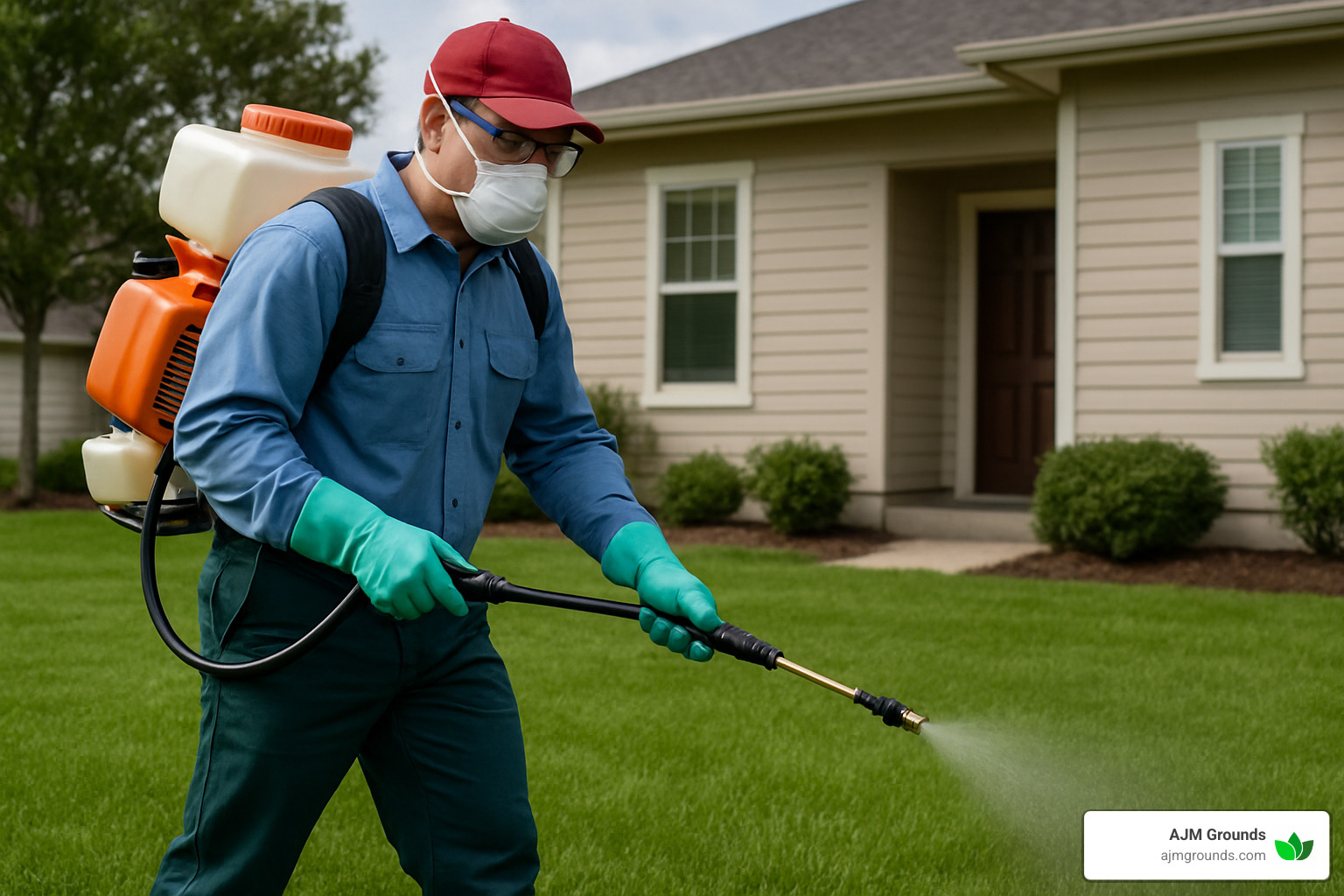
– Always wear appropriate personal protective equipment when applying any products
– Follow all label directions precisely
“One of the biggest mistakes we see is improper timing,” notes our lawn care supervisor. “Applying pre-emergent herbicides too late or grub control too early renders them ineffective. Understanding the life cycles of both pests and plants is crucial for success.”
Frequently Asked Questions about Fertilization and Pest Control
What’s the best fertilizer schedule for New England lawns?
The timing of fertilization makes all the difference for New England lawns. After years of working with properties across Massachusetts, we’ve developed a schedule that works beautifully with our regional climate:
Early Spring (April-May): Start with a light application (½ lb nitrogen per 1,000 sq ft) once soil temperatures consistently reach 55°F. This gives your grass a gentle wake-up call without promoting the excessive top growth that attracts pests.
Early Summer (June): Consider a light feeding only if your lawn shows signs of nutrient deficiency. Many of our clients in Lexington and Winchester skip this application entirely with excellent results.
Early Fall (September): This is your main application (1 lb nitrogen per 1,000 sq ft) and arguably the most important feeding of the year.
Late Fall (November): Apply a winterizing formula with higher potassium content to strengthen root systems before dormancy.
“Most homeowners are surprised when I tell them fall is actually the most critical time to fertilize cool-season grasses,” explains our turf specialist. “While everyone’s focused on spring green-up, that September application is quietly building the foundation for next year’s success.”
For most Massachusetts properties, we recommend slow-release nitrogen sources and a fertilizer with an N-P-K ratio of approximately 3-1-2 or 4-1-3, though this can vary based on your soil test results.
How do I spot a pest problem early before damage spreads?
Catching pest issues before they cause visible damage can save your lawn and your wallet. Here’s what our technicians look for when inspecting lawns in Bedford, Burlington, and beyond:
For white grubs (including Japanese Beetle and European Chafer larvae), watch for wildlife activity first—birds, skunks, or raccoons suddenly taking interest in your lawn is nature’s early warning system. Turf that feels spongy underfoot or can be pulled back like a carpet indicates root damage from grubs feeding below. The definitive check is cutting a 1′ square section of turf and counting grubs—finding 5 or more per square foot typically warrants treatment.
Chinch bugs often start as small yellowing patches in hot, sunny areas that mysteriously expand despite regular watering. Our technicians use the simple “coffee can test”: Cut both ends off a coffee can, push it a few inches into the soil, fill with water, and watch for small black insects with white wings floating to the surface.
For sod webworms, look for small, irregular brown patches and the presence of small, tan-colored moths flying in a distinctive zigzag pattern over your lawn at dusk. Examining the lawn closely may reveal silk tubes or webs at soil level.
“One single sod webworm can destroy 3-4 feet of grass,” our pest specialist often reminds clients. “That’s why we emphasize regular monitoring—catching just a few moths during their evening flight pattern can prevent significant damage.”
Are organic treatments really safer for kids, pets, and pollinators?
Yes, organic lawn care approaches generally offer significant safety advantages, but it’s worth understanding the complete picture:
For families with children and pets, organic products typically have substantially lower toxicity and shorter environmental persistence. Most can be used without the frustrating “keep off lawn for 24 hours” restrictions common with synthetic pesticides. One Burlington mom told us, “The peace of mind is worth every penny. My kids can play on the lawn immediately after treatment, and I’ve actually seen more butterflies since making the switch.”
That said, even organic materials require proper handling—some natural oils can cause irritation if misused, and concentrated organic materials should still be stored safely away from curious little hands and paws.
The pollinator benefits of organic programs are particularly striking. By emphasizing soil health and biodiversity, organic approaches create better habitat for bees, butterflies, and other beneficial insects. Many organic pest controls target specific pests without harming beneficial insects, though timing remains important—even organic insecticides can affect pollinators if applied when they’re actively foraging.
“The safety advantage of organic products comes not just from their ingredients, but from the overall philosophy,” explains our organic specialist. “When you focus on prevention through soil health rather than reactive treatment with pesticides, you naturally create a safer environment for everything living in your yard—from soil microbes to songbirds.”
Conclusion
Picture this: a lush, green lawn that stays beautiful with minimal effort and without drowning it in chemicals. That’s not a fantasy—it’s what happens when you understand the delicate balance between fertilization and pest control.
Throughout this guide, we’ve explored how these two aspects of lawn care are deeply interconnected. The research is clear—when you reduce nitrogen inputs by 30-50%, pest problems dramatically decrease while your lawn still maintains that gorgeous green you’re looking for.
Think of your soil as the foundation of your home. Without a solid foundation, even the most beautiful house will eventually develop problems. The same is true for your lawn. Building healthy soil rich in organic matter and teeming with beneficial microorganisms creates natural resilience against pests and diseases.
“Most of our clients are surprised by how much less they need to do once they start working with nature instead of against it,” says our lead technician. “They’ve been trained to think more is better, when often the opposite is true.”
Remember these five principles as you care for your lawn:
First, less really is more with fertilizer. Your grass doesn’t need to be force-fed to thrive.
Second, focus on soil health as your primary goal. Everything else—pest resistance, drought tolerance, disease prevention—follows naturally.
Third, accept Integrated Pest Management. This systematic approach helps you address problems at their source rather than just treating symptoms.
Fourth, select the program that fits your specific needs and values, whether that’s organic, hybrid, or traditional.
Fifth, timing is everything. The right treatment at the right time maximizes effectiveness while minimizing inputs.
At AJM Grounds, we’ve been putting these principles into practice for years across Bedford, Billerica, Burlington, Lexington, Reading, Stoneham, Wilmington, Winchester, and Woburn. Our clients enjoy beautiful lawns that stay that way with fewer inputs and less stress—both for the lawn and its owner.
The best part? When you work with nature rather than fighting against it, you’ll save money, time, and resources. You’ll create a lawn that’s not just beautiful today, but sustainable for years to come—a lawn where your children and pets can play safely, where beneficial insects can thrive, and where you can take pride in your environmental stewardship.
Ready to transform your approach to fertilization and pest control? We’d love to help. Contact us for a consultation custom to your specific lawn conditions and goals. We’ll develop a plan that balances effective care with environmental responsibility, creating a lawn you can enjoy with complete peace of mind.
Learn more about our Lawn Fertilizing Service
