

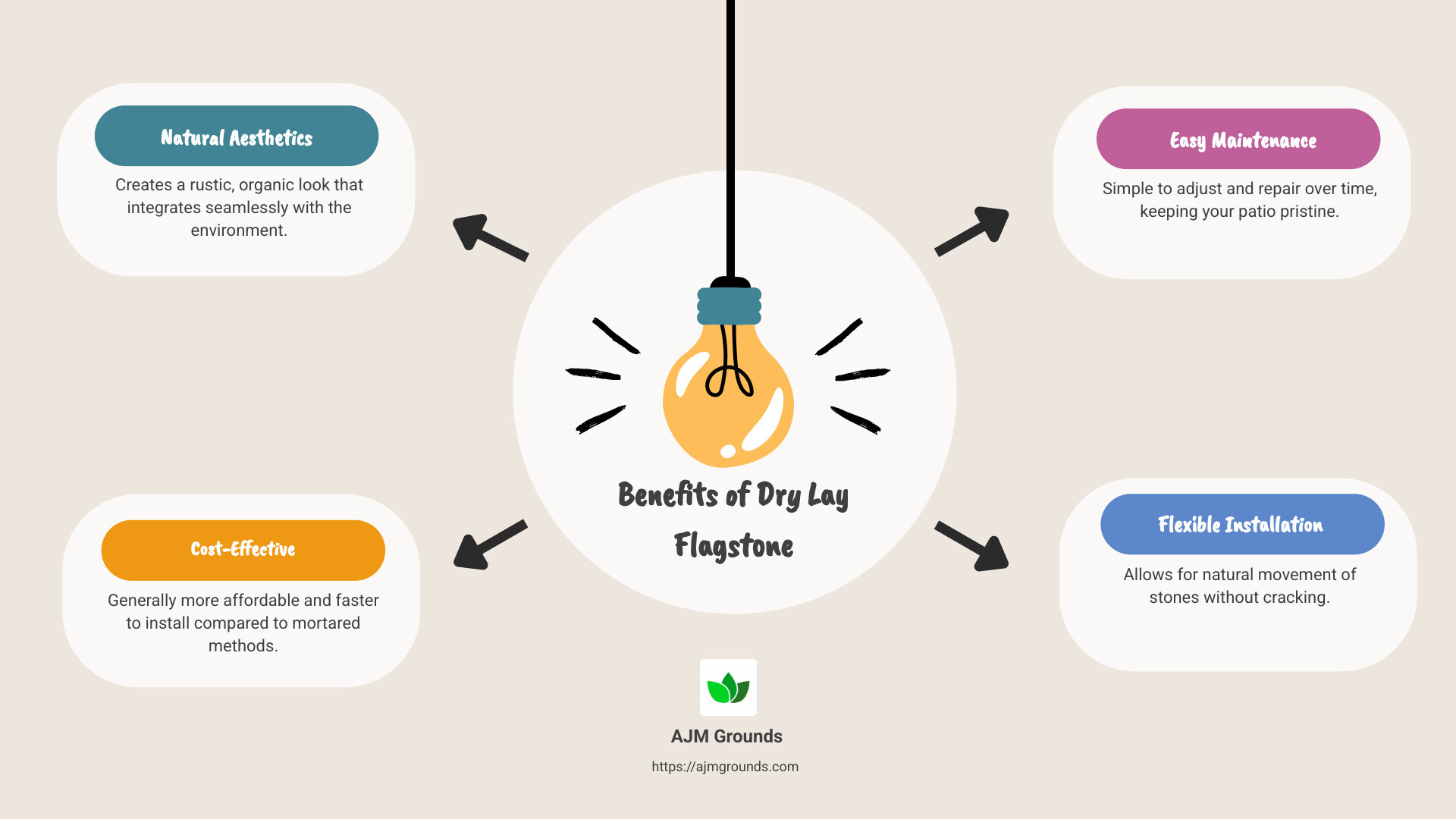
Dry lay flagstone is a popular method for homeowners looking to install a beautiful patio without the complexities of mortar work. This technique involves placing stones on a solid base of sand and gravel, offering a flexible and natural-looking landscape feature. Here’s a quick snapshot of what makes dry lay flagstone appealing:
- Natural Aesthetics: Offers a rustic, organic look that blends seamlessly with the environment.
- Cost-Effective: Typically less expensive and quicker to install than mortared options.
- Easy Maintenance: Simple to adjust and repair over time.
I’m John Caplis, the owner of AJM Grounds LLC. With years of experience in landscaping and hardscaping across Massachusetts, I’ve transformed numerous outdoor spaces using the dry lay flagstone method. Now, let’s dive deeper into the ins and outs of installing a stunning flagstone patio.
Understanding Dry Lay Flagstone
Dry lay flagstone is a straightforward and flexible way to create a stunning and functional patio. This method doesn’t rely on concrete or mortar, making it a great option for DIY enthusiasts and professionals alike.
The Basics of Dry-Laid Stone
In a dry lay installation, each stone is placed on a base of sand and gravel. This technique is prized for its adaptability and the natural appearance it gives to landscapes.
- Sand and Gravel Base: The foundation of any successful dry lay flagstone project is a well-prepared base. A mix of sand and gravel provides a stable yet flexible surface that accommodates natural shifts in the ground. This flexibility is crucial in regions with fluctuating temperatures, as it helps prevent cracking and movement over time.
- Flexibility: One of the standout benefits of the dry lay method is its adaptability. You can easily adjust or replace stones without the hassle of breaking mortar. This feature allows for quick repairs and modifications, ensuring your patio remains pristine for years to come.
Why Choose Dry Lay Flagstone?
- Durability and Longevity: While the stones are not permanently fixed, when properly installed, a dry lay flagstone patio can last for decades. The use of a gravel and sand base allows for drainage, reducing the risk of water damage.
- Low Maintenance: Unlike wet-laid stone, which requires sealing and regular upkeep, dry-laid patios are relatively low maintenance. Occasional re-leveling or replacing a stone is usually all it takes to keep it looking its best.
- Environmental Considerations: By avoiding concrete, dry lay installations are more eco-friendly. The materials used are natural and allow rainwater to permeate the ground, supporting local ecosystems.
Getting Started with Dry Lay Flagstone
Before diving into your project, understand local building codes and regulations. Proper excavation and soil compaction are critical first steps. Investing time in creating a solid base will pay off in the beauty and longevity of your patio.
Whether you’re a DIY enthusiast or prefer professional installation, dry lay flagstone offers a versatile and visually appealing solution for enhancing your outdoor space. Ready to explore this method further? Let’s move on to the step-by-step guide to laying your flagstone patio.
Step-by-Step Guide to Dry Laying Flagstone
Step 1: Preparing the Site
Before you start, check local building codes and contact utility companies to avoid any surprises underground. Once you’re clear, it’s time to excavate the area. Dig down to a depth that accommodates both your thickest stone and an additional 2-3 inches for the gravel base. For instance, if your stone is 2 inches thick, dig to a total depth of 4-5 inches.
Next, compact the soil using a hand tamper or a mechanical compactor. This step ensures that your base remains stable and prevents future settling.
Step 2: Creating the Base
Now, add about 3 inches of 1/4-inch minus crushed gravel to your excavated area. Spread it evenly and compact it thoroughly. For larger areas, renting a plate compactor can save time and effort. After compacting, use a fine spray of water to perform hydro-compaction, which helps the gravel settle firmly.
Consider adding a separation fabric between the soil and gravel. This fabric prevents the gravel from mixing with the soil, maintaining the integrity of your base over time.
Step 3: Laying the Flagstone
Start by arranging your stones in a pattern that suits your taste. Aim for consistent joints, typically about 1 inch wide. Use a rubber mallet to gently tap each stone into place, ensuring they are firmly seated.
Check your work frequently with a level, making sure the stones are even. Adjust as needed by adding more gravel to low spots or removing it from high spots. A slight pitch towards the edges will aid in drainage.
Step 4: Filling the Joints
Once your stones are laid out, it’s time to fill the joints. Sweep stone dust into the gaps for a natural look. If you prefer a more solid joint, consider using polymeric sand, which hardens when wet and provides a durable finish.
For a touch of greenery, you can encourage moss growth by adding topsoil to the joints instead. This not only looks charming but also helps stabilize the stones further.
By following these steps, you’ll create a beautiful, durable, and low-maintenance flagstone patio that improves your outdoor space. Ready to explore more options? Let’s explore the differences between dry lay and wet lay methods in the next section.
Dry Lay vs. Wet Lay: Making the Right Choice
Choosing between dry lay and wet lay flagstone for your patio is crucial. It influences the look, cost, and maintenance of your project. Let’s break down the differences to help you decide which method suits your needs.
Dry Lay Flagstone
Pros:
- Flexibility: Dry lay flagstone is forgiving. You can easily adjust stones over time if they shift or settle. This method is ideal for DIY enthusiasts who might want to make changes later.
- Cost-Effective: Without the need for concrete or mortar, dry lay installations generally cost less upfront. You save on materials and labor costs, making it a budget-friendly option.
- Natural Look: The gaps between stones can be filled with sand, gravel, or even soil for plants. This gives a more organic appearance that blends with the landscape.
Cons:
- Higher Maintenance: Because the stones are not permanently fixed, they may require periodic adjustments. Weeds can also grow in the joints, necessitating regular upkeep.
- Less Stability: In high-traffic areas, dry lay stones might shift more easily compared to wet lay, potentially creating tripping hazards.
Wet Lay Flagstone
Pros:
- Permanent and Stable: Wet lay flagstone involves setting stones in mortar on a concrete base. This results in a durable, stable surface that withstands heavy use.
- Low Maintenance: With fewer gaps, there’s less opportunity for weeds to grow. This reduces the time and effort needed for maintenance.
- Polished Appearance: The seamless finish of wet lay installations provides a more formal and polished look, suitable for upscale settings.
Cons:
- Higher Cost: The use of concrete and mortar increases the cost of materials and labor. However, the long-term durability might offset this initial investment.
- Less Flexibility: Once set, wet lay stones are difficult to adjust. Any changes require more effort and expertise.
Cost Comparison
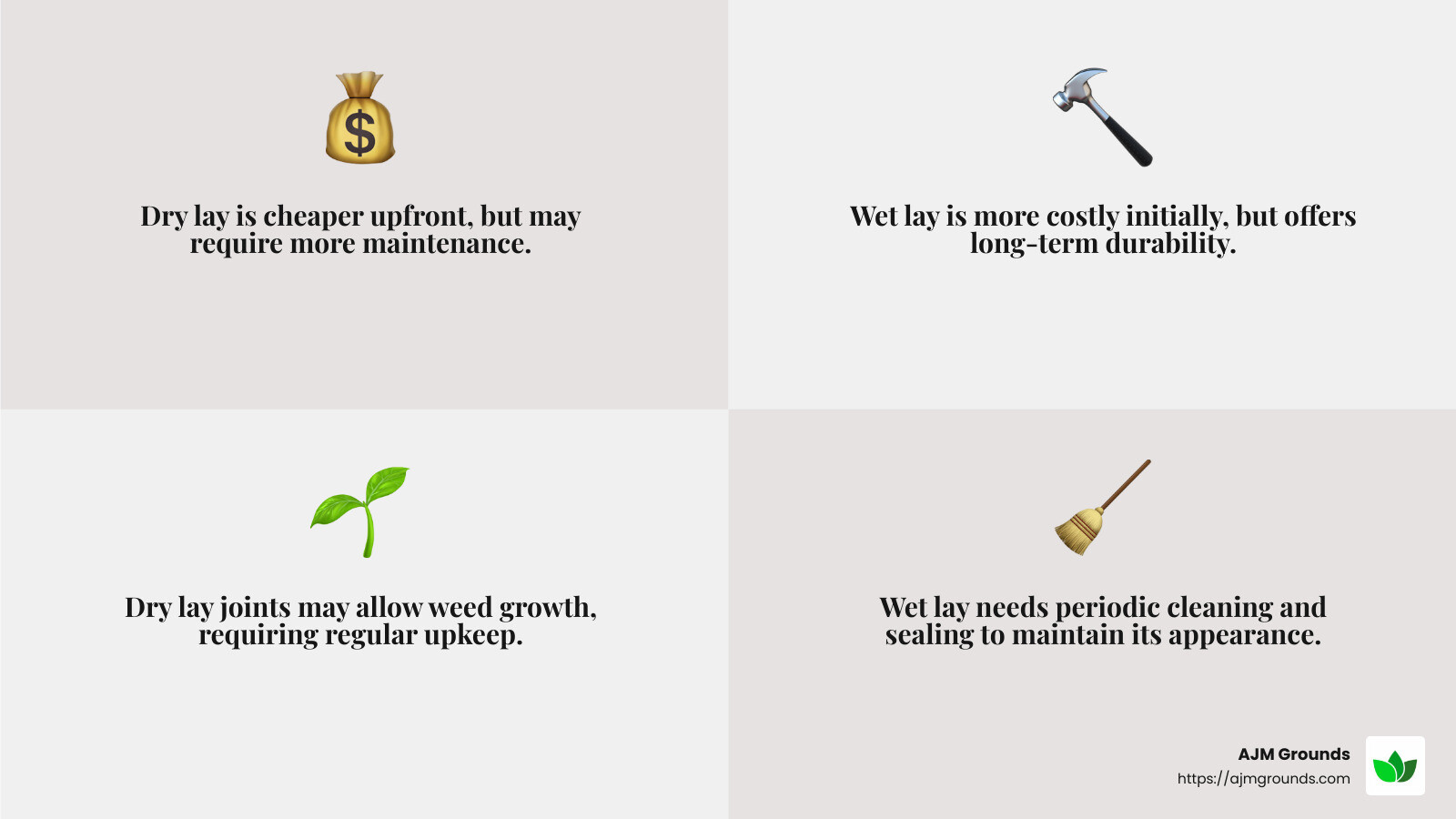
While dry lay is typically cheaper upfront, consider the long-term investment. Wet lay might have higher initial costs, but it can save on maintenance down the road. Evaluate your budget and how you plan to use the space to make an informed decision.
Maintenance Considerations
Maintenance needs vary between the two methods. Dry lay requires regular joint filling and weed control, while wet lay primarily involves periodic cleaning and sealing.
The choice between dry and wet lay depends on your priorities. Consider factors like budget, desired aesthetic, and how much time you’re willing to spend on maintenance. Now that you understand the options, let’s address some frequently asked questions about dry lay flagstone.
Frequently Asked Questions about Dry Lay Flagstone
How do you dry lay flagstone?
The dry lay method is a popular choice for those looking to install a flagstone patio. It involves laying stones on a bed of sand and gravel, providing a natural and flexible surface without using concrete or mortar.
- Excavation: Start by excavating the area to a depth of about 6 inches, plus the thickness of the flagstone. This ensures a stable foundation.
- Gravel Base: Lay a compacted gravel base, typically 4 inches thick, to provide drainage and stability. This base should be leveled and sloped slightly to allow water runoff.
- Flagstone Placement: Arrange the flagstones on top of the gravel, adjusting each stone to maintain a level surface. This step often involves using a rubber mallet to gently tap the stones into place.
- Joint Filling: Once the stones are set, fill the joints with sand, stone dust, or polymeric sand to lock the stones in place and prevent weed growth.
Can you lay flagstone directly on dirt?
Laying flagstone directly on dirt is not recommended for a long-lasting patio. While it might seem like a quick solution, this method lacks stability and drainage, leading to shifting stones and uneven surfaces over time.
- Thick Flagstone: If you opt to lay flagstone directly on dirt, ensure the stones are thick enough (at least 1.5 inches) to withstand movement and pressure.
- Soil Base: Prepare the soil by removing grass and compacting it as much as possible. However, this approach is best for temporary setups or low-traffic areas.
For a more durable installation, consider using a compacted gravel base, which provides better stability and drainage.
What is the difference between wet set and dry set flagstone?
The main difference between wet set and dry set flagstone lies in the materials and techniques used for installation.
- Dry Set Flagstone:
- Base: Uses a sand and gravel base.
- Installation: Stones are laid without mortar, allowing for flexibility and easy adjustments.
- Maintenance: Requires more frequent upkeep, such as refilling joints and controlling weeds.
- Wet Set Flagstone:
- Base: Involves setting stones in a mortar mix on a concrete base.
- Installation: Provides a permanent, stable surface that’s less prone to shifting.
- Maintenance: Lower maintenance due to fewer gaps for weeds, but may require periodic sealing.
Both methods have their advantages and drawbacks. Dry set is budget-friendly and adaptable, while wet set offers durability and a polished finish. Consider your specific needs, such as the intended use of the space and your maintenance preferences, when choosing between the two.
Conclusion
At AJM Grounds, we take pride in our ability to transform outdoor spaces with our personalized service and attention to detail. Whether you’re considering a dry lay flagstone patio or another landscaping project, our team is committed to delivering results that exceed your expectations.
Personalized Service: Every project we undertake is unique, just like our clients. We listen to your needs and tailor our approach to ensure that your vision becomes a reality. Our team works closely with you from start to finish, ensuring that every detail aligns with your preferences.
Attention to Detail: We believe that the little things make the biggest difference. From carefully preparing the site to carefully laying each flagstone, we ensure that every step of the process is executed with precision. Our commitment to quality means that you can enjoy a beautiful, durable patio for years to come.
Choosing AJM Grounds means choosing a partner who cares about your project as much as you do. Our expertise in patio installation and landscaping, combined with our dedication to customer satisfaction, makes us the ideal choice for your next outdoor project.
Ready to improve your outdoor space? Contact AJM Grounds today to get started on your dream patio. Let us bring your vision to life with our best service and craftsmanship.
