

The Natural Beauty of Stone Underfoot
A dry laid flagstone walkway is a landscaping feature where natural stone pieces are placed on a compacted base of gravel and stone dust without using mortar or concrete. This creates a durable, natural-looking path that complements gardens and outdoor spaces.
What is a dry laid flagstone walkway?
- Construction Method: Stones placed on gravel and stone dust (no mortar)
- Thickness Required: 1.5″ to 2.5″ thick stones recommended
- Base Depth: 4-6″ of compacted gravel (more in cold/wet climates)
- Joint Material: Stone dust or screenings (not sand)
- Durability: 20-30 years with proper maintenance
- Cost: Generally 20-30% less expensive than mortared installations
Dry laid flagstone walkways have been prized for centuries for their natural beauty and practical durability. Unlike wet-laid (mortared) installations, dry laid pathways allow for natural settling, easier repairs, and better performance in regions with freeze-thaw cycles. The stones rest on a carefully prepared base of compacted gravel topped with stone dust, creating a stable yet flexible surface that can adapt to ground movement over time.
The irregular shapes and earthy tones of flagstone create a timeless appeal that blends seamlessly with landscaping. Whether you’re looking to create a formal front entrance path or a casual garden walkway, the dry laid method offers both aesthetic charm and practical benefits.
I’m John Caplis, owner of AJM Grounds LLC, and I’ve installed dozens of dry laid flagstone walkways throughout Woburn and surrounding Massachusetts communities, helping homeowners transform their outdoor spaces with natural stone elements that withstand our challenging New England seasons.
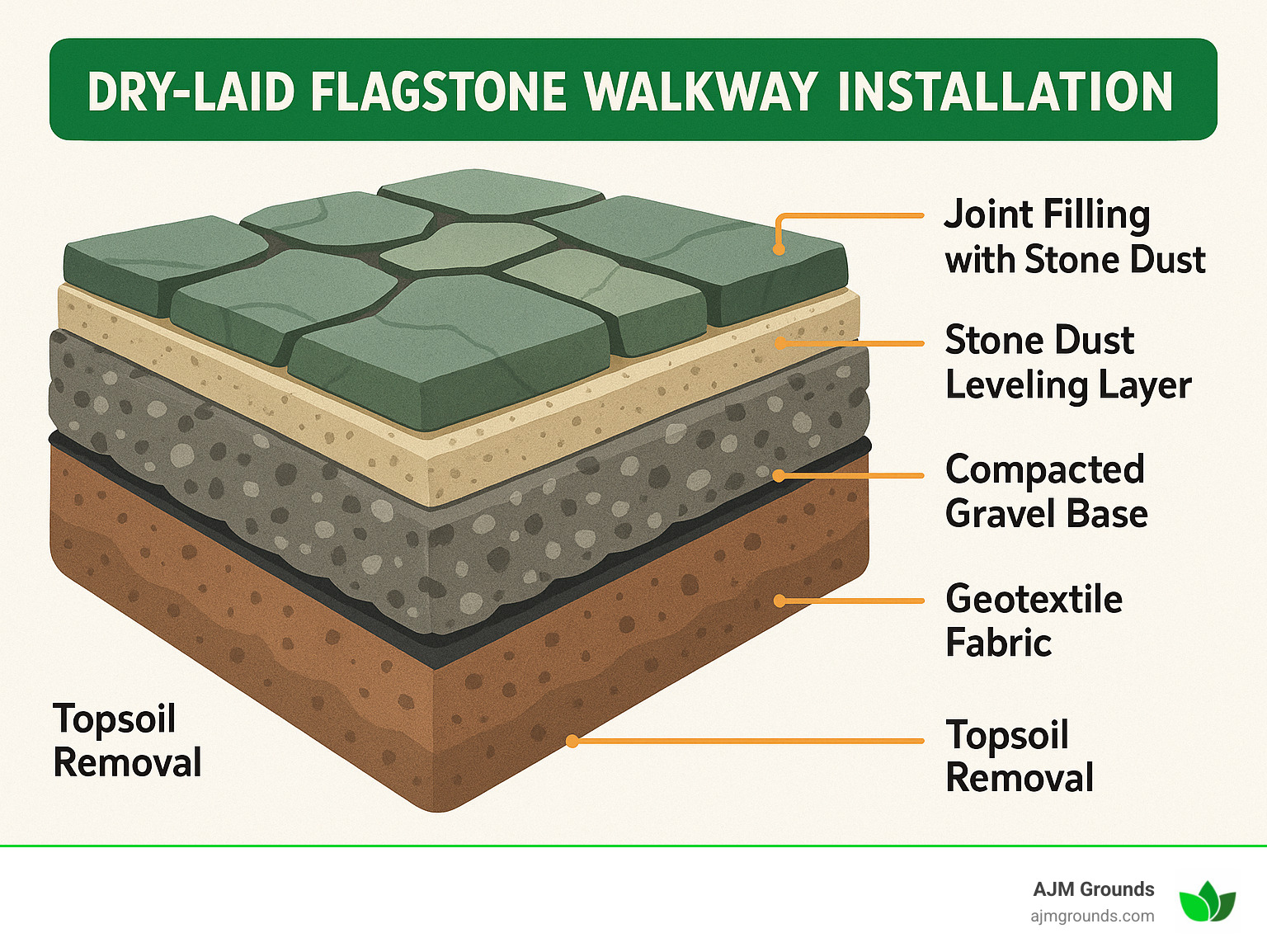
Essential dry laid flagstone walkway terms:
Dry Laid Flagstone Walkway 101
A dry laid flagstone walkway is simply a path made of natural stone set on a compacted gravel and stone-dust base—no concrete, no mortar. Because the stones can move slightly with seasonal shifts, this method is ideal for our freeze-thaw New England climate.
Key Benefits
- 20–30 % lower install cost than mortared work
- Excellent drainage—water flows through joints, not across the surface
- Easy repairs—lift and reset a single stone if one ever wobbles or cracks
- Ready for foot traffic the moment the last stone is placed
A Few Trade-offs
- Joints need a quick top-off of stone dust every year or two
- Expect minor settling during the first 12 months
- Stones must be 1.5–2.5 in. thick to avoid cracking under load
When properly built, a dry-laid path delivers decades of service with little more than periodic sweeping and the occasional weed pull.
Materials & Design Planning
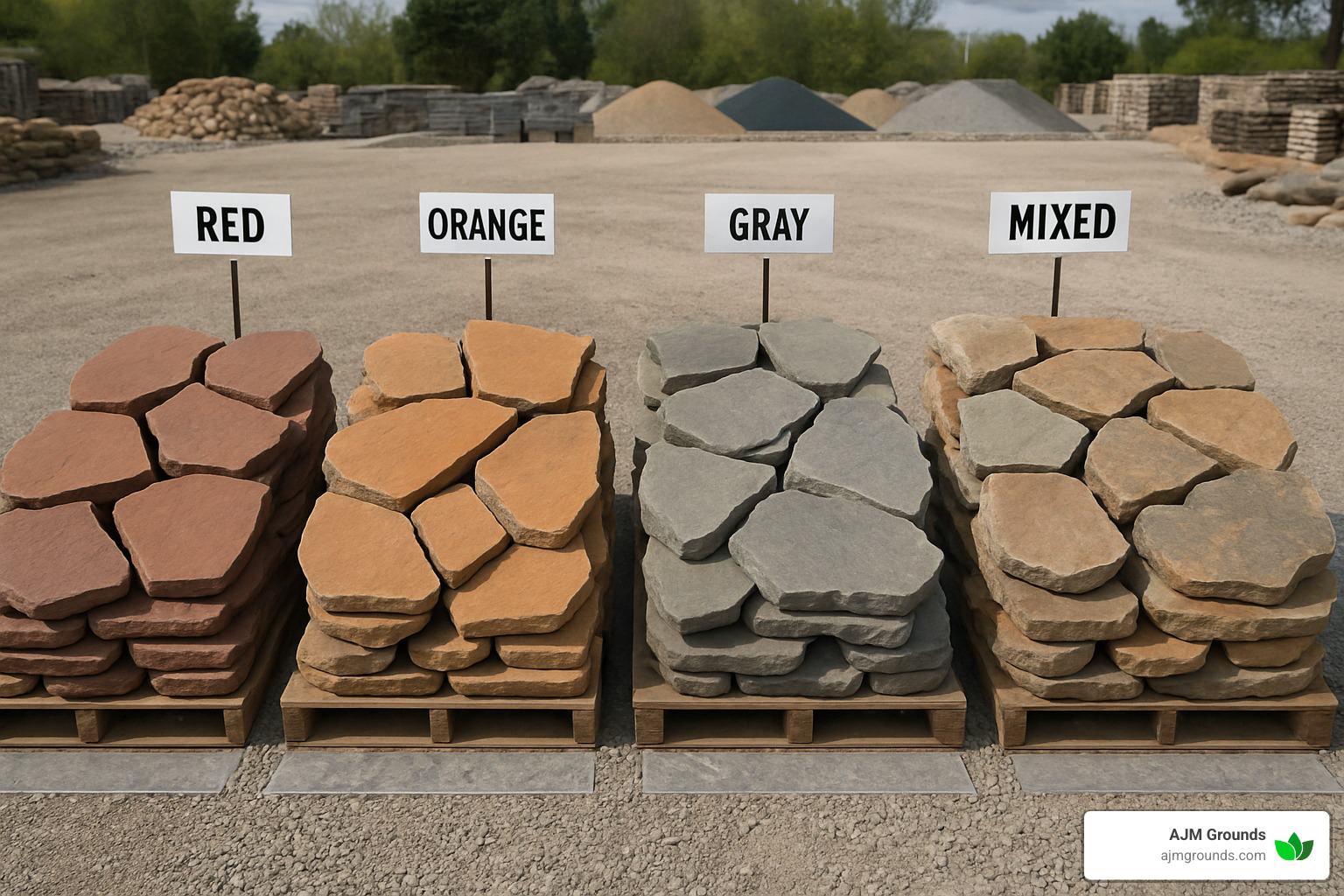
Choosing Your Stone
Bluestone, slate and sandstone all perform well in Massachusetts. Whatever you pick, stay in the 1.5–2.5 in. thickness range—thinner pieces simply don’t last under foot traffic. Large slabs (12 × 18 in. or bigger) feel stable and look more natural than lots of tiny pieces.
Base & Bedding
- 4–6 in. of ¾-in. crushed gravel on top of geotextile fabric
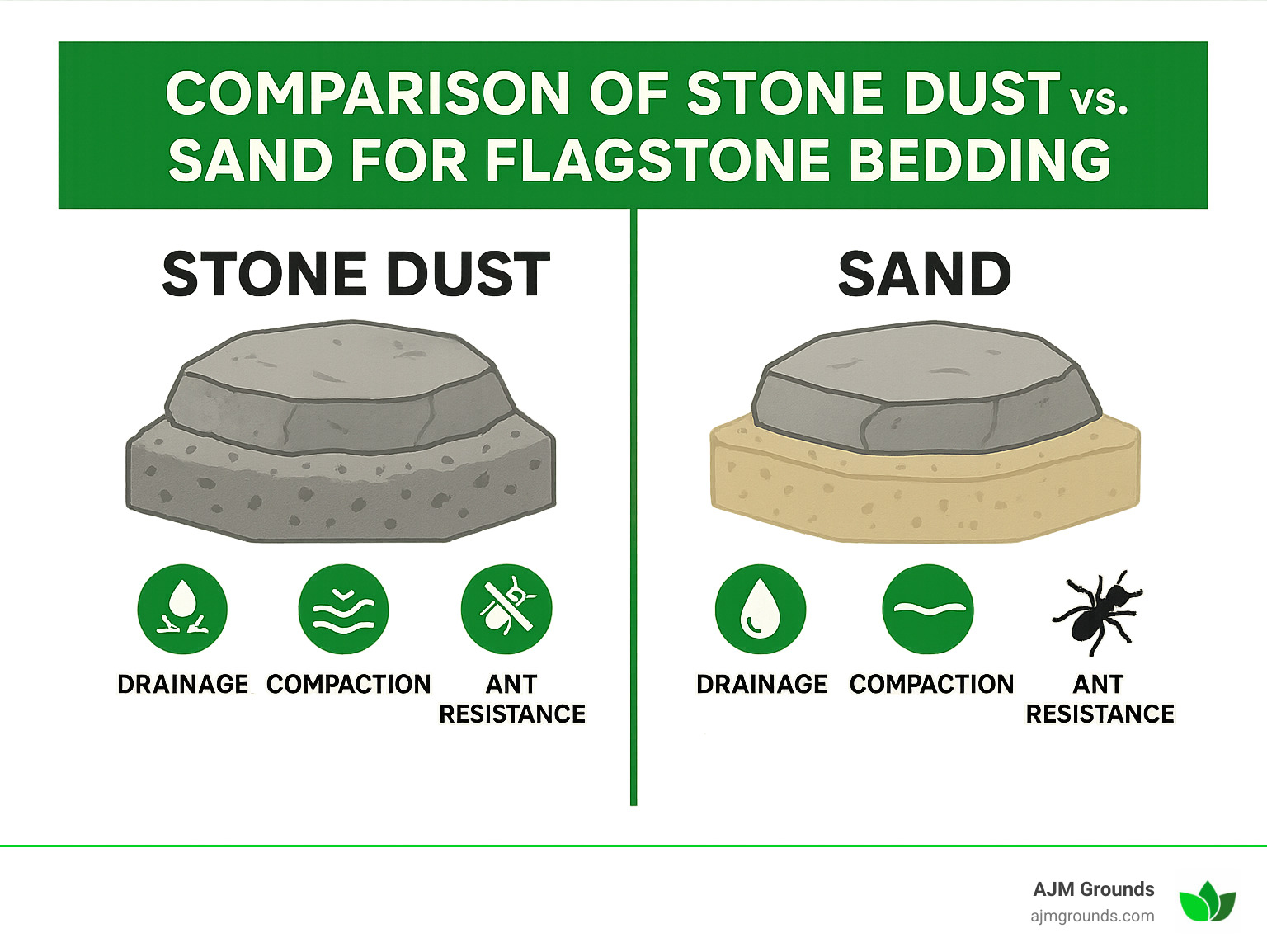
- 1–2 in. of stone dust (NOT sand) for leveling
- Maintain a ⅛ in. per foot slope for drainage
Joints & Edging
Sweep stone dust into joints for a clean look that also discourages ants. Steel or stone edging keeps outer pieces from drifting and gives the walkway a crisp profile.
For more ideas, see HGTV’s guide to garden pathways.
More info about Dry Lay Flagstone | More info about Laying a Stone Path
Step-by-Step Installation Guide
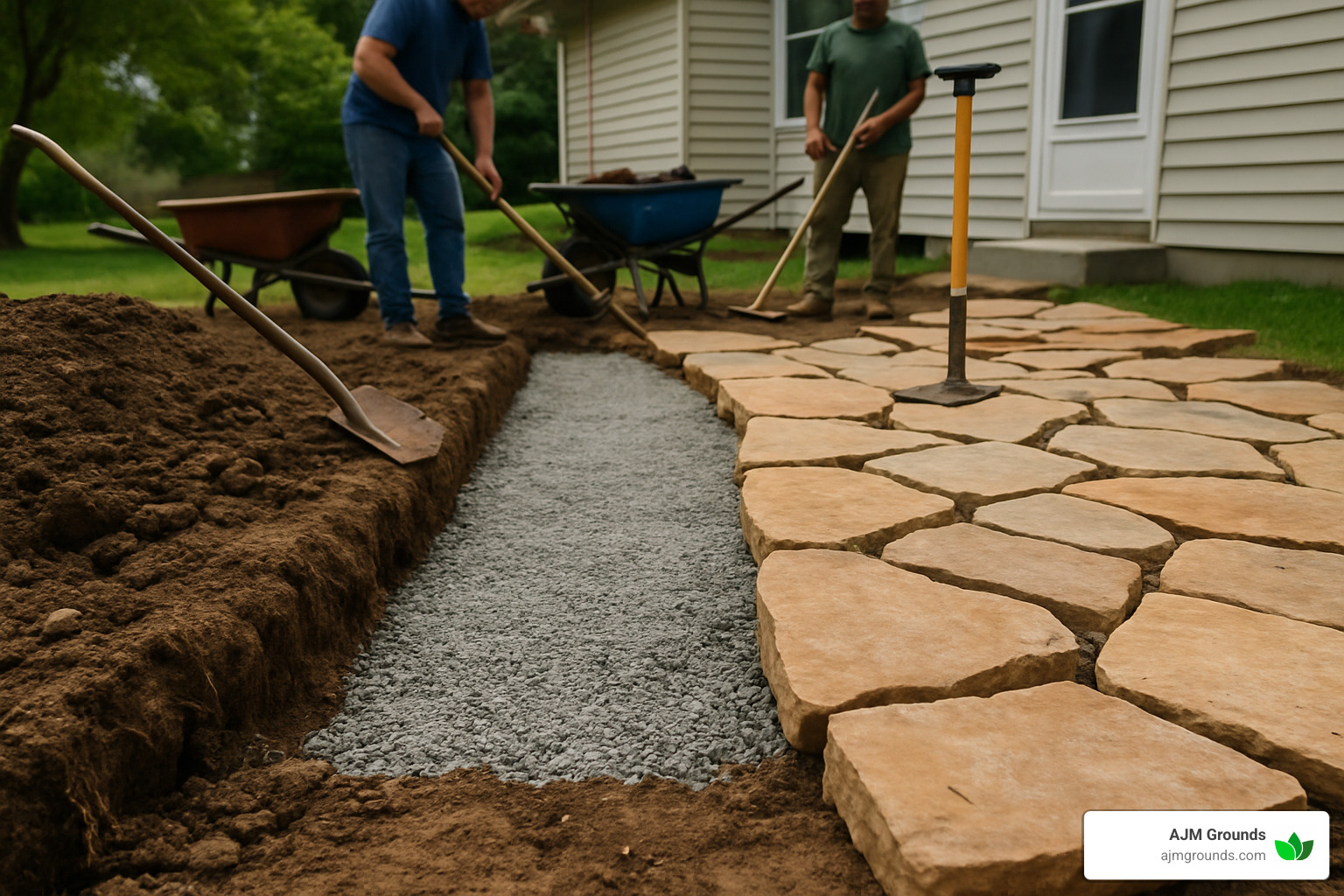
- Lay out the path. Mark the route with stakes and string, then call 811 to locate utilities.
- Excavate 8–10 in. Extend the dig 4–6 in. past the final edge.
- Compact the subgrade. A plate compactor prevents future settling.
- Install geotextile fabric. Keeps soil out of the gravel.
- Add 4–6 in. of ¾-in. gravel in 2-in. lifts, compacting each layer.
- Spread 1–2 in. of stone dust. This is your leveling layer.
- Set stones like a puzzle. Check each piece for level and stability; adjust stone dust as needed.
- Fill joints with stone dust, broom-in, and mist lightly with water.
Following these steps, most walkways are ready for everyday use the same day they’re installed.
More info about Walkway Installation
Maintenance, Troubleshooting & Costs
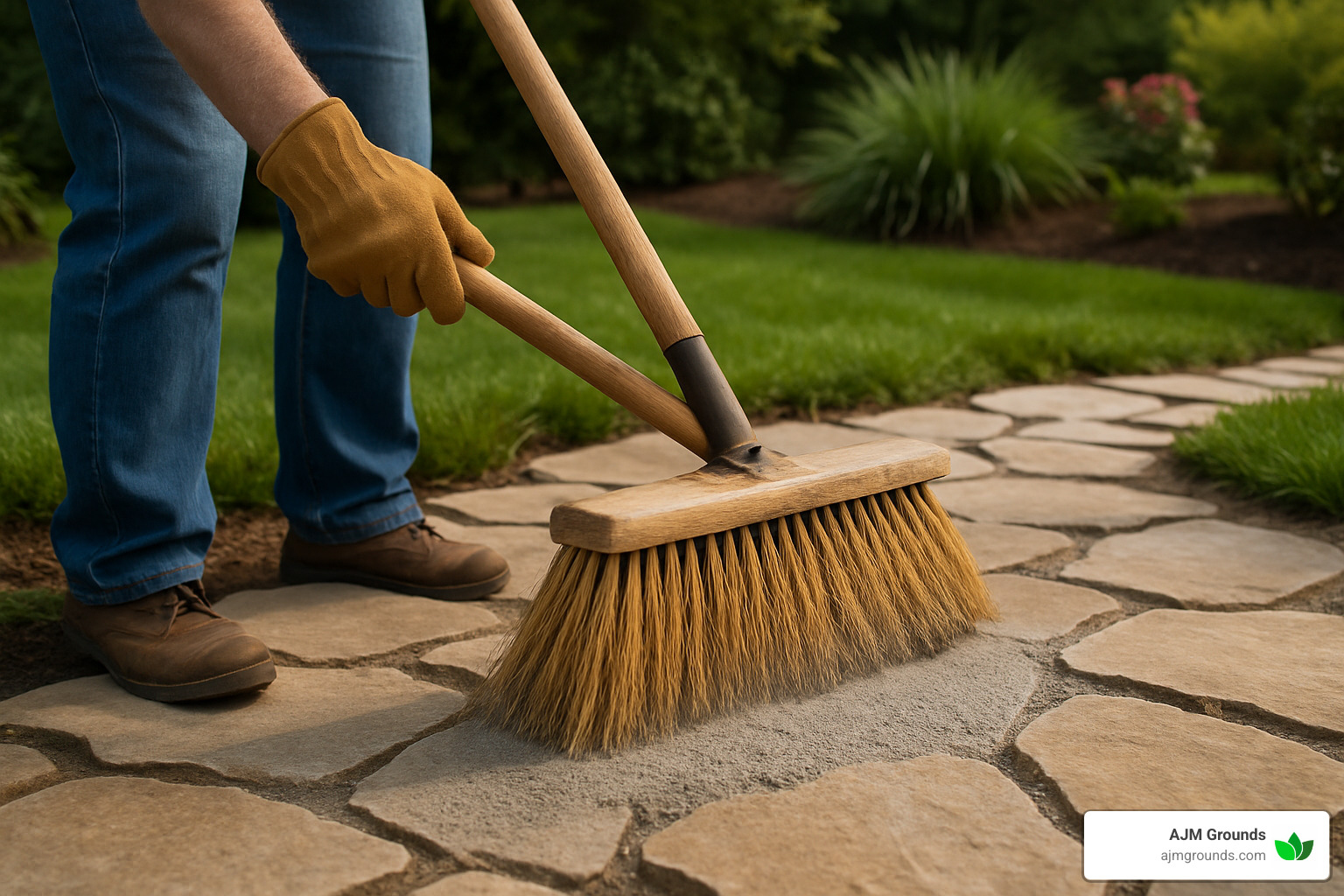
Seasonal Care
- Spring: top off joints, re-level any stones that shifted.
- Summer: pull weeds early; address ants quickly.
- Fall: keep leaves off the path; add joint material before frost.
- Winter: use plastic shovels and calcium chloride de-icer.
Common Pitfalls
Thin stones, a skimpy gravel base, or sand bedding are the usual culprits when a walkway fails. Stick to the specs above and edges that restrain the stone, and you’ll avoid 90 % of problems.
Average Pricing
Internet research shows dry laid flagstone walkways typically run $15–$75 per sq ft; complex designs or exotic stone can climb toward $150 per sq ft. (These figures are averages from online sources—not actual costs for AJM Grounds.)
For DIY repairs, tools like the Gorilla Gripper Stone Carrying Tool make lifting large slabs safer.
Conclusion
There’s something truly special about a dry laid flagstone walkway that grows more beautiful with time. As the stones settle into your landscape, they develop a character and patina that manufactured materials simply can’t match. The natural variations in color, texture, and shape create a timeless pathway that feels as though it’s always been part of your property.
Throughout my years working with homeowners across Woburn, Winchester, and Lexington, I’ve watched clients fall in love with their stone pathways season after season. That initial moment when a project is complete certainly brings satisfaction, but the real joy comes from watching these natural stone elements mature and integrate with the surrounding landscape over time.
The beauty of the dry-laid method lies in its perfect balance of structure and flexibility. With proper installation—thorough base preparation, quality stone selection, and meticulous placement—your pathway will stand up to our Massachusetts freeze-thaw cycles while maintaining its natural charm. While some walkway options might offer a lower initial price point, few can match the decades-long value proposition of natural stone.
The foundation truly makes the difference. Those invisible layers beneath your stones—the compacted gravel base, the geotextile fabric, the stone dust bedding—these are what transform beautiful stones into a functional, lasting walkway. Cutting corners on these elements inevitably leads to disappointment down the road.
For many homeowners, a dry laid flagstone walkway becomes more than just a path—it becomes a defining feature of their outdoor space. Whether it’s welcoming guests to your front door, guiding them through your garden sanctuary, or connecting your patio to other landscape features, natural stone creates an impression that concrete and pavers simply can’t replicate.
At AJM Grounds, we believe that quality hardscaping should improve both your property’s beauty and its functionality. A properly installed stone walkway does exactly that—providing decades of practical use while elevating your outdoor aesthetic. The initial investment pays dividends in durability, minimal maintenance, and timeless appeal that actually increases property value.
If you’re considering adding a dry laid flagstone walkway to your property, we’d be happy to discuss your vision and help determine if it’s the right solution for your specific needs and budget. Our team brings years of experience working with New England’s unique climate challenges and can help you create a pathway that will stand the test of time.
More info about walkway installation services
