

Why Building a Timber Retaining Wall Transforms Your Landscape
A timber retaining wall is a wooden structure built to hold back soil on sloped terrain, prevent erosion, and create level planting areas or usable yard space. These walls offer a natural aesthetic that blends seamlessly into garden settings, often at a fraction of the cost of concrete or stone. They are an excellent solution for changing sloped, difficult-to-mow areas into functional outdoor spaces like terraced gardens.
For a successful DIY project under 4 feet tall, the best materials are pressure-treated 6×6 timbers rated for ground contact. The key to a lifespan of 40+ years lies in three critical elements: a solid gravel foundation, a proper drainage system (including a pipe, gravel backfill, and filter fabric), and correct installation with staggered joints. Without these fundamentals, even the best timber will fail prematurely.
As John Caplis, owner of AJM Grounds LLC, I’ve designed and installed dozens of timber retaining walls throughout the Greater Woburn, MA area, helping homeowners reclaim sloped yards. While this guide covers the basics for smaller projects, I always recommend professional consultation for walls over 4 feet or those on challenging sites.
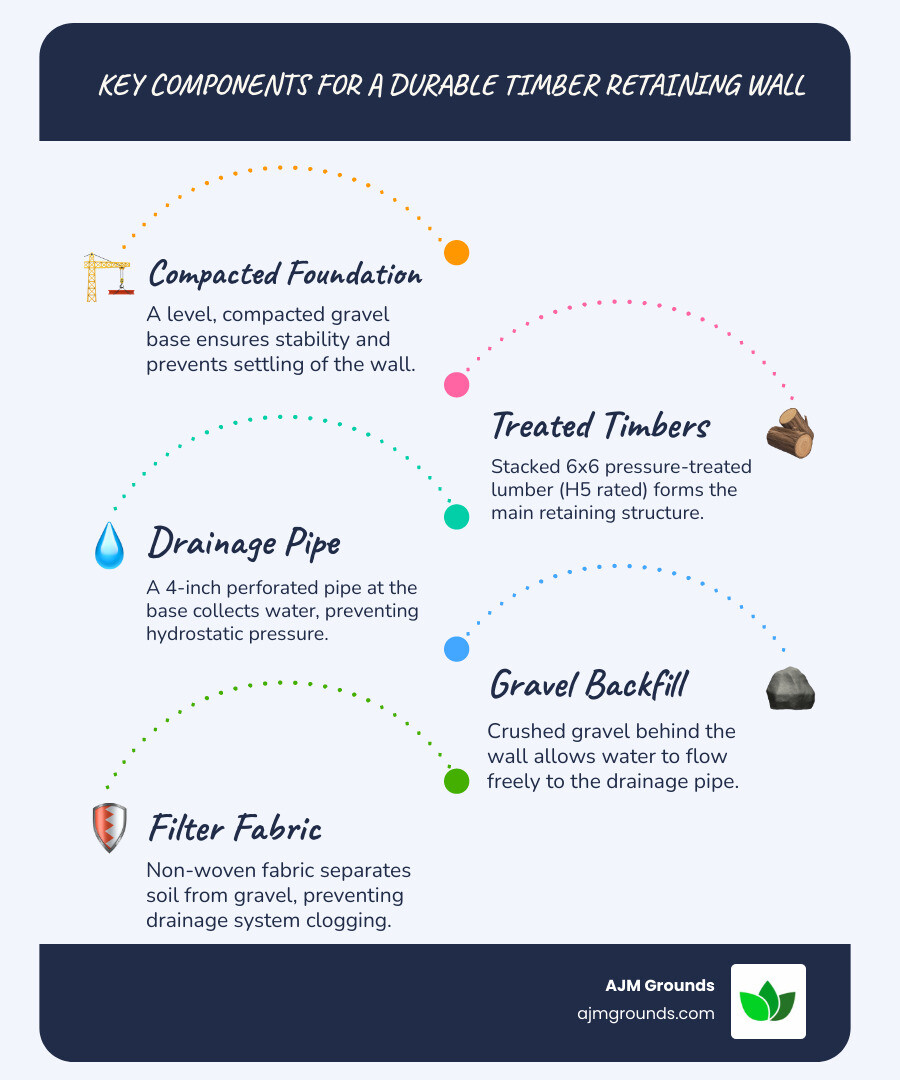
Timber retaining wall terms you need:
Planning and Building Your Timber Retaining Wall
Proper planning is the cornerstone of a successful and enduring timber retaining wall. This means understanding the materials, tools, and basic construction steps before you begin.
Key Design & Material Considerations
Timber’s primary appeal is its natural aesthetic and cost-effectiveness, often coming in at a significantly lower price than concrete blocks. It’s also relatively easy to work with for creating custom designs. However, wood is susceptible to rot and insect damage, so it requires treated lumber and more maintenance than stone or concrete. Timber walls also have height and strength limitations; projects over 4 feet tall require professional engineering to ensure safety and stability.
A properly constructed timber retaining wall can last upwards of 40 years. The key is using pressure-treated lumber specifically rated for ground contact (a rating of .40 or H5 treatment is best). This treatment infuses the wood with preservatives that protect it from decay. Avoid using untreated wood or old railroad ties, which can be structurally inconsistent and leach harmful chemicals.
Regarding cost, a timber project is typically more budget-friendly. For an average 140 sq ft wall, costs might range from $14,000 to $42,000. In comparison, a similar-sized concrete block wall could cost anywhere from $25,000 to $75,000.
Please note: The pricing mentioned here is based on average internet research and is not actual AJM Grounds pricing. Project costs can vary widely depending on specific site conditions, chosen materials, design complexity, and local labor rates. We always provide a detailed, personalized quote for all our projects in the Greater Woburn, MA area.
Here’s a quick comparison:
| Feature | Timber Retaining Wall | Concrete Block Retaining Wall |
|---|---|---|
| Cost | Lower (approx. $14k – $42k for 140 sq ft) | Higher (approx. $25k – $75k for 140 sq ft) |
| Lifespan | 40+ years (with proper treatment) | 50-100+ years |
| Aesthetics | Natural, rustic, blends with gardens | Modern, uniform, wide range of styles |
| Durability | Susceptible to rot (requires treated wood) | Very resistant to rot, decay, and insects |
| Maintenance | Requires periodic sealing/inspection | Low maintenance, occasional cleaning |
| DIY Suitability | Good for smaller walls (under 4 ft) | Heavier and more complex for DIY |
Essential Tools and Materials for a Timber Retaining Wall
Having everything on hand before you start makes the process much smoother. Here’s a basic list:
Materials:
- 6×6 Pressure-Treated Timbers (ground-contact rated)
- 3/4″ Crushed Gravel (for foundation and drainage)
- 4″ Perforated Drain Pipe
- Non-woven filter fabric
- 10-inch timber screws (exterior grade)
- Rebar (1/2-inch diameter)
- Wood preservative for cut ends
- Landscape marking paint and string line
Tools:
- Shovel, Level, and Tape Measure
- Circular Saw or Chainsaw
- Drill and Impact Driver
- Sledgehammer and Tamper
- Safety Glasses and Work Gloves
- Wheelbarrow
Step-by-Step Construction Guide for a Basic Timber Retaining Wall
Building a timber retaining wall under 4 feet can be broken down into a few key stages. Precision at each step is crucial for a long-lasting result.
1. Site Preparation and Layout:
- Use marking paint and a string line to outline the wall’s location.
- Excavate the hillside to create enough working space for your backfill and drainage system.
- Dig a trench for the footing. It must be deep enough to bury the first course of timber completely, plus room for a 6-inch gravel base.
2. Foundation Preparation:
- Line the trench with non-woven landscape fabric.
- Fill the trench with at least 6 inches of 3/4″ crushed gravel.
- Use a hand tamper to compact the gravel until it is solid and perfectly level. A stable, level base is the most important part of the wall.
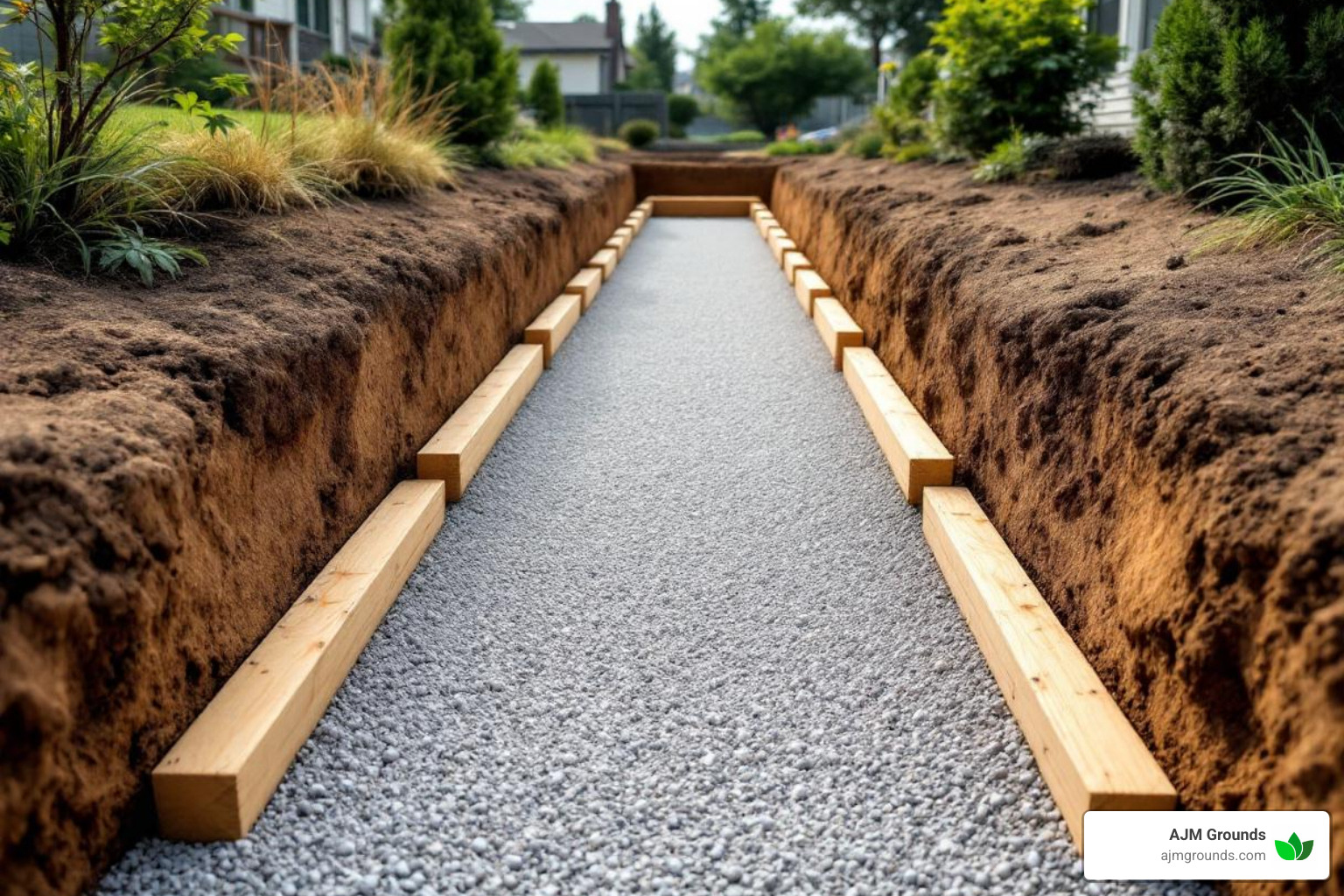
3. Installing the Timbers:
- Lay the first course of timbers on the compacted gravel, ensuring it is perfectly level front-to-back and side-to-side. Any error here will be magnified as you build up.
- Drill holes through the first course and drive rebar stakes through the timber and deep into the ground to anchor it in place.
- Stack the next courses, staggering the joints like bricks for strength. Secure each layer to the one below with 10-inch timber screws every few feet.
- Remember to apply wood preservative to any cuts you make.
The Secret to Longevity: Proper Drainage
Water is the number one enemy of a retaining wall. Without proper drainage, water builds up behind the wall, creating immense hydrostatic pressure that can cause it to bulge, crack, or fail. Excess moisture also accelerates rot.
An effective drainage system is not optional. Here’s how to build one:
- Perforated Pipe: Place a 4-inch perforated drain pipe behind the first course of timbers. Ensure it has a slight slope to an open end (a “daylight outlet”) where water can escape.
- Gravel Backfill: Backfill behind the wall with at least 12 inches of 3/4″ crushed gravel. This allows water to flow freely down to the pipe.
- Filter Fabric: Wrap the gravel backfill in non-woven filter fabric. This lets water pass through but stops soil and silt from clogging your drainage system.
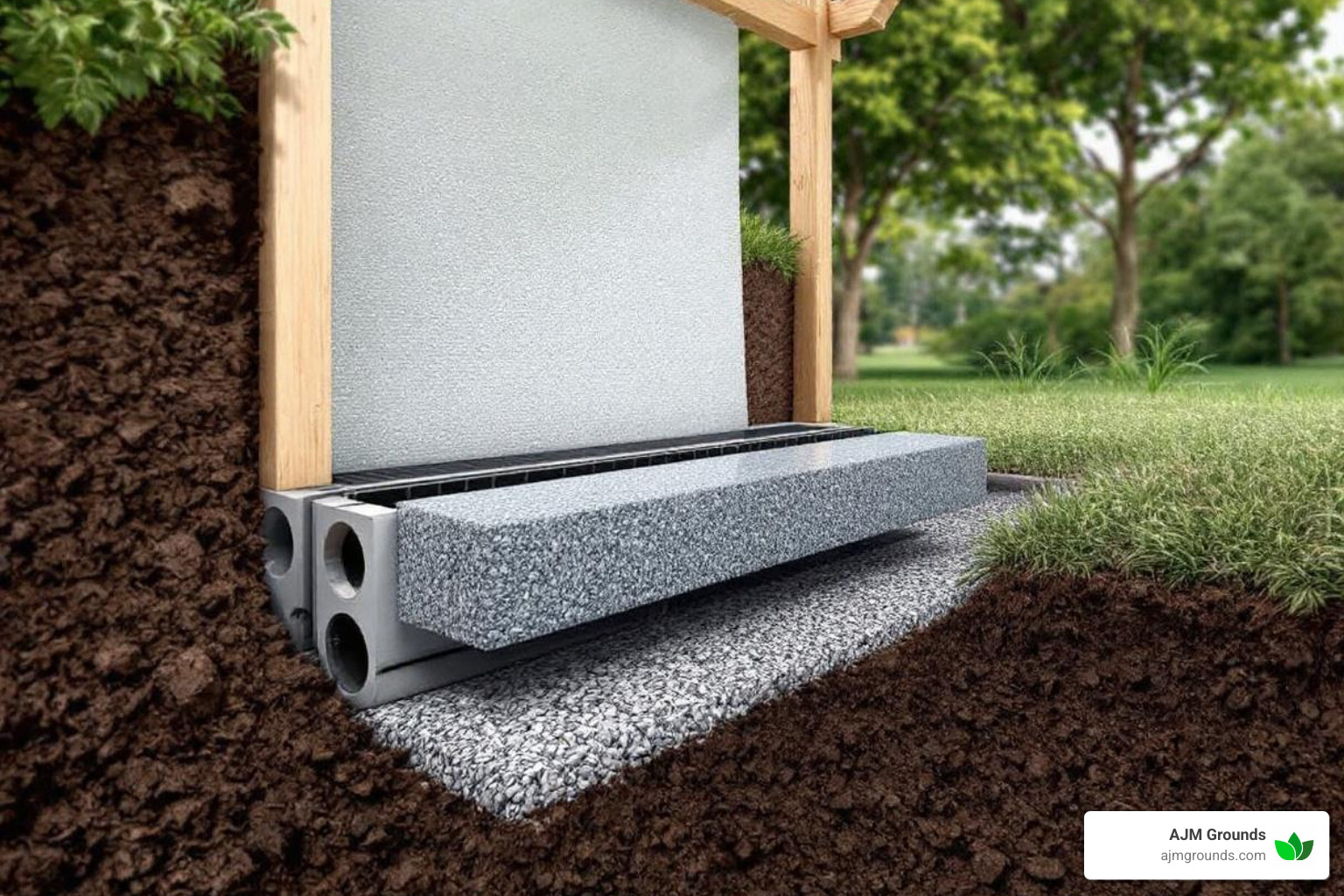
This system relieves pressure and keeps timber dry, which is essential for a long lifespan. For more on this topic, see why proper drainage in your landscape is so important.
Reinforcement and Finishing Your Timber Retaining Wall
For walls taller than 3-4 feet, additional reinforcement like “deadmen” tie-backs is required to anchor the wall to the hillside. This is a job for professionals, as it involves engineering to counteract soil pressure.
Finishing Touches:
- Capping: Add a top timber cap for a polished look.
- Backfilling: Fill the space behind the gravel drainage zone with topsoil, compacting it gently in layers.
- Grading: Grade the soil around the wall to ensure water flows away from the structure.
Maintenance Practices:
To get 40+ years out of your wall, perform regular maintenance:
- Inspect the wall periodically for any signs of shifting or bulging.
- Keep the drain pipe outlets clear of debris.
- Reapply a wood sealant every few years to protect against sun and moisture.
By following these best practices, you can ensure your timber retaining wall remains a beautiful and functional part of your landscape. For more insights, explore our guide on hardscape construction.
When to Call a Professional and Final Thoughts
While building a smaller timber retaining wall can be a rewarding DIY project, it’s crucial to understand the limitations and when it’s time to bring in the experts. As a landscaping company serving the Greater Woburn, MA area, we’ve seen the difference professional expertise makes.
Safety Considerations:
Construction always carries risks. Be mindful of the following:
- Heavy Lifting: Timbers, gravel, and soil are heavy. Use proper lifting techniques and get help when needed.
- Excavation Safety: Always call 811 before you dig to locate any underground utilities. Be cautious of trench stability.
- Power Tools: Use saws and drills safely, always wearing personal protective equipment (PPE) like safety glasses and gloves.
Recognizing Project Limits:
Some projects are best left to professionals. Call an expert if your wall involves:
- Heights Over 4 Feet: This is the most critical rule. Taller walls exert immense pressure and require professional engineering.
- Steep Slopes: A steep or unstable slope increases the forces acting on the wall, raising the risk of failure.
- Poor Soil Conditions: Heavy clay or loose, sandy soils require special engineering to ensure stability.
- Surcharge Loads: If the wall will support extra weight from a driveway, patio, or structure, it needs an engineered design.
For complex or large-scale projects in the Woburn, MA area, the expert team at AJM Grounds is here to help. We have the experience, equipment, and knowledge to design and construct timber retaining walls that are not only aesthetically pleasing but also structurally sound and built to last. Our attention to detail ensures your project meets your needs and provides a flawless finish.
When in doubt, a professional assessment can save you time, money, and headaches. To learn more about how we can assist, explore our guide on professional retaining wall construction.
