

Why Proper Concrete Retaining Wall Construction Matters
Concrete retaining wall builders are specialized contractors who design and construct durable walls that hold back soil, prevent erosion, and create usable outdoor spaces on sloped properties.
Key Services Concrete Retaining Wall Builders Provide:
• Site evaluation and soil analysis for proper foundation design
• Engineering plans and permit applications (required for walls over 4 feet)
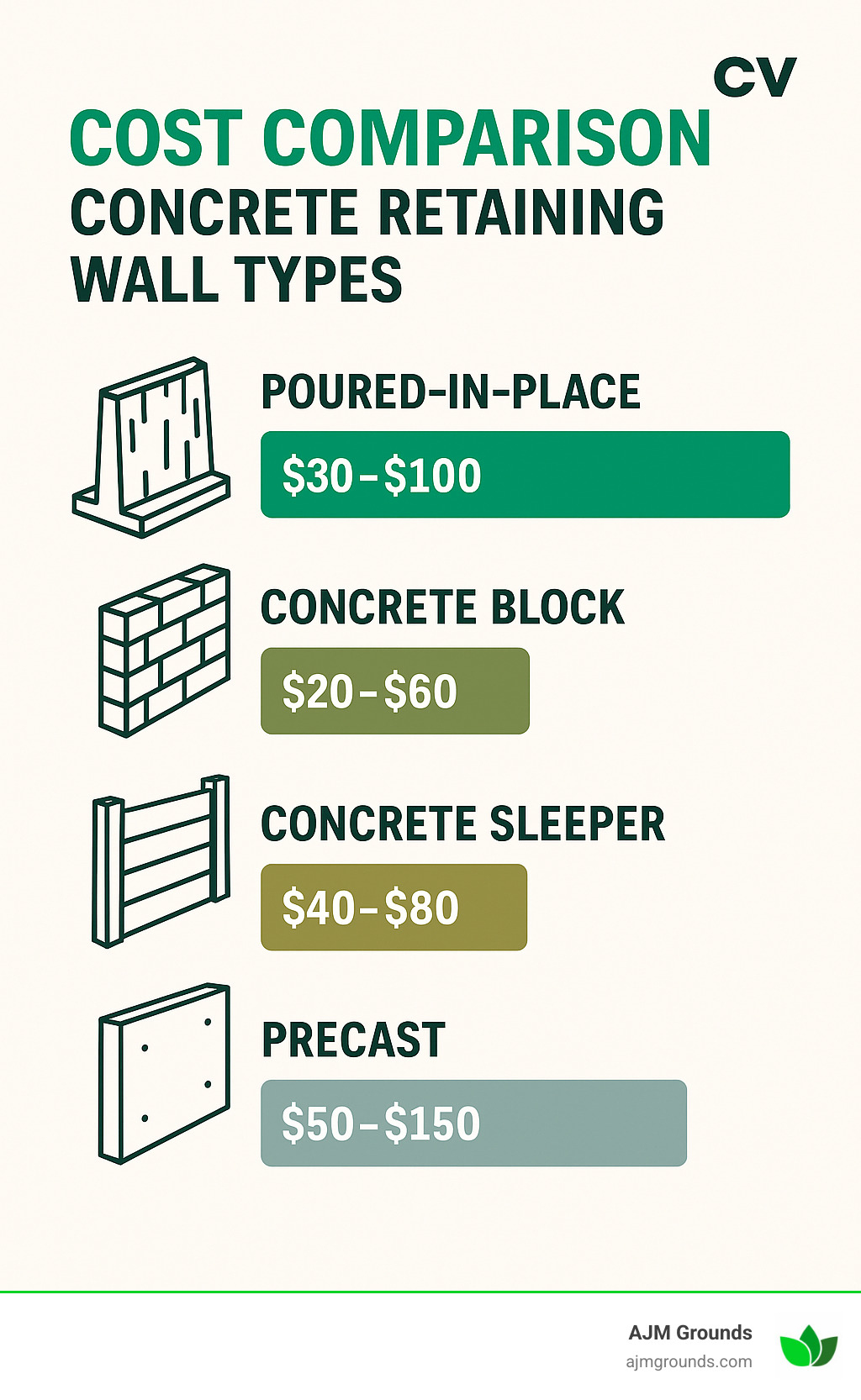
• Multiple concrete options including poured-in-place, block, and precast systems
• Drainage installation with weep holes and backfill systems
• Long-term warranties on materials and workmanship
Average costs range from $20-$150 per square foot based on internet data, with basic walls starting around $20-$50 per square foot and complex engineered walls reaching $150+ per square foot.
When properly built, concrete retaining walls offer a 50-100 year design lifespan – making them one of the most durable landscaping investments for your property. They resist fire, pests, and decay while requiring minimal maintenance compared to wood or other materials.
The biggest risk? Hiring inexperienced contractors who skip proper drainage or engineering. Poor installation can lead to wall failure, soil erosion, and costly repairs within just a few years.
I’m John Caplis, owner of AJM Grounds LLC, where we’ve helped countless Woburn homeowners select and work with qualified concrete retaining wall builders for their landscaping projects. Through years of experience in hardscaping and outdoor changes, I’ve seen what separates excellent concrete wall installation from costly mistakes.
Easy concrete retaining wall builders word list:
– backyard retaining wall ideas
– retaining walls ideas
Understanding Concrete Retaining Walls
When I work with homeowners across Woburn, Winchester, and the surrounding Massachusetts communities, I’m often surprised by how many people think retaining walls are just “fancy garden borders.” The truth is, these structures are engineering marvels that battle some serious forces every single day.
Think about it this way: the soil behind your retaining wall is constantly pushing against it with tremendous pressure. Add water from rain or irrigation, and that pressure can double or triple. Throw in our New England freeze-thaw cycles, and you’ve got a structure that needs to be built right the first time.
Professional concrete retaining wall builders understand these challenges intimately. We know that a wall isn’t just holding back dirt—it’s managing hydrostatic pressure from groundwater, resisting the expansion forces from freezing soil, and handling the constant settling and movement that happens naturally over time.
The physics might sound complicated, but the bottom line is simple: cut corners on design or construction, and you’ll likely face expensive repairs or complete wall failure within just a few years. Do it right, and your concrete retaining wall will serve your property faithfully for 50 to 100 years.
What Is a Concrete Retaining Wall?
A concrete retaining wall is essentially a structural superhero for your landscape. Its main job is soil retention—holding back earth to create level, usable space from what might otherwise be an unusable slope.
But these walls do so much more than just hold dirt in place. They’re masters of load resistance, designed to handle thousands of pounds of pressure while creating valuable usable land for your family to enjoy.
I’ve seen clients transform steep, unusable backyards into beautiful terraced gardens, level patios for entertaining, and even additional parking areas. One family in Lexington turned their sloping side yard into three distinct garden levels—each one perfectly level and accessible thanks to a series of concrete retaining walls.
The key difference between concrete and other materials is longevity. While a wooden retaining wall might give you 15 good years before needing replacement, a properly built concrete wall will outlast your mortgage—and probably your grandchildren’s mortgages too.
Main Purposes & Benefits
Erosion prevention is where retaining walls really shine. Without them, Massachusetts rainfall can turn your beautiful landscaping into a muddy mess. I’ve seen properties where spring runoff carved deep gullies through expensive plantings, washing away topsoil and undermining foundations.
Terrace creation opens up incredible possibilities for your outdoor space. That steep slope that’s been mocking you every time you mow? A retaining wall can transform it into multiple level areas perfect for gardens, seating areas, or play spaces.
Here’s something many homeowners don’t consider: concrete retaining walls are completely fire and pest-proof. While your neighbor might be dealing with carpenter ants destroying their wooden wall, your concrete structure will keep looking great year after year. No termite treatments, no rot concerns, no fire hazards.
The resale value boost is real too. Buyers love seeing usable outdoor space, and they especially appreciate permanent improvements that won’t need replacement anytime soon. A well-designed retaining wall system often pays for itself in increased property value.
Low maintenance is perhaps the biggest long-term benefit. After installation, your main job is keeping drainage areas clear and giving the wall an occasional cleaning. Compare that to wooden walls that need regular staining, board replacement, and structural repairs.
Key Concrete Wall Types & Their Advantages
Poured-in-place concrete is the gold standard for strength and customization. We build forms right on your property and pour concrete directly into them, creating a monolithic structure without weak joints. This method lets us create custom curves, integrate planters, or match specific architectural details. It’s my go-to choice for tall walls or challenging soil conditions.
Concrete block systems (also called CMU) offer excellent value for residential projects. Modern interlocking blocks include built-in drainage features and come in various textures and colors. They’re faster to install than poured walls and perfect for walls under six feet tall. Many homeowners love the clean, geometric look they provide.
Concrete sleeper walls give you that contemporary horizontal-line aesthetic while delivering serious durability. These precast concrete planks stack between posts to create walls that can last 60 years or more. They’re particularly popular with clients who want a modern look without the maintenance headaches of timber sleepers.
Precast panel systems are manufactured in controlled factory conditions, ensuring consistent quality and finish. They install quickly but require crane access, making them better suited for larger projects or properties with good equipment access. The factory setting also allows for intricate textures and decorative finishes.
Gabion basket systems combine wire mesh cages with concrete rubble or stone fill. They’re incredibly flexible, literally—they can handle soil movement that might crack other wall types. The excellent drainage and natural appearance make them perfect for areas with challenging soil conditions or where you want a more organic look.
Each type has its place, and the best choice depends on your specific site conditions, aesthetic preferences, and budget. That’s where experienced concrete retaining wall builders really earn their keep—matching the right system to your unique situation.
Comparing Types & Costs of Concrete Retaining Walls
When clients ask me about retaining wall costs, I always start with the same caveat: every project is unique. The homeowner with a simple 3-foot wall in easily accessible backyard will have a very different budget than someone needing an engineered 8-foot wall on a steep slope with limited equipment access.
Based on internet data, concrete retaining wall builders typically charge between $20-$150 per square foot, though complex projects can easily exceed $300 per square foot. These wide ranges reflect the many variables that influence final pricing.
Wall height drives costs exponentially, not linearly. A 6-foot wall doesn’t cost twice as much as a 3-foot wall—it often costs three to four times more due to engineering requirements, deeper foundations, and additional reinforcement. We’ve seen projects where adding just two feet of height doubled the total project cost.
Site accessibility can make or break your budget. If our crews can back a concrete truck right up to the work area, costs stay reasonable. But when we need to hand-carry materials down steep slopes or through narrow side yards, labor costs can increase by 30-50%. During our initial site visits, we always evaluate access routes to provide accurate estimates.
Soil conditions often surprise homeowners with hidden costs. That beautiful level yard might be sitting on expansive clay that requires special drainage solutions. Poor soil conditions can add thousands to a project through deeper excavations, soil stabilization, or improved drainage systems.
For detailed information about our construction process, visit our retaining wall construction page.
Engineering fees become mandatory for walls over 4 feet in most Massachusetts communities. These stamped plans typically cost $1,500-$5,000 but ensure your wall meets safety standards and building codes. It’s not optional—it’s protecting your investment and your family’s safety.
The labor-to-materials ratio typically runs about 60-70% labor costs, which explains why choosing experienced concrete retaining wall builders matters so much. Poor installation can turn high-quality materials into an expensive failure within just a few seasons.
Durability & Maintenance Over Time
Here’s what makes concrete retaining walls such a smart long-term investment: they’re built to outlast you. With proper construction, these walls deliver 50-100 years of reliable service—often requiring less maintenance than your roof or driveway.
Annual inspections take about 15 minutes and can save you thousands. Walk along your wall each spring, looking for new cracks, signs of settlement, or drainage issues. Small problems caught early stay small and inexpensive to fix.
Keep those weep holes clear. These small openings aren’t decoration—they’re your wall’s lifeline. Clogged drainage can build up water pressure that even the strongest wall can’t resist forever. A quick cleaning with a wire brush twice a year prevents major headaches.
Minor crack sealing is normal maintenance, not a sign of failure. Concrete naturally develops small cracks as it ages and settles. Sealing these with appropriate concrete caulk prevents water infiltration and freeze-thaw damage that could turn small cracks into big problems.
Watch for warning signs that need professional attention: horizontal cracks, any bulging or tilting, water pooling behind the wall, or erosion around the foundation. These issues require immediate professional evaluation—they rarely fix themselves and always get worse with time.
We recommend professional inspections every 5-7 years, or after major storms that could affect drainage or soil stability. It’s a small investment that protects a major one.
Environmental & Economic Considerations
Concrete retaining walls are surprisingly green when you consider their full lifecycle. While concrete production does have environmental impacts, the 75-100 year lifespan means far fewer replacement cycles compared to timber or other materials.
Modern concrete often incorporates recycled content, including recycled concrete aggregate from demolished structures. This reduces landfill waste while maintaining strength and durability. Many concrete retaining wall builders now prioritize these sustainable options without compromising performance.
Using local materials reduces transportation emissions and often costs less too. Massachusetts has excellent local aggregate sources, so there’s rarely need to ship materials long distances for standard projects.
The lifecycle cost analysis strongly favors concrete. A concrete wall costing $40 per square foot that lasts 75 years costs about $0.53 per square foot per year. Compare that to a timber wall at $20 per square foot lasting 15 years—that’s $1.33 per square foot annually, plus the hassle and cost of multiple replacements.
Concrete’s thermal mass benefits your landscaping too. These walls moderate soil temperature swings, creating more stable growing conditions for plants and reducing freeze-thaw stress on drainage systems.
The upfront investment feels significant, but when you spread it over decades of reliable service, concrete retaining walls become one of the most cost-effective improvements you can make to your property.
How Professional Concrete Retaining Wall Builders Deliver Long-Lasting Results
The difference between a retaining wall that stands strong for decades and one that crumbles within a few years often comes down to one thing: the expertise of your concrete retaining wall builders. Having worked with countless homeowners across Woburn and surrounding communities, I’ve seen how professional processes make all the difference.
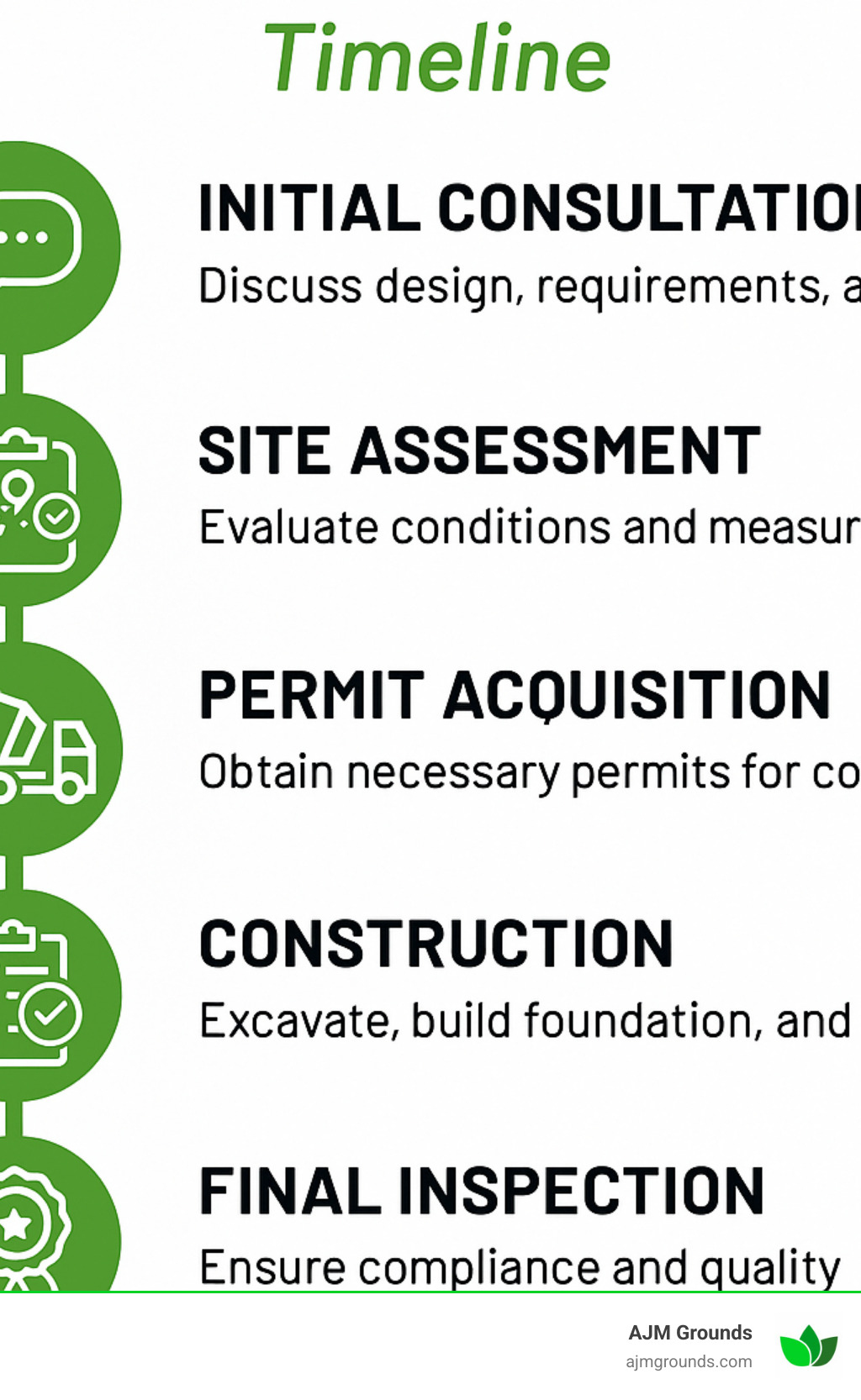
When we evaluate potential contractors for our clients, we look for builders who follow a systematic approach that addresses every critical aspect of wall construction. The best concrete retaining wall builders start with a comprehensive site evaluation that includes detailed soil analysis and drainage assessment. This isn’t just a quick look around your yard—it’s a thorough investigation that determines what type of foundation will work and what drainage challenges need to be addressed.
From there, professional contractors move into the engineering design phase. For walls over 4 feet, this means bringing in structural engineers to perform load calculations and create stamped plans. Even for smaller walls, experienced builders understand the forces at play and design accordingly.
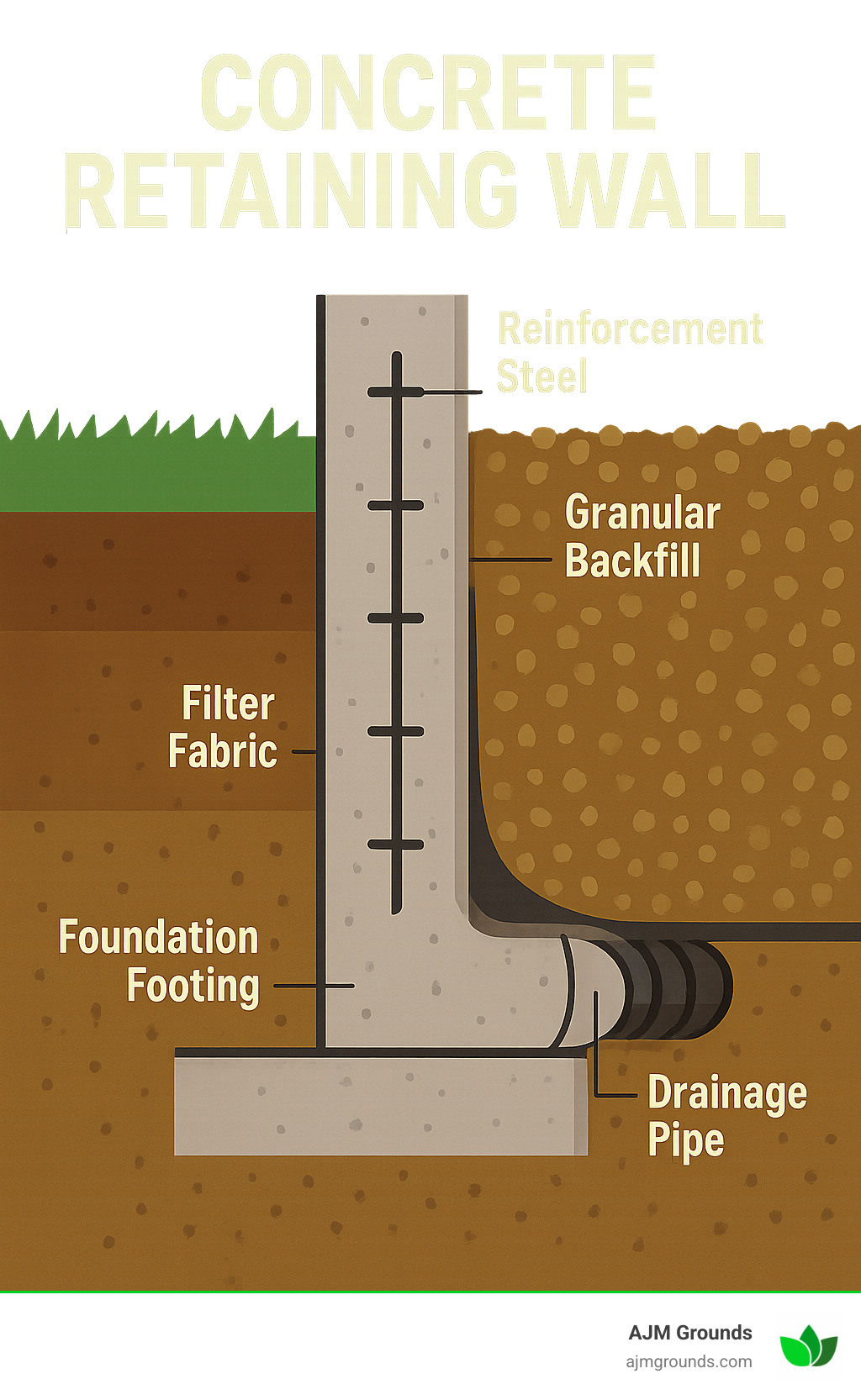
The actual construction process is where expertise really shows. Precise excavation ensures the foundation is the right depth and width for the soil conditions. Proper drainage installation with perforated pipes, filter fabric, and granular backfill prevents the water problems that kill most retaining walls. The foundation pour must be level and properly reinforced to handle the enormous loads these walls face.
During wall construction, professional builders follow engineering specifications exactly—no shortcuts on reinforcement or curing time. The backfilling process requires careful attention to compaction and drainage material placement. Finally, surface grading and erosion control measures protect the investment for years to come.
What sets professional contractors apart is their quality control at every phase. They inspect concrete strength, verify drainage installation, and confirm proper reinforcement placement before moving to the next step. This systematic approach is why professional installations last 50-100 years while DIY attempts often fail within a decade.
Choosing Concrete Retaining Wall Builders Checklist
Selecting the right contractor can feel overwhelming, but focusing on a few key qualifications will help you find concrete retaining wall builders who deliver lasting results. The most important factor is valid licensing and insurance—always verify these are current before any work begins.
A thorough portfolio review tells you more about a contractor’s capabilities than any sales pitch. Look for completed projects similar to yours in size and complexity. Don’t just look at photos—ask for addresses and drive by to see how walls are holding up after several years.
References from recent clients provide invaluable insights into the contractor’s work quality and professionalism. Ask specific questions about timeline adherence, cleanup, and how well the finished wall has performed.
Insist on detailed written estimates that break down materials, labor, and timeline. Vague proposals often lead to costly surprises later. The estimate should include specific drainage plans—if drainage isn’t mentioned, that’s a red flag.
Warranty coverage varies significantly between contractors. Look for clear terms covering both materials and workmanship, typically 2-5 years for quality installations. Some contractors even offer longer warranties on their concrete work.
Watch out for door-to-door solicitors, requests for full payment upfront, or estimates significantly below market rates. If a contractor can’t provide proper licensing, insurance, or references, keep looking. For properties that have experienced issues, contractors experienced in retaining wall repairs can often identify and fix underlying problems that caused original failures.
Engineering & Permit Essentials for Concrete Retaining Wall Builders
Understanding when engineering and permits are required helps you work effectively with qualified contractors and avoid legal headaches down the road. In most Massachusetts communities, the 4-foot rule applies—walls over this height require stamped engineering plans and building permits.
Professional concrete retaining wall builders handle the entire permit process, including structural calculations for load analysis and foundation sizing. Engineers also design drainage systems to manage hydrostatic pressure and perform soil analysis to determine bearing capacity and stability requirements.
The inspection process typically includes foundation inspection before concrete is poured and final inspection after completion. Experienced contractors coordinate these inspections seamlessly, ensuring no delays in your project timeline.
Safety factors built into engineered designs account for unexpected loads, soil changes, and extreme weather events. This isn’t over-engineering—it’s protecting your investment and ensuring public safety. For reference, Contra Costa County’s retaining wall guidelines provide excellent examples of proper engineering requirements.
Projects on challenging terrain require additional considerations. Contractors specializing in retaining walls for slopes understand the complex engineering needed for hillside stability and proper drainage management.
Drainage & Soil Factors That Make or Break a Wall
Here’s the truth about retaining wall failures: poor drainage kills more walls than any other factor. I’ve seen expensive, beautifully built walls fail within years because contractors skipped proper drainage design. Conversely, walls with excellent drainage continue performing flawlessly after decades.
The foundation of good drainage starts with perforated drain pipes installed behind the wall to collect and redirect water away from the structure. Filter fabric prevents soil particles from clogging these drainage systems over time. Granular backfill using crushed stone or gravel provides free-draining material that doesn’t retain water against the wall.
Weep holes allow water to escape through the wall face, preventing hydrostatic pressure buildup. Surface drainage systems direct runoff away from the wall area before it can saturate the soil behind the structure.
Soil conditions present their own challenges that experienced concrete retaining wall builders know how to handle. Clay soils are particularly problematic because they expand dramatically when wet, exerting enormous pressure on walls. Frost-susceptible soils can heave during freeze-thaw cycles, potentially damaging wall structures.
Organic soils may settle significantly over time, affecting wall stability and requiring special foundation considerations. Rock or hardpan layers may require special excavation techniques and equipment.
For challenging conditions, professional contractors may recommend advanced solutions like tie-backs, soil nails, or geogrid reinforcement to ensure long-term stability. These aren’t always necessary, but when they are, they’re the difference between success and failure.
The key is working with contractors who understand these factors and design drainage systems accordingly. Proper drainage isn’t expensive compared to wall replacement, but it’s absolutely critical for long-term performance.
Design Inspiration & Aesthetic Options
Gone are the days when concrete retaining walls meant boring gray slabs dominating your landscape. Today’s concrete retaining wall builders have transformed these essential structures into stunning design features that improve rather than hide in your outdoor space.
The aesthetic possibilities are truly exciting. Textured forms can give your wall the appearance of natural wood grain, weathered stone, or classic brick—all while maintaining concrete’s superior durability. We’ve worked with homeowners in Winchester who were amazed when their new concrete wall looked exactly like expensive natural stone but cost significantly less.
Colored concrete opens up even more creative possibilities. Whether you want earth tones that blend seamlessly with your landscape or bold colors that make a statement, integral coloring and staining techniques can achieve virtually any look you envision.
For the ultimate in sophistication, stone veneer applications allow you to apply real natural stone or high-quality manufactured stone over the concrete structure. This gives you the authentic appearance of a solid stone wall with the engineering strength and longevity that only concrete can provide.
Exposed aggregate finishes reveal beautiful decorative stones within the concrete surface, creating texture and visual interest that changes throughout the day as light and shadows shift. This technique works particularly well for walls that will be viewed up close, such as those around patios or garden areas.
When we design walls for our clients across the greater Woburn area, we always consider how the retaining wall will complement the home’s architecture and existing landscape. A well-designed wall should feel like a natural part of your property, not an afterthought. For comprehensive design inspiration, our landscape retaining walls showcase demonstrates how concrete walls can become beautiful focal points.
Adding Function With Style
The most successful retaining wall projects we’ve completed serve multiple purposes beyond just holding back soil. Smart design can transform a necessary structural element into your favorite outdoor feature.
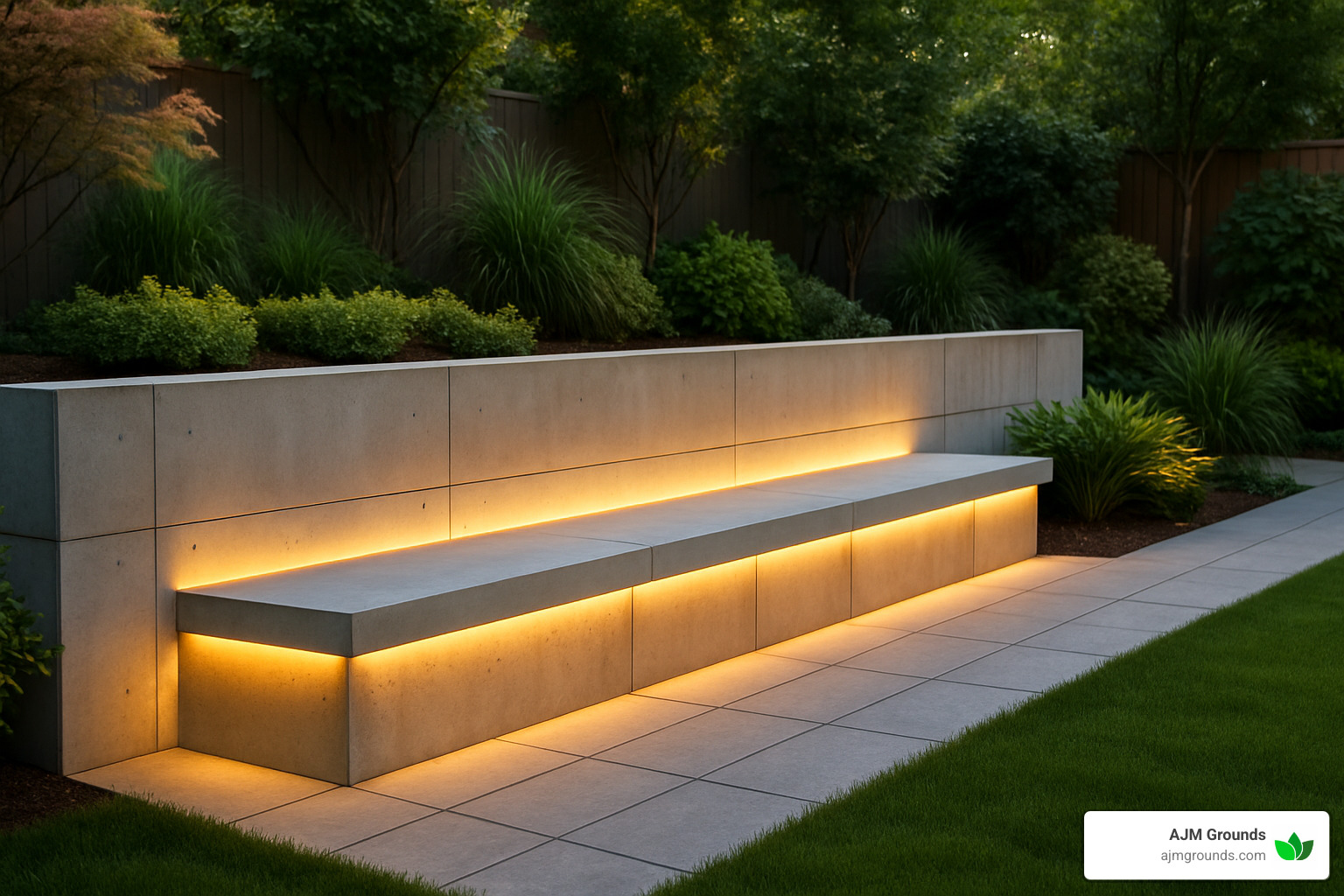
Integrated seating turns retaining walls into comfortable gathering spaces. We typically build these walls 18-24 inches wide and at a comfortable sitting height, creating perfect spots for morning coffee in the garden or evening conversations under the stars. The thermal mass of concrete even provides natural warming on cool evenings.
Tiered planter areas are perhaps our most popular upgrade. By creating stepped walls at different heights, we can design beautiful terraced gardens that showcase your favorite plants while softening the wall’s appearance. These planters work especially well for displaying seasonal flowers or creating herb gardens within easy reach of your kitchen.
Lighting integration completely transforms how your outdoor space feels after dark. LED strip lighting along the top of walls creates dramatic uplighting effects, while built-in fixtures can provide both safety lighting and stunning visual appeal. We’ve seen clients fall in love with their backyards all over again once they experience how beautiful proper wall lighting can be.
Water features add the soothing sound of moving water to your landscape. Whether it’s a simple spillway between terraced levels or an elaborate fountain integrated into the wall face, water elements create focal points that draw attention and provide natural relaxation.
For clients planning extensive outdoor entertaining areas, retaining walls can provide structural support for outdoor kitchens or pizza ovens. The wall creates a natural windscreen while hiding utility connections and providing a backdrop for your cooking area.
Case Studies & Success Stories
Last year, we worked with a family in Lexington whose steep backyard had been completely unusable for their young children. Their previous attempts at landscaping kept washing away during heavy rains, and the slope was simply too steep for safe play.
By installing a series of concrete retaining wall builders-designed walls using colored concrete blocks, we created three distinct level areas. The upper terrace became a beautiful patio space with integrated seating walls perfect for adult relaxation. The middle level transformed into a safe play area where the kids could run and play games without worrying about the slope. The lower terrace became mom’s dream vegetable garden, with built-in planters that made maintenance easy.
The total change added over 1,200 square feet of usable outdoor space to their property. More importantly, it created outdoor areas the whole family actually uses and enjoys. The integrated lighting system means evening barbecues and outdoor games continue well past sunset.
We’ve also worked on larger commercial projects that demonstrate the engineering capabilities available for challenging residential applications. A recent project with Foremost Landscapes & Services involved stabilizing a major slope that was threatening a commercial parking area. The engineered concrete wall solution not only solved the safety issue but created additional revenue-generating parking spaces.
These success stories show how professional concrete retaining wall builders can transform problem areas into valuable, beautiful spaces that improve both your lifestyle and your property value.
Frequently Asked Questions about Concrete Retaining Wall Projects
When we meet with homeowners in Woburn and the surrounding communities, we hear many of the same questions about concrete retaining walls. These concerns are completely understandable—you’re making a significant investment that will affect your property for decades to come.
Let me address the most common questions we encounter, drawing from our years of experience helping Massachusetts homeowners work with qualified concrete retaining wall builders.
How long will my concrete retaining wall last?
This is probably the question we hear most often, and it’s a great one to ask. Properly constructed concrete retaining walls have a design lifespan of 50-100 years—which makes them one of the longest-lasting improvements you can make to your property.
But here’s the thing: that impressive lifespan depends entirely on getting the fundamentals right from day one. Quality construction means following engineering specifications precisely, not cutting corners on materials or installation steps. We’ve seen contractors skip crucial steps like proper compaction or drainage installation, and those walls start showing problems within just a few years.
Proper drainage is absolutely critical. Without adequate water management, even the strongest concrete wall will eventually fail as hydrostatic pressure builds up behind it. The walls we see lasting 60+ years all have one thing in common—excellent drainage systems that were installed correctly from the beginning.
Your local climate matters too. Here in New England, we deal with freeze-thaw cycles that can be particularly hard on retaining walls. That’s why using appropriate concrete mixes designed for our climate conditions is so important. The concrete needs to be able to handle our temperature swings and moisture levels.
Finally, regular maintenance plays a role, though it’s minimal compared to other materials. We recommend simple annual inspections and clearing debris from drainage systems. It’s amazing how a little preventive care can help a wall reach that full 100-year potential.
What affects the final price of a retaining wall?
I wish I could give you a simple answer, but retaining wall costs vary tremendously based on your specific situation. Based on internet data, you might see anything from $20 per square foot for basic walls up to $150+ per square foot for complex engineered structures—and some specialty projects can cost even more.
Height and length are the biggest factors. Basic walls under 4 feet might average $20-$50 per square foot, while engineered walls over 6 feet can easily reach $75-$150+ per square foot. Once you get above 4 feet, you’re typically looking at engineering requirements, permits, and more complex construction methods.
Site conditions can dramatically impact your final cost. If we need to bring equipment through your neighbor’s yard, hand-carry materials, or deal with challenging soil conditions, costs can increase by 25-50% or more. Poor drainage or unstable soil might require special foundation work or additional reinforcement.
The materials and finishes you choose make a big difference too. A basic concrete block wall costs significantly less than poured concrete with decorative textures or stone veneer. But remember, the structural components—foundation, drainage, reinforcement—represent the bulk of your investment regardless of the finish.
Engineering requirements add $2,000-$5,000 in design fees for walls that need professional structural design. Permits and inspections typically run $200-$800 depending on your local municipality’s requirements.
These are average costs based on internet data and not actual costs for AJM Grounds services.
Can I DIY a small concrete wall, or should I hire pros?
I get this question a lot, especially from handy homeowners who’ve tackled other outdoor projects successfully. My honest answer? It depends on what you’re building and how comfortable you are with some pretty serious consequences if things go wrong.
For small decorative walls under 3 feet that aren’t holding back significant soil loads, an experienced DIYer might be able to handle the project. Think garden borders or low landscape features that are more about aesthetics than structural function.
But for anything that’s truly retaining soil and creating usable space, I strongly recommend working with professional concrete retaining wall builders. Here’s why: retaining wall failure isn’t just expensive—it can be dangerous. We’ve seen walls collapse and damage property, and in worst cases, create safety hazards for people and pets.
The technical complexity involved surprises most people. Proper drainage design, foundation sizing, reinforcement placement, and concrete curing all require specialized knowledge. Small mistakes in any of these areas often don’t show up for several years, by which time repairs are much more expensive than doing it right initially.
Code compliance is another consideration. Most communities require permits and inspections for walls over 3-4 feet, which means you’ll need professional involvement anyway. Even if your wall is shorter, local codes might have specific requirements about setbacks, drainage, or construction methods.
Finally, there’s the equipment factor. Proper excavation, concrete mixing, and placement require tools that most homeowners don’t have access to. Renting everything you need for a weekend project often costs more than you’d expect.
My advice? If you’re thinking about DIY, start by getting a consultation with experienced contractors. Understanding what’s involved might help you decide whether it’s a project you want to tackle yourself or invest in professional installation for long-term peace of mind.
Conclusion
When you’re ready to invest in a retaining wall, choosing experienced concrete retaining wall builders makes all the difference between a project that transforms your property and one that becomes a costly headache. We’ve seen too many homeowners learn this lesson the hard way—beautiful walls that crack within years because corners were cut on drainage, or expensive repairs needed because the foundation wasn’t properly engineered.
At AJM Grounds, we believe every retaining wall project tells a unique story. Maybe you’re dealing with that steep slope in your Woburn backyard that’s been washing away after every storm. Perhaps you’re dreaming of creating a level patio space in Winchester where your family can actually enjoy the outdoors. Or you might be looking to add both function and beauty to your landscape while protecting your property investment.
Whatever brought you to consider a concrete retaining wall, we’re here to guide you through the process with the personalized service and attention to detail that sets us apart. We take time to understand not just what you need, but what you envision for your outdoor space. Because the best retaining walls don’t just solve problems—they create opportunities.
The engineering might seem complex, and the decisions about materials and design can feel overwhelming. But that’s exactly why working with experienced professionals matters. We handle the technical details, steer the permit process, and ensure your wall is built to last decades, not just seasons.
Your property deserves the peace of mind that comes with professional installation. When you see your transformed landscape—whether it’s new garden terraces, a stable slope, or simply the confidence that your soil will stay where it belongs—you’ll understand why investing in quality concrete retaining wall builders was the right choice.
Ready to explore what’s possible for your property? Visit our retaining wall construction page to learn more about how we can help turn your vision into reality.
A well-built concrete retaining wall is more than just a functional necessity—it’s an investment in your property’s value, safety, and beauty that will serve you for generations.
