

Why Commercial Properties Need Professional Concrete Retaining Walls
Concrete commercial retaining wall installation is the process of building engineered structures that hold back soil and create usable space for businesses. Here’s what you need to know:
Key Steps in Commercial Installation:
– Site analysis and geotechnical evaluation
– Engineering design with proper load calculations
– Excavation and foundation preparation
– Wall construction with reinforcement
– Drainage system integration
– Backfill and compaction to 95% Standard Proctor
Critical Requirements:
– Licensed engineer approval for walls over 4 feet
– Building permits and code compliance
– Proper drainage to prevent failure
– Commercial-grade materials (3000+ PSI concrete)
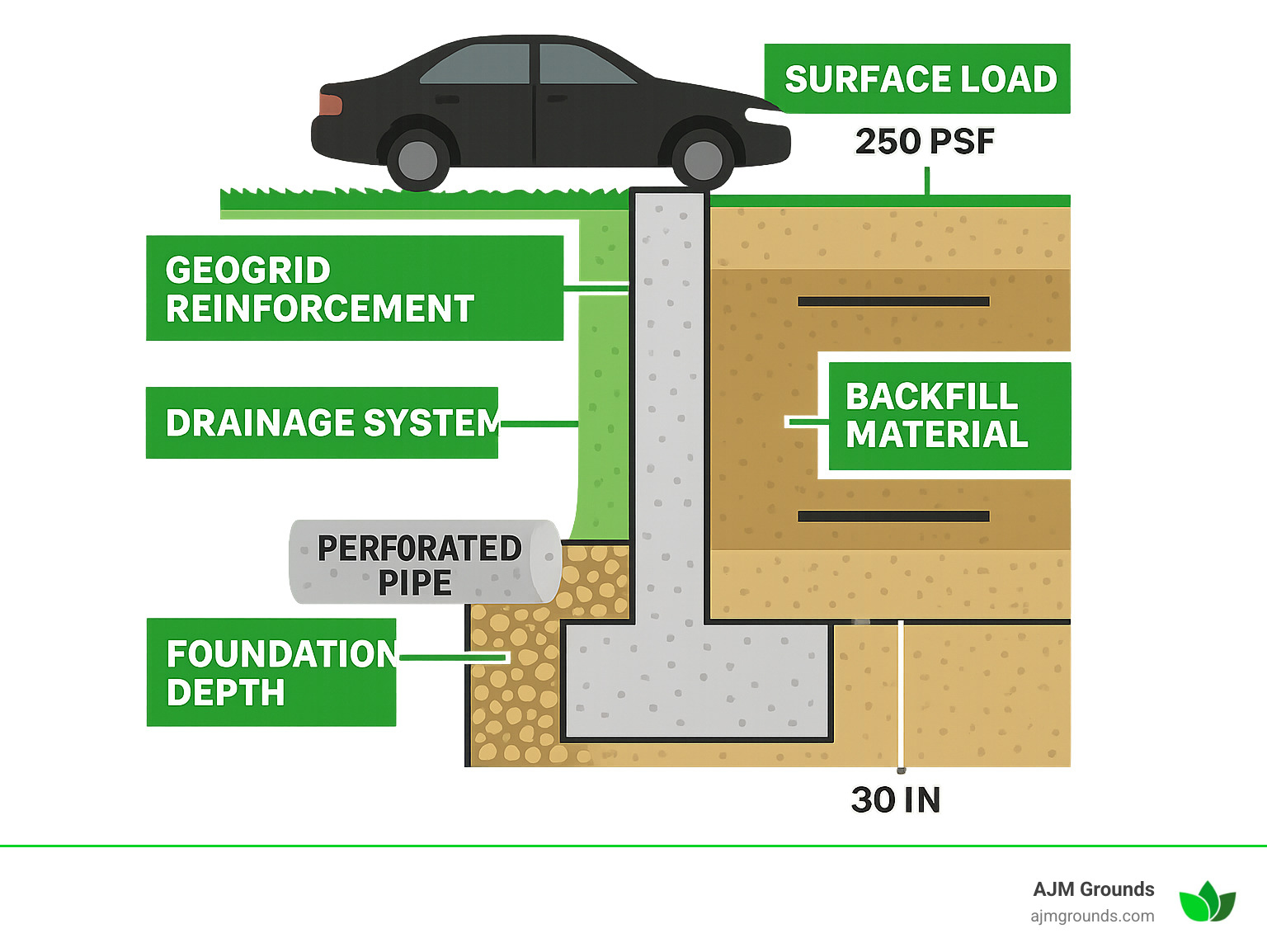
Commercial retaining walls transform steep, unusable slopes into valuable parking areas, loading zones, and landscaped spaces. They must handle heavy surcharge loads from vehicles (typically 250 PSF for commercial areas), resist frost heave, and manage stormwater runoff. When properly installed, concrete retaining walls last 50-100 years with minimal maintenance.
Poor installation leads to expensive failures. Without proper drainage, walls can collapse from water pressure buildup. That’s why commercial projects require professional expertise from day one.
I’m John Caplis, owner of AJM Grounds LLC, and I’ve helped numerous commercial clients in Woburn successfully steer concrete commercial retaining wall installation projects. My team combines engineering knowledge with hands-on construction experience to deliver walls that perform reliably for decades.
Must-know concrete commercial retaining wall installation terms:
– block wall installation
– retaining wall builders near me
– how to install a block retaining wall
Understanding Commercial Concrete Retaining Walls
When we talk about concrete commercial retaining wall installation, we’re discussing serious engineering. A commercial concrete retaining wall is a load-bearing structure designed to handle massive lateral soil pressure while creating stable, usable space that can support heavy commercial activities.
These walls resist enormous forces that soil creates when it wants to move downhill while serving multiple functions: stabilizing slopes, expanding parking and operational space, and managing stormwater runoff. Commercial sites typically require walls to handle 100-250 PSF (pounds per square foot) from vehicles, equipment, and stored materials, plus frost heave and constant pressure from saturated soil.
Modern commercial retaining walls can seamlessly blend with landscaping and hardscaping features, turning potential eyesores into attractive property features that improve curb appeal.
For detailed information about professional installation approaches, check out our Concrete Retaining Wall Builders page.
Key Functions & Advantages of Concrete Walls
Soil retention under extreme conditions is where concrete walls truly shine. Commercial walls must be load-bearing structures first, handling whatever commercial life throws at them.
Parking lot expansion represents one of the most valuable applications. By creating stable, lifted areas with retaining walls, businesses can dramatically increase usable space. I’ve helped clients add dozens of parking spots by properly retaining slopes that were previously unusable.
Erosion control becomes critical when considering water runoff from commercial roofs, parking lots, and surrounding slopes. A properly designed concrete wall manages water flow and prevents soil loss that can undermine building foundations.
The lifespan advantage is substantial. Well-constructed concrete retaining walls last 50-100 years with proper installation and drainage, making them incredibly cost-effective over their lifetime.
Main Types & Systems Used in Commercial Settings
Gravity walls rely on their own weight and setback geometry to resist soil pressure, working well for moderate heights in good soil conditions.
Mechanically Stabilized Earth (MSE) walls with geogrid reinforcement can reach impressive heights – over 50 feet when properly engineered. The geogrid layers extend back into the backfill soil, creating a reinforced mass that’s much more stable.
Cantilever walls use an L-shaped concrete footing to resist overturning forces, representing a sweet spot for many mid-height commercial applications.
Counterfort walls add triangular supports on the back face at regular intervals for very tall installations.
Segmental block systems offer flexibility and speed. Modern precast panel systems can be engineered for significant heights when combined with geogrid reinforcement.
The key is matching the wall system to your specific site conditions, height requirements, and load expectations.
Planning & Engineering for Success
Concrete commercial retaining wall installation planning requires comprehensive site analysis starting with a geotechnical report that identifies soil classification, bearing capacity, and water table location – three factors determining whether your wall stands strong for decades.
Soil classification directly affects project success and cost. Clay soils hold water and push harder against walls, creating higher lateral pressures. Sandy soils drain better but might need deeper foundations. The internal friction angle ranges from 27 degrees for clay to 36 degrees for sand and gravel, driving our stability calculations.
Commercial sites face much heavier loads than residential properties. We design for surcharge loads of 250 PSF in areas where vehicles will operate and 100 PSF for pedestrian areas. Global stability analysis ensures the whole hillside won’t move, not just the area immediately behind the wall.
Drainage design is absolutely critical – poor drainage causes more retaining wall failures than any other factor. Our drainage systems use filter fabric, strategically placed weep holes, and perforated pipe to keep water moving safely away from the wall.
Code compliance and permitting protect everyone involved. In Massachusetts, walls over 4 feet require a licensed engineer’s seal, and building departments carefully review commercial projects for International Building Code compliance.
For comprehensive information about drainage solutions, check out this Scientific research on drainage design.
How Site Preparation & Excavation Impact Performance
Site preparation makes or breaks every project. Cut and fill operations require careful planning, calculating excavation depth based on wall height, local frost line requirements, and soil conditions. Here in Massachusetts, we typically dig below the 4-foot frost line.
Trench dimensions matter significantly. We need space for the wall footing plus room for safe, effective work. A good rule of thumb is burying the first course about one-tenth of the total wall height.
Our crushed stone base uses clean, angular stone compacted to 95% Standard Proctor density, creating a stable, well-draining foundation. Compaction standards are non-negotiable – every lift of backfill goes down in 8-inch layers and gets compacted to 95% Standard Proctor density.
Engineering Checklist for concrete commercial retaining wall installation
Concrete strength starts at 3000 PSI minimum for commercial applications, with proper air entrainment for New England weather. Rebar layout follows engineered patterns with typical spacing every 16 inches on center. The reinforcement ties directly into the footing to resist overturning forces.
For reinforced walls, geogrid spacing and embedment length are calculated precisely, typically extending at least 60% of wall height into the backfill. Factor of safety calculations ensure performance under all expected conditions – we design for factors of safety of 1.5 for overturning, 1.5 for sliding, and 2.0 for bearing capacity.
Planning for barrier loads during design is much easier than adding them later.
Concrete Commercial Retaining Wall Installation: Step-by-Step Guide
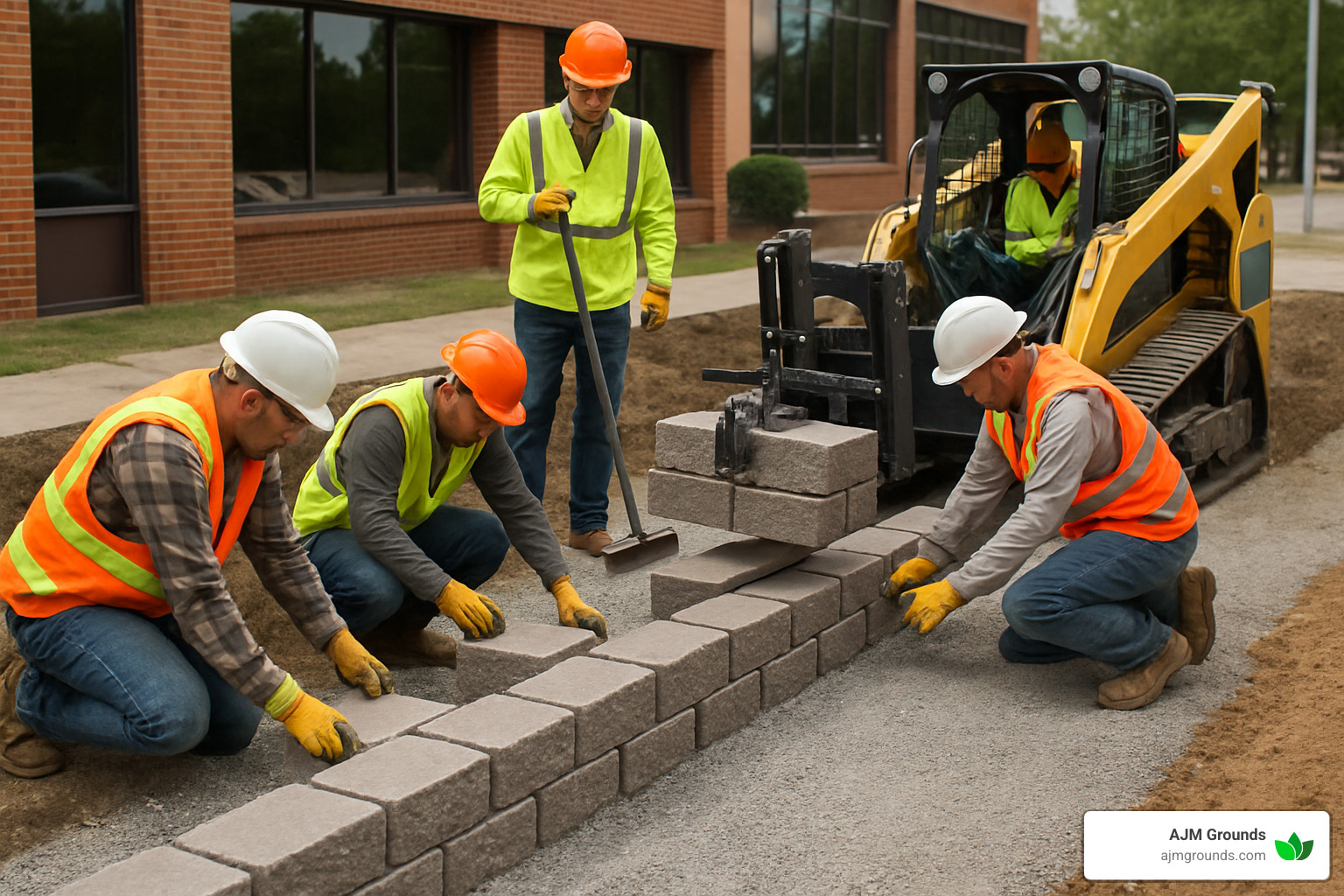
The installation process follows a precise sequence that cannot be rushed. Each step builds on the previous work, and shortcuts inevitably lead to problems.
We begin with precise layout using stakes, string lines, and laser levels. Excavation proceeds according to engineered specifications, removing all organic material and loose soil. Base preparation involves placing and compacting crushed stone in lifts, testing compaction with nuclear density gauges to ensure 95% Standard Proctor density.
The installation workflow follows proven sequences that maximize efficiency while maintaining quality, with each crew member having specific responsibilities and checklists ensuring nothing is missed.
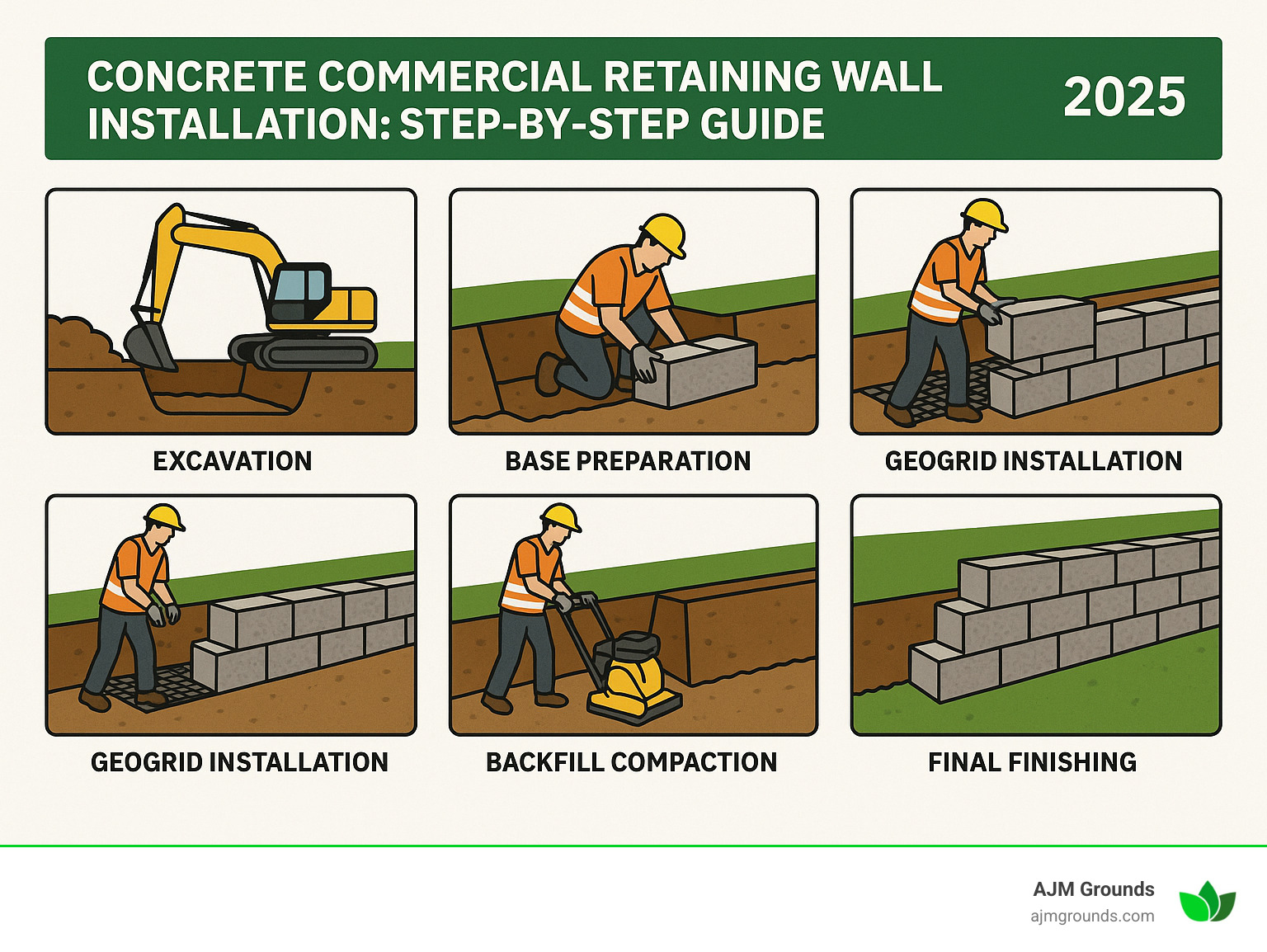
1. Foundations & Footings for Concrete Commercial Retaining Wall Installation
Getting the foundation right is absolutely critical for concrete commercial retaining wall installation. Foundation work determines whether your wall lasts 5 years or 50 years.
Foundation excavation starts with reaching truly solid ground – undisturbed soil or properly engineered fill. We dig down factoring in footing thickness, base material layer, and frost protection requirements. Here in Massachusetts, frost line consideration is especially important.
The footing key extends below the base slab and locks into undisturbed soil below, acting as a mechanical anchor preventing the entire wall from sliding horizontally under soil pressure. Stem thickness uses a minimum of 12 inches for most commercial applications, often thicker depending on wall height and loads.
Damp-proofing the soil-contact face protects your investment for decades. We apply cementitious waterproofing materials that create permanent bonds with concrete and resist hydrostatic pressure from groundwater.
Foundation work sets the stage for everything that follows. Take the time to do it right, and your commercial retaining wall will serve your property reliably for generations.
2. Wall Assembly & Reinforcement
Wall assembly transforms engineering plans into solid, lasting structures. Concrete commercial retaining wall installation requires precision at every step.
Block stacking follows specific patterns for strength. We offset vertical joints by at least 3 inches between each course, using string lines and levels to ensure every block sits exactly where it should.
Setback control makes the difference between a wall that stands strong and one that tips over. Most segmental block systems have built-in setback of 6-12 degrees – the wall appears to lean backward slightly, but that’s intentional engineering.
Rebar tie-in work connects everything together. Reinforcement steel must splice and tie according to ACI standards, maintaining proper concrete cover to prevent corrosion while ensuring steel and concrete work together.
Geosynthetic layers get placed at calculated intervals with geogrid pulled tight and secured properly. The embedment length typically runs 60% of wall height – this isn’t negotiable.
No-fines concrete offers an alternative for certain projects, using about 500 pounds of cementitious material per cubic yard and bonding directly to block faces.
Each reinforcement decision impacts the wall’s ability to handle commercial loads for the next 50-100 years.
3. Drainage & Backfill Integration
Getting drainage right is where many concrete commercial retaining wall installation projects succeed or fail. With the right approach, your drainage system will keep your wall performing perfectly for decades.
Clean stone backfill forms the drainage system backbone. We use angular, well-graded stone that compacts solidly for structural support while letting water flow freely. The stone extends from the wall base to at least 18 inches behind the wall face.
Perforated pipe installation requires careful attention to grades and connections. We maintain consistent slopes directing water toward outlets, surrounding pipe with clean stone and wrapping with filter fabric.
Vent-to-daylight requirements aren’t optional. Every drainage system needs clear paths for water to exit without creating pressure buildup. We install cleanouts at direction changes and protect outlets from freezing and debris.
Geotextile fabric acts like a coffee filter between drainage stone and general backfill soil, preventing fine soil particles from migrating into the drainage system over time.
Slope grading provides the final piece. Surface water needs to flow away from your wall – we create grades that slope at least 2% away from the wall for a minimum distance of 10 feet.
For comprehensive drainage solutions that work seamlessly with retaining walls, visit our Landscape Drainage Solutions page.
4. Finishes, Safety & Site Features
The final phase of concrete commercial retaining wall installation transforms a functional structure into an attractive, safe, and fully integrated part of your commercial property.
Form liners and stains open up possibilities for concrete walls that need to blend with existing architecture. We can create surfaces that look like natural stone, aged brick, or wood grain patterns. Popular commercial finishes include smooth architectural surfaces for modern buildings and natural stone textures for traditional settings.
Rail posts directly into hollow-core blocks create incredibly strong connections. Instead of drilling into finished concrete, we place posts during construction and fill cores with concrete around anchors.
Guardrails aren’t just about code requirements – they create concentrated loads that can affect wall stability if not properly engineered. We coordinate with structural engineers to ensure walls can handle both soil pressure and railing loads safely.
Stairs and ramps deserve special attention for ADA compliance. Proper integration during construction creates smooth transitions that last.
Lighting integration during wall construction costs a fraction of retrofitting later. Whether for security or aesthetics, planning ahead saves money and creates better results.
Final landscaping and parking lot tie-ins bring everything together, coordinating drainage slopes, curb connections, and landscape areas to ensure your investment performs beautifully for decades.
Cost, Codes, and Lifecycle Maintenance
The real costs of concrete commercial retaining wall installation depend on several key factors. Material selection, wall height, and site accessibility can dramatically affect your bottom line.
Based on average internet data (not AJM Grounds pricing), you’re looking at $50-$150 per square foot for standard commercial installations. Complex projects with extensive reinforcement, difficult access, or premium finishes can reach $300+ per square foot.
The return on investment is where concrete walls really shine. You’re creating usable space – parking lot expansion means more customer spots or rental income. These walls typically last 50-100 years with minimal maintenance, making them one of the smartest long-term investments.
Permit costs and timelines add to your budget but are non-negotiable. In Massachusetts, we typically see 4-6 weeks for permit approval on commercial projects.
| Wall Type | Typical Cost Range | Best For | Key Advantages |
|---|---|---|---|
| Segmental Block | $50-$120/sq ft | Mid-height walls | Fast installation, attractive |
| Poured Concrete | $75-$180/sq ft | Tall walls, custom shapes | Maximum strength, design flexibility |
| Precast Panels | $90-$200/sq ft | Large projects | Consistent quality, faster installation |
How Regulations Shape Concrete Commercial Retaining Wall Installation
Building codes keep your wall standing and people safe. The International Building Code (IBC) sets the foundation, but local requirements can be stricter.
Walls over 4 feet typically require an engineer’s seal – this isn’t optional. Surcharge load requirements are critical: 250 PSF for areas with vehicle traffic and 100 PSF for pedestrian-only areas.
ADA compliance affects walls in public areas. Stormwater regulations are becoming stricter, with many projects requiring stormwater management plans addressing runoff from new parking areas.
For professional installation meeting all regulatory requirements, check out our Retaining Wall Construction services.
Long-Term Care & Common Mistakes to Avoid
The biggest mistake? Skimping on drainage. Walls that look perfect during construction can fail within years if water builds up behind them.
Poor compaction is another silent killer. Loose backfill settles over time, creating voids allowing water accumulation and soil movement.
Many clients underestimate future loads. Conservative design provides safety margins for changing business needs.
Freeze-thaw damage is real in Massachusetts. We design for severe exposure conditions ensuring drainage systems won’t freeze and block water flow.
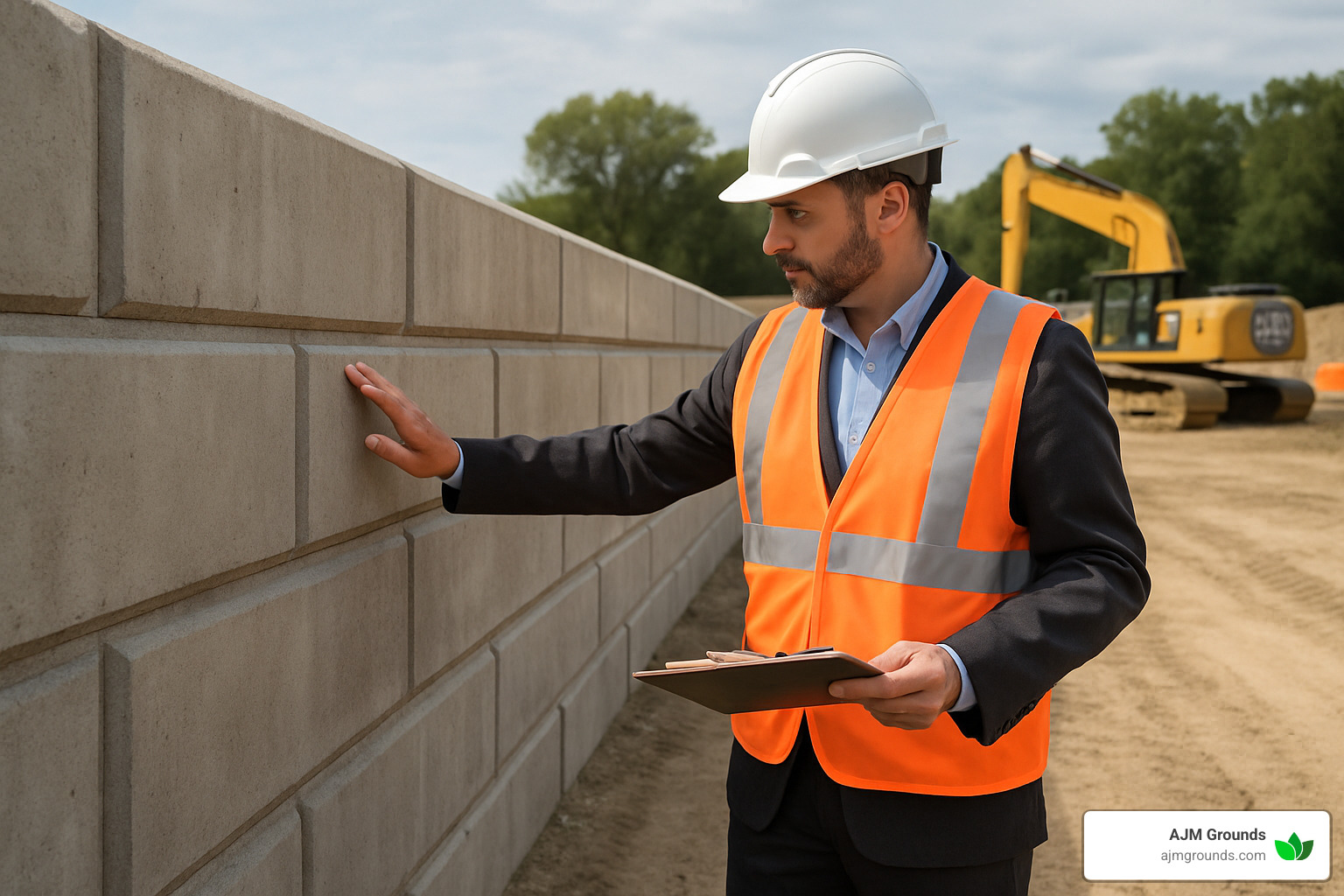
Annual inspections are your best insurance policy. Check for settlement, cracking, drainage function, and vegetation encroachment. A properly installed concrete commercial wall needs very little maintenance, but the key word is “properly” – cutting corners during installation creates expensive problems later.
Frequently Asked Questions about Commercial Concrete Retaining Walls
What height triggers engineering & permits?
Most places require a professional engineer once your wall hits 4 feet in height. But in Massachusetts, I tell commercial clients to consider engineering even for 3-foot walls because commercial properties face much tougher demands than residential ones.
It’s not just about height – it’s about consequences if something goes wrong. Commercial walls need to handle delivery trucks, employee parking, and potentially thousands of visitors. Even shorter wall failures could shut down your business or create liability issues.
The concrete commercial retaining wall installation process for commercial properties almost always needs permits, regardless of height. Building departments take commercial projects seriously because public safety is involved.
How long does a concrete commercial wall really last?
Think in terms of generations, not years. A properly built concrete retaining wall will last 50 to 100 years with basic maintenance. That’s longer than most commercial buildings themselves!
The secret is in proper details: excellent drainage keeps water pressure from building up, quality concrete with proper air entrainment survives harsh Massachusetts winters, and adequate reinforcement cover prevents rust that could crack concrete from inside.
I’ve inspected walls built in the 1960s that still look and perform like new. The maintenance is refreshingly simple: walk the wall once a year, check that drainage outlets are clear, and fix small issues promptly.
Can a retaining wall be combined with landscaping and parking expansion?
This is where retaining walls really shine for commercial properties! The best projects combine structural support, expanded parking, and attractive landscaping into one cohesive design.
Parking lot expansion is probably the most valuable application. A steep, unusable slope becomes level parking handling dozens of additional cars. For retail properties, that directly translates to more customers and higher revenue.
Landscaping integration adds finishing touches that make properties stand out. Instead of plain concrete walls, you get terraced planting areas managing stormwater runoff while creating attractive green spaces.
The key is planning everything together from day one, coordinating drainage systems, soil selection, and all elements during design for results that look like they were always meant to be there.
Conclusion
When considering concrete commercial retaining wall installation, you’re making a decision that will impact your property for decades. These aren’t just walls – they’re investments in your business’s future functionality and value.
The difference between success and costly failure comes down to doing things right from day one. Every aspect matters: initial site analysis revealing hidden challenges, engineering calculations ensuring long-term stability, and construction details that make all the difference.
I’ve seen too many commercial properties struggle with failed retaining walls that seemed fine during construction but developed serious problems within years. The common thread? Corners were cut somewhere in the process.
At AJM Grounds, our attention to detail and personalized service means we listen to your specific needs and design solutions for your property’s unique challenges. Whether you’re in Woburn, Bedford, Billerica, Burlington, Lexington, Reading, Stoneham, Wilmington, or Winchester, we understand local soil conditions, building codes, and weather patterns affecting retaining wall performance.
Commercial properties have demanding requirements that residential contractors often don’t fully appreciate. Your walls need to handle heavy vehicle loads, meet strict safety codes, and minimize business disruption during construction. Our systematic approach addresses these challenges while delivering results that perform reliably year after year.
The return on investment speaks for itself. A well-executed concrete commercial retaining wall installation creates valuable parking space, prevents erosion problems, and requires minimal maintenance over its 50-100 year lifespan.
Your commercial property deserves professional execution from start to finish. From initial consultation through final cleanup, we’re committed to delivering walls that improve your property’s value and functionality for generations to come.
Ready to transform your commercial property with professional retaining wall construction? Let’s discuss how our expertise can help you achieve your site development goals while avoiding common pitfalls that plague many projects.
For more information about our comprehensive retaining wall services, visit our Retaining Wall Construction page.
