

Commercial snow and ice management is crucial for maintaining safety, accessibility, and professionalism in business premises during the harsh winter months. This essential service ensures parking lots, sidewalks, and pathways are clear, preventing accidents and supporting smooth business operations.
Quick Answers on Commercial Snow and Ice Management:
- Safety: Prevents slips and falls, reducing liability risks.
- Accessibility: Keeps entryways and pathways clear for foot traffic.
- Professionalism: Regular management maintains a clean and presentable environment.
- Reliability: Offers timely service even during severe weather conditions.
Businesses that invest in robust snow and ice management enjoy a safer environment for customers and employees while projecting a professional image.
I’m John Caplis, owner of AJM Grounds in Woburn, MA. With years of experience in commercial snow and ice management, my team and I help businesses steer winter challenges effectively, ensuring properties are safe, accessible, and ready for business. Transitioning to the importance of these services, let’s explore how they mitigate risks and improve property value.
Commercial snow and ice management further reading:
– commercial snow management acton ma
– commercial snow plowing
Importance of Commercial Snow and Ice Management
Risk Management and Liability
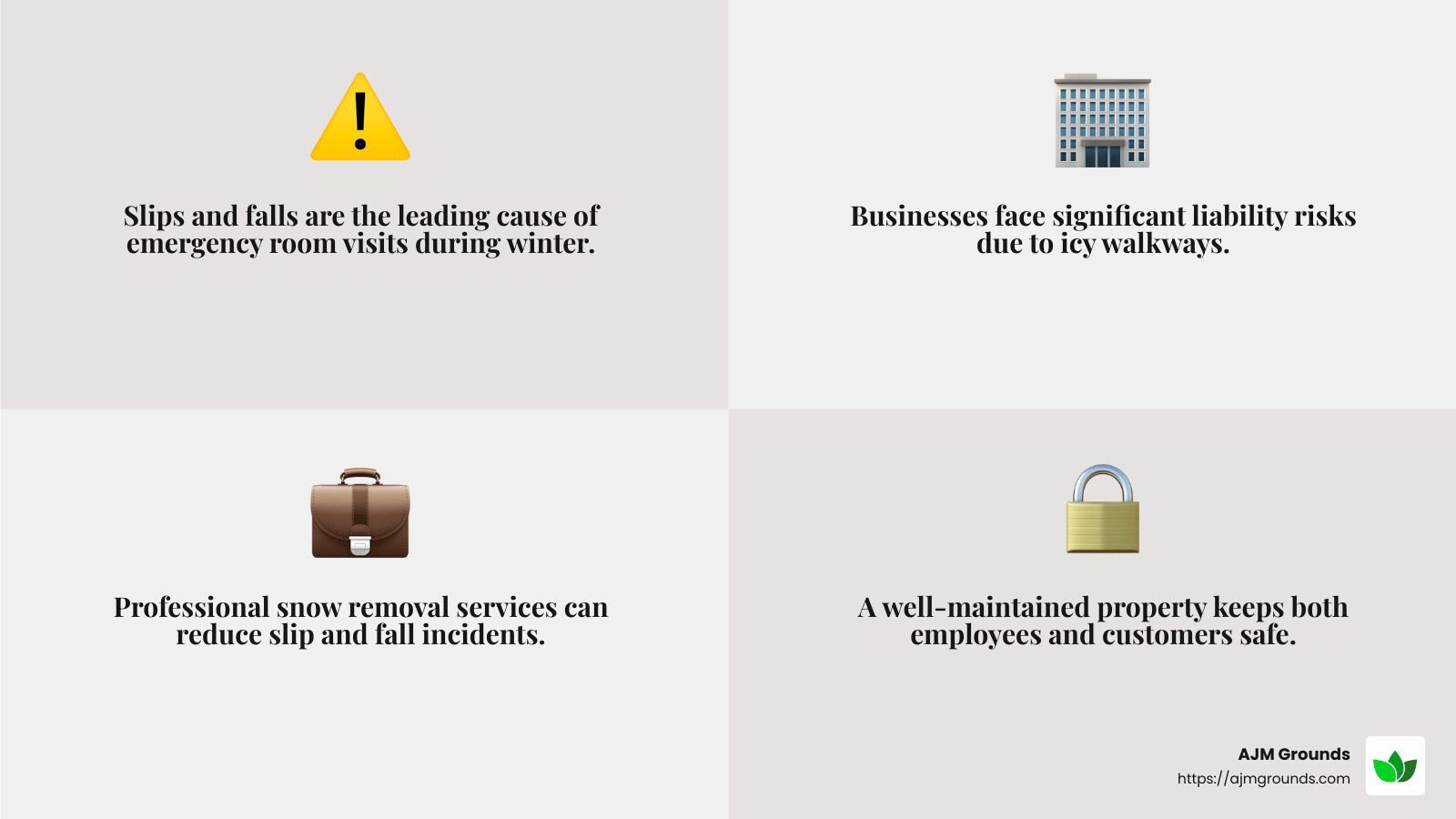
Managing snow and ice is not just about keeping your property looking neat. It’s about risk management. Slippery surfaces can lead to falls and injuries. For businesses, this means potential lawsuits and insurance claims. Susan Lesczynski from Walnut Capital Real Estate Services, Inc. shared that working with a professional snow removal service led to “worry-free winters” by effectively eliminating slips and falls.
By hiring a professional snow removal company, you reduce accidents and protect your business from liability. This is not just about saving money on potential lawsuits. It’s about keeping your customers and employees safe.
Ensuring Accessibility
When snow piles up, it can block entrances and make it hard for people to get in and out of your business. Accessibility is crucial for keeping your business running smoothly. James McCullough from American Eagle Outfitters emphasized the importance of a “hazardous-free environment” during winter months.
Professional snow and ice management services ensure that your driveways, parking lots, and sidewalks are clear. This means customers and employees can access your business safely and conveniently, even after a heavy snowfall.
Professional Image
A well-maintained property reflects a business’s commitment to professionalism. When you invest in commercial snow and ice management, you show that you care about your property and the people who visit it. This can improve your company’s image and reputation.
In summary, effective snow and ice management is about more than just clearing paths. It’s about managing risks, ensuring accessibility, and maintaining a professional appearance. Investing in these services can save you from costly liabilities and keep your business running smoothly during the winter months.
Key Components of a Successful Snow and Ice Management Program
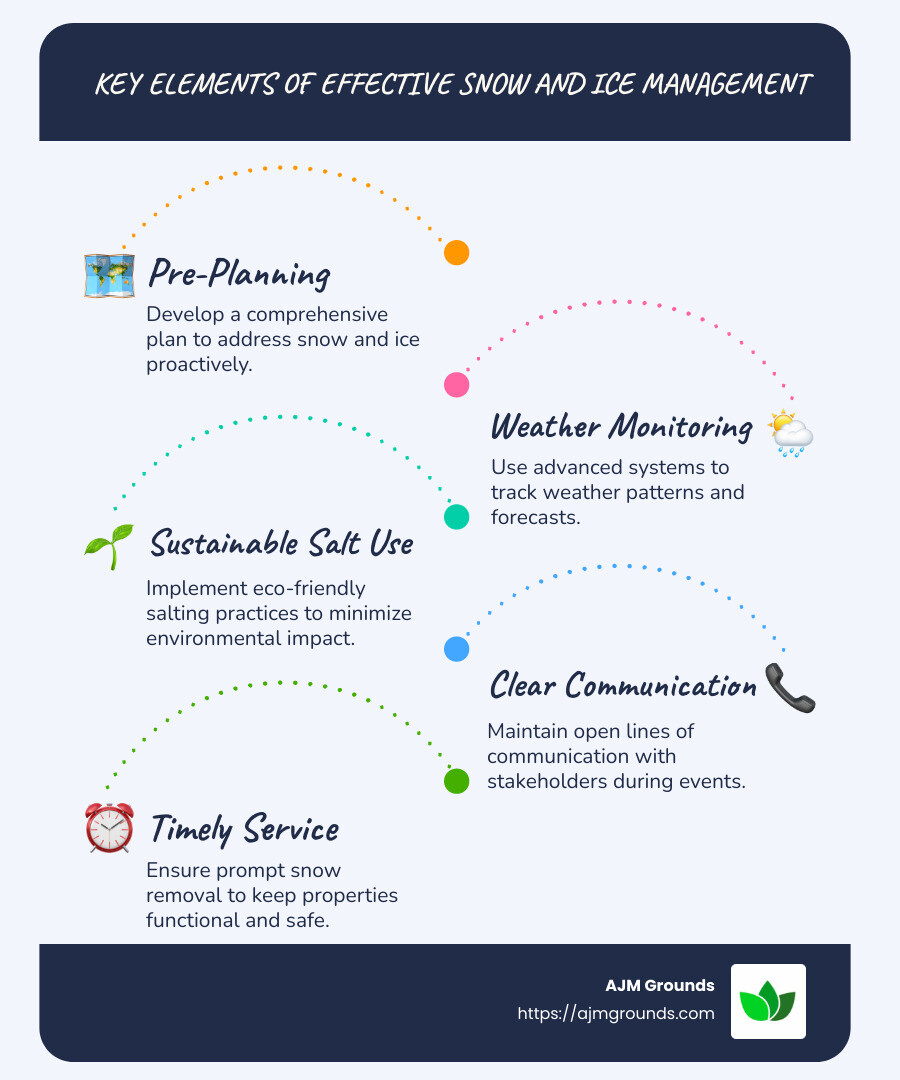
Creating an effective commercial snow and ice management program involves several critical components. Let’s explore the essentials: pre-planning, weather monitoring, and communication.
Pre-Planning
Pre-planning is the backbone of any successful snow and ice management strategy. Starting early is crucial. As Diane Batayeh from Village Green notes, buying supplies like salt well before the first snowstorm is essential. This ensures you’re prepared and not scrambling at the last minute.
Think of pre-planning as your roadmap for the winter. It involves assessing your property, identifying potential problem areas, and setting up a detailed action plan. This plan should cover everything from snow removal routes to equipment needs. The goal is to have a clear, actionable strategy before the snow hits.
Weather Monitoring
Accurate and timely weather monitoring is another key element. Knowing when and where snow and ice will occur allows you to act swiftly and effectively. This minimizes disruptions and keeps your property safe.
Use reliable weather monitoring tools and services to keep an eye on upcoming storms. This helps you mobilize your team and resources at the right time. As part of your program, ensure that you have systems in place for ongoing weather updates. This way, you can adjust your plans as needed and stay ahead of the weather.
Communication
Effective communication is critical to the success of your snow and ice management program. Establish clear lines of communication with your team and any external service providers. This ensures everyone is on the same page and can act quickly when conditions change.
For businesses, communicating with customers and employees is just as important. Keep them informed about your snow removal plans and any potential disruptions. This transparency builds trust and helps everyone feel prepared.
In summary, a well-rounded snow and ice management program is built on solid pre-planning, proactive weather monitoring, and clear communication. These components work together to keep your property safe, accessible, and running smoothly throughout the winter months.
Best Practices for Commercial Snow and Ice Management
When it comes to commercial snow and ice management, adopting best practices is key to ensuring safety and efficiency. Let’s explore some critical areas: sustainable salt use, environmental impact, and RFP practices.
Sustainable Salt Use
Using salt to manage ice is common, but it’s important to use it wisely. Overuse can lead to environmental harm, damaging vegetation and polluting waterways. To minimize these impacts, consider the following:
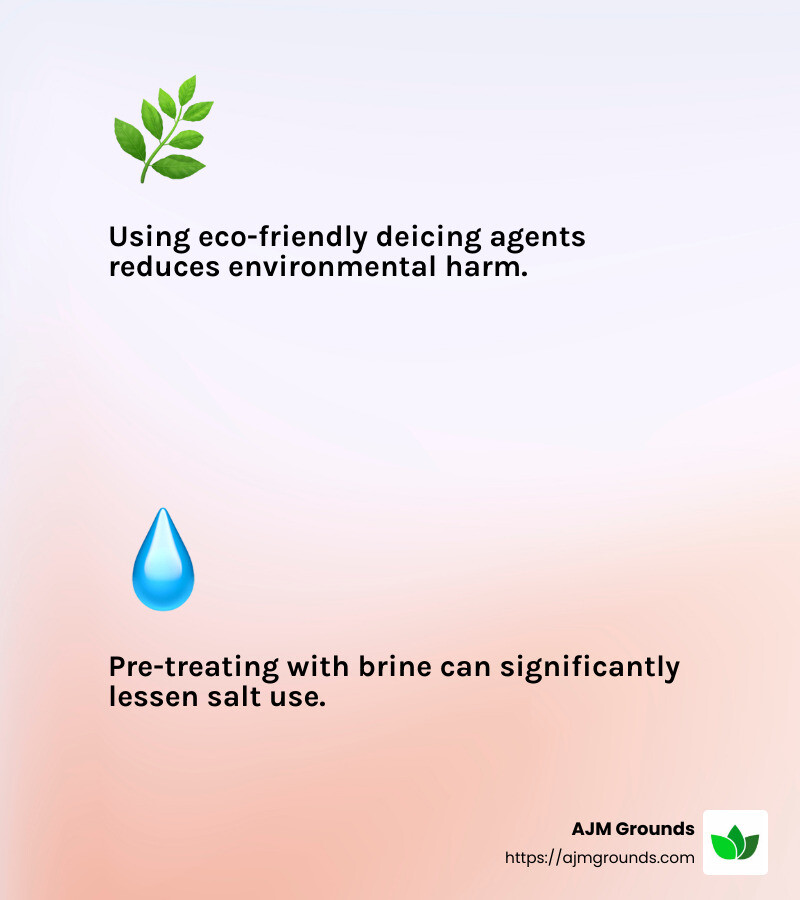
- Pre-treat surfaces with a brine solution before snowfalls. This can reduce the amount of salt needed later.
- Use smart spreaders that control the amount of salt distributed, ensuring even coverage without excess.
- Opt for eco-friendly deicing agents when possible. These alternatives can be less harmful to the environment.
Environmental Impact
Managing snow and ice responsibly means considering the environmental impact. Here are some practices to keep in mind:
- Monitor runoff: Ensure that melting snow and ice don’t carry salt and other chemicals into local waterways.
- Use sand to provide traction on icy surfaces. Sand is less harmful than salt and can be effective in certain conditions.
- Educate your team on the importance of minimizing environmental harm. Training sessions can help them understand how to implement these practices effectively.
RFP Practices
Request for Proposal (RFP) practices are crucial for selecting the right snow management provider. Here’s how to ensure your RFP is effective:
- Start early: As noted by industry experts, early planning is vital. Begin your RFP process well before the snow season to secure the best services.
- Be specific: Clearly outline your needs and expectations in the RFP. This includes the scope of work, frequency of service, and any special requirements.
- Evaluate providers: Look for providers with a proven track record in sustainability and environmental responsibility. Their commitment to best practices can make a significant difference.
By focusing on sustainable salt use, understanding the environmental impact, and refining RFP practices, businesses can improve their commercial snow and ice management programs. This approach not only ensures safety and accessibility but also demonstrates a commitment to environmental stewardship.
Tools and Resources for Effective Snow and Ice Management
To manage snow and ice effectively, businesses need the right tools and resources. These include specialized software, deicing agents, and snow removal equipment. Let’s explore each of these components.
Software
Software plays a crucial role in modern commercial snow and ice management. It helps in planning, monitoring, and executing snow removal strategies efficiently. Here’s how:
- Weather Monitoring: Advanced software provides real-time weather updates. This ensures that businesses can prepare and respond promptly to snow events.
- Route Optimization: Software helps plan the most efficient routes for snowplows and salt spreaders. This saves time and reduces fuel consumption.
- Communication Platforms: Keeping the team connected is vital. Software solutions enable seamless communication between managers and on-ground teams, ensuring everyone is on the same page.
Deicing Agents
Choosing the right deicing agents is essential for effective snow and ice control. Here are some popular options:
- Traditional Salt (Sodium Chloride): Commonly used but can harm the environment if overused.
- Calcium Magnesium Acetate (CMA): A more eco-friendly option, effective at lower temperatures and less corrosive.
- Potassium Acetate: Often used in sensitive areas, it works well in extreme cold and has minimal environmental impact.
A convenient comparison chart of deicing agents can help you make informed decisions based on temperature range and environmental impact.
Snow Removal Equipment
The right equipment can make all the difference in snow management. Here are key types of equipment used:
- Snowplows: Essential for clearing large areas like parking lots. They come in various sizes to suit different needs.
- Snow Blowers: Useful for smaller areas and sidewalks, providing precision in tight spaces.
- Smart Spreaders: Control the distribution of deicing agents, ensuring even coverage without excess.
Investing in state-of-the-art equipment ensures efficient and timely snow removal, which is critical for maintaining safe and accessible properties during winter months.
By leveraging the right software, choosing effective deicing agents, and using advanced snow removal equipment, businesses can improve their commercial snow and ice management programs. This approach not only improves efficiency but also aligns with environmental and safety standards.
Frequently Asked Questions about Commercial Snow and Ice Management
What are the most effective deicing agents?
Choosing the right deicing agents is crucial for effective commercial snow and ice management. Here’s a quick look at some of the most effective options:
- Traditional Salt (Sodium Chloride): Widely used for its cost-effectiveness. However, it can be damaging to the environment if overused.
- Calcium Magnesium Acetate (CMA): Known for being eco-friendly, it works well at lower temperatures and is less corrosive than traditional salt.
- Potassium Acetate: Ideal for sensitive areas, this agent is effective in extreme cold and has minimal environmental impact.
A comparison chart can help you choose the best deicing agent based on your specific needs, considering factors like temperature range and environmental considerations.
How can businesses prepare for snow season?
Preparation is key to managing winter weather effectively. Here are some steps businesses can take to be ready:
- Early Planning: Start planning in early summer. This includes selecting a snow and ice removal partner and preparing your Request for Proposal (RFP) with best practices in mind.
- Weather Monitoring: Use advanced software for real-time updates to anticipate snow events and respond promptly.
- Communication: Maintain clear communication with your snow removal provider to ensure expectations are met and services are delivered efficiently.
- Training: Educate your team and residents about winter safety practices, such as not leaving windows open during cold spells to prevent freezing pipes.
What are the benefits of hiring a professional snow management service?
Hiring a professional snow management service offers numerous advantages:
- Safety and Accessibility: Professionals ensure that your property remains safe and accessible by promptly clearing snow and ice from driveways, sidewalks, and parking lots.
- Timely Service: Professional services are available 24/7, providing timely snow removal even during emergencies.
- State-of-the-Art Equipment: They use advanced equipment and techniques for efficient snow and ice removal.
- Customized Plans: Professionals offer custom snow removal plans to meet your specific property needs.
- Liability Protection: By reducing the risk of accidents and injuries, professional services help protect you from liability.
Investing in professional services not only improves the safety and accessibility of your property but also provides peace of mind during the winter months.
Conclusion
At AJM Grounds, we understand the challenges that winter weather can bring to businesses. That’s why our commercial snow and ice management services are designed with a focus on personalized service and attention to detail. We are committed to ensuring that your property remains safe, accessible, and free from the burdens of winter.
Our team operates in various locations including Bedford, Billerica, Burlington, Lexington, Reading, Stoneham, Wilmington, Winchester, and Woburn, MA, providing custom solutions to meet the unique needs of each client. We don’t just clear snow and ice; we create plans that fit your specific requirements, ensuring seamless and efficient service every time.
We pride ourselves on using state-of-the-art equipment and eco-friendly materials, like Calcium Magnesium Acetate (CMA), to manage snow and ice effectively while minimizing environmental impact. Our proactive approach includes early planning and constant weather monitoring to stay ahead of the storm and keep your operations running smoothly.
Choosing AJM Grounds means partnering with a team that prioritizes your safety and satisfaction. Our commitment to detail ensures that every aspect of our service is executed flawlessly, providing you with peace of mind throughout the winter season.
For a reliable and professional approach to snow and ice management, consider AJM Grounds. Let us help you maintain a safe and welcoming environment for your employees and customers, no matter what winter throws your way.

