

When it comes to establishing a lush, vibrant lawn, best time to plant a new lawn is not just important—it’s crucial. Your lawn’s success hinges on aligning planting efforts with the optimal season for grass growth. Choosing the right timing ensures your grass seeds have the best chance to take root and thrive. Timing largely depends on the type of grass and your specific regional climate.
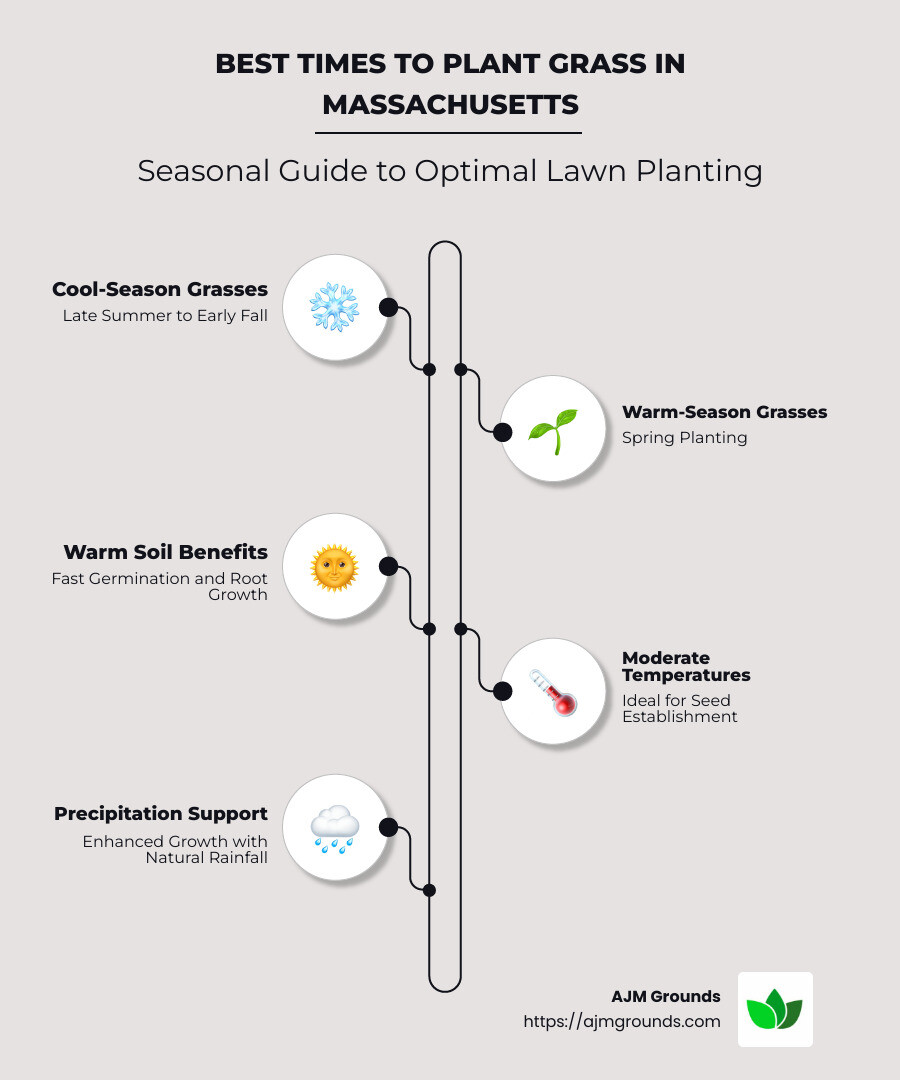
- Cool-Season Grasses: Late summer to early fall is ideal.
- Warm-Season Grasses: Spring is generally best.
The climate in Massachusetts, with distinct seasons, requires careful planning. Knowing when to plant ensures your lawn is actively growing and resilient against future environmental stressors.
I’m John Caplis. As owner of AJM Grounds, I have years of experience helping homeowners in Massachusetts find the best time to plant a new lawn. Our firm combines local climate knowledge with lawn care expertise to craft outdoor spaces that delight.
Best Time to Plant a New Lawn
When deciding on the best time to plant a new lawn, consider the type of grass and your regional climate. Let’s break it down for both cool-season and warm-season grasses.
Cool-Season Grasses
For cool-season grasses like Kentucky bluegrass, perennial ryegrass, and tall fescue, the sweet spot for planting is late summer to early fall. This timing aligns with their natural growth cycles, allowing seeds to germinate when soil temperatures are still warm but air temperatures are cool. This period provides the ideal conditions for quick germination and robust root development.
- Why Late Summer/Early Fall?
- Warm Soil: The soil retains heat from the summer months, which aids in seed germination.
- Cool Air Temperatures: Cooler days reduce stress on new seedlings.
- Less Competition from Weeds: Weeds are less aggressive, giving grass seedlings a better chance to thrive.
- Natural Precipitation: Fall often brings increased rainfall, reducing the need for additional watering.
Warm-Season Grasses
Warm-season grasses such as Bermudagrass, Zoysia grass, and Centipede grass prefer a different schedule. These grasses thrive when planted in early spring. At this time, the soil is warming up, which is crucial for the germination of these grass types.
- Why Early Spring?
- Rising Soil Temperatures: Warm-season seeds need warmth to germinate effectively.
- Early Seasonal Rains: Spring showers help maintain moisture levels necessary for seedling growth.
- Avoiding Frost: Planting after the last frost ensures seedlings aren’t damaged by unexpected cold snaps.
Massachusetts Climate Considerations
In Massachusetts, where AJM Grounds operates, understanding the local climate intricacies is crucial. The state’s distinct seasonal changes mean that timing your lawn planting can make all the difference. For cool-season grasses, aim for late August to early September. For warm-season varieties, wait until the soil has warmed sufficiently in the spring.
By aligning your planting efforts with these optimal times, you set the stage for a healthy, thriving lawn that can withstand the challenges of each season.
Up next, we’ll dig into why fall is particularly ideal for planting cool-season grasses and how you can take advantage of the season’s unique benefits.
Why Fall is Ideal for Cool-Season Grasses
Planting your lawn in the fall offers several advantages, especially for cool-season grasses like Kentucky bluegrass and perennial ryegrass. Here’s why this season is perfect for them:
Warm Soil
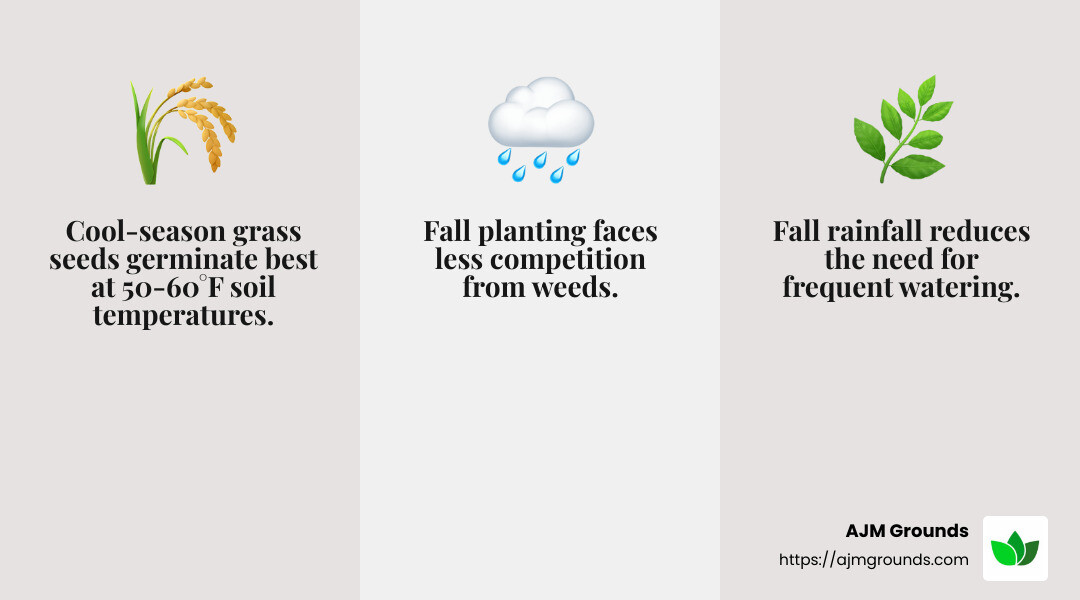
During early fall, the soil holds onto the warmth accumulated over the summer. This is crucial because cool-season grass seeds germinate best when soil temperatures are between 50 to 60 degrees Fahrenheit. This warm soil acts like a cozy blanket for the seeds, encouraging them to sprout quickly and establish strong roots.
Fast Germination
The combination of warm soil and cooler air temperatures leads to rapid germination. Seeds can start growing within just a week or two. This quick start is vital for building a robust lawn before winter arrives. In Massachusetts, where AJM Grounds operates, the ideal planting window is from late August to early September. This timing ensures a full growing season before the first frost.
Moderate Temperatures
Fall brings moderate daytime temperatures, typically ranging from 60°F to 75°F. These conditions are perfect for new grass seedlings. They experience less stress compared to the hotter summer months, allowing them to focus on growing strong and healthy.
Precipitation Benefits
Fall often comes with increased rainfall, which is a blessing for new lawns. Consistent soil moisture is essential for seed germination and establishment. With more natural precipitation, there’s less need for frequent watering, reducing your workload and helping ensure the seeds don’t dry out.
Less Competition from Weeds
Another advantage of fall planting is the reduced competition from weeds. By late summer and early fall, many weeds are past their peak growth phase. This gives your grass seedlings a better chance to thrive without fighting for nutrients and water.
By planting cool-season grasses in the fall, you’re leveraging the season’s natural advantages to give your lawn the best possible start. Next, we’ll discuss the specifics of spring planting for warm-season grasses and how to steer the challenges of this approach.
Spring Planting for Warm-Season Grasses
When it comes to warm-season grasses like Bermudagrass and Zoysia grass, spring is the time to shine. These grasses thrive when temperatures rise, making spring the best time to plant them. But there are some important factors to keep in mind.
Soil Temperatures
Warm-season grasses love heat. They germinate best when soil temperatures are consistently between 65°F and 70°F. In Massachusetts, this usually happens in late spring. Using a soil thermometer can help you pinpoint the right time to plant. Warm soil is key for these grasses to take root and grow.
Early Seasonal Rains
Spring showers aren’t just for flowers—they’re great for new lawns too. Early seasonal rains help keep the soil moist, which is crucial for grass seeds to germinate. However, be cautious of overwatering. Too much water can lead to soggy soil, which might drown your seeds. Aim for a balance: moist but not waterlogged.
Frost Danger
A challenge with spring planting is the risk of frost. Frost can damage or even kill young grass seedlings. In Massachusetts, late frosts can sneak in, so it’s important to keep an eye on the weather forecast. Planting after the last expected frost reduces the risk of damage.
To protect your new lawn, consider covering it with a light frost cloth on cold nights. This simple step can make a big difference in ensuring your seedlings survive and thrive.
By understanding these factors, you can give your warm-season grasses a strong start. Up next, we’ll dive into how to prepare your lawn for planting to maximize growth and health.
Preparing Your Lawn for Planting
Before you plant a new lawn, preparation is key. Let’s break down the essential steps to ensure your grass grows lush and healthy.
Soil Preparation
Start by getting your soil ready. Good soil is the foundation of a beautiful lawn. Use a sharp shovel or rent a sod cutter to remove any existing grass. Next, walk around and inspect the area. Remove large rocks and debris. If your soil is compacted, work it over with a tiller. You want the soil to be broken down to pea- or marble-sized particles. This creates a welcoming environment for grass seeds.
Weed Removal
Nobody wants weeds competing with their new grass. Before planting, clear the area of any weeds. Weeds can steal nutrients and water from your grass. Removing them now will save you headaches later. Use a rake or hoe to uproot them, making sure you get the roots so they don’t grow back.
Aeration
Aeration is like giving your lawn a breath of fresh air. It involves poking small holes in the soil to allow air, water, and nutrients to reach the roots. This is especially important if your soil is compacted. You can use a manual aerator or rent a core aerator for larger areas. Aerating before planting helps seeds establish more quickly and encourages stronger root growth.
Seed Selection
Choosing the right seed is crucial. The best type of grass depends on your location, climate, and how you plan to use your lawn. For example, if your lawn gets a lot of sun, you’ll need a sun-tolerant variety. If it sees a lot of foot traffic, consider a durable type. A blend of different grass types can offer resilience and an attractive look.
Don’t forget to check the seed packaging for the recommended seeding rate. This helps avoid over or under-seeding, both of which can lead to problems down the road.
By preparing your lawn properly, you’re setting the stage for success. Next, we’ll answer some frequently asked questions to help you plant your new lawn with confidence.
Frequently Asked Questions about Planting a New Lawn
What month should I put grass seed down?
For cool-season grasses like Kentucky bluegrass and tall fescue, the best time to plant is late summer to early fall. During this period, the soil is still warm from the summer sun, and the cooler air temperatures create ideal conditions for grass seed germination. In places like Massachusetts, this means aiming for mid-August to mid-September.
For warm-season grasses such as Bermudagrass, planting in late spring to early summer is ideal. These grasses thrive when soil temperatures are higher, which helps the seeds germinate more effectively.
Is it better to plant new grass in the spring or fall?
The answer depends on the type of grass. Cool-season grasses benefit from a fall planting. The soil is warm, the air is cooler, and there’s often more rain, which helps with seed germination and establishment. Planting in fall also gives the grass a head start before it faces the heat of summer.
On the other hand, warm-season grasses are best planted in spring. This timing allows them to establish before the peak summer heat. However, beware of late frosts, which can harm young seedlings.
Can I just throw grass seed down on an existing lawn?
While it’s tempting to simply scatter seeds over your lawn, proper soil preparation is crucial for success. This process, known as overseeding, involves more than just tossing seeds. First, mow your existing grass short and remove any clippings. Then, aerate the lawn to allow seeds to contact the soil directly. Overseeding without preparation can lead to poor germination and patchy growth.
By understanding the best times and methods for planting grass, you’ll be well on your way to a lush, healthy lawn. Next, we’ll explore common challenges and solutions in lawn care.
Conclusion
Creating a lush, vibrant lawn is more than just planting seeds—it’s about understanding your environment and choosing the right timing. At AJM Grounds, we pride ourselves on offering personalized service and expert lawn care custom to your specific needs. Whether you’re looking to establish a new lawn or maintain an existing one, our team is here to ensure your grass thrives in the unique climate of Massachusetts.
Our expertise in landscape installations means we not only understand the best time to plant a new lawn but also how to prepare your soil and select the right grass for your area. From our base in Woburn, MA, to our locations across Bedford, Billerica, Burlington, and beyond, we bring attention to detail and a commitment to quality that sets us apart.
With AJM Grounds, you’re not just getting a service—you’re gaining a partner in creating the lawn of your dreams. Our dedication to customer satisfaction ensures that every lawn we care for is mowed to perfection and maintained with the utmost care.
Ready to transform your outdoor space? Visit our Landscape Installations page to learn more about how we can help you achieve a beautiful, healthy lawn. Let’s grow together!
