

Why Your Retaining Wall is Only as Strong as Its Base
A strong retaining wall starts with a solid foundation. The base for retaining wall construction is the single most important factor in helping it stand for decades, not just a few years. Without a proper base, even a well-built wall can fail, leading to sagging, leaning, and expensive repairs.
Quick Answer: Building a Strong Base (Basics Only)
- Depth: Plan for a trench that is several inches deep and allows a portion of the first course to be buried.
- Material: Use angular crushed stone (not round pea gravel) so the pieces lock together.
- Width: Make the base area wider than the wall blocks so the weight is spread out.
- Compaction: Firmly compact the base material so it does not settle later.
- Drainage: Include drainage stone and, where appropriate, a perforated drain pipe and landscape fabric.
The base helps distribute the wall’s weight, limits settling, and provides drainage to reduce water pressure. In Greater Woburn’s freeze-thaw climate, these details matter even more. The team at AJM Grounds has seen many walls fail early because the base was rushed or undersized. This guide will help you understand the fundamentals so you can discuss your project confidently with a professional and recognize a properly built retaining wall base.
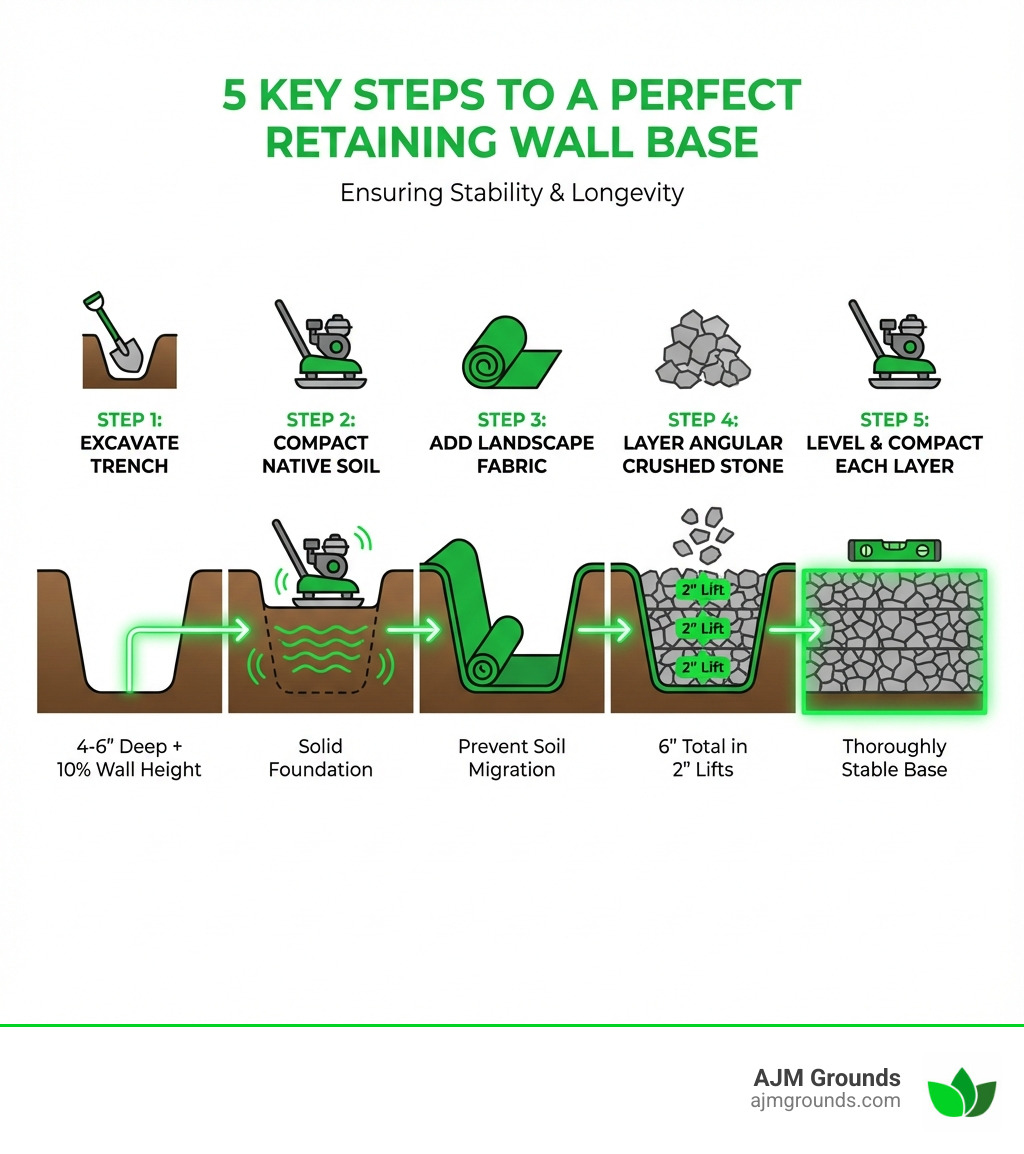
Common base for retaining wall vocab:
- retaining wall installation
- how to install a block retaining wall
- concrete block retaining wall construction
Building the Perfect Base for a Retaining Wall
The success of any retaining wall begins with a carefully prepared base for retaining wall. This foundation is what helps ensure the wall’s stability and longevity, especially in Greater Woburn, MA, where harsh freeze-thaw cycles and heavy rain are common. Skipping or rushing this step can lead to tilting, cracking, and even complete structural failure.
The Primary Purpose of a Proper Retaining Wall Base
A proper base is not just a layer of rock; it is the foundation of the entire structure.
- Structural Support & Weight Distribution: A well-built base spreads the load of the wall and the soil it retains, helping to prevent sinking or shifting.
- Settlement Prevention: A firm, uniformly compacted base reduces uneven settling over time, which can compromise the wall’s integrity.
- Frost Heave Resistance: In colder climates like Greater Woburn, MA, the right base material and depth help limit frost heave, where freezing water in the soil can push the wall upward or out of alignment.
- Drainage: The base is the first step in a proper drainage system, allowing water to move away from the wall and reducing pressure behind it.
An improperly prepared base is one of the most common reasons retaining walls fail early.
Recommended Materials: Why Angular Stone Beats Pea Gravel
When selecting materials for your base for retaining wall, not all rocks are created equal. Angular crushed stone is strongly preferred over rounded alternatives like pea gravel.
Top Recommended Materials for a Retaining Wall Base:
- 3/4″ Minus (Crushed Stone with Fines): A mix of crushed stone and stone dust that compacts tightly for a very stable base.
- Crush and Run (or Crusher Run): Similar to 3/4″ Minus, this blend of crushed rock and fines locks together exceptionally well.
The sharp, irregular edges of angular stone interlock when compacted, creating a strong, stable base. In contrast, the round, smooth particles of pea gravel behave more like ball bearings, shifting and settling under load. This is why experts such as Oregon State University’s Extension warn against using rounded rock for structural bases, and why major block manufacturers advise against rounded rock in this role.
Table: Comparing Base Materials for Retaining Walls
| Material | Compaction | Drainage | Best Use |
|---|---|---|---|
| 3/4-inch Crushed Stone | Excellent; particles interlock tightly. | Good | Ideal choice for most retaining wall bases; provides a strong, stable foundation. |
| Paver Base | Excellent; mix of crushed stone and dust. | Good | Common under patios and small walls; also suitable as a retaining wall base in light-duty applications. |
| Pea Gravel (or River Rock) | Poor; round stones do not lock together. | Excellent | Not recommended for the base. Works better as a drainage backfill behind the wall, not under it. |
Building the Perfect Base for a Retaining Wall
The success of any retaining wall depends heavily on its base. This is where good planning and careful preparation pay off, helping ensure the longevity and stability of your structure. Below is an overview of the key concepts homeowners in Greater Woburn, MA should understand when talking with a professional about a base for retaining wall.
The Primary Purpose of a Proper Retaining Wall Base
The base for retaining wall construction is the foundation that supports the entire structure.
- Structural Support: A retaining wall holds back significant soil, which exerts weight and lateral pressure. The base distributes this load evenly across the subsoil.
- Preventing Settlement: Even quality blocks can fail if the ground beneath is unstable. Poor base preparation allows uneven settling, leading to structural issues.
- Frost Heave Resistance: In Greater Woburn’s freezing temperatures, water in soil expands when frozen. Well-draining granular material helps limit water beneath the wall.
- Level Foundation: The base provides a level surface for the first course of blocks. Uneven bases create crooked, unstable walls.
- Wall Longevity: A well-built base helps walls remain functional for years with better resistance to pressure and climate.
When bases aren’t prepared correctly, walls bulge, crack, lean, or fail entirely.
Recommended Materials: Why Angular Stone Beats Pea Gravel
Choosing the right material for your base for retaining wall is critical.
Why Angular Stone Is Preferred
Angular crushed stone (3/4″ Minus, Crush and Run) has irregular, sharp edges. When compacted, these stones interlock to create a dense base supporting:
- Stability: Resists shifting under weight and pressure
- Compaction: Angular stones compact effectively, reducing voids
- Drainage: Allows water movement even when compacted
Why Pea Gravel Is a Poor Choice
Pea gravel’s smooth, rounded particles don’t interlock. Under pressure, they roll and shift, leading to:
- Instability: Base movement allows walls to settle or lean
- Poor Compaction: Difficult to compact to dense, uniform layers
Oregon State University’s Extension notes rounded rock dislodges under pressure.
Base Preparation for Different Wall Types
- Block Walls: Segmental concrete blocks need angular crushed gravel for flat, compactable surfaces
- Natural Stone: Dry-stacked stone uses compacted angular base with possible thin sand layer for leveling
How to Calculate Trench and Gravel Depth
Getting trench and base dimensions correct is important. These guidelines help understand professional discussions.
Trench Depth
Many systems require:
- Portion of first course buried as footing
- Several inches of compacted base beneath blocks
Taller walls need deeper trenches. Some systems recommend burying roughly 10% of wall height plus gravel base.
Gravel Base Depth
Smaller landscape walls often need at least a few inches of compacted base. Taller walls may require deeper bases.
Trench Width
Trenches should be wider than blocks themselves. Extra width allows base material to extend beyond wall edges.
Many guides suggest trenches at least twice block depth. For 8-inch deep blocks, 16-inch wide trenches are common.
Compaction: The Non-Negotiable Step
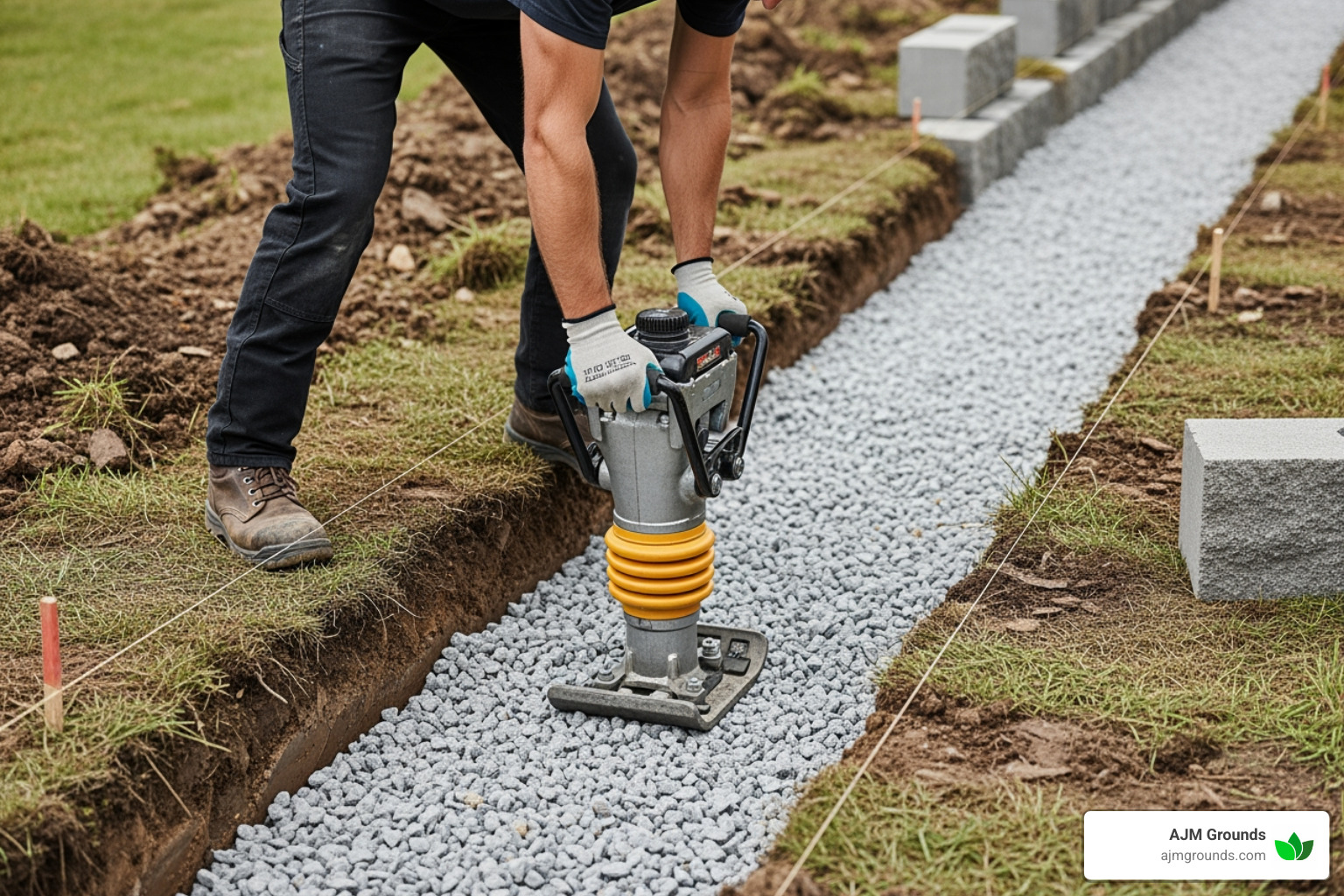
Compaction is critical in preparing the base for retaining wall. It increases base density by reducing air pockets.
Why Compaction Matters
- Limits Settling: Prevents gradual base settlement under loads
- Improves Load-Bearing: Dense bases support more weight
- Improves Stability: Locks angular particles together
Basic Compaction Process
- Prepare Trench: Bottom should be firm, free of organic material
- Add Material in Layers: Install gravel in thin layers for thorough compaction
- Compact Each Layer: Use hand tampers for small projects, plate compactors for larger walls
- Check Level: Ensure flat, level surface after compaction
The Role of Landscape Fabric and Drainage
Drainage is essential. Without it, water builds behind walls creating hydrostatic pressure—a leading failure cause.
Landscape Fabric Functions
- Soil Separation: Keeps native soil from mixing with drainage stone
- Preventing Clogs: Keeps fine particles out of gravel
- Maintaining Integrity: Helps drainage stone stay functional
Typical Placement
- Under Base: In soft conditions, fabric at trench bottom prevents base stone from sinking
- Behind Wall: Fabric between drainage stone and backfilled soil keeps drainage open
Drainage Components
As described in Retaining Wall Drainage & Backfill Basics, moving water away is critical:
- Porous Base/Backfill: Clean angular stone helps water flow down and away
- Perforated Drain Pipe: For taller walls or poor drainage, pipes surrounded by stone direct water to outlets
- Weep Holes: Some masonry walls include holes for water exit; segmental blocks rely on hidden drains
Combining compacted bases with proper fabric and drainage helps walls in Bedford, Reading, Wilmington, Winchester, Woburn, and neighboring communities handle New England weather.
Ensure Your Wall Lasts with a Professional Foundation
Building a retaining wall is a significant investment in your property’s landscape and functionality. As you have seen, the foundation—the base for retaining wall construction—is the single most critical factor influencing longevity and stability.
Key points to keep in mind:
- Primary Purpose: A proper base supports the wall, helps distribute weight, limits settling, resists frost heave, and provides a level starting point.
- Recommended Materials: Angular crushed stone (such as 3/4″ Minus or similar products) is preferred over rounded materials like pea gravel because it interlocks and compacts more effectively.
- Depth and Width: The base area should be deeper and wider than the blocks alone, with enough compacted gravel to provide a stable footing and adequate burial of the first course, according to the wall system used.
- Thorough Compaction: Compaction in thin layers is essential to reduce air pockets and create a dense, stable base.
- Landscape Fabric and Drainage: Fabric helps keep soil out of the drainage stone, and a properly designed drainage system reduces hydrostatic pressure behind the wall.
These fundamentals are especially important in the Greater Woburn climate, where freeze-thaw cycles and heavy rainfall can be hard on poorly built walls. While small landscape walls may look simple, the hidden details in the base and drainage often determine whether a wall lasts.
At AJM Grounds, we focus on those details. Our team understands the specific soils, slopes, and weather patterns in communities like Bedford, Billerica, Burlington, Lexington, Reading, Stoneham, Wilmington, Winchester, and Woburn, MA. We use that local experience to design and build retaining walls with foundations that are custom to each site.
For a professionally built retaining wall that stands the test of time, contact our hardscaping experts at AJM Grounds.
