

Charting a Course to a Beautiful Backyard
Backyard stone pathways can transform your outdoor space, adding charm, function, and lasting beauty. They’re more than just a way to get from point A to B; they are a key feature of your garden’s design.
Key considerations for your pathway project include:
- Materials: Popular choices include flagstone, concrete pavers, natural stepping stones, and gravel.
- Benefits: Stone pathways are durable, low-maintenance, and can improve your property’s value.
- Design: Paths can be straight or curved, wide or narrow, to match your home’s aesthetic.
This guide will cover everything from choosing materials to installation and care, helping you create a path that stands the test of time.
As the owner of AJM Grounds LLC, I specialize in creating functional works of art through Backyard stone pathways and sustainable landscape designs. My team and I are committed to bringing our clients’ visions to life.
Backyard stone pathways further reading:
Your Complete Guide to Backyard Stone Pathways
A stone pathway is more than a walkway; it’s a key feature that adds timeless beauty to your landscape. It guides visitors, defines spaces, and reflects your personal style. Let’s explore how to create a path that’s perfect for your backyard and can withstand the New England climate.
Choosing Your Stone: Materials & Styles
Picking the right material is the first step in creating your backyard stone pathways. Each stone has a unique look and durability. Here in Woburn, MA, and surrounding areas, we work with many options that thrive in our local climate.
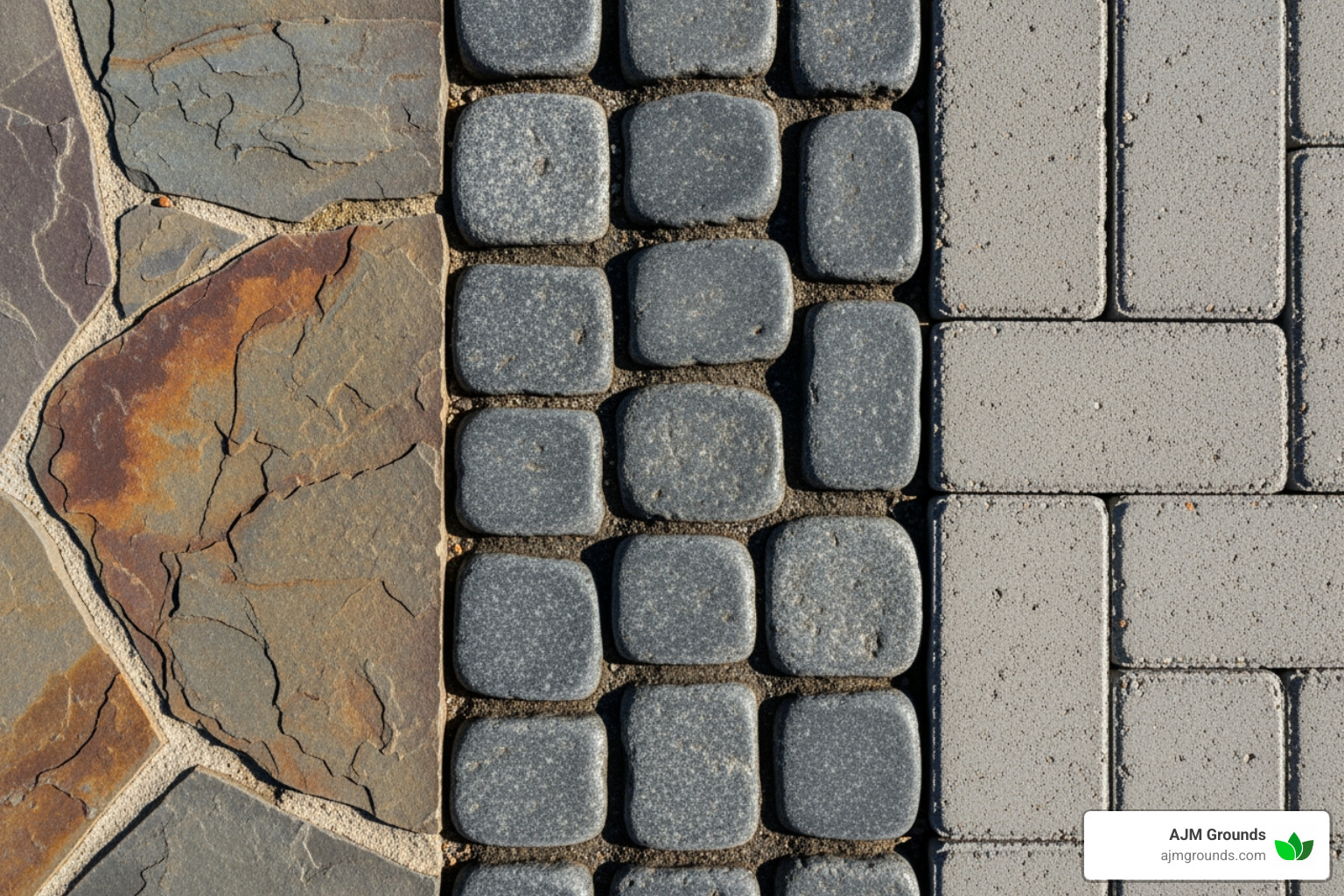
Here are some popular choices:
- Flagstone & Bluestone: These large, flat stones, often with irregular shapes, create a natural, flowing look. Bluestone, a type of flagstone, is prized for its blue-gray color and strength. We recommend a thickness of at least 3/4-inch to prevent cracking in our freeze-thaw cycles.
- Pavers (Concrete): For a more uniform look, concrete pavers come in many colors, shapes, and sizes. They allow for intricate patterns and provide a durable, smooth surface that resists cracking better than solid concrete slabs.
- Stepping Stones: These individual stones, spaced apart, create a gentle, whimsical path through a garden or lawn. They are available in natural stone, concrete, and even weather-resistant resin.
- Gravel: An affordable and versatile option, gravel paths offer excellent drainage and a satisfying crunch underfoot. When installed over a weed barrier, they are low-maintenance.
- Cobblestone: For old-world charm, these small, rounded stones create incredibly tough and long-lasting paths.
- Slate & Granite: Slate offers a sleek, modern look with its thin, smooth layers. For maximum durability, granite is a rugged, weather-resistant choice that easily handles New England winters.
Durability and Aesthetics
Natural stone walkways made from granite, slate, or sandstone can last for generations with little upkeep. Unlike concrete, a properly installed stone path on a solid gravel and sand base will remain flat and smooth, adding timeless elegance to your garden.
Eco-Friendly Options
For a greener approach, consider:
- Reclaimed Stones: Salvaged from old landscapes, these add character and reduce waste.
- Permeable Pavers: These allow rainwater to soak into the ground, reducing runoff.
- Recycled Materials: Repurposed broken concrete (“urbanite”) or recycled bricks can create stylish, sustainable walkways.
For more ideas, see our hardscaping services.
Key Design Considerations
Good design is about creating a path that is both beautiful and practical.
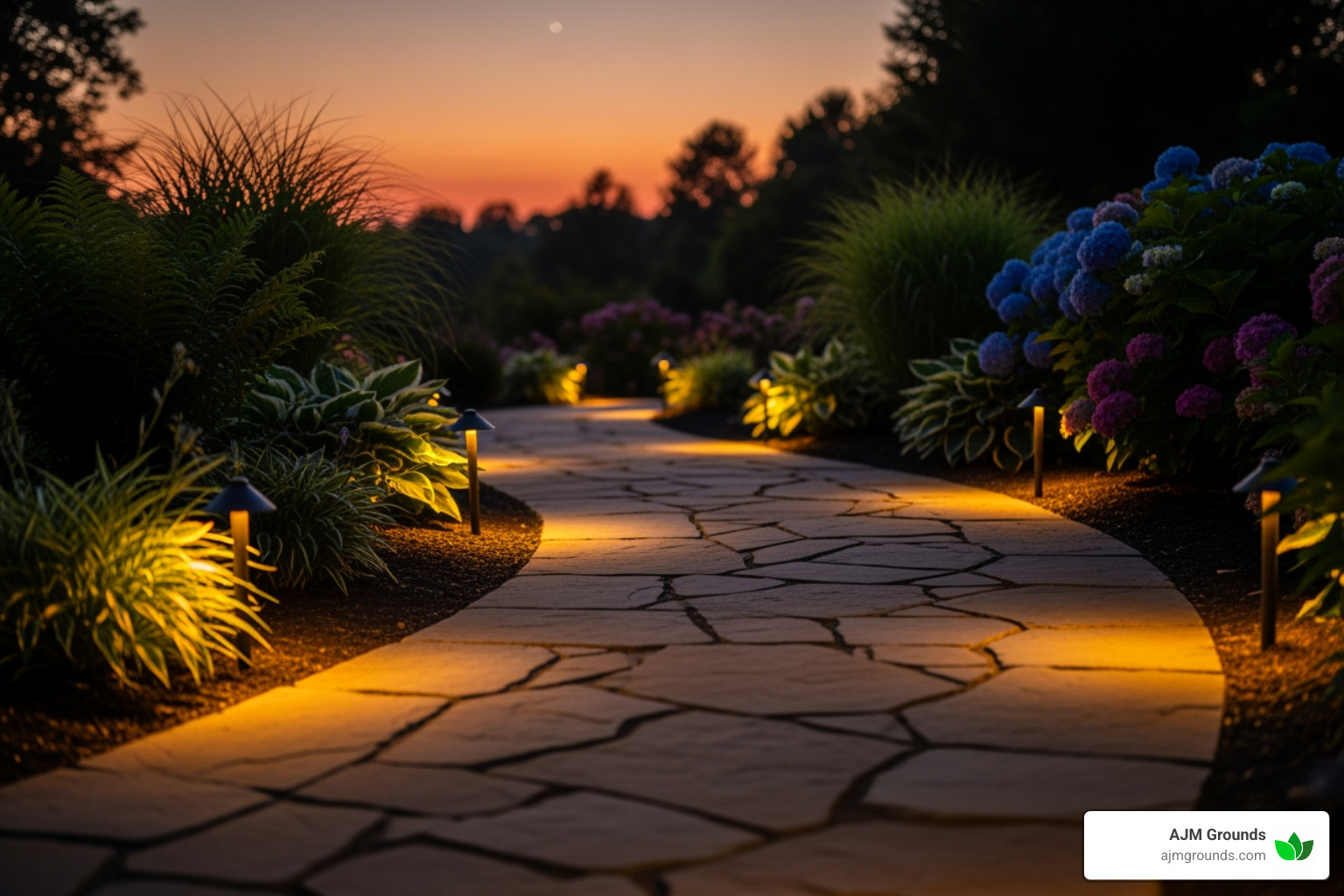
- Path Shape: Straight paths feel formal and direct, ideal for modern designs or leading to a doorway. Curved paths create a softer, more natural feel, inviting exploration and making a space feel larger.
- Pathway Width: A width of 30-36 inches is comfortable for one person. For two people to walk side-by-side, plan for at least 48 inches. If you need access for a wheelbarrow or mower, 50-60 inches is best.
- Edging: Edging defines your path and contains materials like gravel. Classic options include brick or stone borders, while plastic paver edging offers an invisible, secure boundary.
- Plants and Ground Covers: Soften the path’s edges by planting low-growing ground covers like creeping thyme between stones. Bordering the path with plants like hostas or ornamental grasses helps it blend into the garden.
- Pathway Lighting: Lighting adds safety and ambiance after dark. Solar-powered lights are an easy, eco-friendly option. Low-voltage LED lights provide brighter, more consistent illumination to highlight curves and steps.
Explore more concepts in our collection of garden path design ideas.
How to Install Backyard Stone Pathways
Proper installation is key to a long-lasting stone pathway. Rushing the prep work can lead to shifting stones and endless weeds.
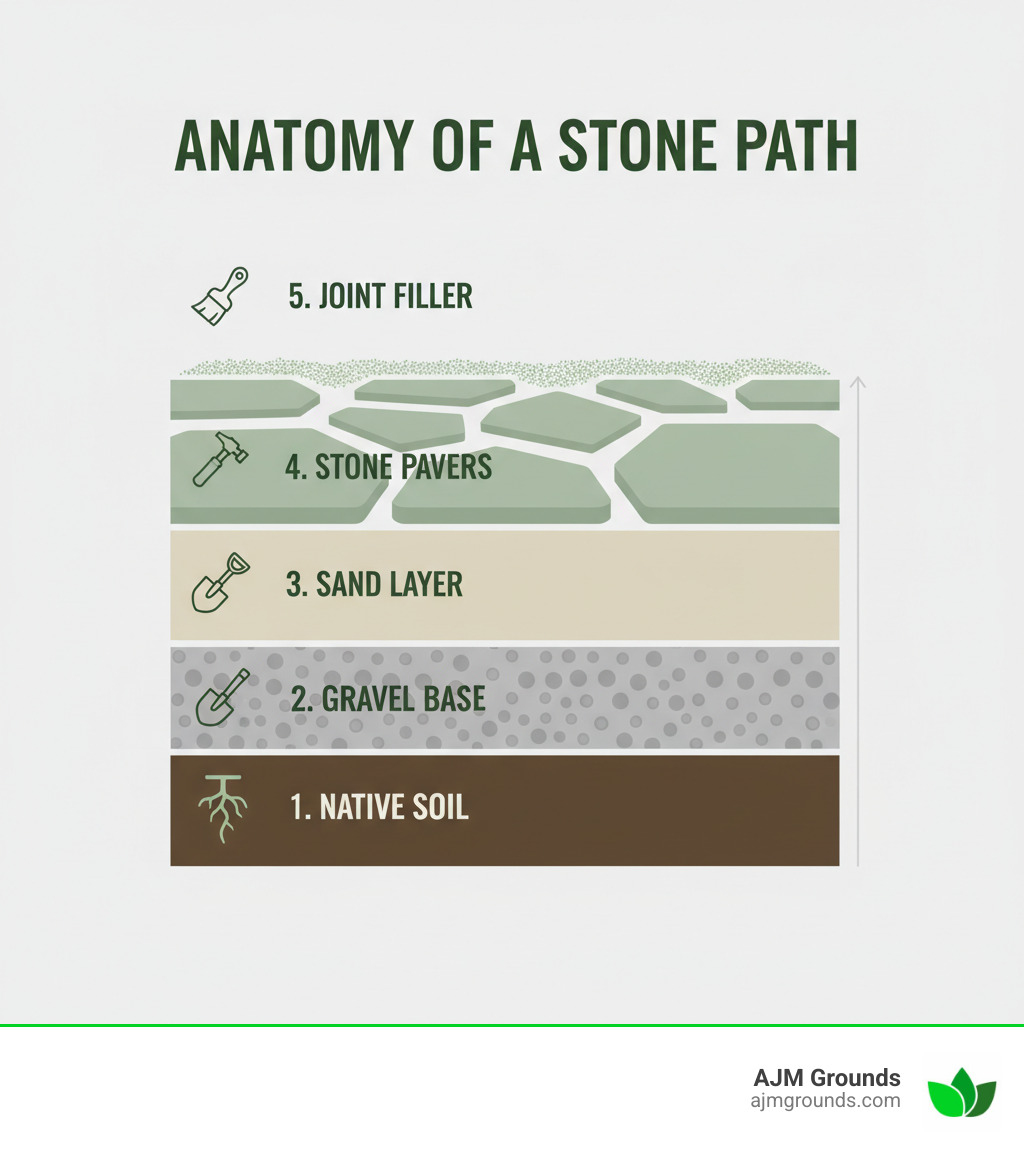
- Plan and Mark: Before digging, call 811 to have underground utility lines marked. Outline your path’s shape on the ground using a garden hose or stakes and string, then mark it with spray paint.
- Excavate: Clear the area of grass and debris. Dig a trench about 7-10 inches deep. Critically, create a slight slope (about 1/4 inch per foot) for proper water drainage.
- Compact and Add Fabric: Use a hand tamper or plate compactor to firm up the soil at the bottom of the trench. Then, lay down permeable landscape fabric to block weeds and separate the soil from your base layers.
- Build the Base: Add a 4-6 inch layer of compactable gravel, compacting it thoroughly. On top, spread a 1-2 inch layer of coarse sand. Screed the sand to create a smooth, level setting bed that follows your drainage slope.
- Lay and Level the Stones: Begin placing your stones on the sand bed. Wiggle each stone into place and tap it with a rubber mallet until it’s firm and level with its neighbors. Use a level to check your work as you go.
- Fill Gaps and Finish: Once all stones are set, sweep a joint filler into the gaps. Options include coarse sand or polymeric sand, which hardens to resist weeds and washout. If needed, install paver edging to hold the perimeter of the path securely.
For more detailed instructions, read our guide on laying a stone path. You can also find extra tips from experts on how to build a stone path for your garden.
Understanding the Cost of a Stone Pathway
The cost of backyard stone pathways is a common question. Please note, the figures mentioned here are general averages based on online data and are not the actual costs for AJM Grounds. Your project’s final price will depend on materials, labor, and design complexity.
Professionally installed stone pathways typically range from $15 to $60 or more per square foot.
Key factors influencing the cost include:
- Material Costs: Gravel is the most budget-friendly, while natural stone like flagstone, bluestone, and granite are at the higher end. Concrete pavers offer a mid-range option with great variety.
- Labor Costs: Professional installation is a significant portion of the cost but ensures a durable, high-quality result that prevents future problems.
- DIY vs. Professional: A DIY approach saves on labor costs but requires significant time, physical effort, and the right tools. Hiring a pro like AJM Grounds guarantees an efficient, expert installation, which is often a worthwhile investment. A professionally installed 40-foot flagstone path could average $600 to $2,500 or more.
- Project Complexity: Longer, wider paths, sloped terrain requiring steps, and intricate patterns will increase labor and material costs.
For a personalized estimate, please visit our walkway installation page.
Maintaining Your Backyard Stone Pathways for Lasting Beauty
Your stone pathway is low-maintenance, but a little care will keep it looking its best for years.
- Regular Cleaning: Sweep away leaves and debris regularly. For a deeper clean, rinse with a garden hose. Avoid harsh chemicals; a pH-neutral stone cleaner is best for tough stains.
- Weed Prevention: A proper landscape fabric barrier and polymeric sand in the joints are your best defense. Pull any weeds that appear promptly.
- Addressing Common Issues:
- Wobbly Stones: Lift the stone, add and compact more sand underneath, and reset it until it’s level and firm.
- Loose Joint Filler: Simply sweep more sand or polymeric sand into the joints and wet it according to the product’s instructions.
- Moss or Algae: In shady, damp areas, scrub growth away with a stiff brush and water.
- Cracking: This is rare with thick stones and a proper base. If a stone does crack, it should be replaced.
By following these tips, your pathway will remain a beautiful feature of your garden. For more on specific layouts, see our page on installing a stepping stone walkway.
Bring Your Vision to Life
Final Steps on Your Pathway Journey
We’ve journeyed from choosing materials and planning designs to the details of installation and maintenance for your backyard stone pathways. A well-designed stone path is more than a walkway—it’s a timeless investment in your property’s value and your daily enjoyment. It adds durability, beauty, and a personal touch to your outdoor sanctuary.
At AJM Grounds, we bring these visions to life for homeowners throughout Woburn, Burlington, Winchester, and surrounding Massachusetts communities. Our professional expertise and commitment to personalized service set us apart. We understand how to build paths that not only look beautiful but also withstand the New England climate. We don’t do cookie-cutter solutions; we create pathways that reflect your home’s unique character.
Whether you dream of a rustic flagstone trail or a neat paver walkway, our team handles every detail with care.
Ready to transform your backyard?
Contact us for your professional walkway installation and let’s start creating your perfect pathway today. Your beautiful backyard is waiting.
