

Transform Your Sloped Yard: Backyard Retaining Wall Ideas
Looking for quick inspiration for your landscape project? Here are the top 5 backyard retaining wall ideas that combine function and style:
- Tiered Stone Walls – Create multi-level planting beds while managing slopes
- Gabion Cages – Budget-friendly option that doubles as seating when topped with wood
- Timber Sleepers – Warm, natural look with integrated steps for navigating slopes
- Concrete Block Systems – Versatile interlocking blocks starting at just $4.30/sq ft
- Corten Steel Panels – Modern aesthetic with a naturally developing rust patina
Backyard retaining wall ideas do much more than simply prevent soil erosion. These functional structures transform challenging slopes into usable outdoor spaces while adding architectural interest to your landscape. Whether you’re dealing with a sloped yard, creating garden terraces, or simply wanting to add visual interest to your outdoor space, a well-designed retaining wall can be both practical and beautiful.
Retaining walls solve common landscape challenges by creating level areas for patios, gardens, and play spaces. They prevent erosion, manage water runoff, and can dramatically increase your usable yard space. Beyond their practical benefits, these structures can become stunning focal points that improve your property’s value and curb appeal.
I’m John Caplis, owner of AJM Grounds LLC, and I’ve designed and installed countless backyard retaining wall ideas for homeowners throughout Woburn who needed practical solutions for challenging landscapes. My experience has taught me that the best retaining walls not only solve functional problems but also improve the overall beauty of outdoor living spaces.
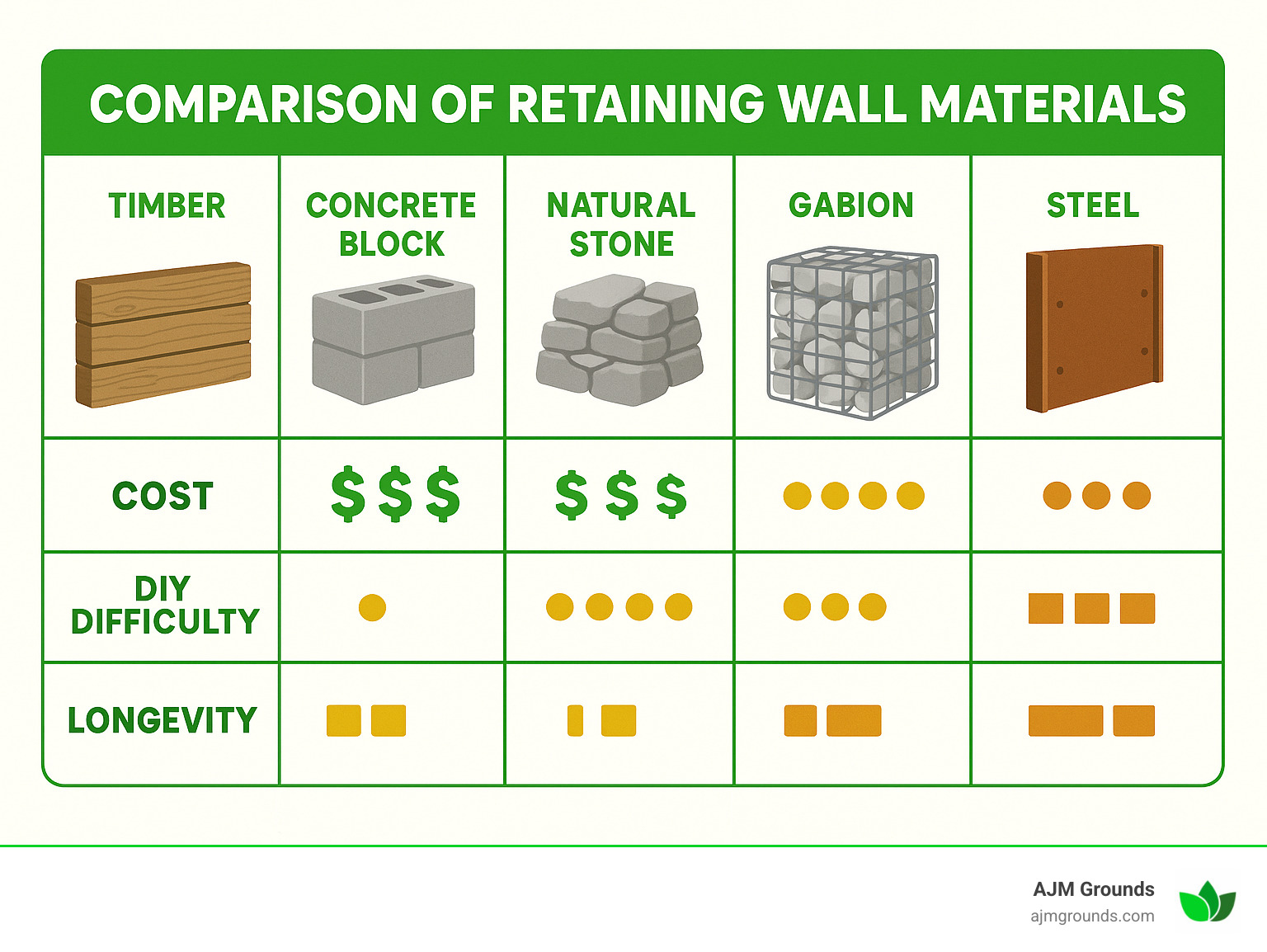
What Is a Retaining Wall?
A retaining wall is a structure designed to hold back soil and create a vertical change in ground elevation. Think of it as nature’s bookend – it keeps soil in place when gravity would otherwise cause it to slide downhill. These walls resist the lateral pressure of soil, creating level areas in otherwise sloped landscapes.
As one Lexington homeowner told us after we completed their backyard change: “Before our retaining wall, half our yard was essentially unusable. Now we have a flat area for the kids to play and a beautiful terraced garden. It’s like we doubled our outdoor living space!”
Retaining walls serve several key functions:
- Soil retention: They prevent erosion by holding back soil on slopes
- Creating usable terraces: They transform steep slopes into level, functional areas
- Flood control: They help manage water runoff and prevent flooding in low areas
- Structural support: They can provide stability for buildings and structures on uneven terrain
Why Add One to Your Backyard?
Adding a retaining wall to your backyard can be transformative, especially for properties in the hilly areas of Winchester and Lexington. Here’s why homeowners throughout the Woburn area are investing in these versatile structures:
- Maximize usable space: Convert sloped areas into flat, functional outdoor living spaces
- Create garden tiers: Design multi-level planting beds that add visual interest and make gardening easier
- Add built-in seating: Many wall designs can incorporate seating elements for outdoor entertaining
- Increase property value: Well-designed hardscaping features can boost your home’s curb appeal and market value
- Prevent erosion: Protect your landscape from soil loss during New England’s heavy rains
- Improve drainage: Properly designed walls include drainage systems that direct water away from your home’s foundation
- Define outdoor rooms: Use walls to create distinct zones for different outdoor activities
“Nature’s uneven terrain has its charm until you try to play croquet on a hilly lawn or enjoy a candlelit dinner on an off-kilter patio,” notes a landscape architect we frequently collaborate with. Retaining walls solve these practical problems while adding architectural character to your outdoor space.
Terraced Planter Walls – A Timeless Backyard Retaining Wall Idea
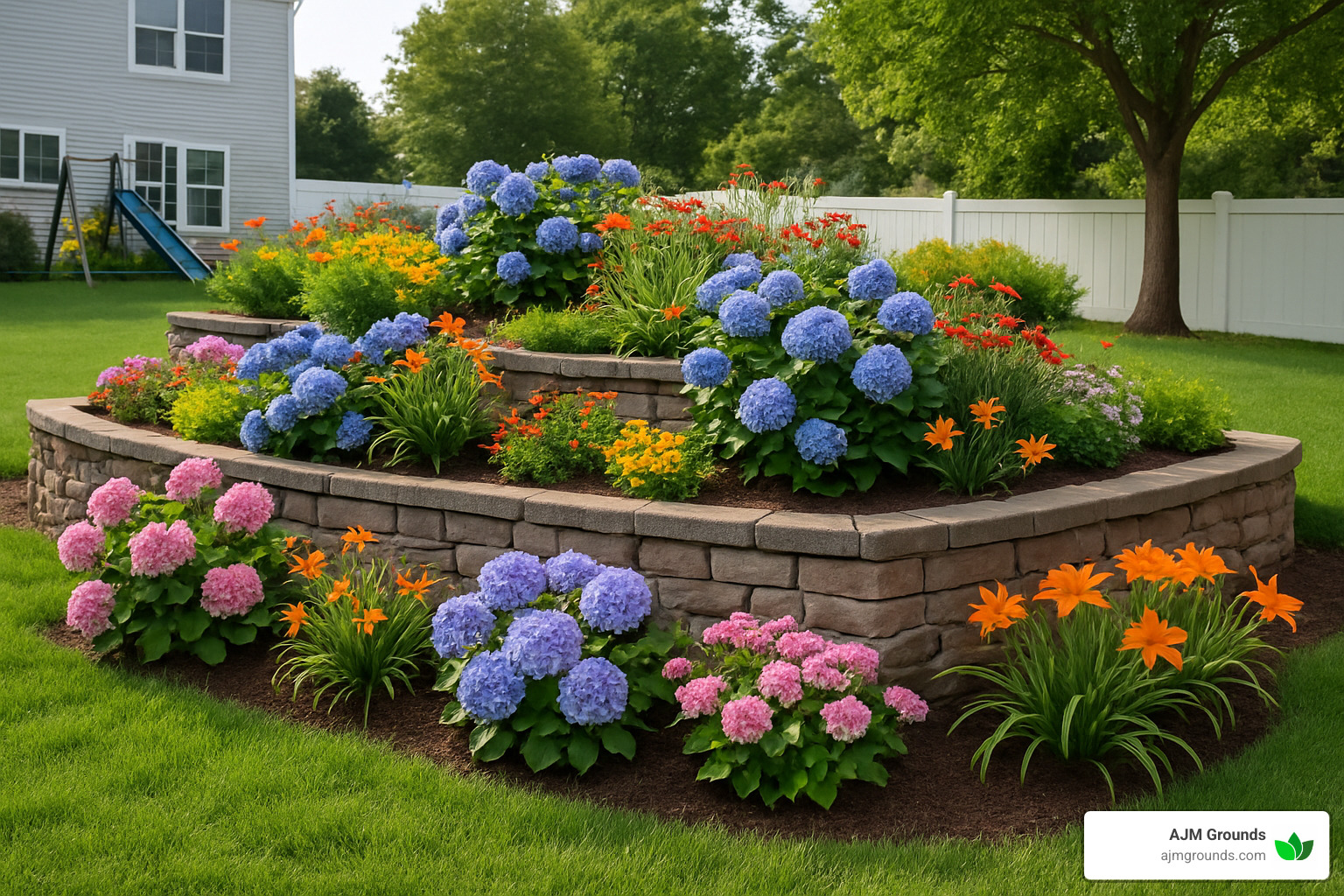
There’s something almost magical about terraced planter walls that makes them one of our most requested backyard retaining wall ideas throughout Woburn and beyond. These stepped garden beds don’t just solve slope problems – they transform challenging terrain into a cascading display of color and texture that draws the eye and invites exploration.
I remember a project we completed for a family in Burlington last spring. Their backyard sloped so steeply that the kids couldn’t even play catch without the ball rolling away. “We used to avoid our backyard because of the steep slope,” the homeowner told me afterward. “Now, our terraced retaining wall has given us three beautiful garden levels that we can easily access and enjoy. It’s like having three gardens in one!”
The beauty of these multi-tiered structures lies in their versatility. Each level becomes its own micro-garden with unique growing conditions. You might plant sun-loving perennials on the upper tier, shade-tolerant hostas on the middle, and moisture-loving ferns at the bottom – creating a dynamic landscape that showcases plants at different heights and blooming seasons.
For successful terraced walls that will stand the test of time, we typically recommend keeping each tier between 2-4 feet tall for easy maintenance, allowing at least 3-4 feet of depth between tiers for comfortable planting access, and incorporating a slight backward lean (about 1 inch per foot of height) for structural stability. Proper drainage behind each tier is absolutely non-negotiable – it’s what prevents water pressure from pushing your beautiful walls over during our notorious New England spring thaws.
Want to explore more options for garden walls? Check out our detailed guide on Retaining Walls for Gardens for additional inspiration.
Backyard retaining wall ideas for sloped yards
When Mother Nature gives you a steep slope, she’s actually offering an opportunity for dramatic landscape design. The key is working with the land rather than fighting against it.
In Bedford and Wilmington, where some properties have challenging grades, we often design walls that follow the natural contours of the landscape. Nature rarely creates perfect straight lines, and retaining walls that gently curve with the existing topography often look more organic and established.
Understanding the “angle of repose” – that’s the steepest angle loose soil can maintain without sliding – guides our approach to sloped yards. For very steep properties, we recommend a multi-tiered approach rather than attempting one massive wall. This strategy not only distributes the soil pressure more effectively but also creates multiple planting zones and makes maintenance significantly easier.
One of my favorite techniques for slope management involves what we call “infinity-edge” terracing. We’ve implemented this for several Stoneham clients, designing the top tier to visually blend with the horizon line. The effect creates a seamless transition between your built landscape and the natural environment beyond – it’s subtle but incredibly effective.
Native planting integration is another crucial element for sloped yards. Beyond their beauty, native plants have root systems perfectly adapted to our local soil conditions. These roots create a natural mesh that helps prevent erosion between and around your wall structures. When combined with proper drainage management systems that direct water away from the wall, you get a solution that’s both beautiful and functionally sound.
Cost & Material Snapshot
Choosing the right material for your terraced wall affects both its appearance and longevity. Based on internet research (not AJM Grounds pricing), here’s what you might expect to invest in different materials:
| Material | Average Cost Range (per sq ft) | Durability | Aesthetic Appeal | DIY Difficulty |
|---|---|---|---|---|
| Poured Concrete | $4.30 – $13.00 | High | Modern, industrial | Advanced |
| Interlocking Concrete Block | $5.65 – $17.00 | High | Versatile, uniform | Beginner-friendly |
| Pressure-Treated Pine | $6.15 – $18.50 | Medium (10-15 years) | Natural, warm | Intermediate |
| Natural Stone | $11.00 – $33.00 | Very High | Timeless, premium | Advanced |
| Brick | $14.00 – $42.00 | High | Classic, neat | Intermediate |
These figures represent material costs only, based on internet research. The true investment includes site preparation, drainage systems, and professional installation – all of which vary significantly depending on your unique property conditions.
Natural stone tends to be the premium choice for terraced planter walls, offering best character and longevity. However, concrete blocks have come a long way in mimicking stone’s appearance while offering easier installation and consistent sizing. For properties with rustic charm, pressure-treated timber creates a warm, natural look that complements wooded lots beautifully.
For terraced walls specifically, we often recommend materials with consistent sizing to simplify the geometric calculations needed for each tier. Interlocking concrete blocks make this process more straightforward, while still offering a range of colors and textures to complement your home’s architecture.
Gabion Bench Walls – Budget-Friendly & Bold
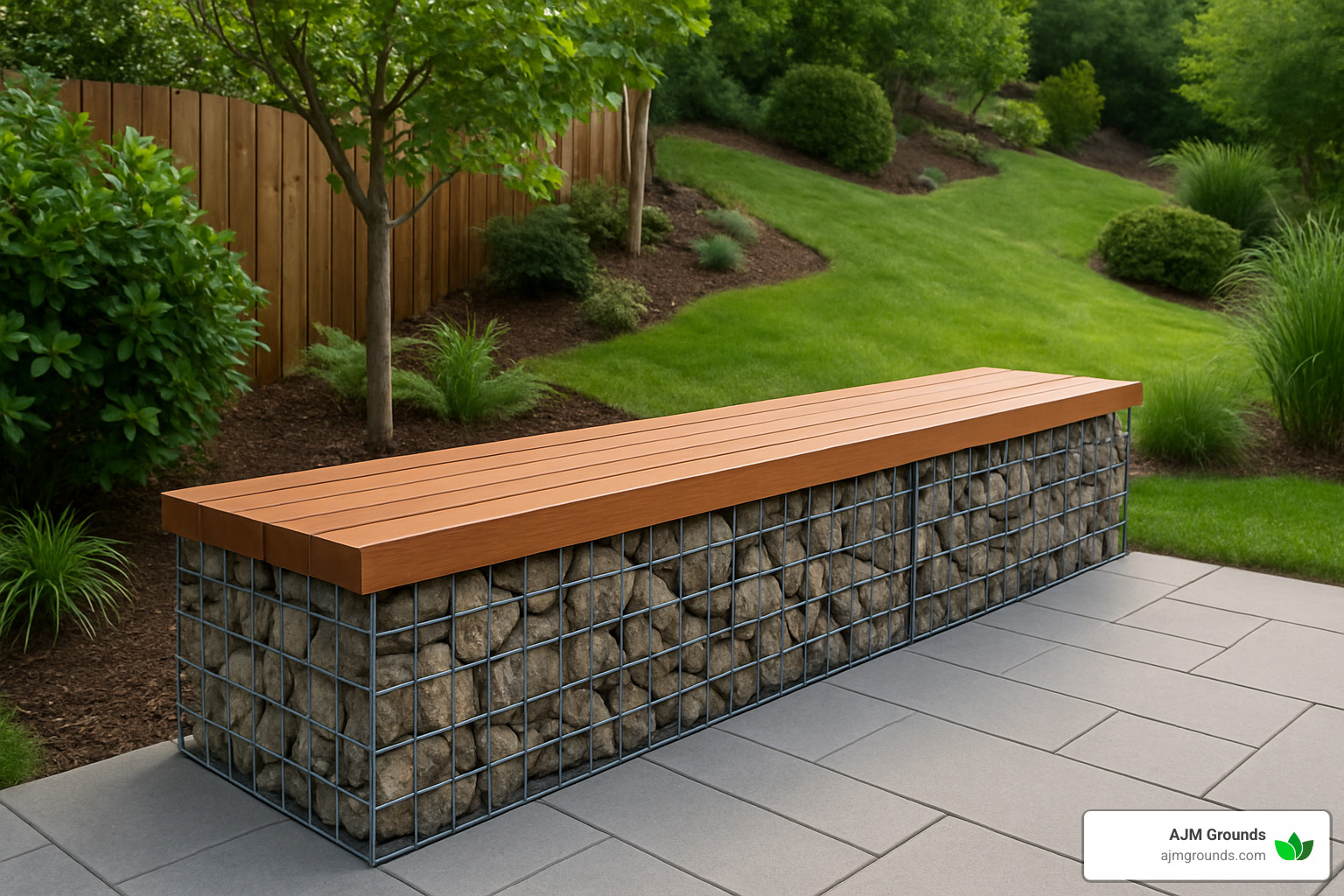
Looking for a retaining wall that makes a statement without breaking the bank? Gabion walls might be your perfect match. These eye-catching structures have become one of our most requested backyard retaining wall ideas among Burlington and Reading homeowners who want something a bit different from traditional stone or concrete.
“Gabion” comes from Italian for “big cage” – and that’s exactly what they are! Imagine sturdy wire cages filled with rocks, creating a beautiful marriage between industrial design and natural elements. The result? A permeable wall that handles drainage beautifully while providing rock-solid support for your sloped yard.
I recently chatted with a Winchester client who couldn’t stop raving about their new gabion bench wall: “We absolutely love how the industrial wire cages contrast with our natural stone. Adding that wooden bench top created our favorite morning coffee spot. It’s like having outdoor furniture that also solves our slope problem!”
What makes gabion walls truly special is their practical versatility. They naturally drain water through their structure (no more worrying about hydrostatic pressure!), can settle slightly without failing, and often use recycled or local materials for an eco-friendly touch. I’ve even noticed small creatures making homes in the rock spaces – a charming bonus for nature lovers. And topped with wood, they transform instantly into beautiful seating areas.
Assembly Basics
Don’t let their impressive appearance fool you – gabion walls are surprisingly straightforward to build. That’s why they’ve become one of the more DIY-friendly backyard retaining wall ideas for moderately skilled homeowners in the Woburn area.
When we install these structures, we start with modular kits that come in various sizes and can be combined to create different configurations. We carefully prepare a level base with compacted ground, then assemble the wire panels according to manufacturer instructions. A key professional tip: we always line the inside with landscape fabric to prevent soil from washing through while maintaining drainage.
The filling process is where both function and aesthetics come together. We strategically place larger, more attractive stones along the visible faces, while using less expensive rubble for the core – giving you the best of both worlds. For seating walls, we cap them with treated timber secured to the top of the cage.
As our lead hardscape installer likes to say, “The beauty of gabion walls is that they’re self-anchoring through their weight. For retaining walls under 3 feet, they rarely need additional anchoring systems, which makes them perfect for DIY enthusiasts.”
Backyard retaining wall ideas that double as seating
Why build separate seating when your retaining wall can pull double duty? This space-saving approach has become incredibly popular with our Woburn and Winchester clients, especially those with smaller yards where every square foot counts.
Some of our most successful dual-purpose designs revolve around creating social spaces. Firepit surrounds with curved gabion walls create intimate gathering spaces that practically beg for marshmallow roasting. Conversation nooks with L-shaped or U-shaped configurations define cozy social zones while managing your property’s elevation changes. Outdoor dining borders at a comfortable 18-20 inch height perfectly define eating areas, while step-seating for slopes creates informal amphitheater-style seating for larger family gatherings.
The secret to truly comfortable seating walls lies in the dimensions. We’ve found that 18-20 inches is the ideal height for primary seating, with at least 12 inches width for the seating surface (though 16-18 inches feels even better). A slight backward angle on the seating surface dramatically improves comfort, and we always ensure splinter-free materials for the sitting area.
A Billerica homeowner recently told me, “What I love about our gabion seating wall is how low-maintenance it is. Unlike our old wooden benches that needed regular staining, our wall seating actually looks better each year as the stones settle and the wood develops this beautiful natural patina.”
According to scientific research on soil drainage, these permeable structures provide excellent water management capabilities – a crucial factor in New England’s varied climate. Plus, their rugged industrial-meets-nature aesthetic works beautifully in both modern and traditional landscapes, making them one of the most versatile backyard retaining wall ideas we offer.
Timber Sleeper Steps – Warm Rustic Charm
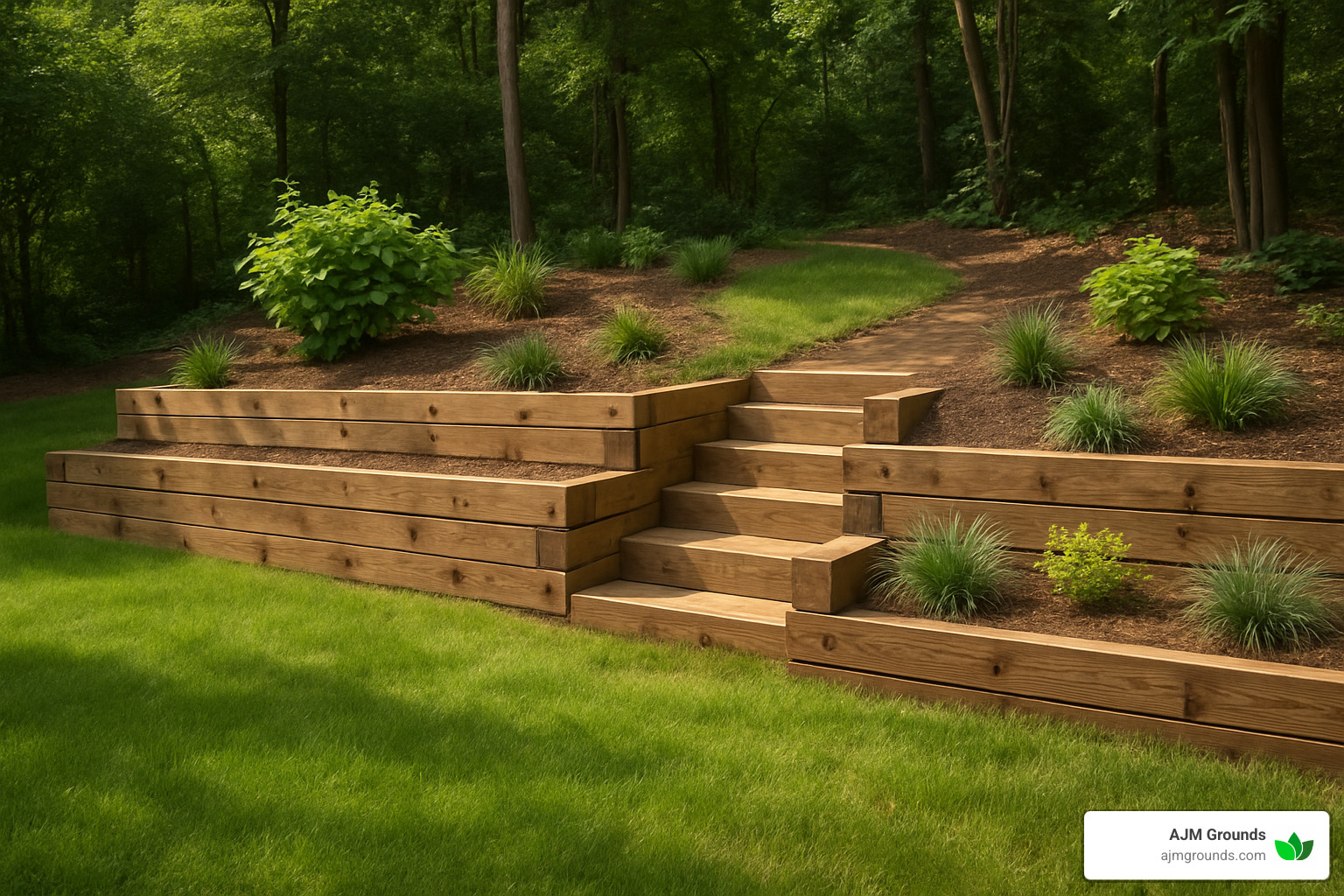
There’s something inherently inviting about wood in a landscape. For our Reading and Stoneham homeowners looking to add natural warmth to their yards, timber sleeper walls deliver that perfect balance of rustic charm and practical function. These walls use horizontal wooden beams—typically 6×6 or 8×8 pressure-treated lumber—stacked and secured to create sturdy retaining structures that feel right at home in New England’s wooded surroundings.
“If you built with Lincoln Logs as a kid, you know the basics of timber retaining walls,” jokes one landscape architect we frequently collaborate with. This intuitive construction approach makes timber walls approachable while offering tremendous design flexibility for your property.
What I love most about timber backyard retaining wall ideas is how beautifully they age in our Massachusetts climate. Rather than fighting the elements, these walls develop character over time, settling into the landscape as if they’ve always belonged there. They’re particularly effective when integrated with steps to steer sloped yards, creating a cohesive solution that handles both soil retention and accessibility challenges.
One of our Lexington clients recently shared: “The timber wall with built-in steps completely transformed how we use our backyard. Before, the steep slope made it difficult to access the lower yard. Now, the natural wood steps invite us to explore the whole property.”
For the best results with timber walls, we recommend using pressure-treated lumber rated specifically for ground contact, applying additional preservative to any cut ends, installing proper drainage behind the wall, securing each course with galvanized spikes or rebar, and incorporating tiebacks (sometimes called “deadmen”) for any walls over 3 feet tall.
Pro Tips for Longevity
While timber walls are among the more budget-friendly backyard retaining wall ideas, they typically don’t last as long as stone or concrete alternatives. That said, with proper construction and maintenance, we’ve installed timber walls throughout Woburn that have stood strong for 15-20 years.
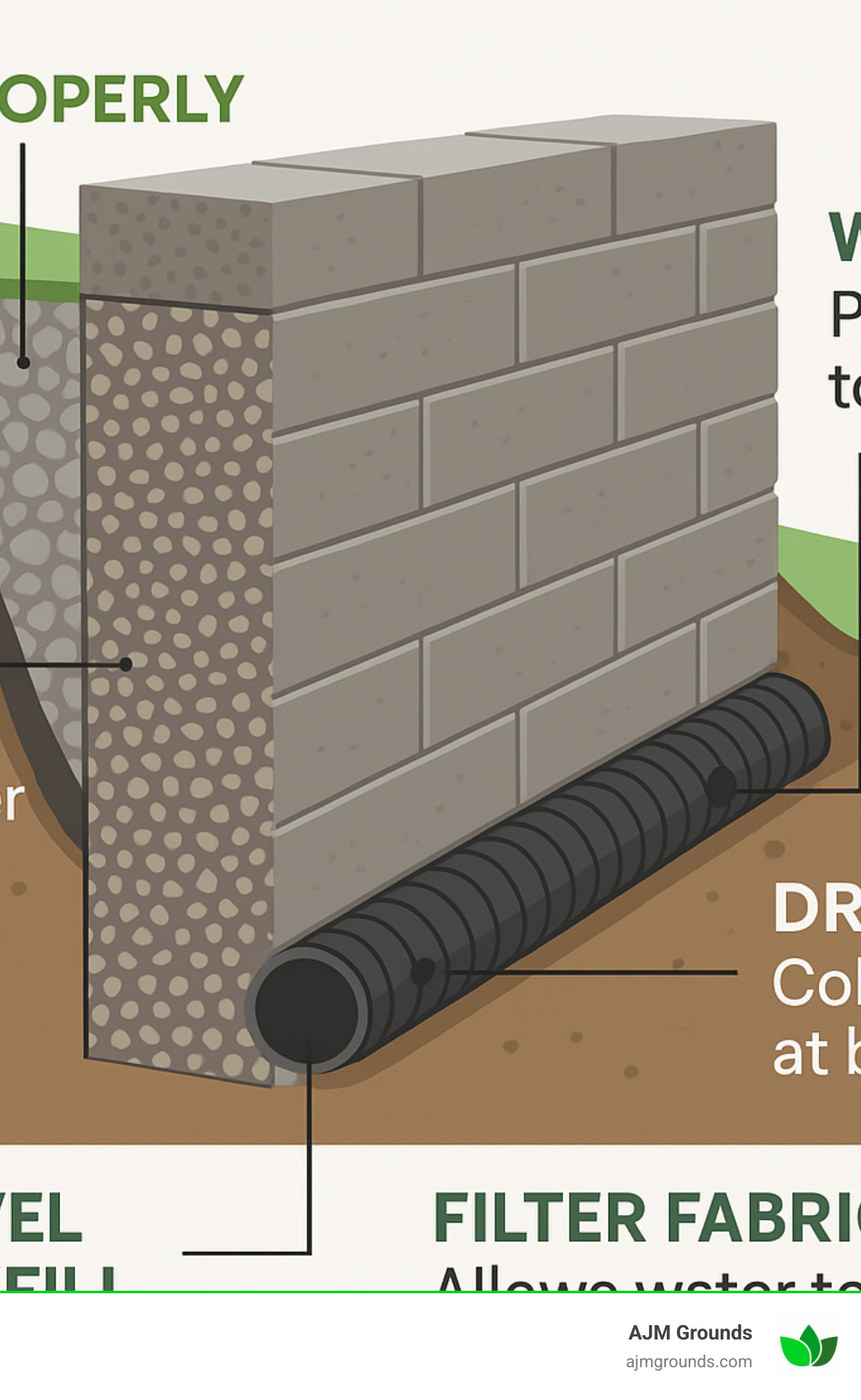
The biggest threat to your timber wall isn’t actually the weight of the soil—it’s water. “With proper drainage and protection from constant moisture, timber walls can serve beautifully for many years,” explains our construction manager. That’s why we’re meticulous about installing excellent drainage systems, including a gravel backfill layer at least 12 inches thick behind every wall, with a perforated drain pipe at the base to direct water away from the structure.
For walls exceeding 3 feet, we always install tiebacks—horizontal members that extend into the hillside—every 4-6 feet to provide additional stability. Even though your lumber comes pressure-treated, we apply additional preservative sealer, especially at cut ends and joints where moisture can penetrate.
We generally recommend keeping timber walls under 5 feet unless they’re designed by an engineer. The bottom course of timbers should always rest on a gravel base below the frost line, and we incorporate geotextile fabric between the soil and drainage gravel to prevent clogging. A slight backward lean of approximately 1 inch per vertical foot helps the wall resist the pressure of the soil behind it.
When integrating steps into your timber wall—which creates a beautiful, cohesive look—safety becomes our priority. We design stairs with a minimum width of 3 feet, comfortable tread depths between 10-14 inches, and consistent riser heights between 6-8 inches. Non-slip surfaces for treads and adequate lighting ensure safe navigation after dark.
The natural warmth of timber creates an inviting transition between different areas of your yard. As one Burlington homeowner told us after we completed their terraced timber project, “The wooden steps feel like they’re guiding you on a journey through the garden. They’ve completely changed how we experience our outdoor space.” For more information about integrating these charming structures into your landscape, check out our detailed guide on Landscape Retaining Walls.
Mixed-Material Modern Walls – Concrete Meets Steel
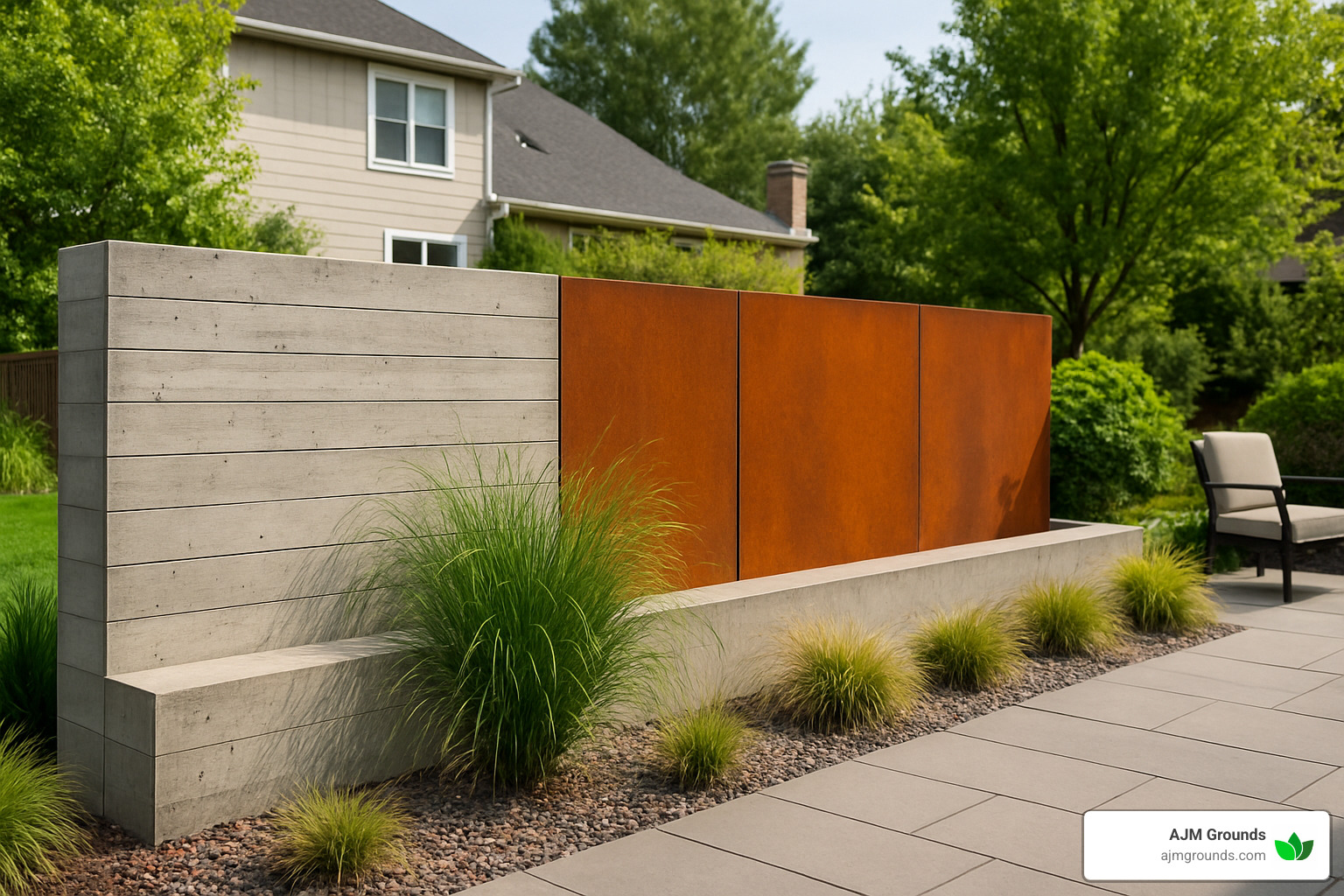
If you’re looking to make a bold architectural statement in your landscape, mixed-material walls might be just what you need. For our Winchester and Burlington clients seeking contemporary backyard retaining wall ideas with serious wow-factor, these innovative structures have become our most talked-about installations.
What makes these walls special is the thoughtful combination of different materials—primarily concrete and metal—that creates visual drama while maximizing the strengths of each element. The contrast between smooth concrete and weathered steel creates a designer look that feels both modern and timeless.
“My neighbors keep asking who designed our backyard,” laughs a Winchester homeowner whose sloped property now features a stunning concrete and Corten steel retaining wall. “The wall has become this conversation piece that defines our outdoor space. Even better, it solved our erosion issues while giving us this perfect backdrop for our garden.”
The magic happens when board-formed concrete meets Corten steel panels. The concrete provides the muscle—structural strength with a textured surface that captures fascinating shadow patterns throughout the day. Meanwhile, the Corten steel brings the warmth—developing a rich, rust-colored patina over time that only improves with age, adding that perfect touch of industrial character to the landscape.
These walls aren’t just pretty faces, though. They’re workhorses that can handle significant grade changes while creating clean, architectural lines that complement contemporary homes. The combination of materials allows these walls to develop unique textures and patinas that actually look better as they age—unlike many landscape features that deteriorate over time.
Design Improvements
What lifts a mixed-material wall from merely functional to absolutely breathtaking are the thoughtful design details we incorporate. When planning these walls for our Woburn area clients, we focus on elements that transform them into true landscape features.
Integrated lighting makes these walls come alive after dark. During construction, we install conduit that allows for LED strip lighting along the base or top of the wall. This creates dramatic nighttime effects that highlight the wall’s texture while providing practical illumination for pathways and steps.
Vertical planting opportunities soften the industrial edge of these structures. We often design special pockets or attachment systems that allow cascading plants to spill over the wall face, creating a beautiful juxtaposition of hard and soft elements.
Contrasting textures create visual interest that changes throughout the day. The interplay between smooth concrete panels and the rich texture of weathered steel creates shadow patterns that shift with the sun’s movement, making the wall a dynamic element in your landscape.
“What I love most about our wall is how it looks different every time I see it,” explains a Burlington client. “In the morning light, the concrete has this warm glow, and by evening, the steel sections catch the sunset in this incredible way. It’s like living with a piece of art that changes with the seasons.”
When designing these walls, we’re careful to consider how they’ll weather in our challenging New England climate. The materials we select actually benefit from exposure to the elements—Corten steel develops its signature patina, while concrete takes on subtle color variations that add character over time.
For homeowners interested in this style, we recommend working with a designer who understands both the aesthetic and structural requirements of mixed-material walls. Proper drainage and structural support are critical, especially for walls exceeding 4 feet in height.
Planning ahead for utilities is essential too. Adding electrical conduit for lighting or plumbing for water features is much simpler during initial construction than trying to retrofit these elements later. We can even incorporate custom metalwork like decorative panels or address numbers that make your wall truly one-of-a-kind.
Want to learn more about how retaining walls can transform sloped properties? Check out our detailed guide on Retaining Walls for Slopes for additional inspiration and technical information.
Frequently Asked Questions about Backyard Retaining Wall Ideas
After installing hundreds of retaining walls throughout Woburn and nearby towns, I’ve noticed homeowners tend to ask similar questions. Let me share the answers to what my clients most commonly want to know about backyard retaining wall ideas:
Do I need permits for a backyard retaining wall?
This is probably the most frequent question I hear during initial consultations. The short answer is: it depends on your wall’s height and location.
Most towns in our area require permits for walls exceeding 3-4 feet tall, though the exact threshold varies. In Woburn specifically, you’ll typically need a building permit for anything over 4 feet, and an engineer may need to sign off on your plans.
Permit requirements also kick in when your wall is near property lines, supports structures like driveways, or might change drainage patterns affecting your neighbors.
One Bedford homeowner learned this lesson the hard way: “I thought since the wall was in my backyard, I didn’t need to check with anyone. Six months later, I had to modify the entire structure to meet code requirements. Trust me—check first!”
I always recommend a quick call to your local building department before breaking ground. That five-minute conversation could save you thousands in potential modifications later.
How do I keep water from pushing my wall over?
Water pressure is the silent wall-killer in New England. With our freeze-thaw cycles and heavy spring rains, proper drainage isn’t just important—it’s essential.
When we build retaining walls in places like Winchester or Burlington, we implement a comprehensive drainage system that includes several key elements. We start with a thick layer of drainage gravel (at least 12 inches) behind the wall to create a zone where water can freely move instead of building up pressure. We then install perforated pipe at the wall’s base to collect and direct that water away from the structure.
For taller walls, we also incorporate weep holes—small openings in the wall face that allow water to escape. We always wrap the drainage gravel in geotextile fabric to prevent soil from washing into and clogging the drainage system over time.
“My previous wall failed after just five years,” shared a Stoneham client. “When AJM rebuilt it with proper drainage, I was shocked at how much more extensive the unseen parts were compared to the visible wall. Ten years later, it’s still standing perfectly.”
Remember: the parts of your wall nobody sees are often the most important for its long-term success.
What’s the easiest DIY material for beginners?
For homeowners wanting to tackle a smaller retaining wall project themselves, I typically recommend interlocking concrete blocks. These manufactured blocks are specifically designed for retaining walls and offer several advantages for first-timers:
They don’t require mortar—they simply stack and lock together. Their uniform sizes make planning straightforward, and many include built-in setback for proper wall lean. They come in various colors and textures to match your landscape style, and they’re relatively lightweight compared to natural stone. Best of all, manufacturers provide clear installation guidelines you can follow.
“I was nervous about building my own wall,” one Reading client told me, “but the interlocking blocks were actually quite intuitive once I got started. The hardest part was getting the base perfectly level—after that, it was almost like building with giant Legos.”
For DIY projects, I recommend keeping your wall under 3 feet tall. Beyond that height, the structural considerations become more complex, and professional installation ensures both safety and longevity.
Other DIY-friendly options include timber walls for straight runs and rustic aesthetics, gabion cages for a more contemporary look, and stacked stone for very low decorative walls under 2 feet.
Conclusion
There’s something magical about changing an awkward slope into a beautiful, functional space with the right backyard retaining wall ideas. Whether you’re drawn to the classic elegance of terraced stone, the contemporary flair of concrete and steel, the warm invitation of timber, or the industrial-chic vibe of gabion cages – these structures do far more than just hold back soil. They create new possibilities for your outdoor living.
I’ve seen the change across Woburn, Bedford, Billerica and surrounding communities. Homeowners often tell me how surprised they are at how much a well-designed retaining wall changes how they use and enjoy their property. What was once an unusable hillside becomes a favorite garden spot or entertaining area.
“We never thought we’d spend so much time in that corner of our yard,” one Lexington client told me recently. “Now it’s where we have morning coffee, evening drinks, and everything in between!”
As you consider your own retaining wall project, keep these essential points in mind:
Your wall should complement your home’s architecture – this visual harmony makes the wall feel like it was always meant to be there. And while looks matter, proper drainage is absolutely critical for longevity. I’ve seen beautiful walls fail prematurely simply because water management wasn’t properly addressed.
Think beyond the basic function too. Could your wall incorporate built-in seating? What about integrated planters or lighting? These multi-functional elements often deliver the greatest satisfaction over time.
Be sure to respect height limitations in your town (generally anything over 4 feet requires permits in our area), and consider the long-term maintenance requirements of different materials. That gorgeous natural stone might be worth the investment if you’re looking for multi-generational durability, while timber offers warmth at a lower price point but will eventually need replacement.
At AJM Grounds, we bring over 15 years of experience to every retaining wall project. We combine technical know-how with creative design sensibilities to deliver solutions that improve both the beauty and functionality of your outdoor space. From the first conversation about your needs to the final walkthrough of your completed project, our team is committed to creating something you’ll love for years to come.
Ready to explore how a retaining wall could transform your challenging landscape? Let’s talk about the possibilities. Your sloped yard has untapped potential just waiting to be revealed.
More info about retaining wall construction
