

Why Your Property Needs a Professionally Built Retaining Wall
Finding the right Retaining Wall Installer can transform your sloped yard into a functional, beautiful outdoor space. A professional retaining wall provides:
Key Benefits:
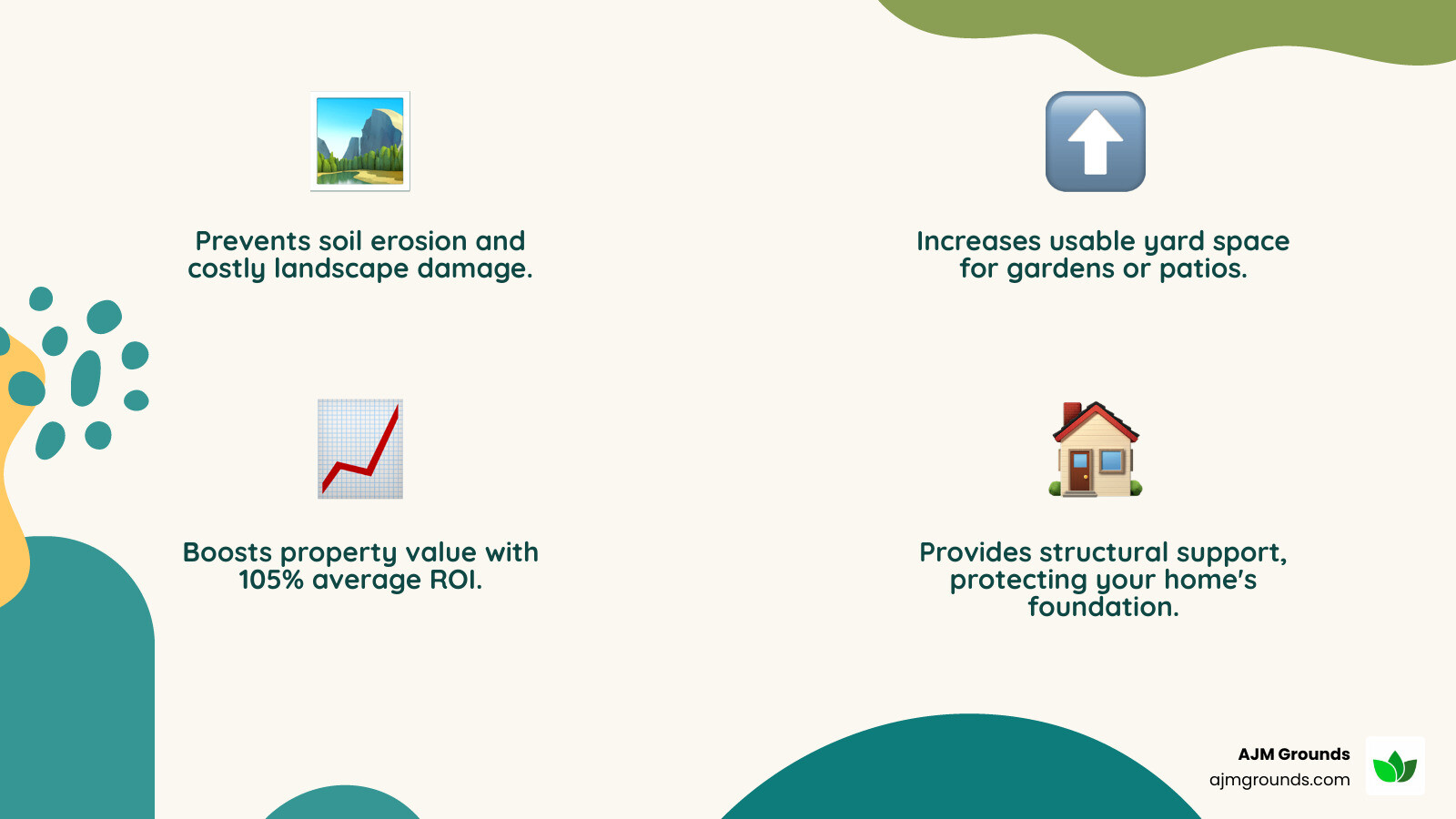
- Soil erosion control – Prevents costly landscape damage
- Increased usable space – Creates level areas for gardens or patios
- Improved property value – Landscape redesigns see an average of 105% value recovery
- Structural support – Protects your home’s foundation from water damage
Retaining walls are structural investments that solve serious property problems while adding visual appeal. Whether you’re dealing with a steep slope or water runoff, the right installer makes all the difference.
When slopes threaten your landscape, soil erosion can damage expensive plantings and your home’s foundation. Professional retaining walls are designed to last 50-100 years, making them a smart long-term solution.
However, not all installers are created equal. Poor installation can lead to wall failure, water damage, and costly repairs. The key is knowing what to look for and which questions to ask.
I’m John Caplis, owner of AJM Grounds LLC, and I’ve spent years helping Woburn homeowners find qualified Retaining Wall Installer professionals. Through proper planning and contractor selection, you can avoid common pitfalls and ensure your investment delivers lasting results.
Retaining Wall Installer vocabulary:
The 5-Step Guide to Finding Your Expert Retaining Wall Installer
Finding the perfect Retaining Wall Installer doesn’t have to be overwhelming. This straightforward five-step process, developed from helping countless Woburn homeowners, takes the guesswork out of hiring the right contractor.
Think of this as your roadmap to a retaining wall you’ll love for decades.
Step 1: Define Your Project & Understand the Basics
Before calling contractors, clarify your needs to communicate effectively and get accurate quotes.
Understanding Your Why
Know your primary goal: Are you battling soil erosion, creating usable space for a garden, or adding structural support to protect your foundation? A well-built wall can do it all while boosting property value. The National Association of Realtors reports that landscape redesigns, including retaining walls, offer an impressive 105% value recovery.
Assessing Your Site
Assess your site: Consider the location (accessibility for equipment), the desired height and length, and your drainage needs. Poor drainage is the top cause of wall failure, so understanding water flow is crucial. For challenging slopes, our guide on Retaining Walls for Slopes offers valuable insights.
Choosing Your Materials
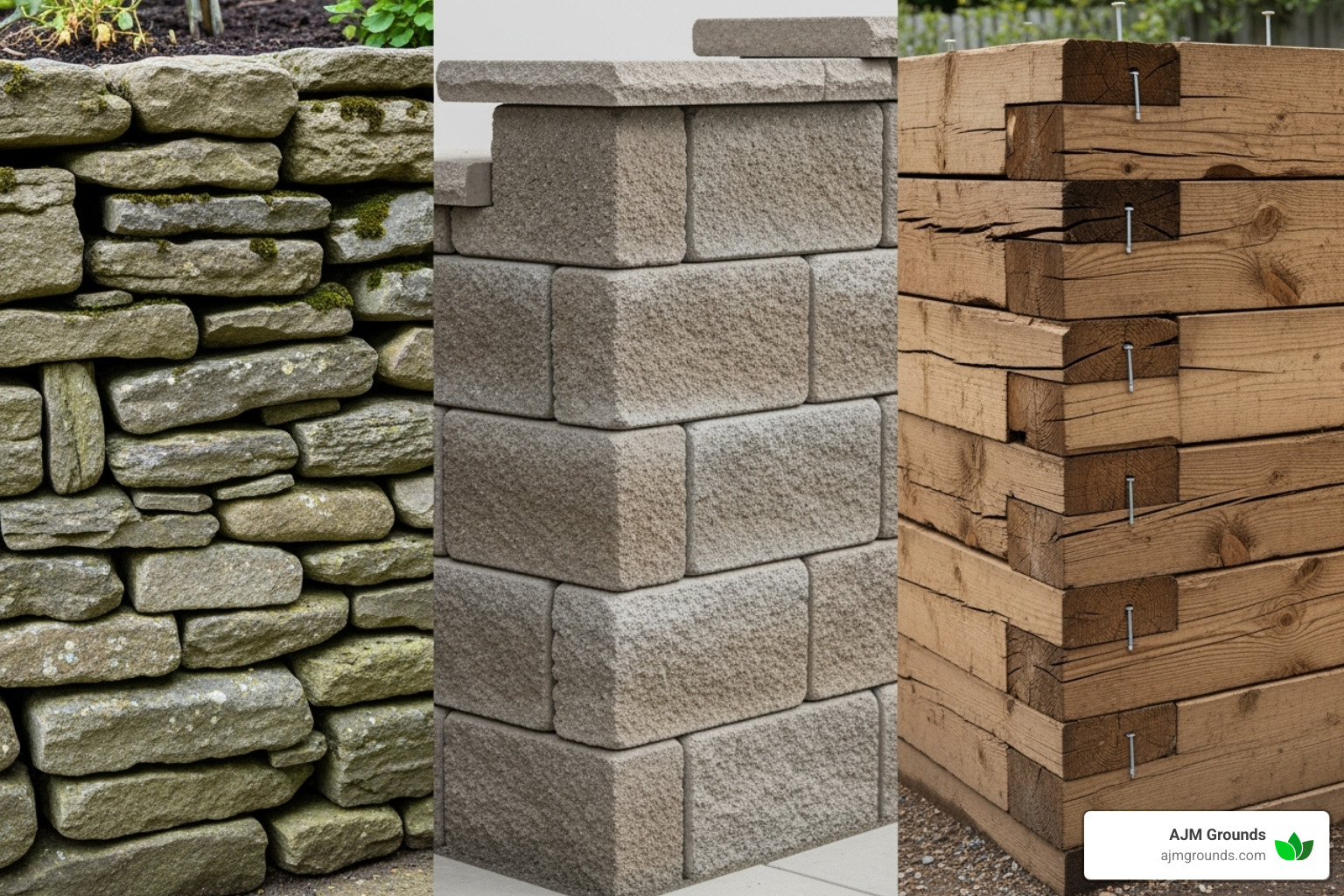
The material you select affects appearance, longevity, and cost. Popular choices include versatile concrete blocks, beautiful but pricier natural stone, and timber, which has a shorter lifespan in New England’s climate.
| Material | Pros | Cons | Average Cost | Lifespan |
|---|---|---|---|---|
| Concrete Blocks | Versatile, cost-effective, easy installation, consistent sizing | Limited natural appearance, may fade over time | Lower cost option | 50-100 years |
| Natural Stone | Beautiful, unique appearance, excellent durability, increases property value | Higher cost, requires skilled installation, weight considerations | Higher investment | 50-100+ years |
| Timber | Natural appearance, lower initial cost, easier for DIY projects | Shorter lifespan, susceptible to rot and insects, limited height applications | Moderate cost | 10-25 years |
Natural Stone Retaining Walls remain a favorite for that classic New England look, and the investment often pays off in beauty and durability. A qualified Retaining Wall Installer will help you weigh these factors for your Woburn property.
Step 2: Researching Your Local Retaining Wall Installer
Now that you know what you want, it’s time to find the right professional.
The DIY Decision
While small, decorative walls under 2 feet can be a DIY project, professional expertise is crucial for more substantial structures. Hire a Retaining Wall Installer if your wall is:
- Over 3-4 feet high (often requiring permits and engineering).
- On complex slopes or unstable terrain.
- Needed to solve poor drainage or water issues.
- Providing structural support for a building.
Professional installation is often more cost-effective than DIY when you factor in time, tool rental, and potential mistakes.
Finding Quality Contractors
To find quality contractors:
- Check licenses and insurance: This protects you from liability. A legitimate contractor provides this readily.
- Read online reviews and ask for local references: Get insights into real customer experiences.
- Review their portfolio: Look for examples of projects similar to yours to gauge their technical and aesthetic skills.
- Understand their specialties: Ensure they are a good fit. For example, experience with New England’s soil and weather is vital for long-term wall performance and broader Landscape Design Installation projects.
Step 3: Questions to Ask a Potential Retaining Wall Installer
Once you have a shortlist, ask these questions to gauge expertise and process.
Process and Experience Questions
- “Can you walk me through your installation process?” Look for clear steps: assessment, excavation, foundation, construction, drainage, backfilling, and final grading.
- “What’s your experience with similar projects in our area?” Local experience with soil, weather, and codes is crucial for long-term performance.
Timeline and Team Questions
- “What’s your estimated timeline, and how do you handle delays?” Experienced contractors provide realistic estimates and clear communication.
- “What size crew will work on our project, and what are their qualifications?” Know who is working on your property.
Technical and Quality Questions
- “How will you address drainage?” This is critical. They should mention perforated pipes, gravel backfill, and water management.
- “What materials do you recommend and why?” Their answer should align with your needs and budget.
- “How do you ensure wall stability?” They should discuss proper foundation, reinforcement, and engineering principles.
Business and Warranty Questions
- “What warranty do you offer?” Reputable contractors offer clear warranties on materials and workmanship.
- “How do you handle unexpected issues?” This tests their problem-solving skills. (Always call 811 before digging).
- “What is your communication process?” Consistent updates are key to a smooth project.
For deeper technical insights, explore our Retaining Wall Construction page.
Step 4: Evaluate Bids and Understand Cost Factors
Smart comparison shopping ensures you get the best value for your investment.
Smart Bid Comparison
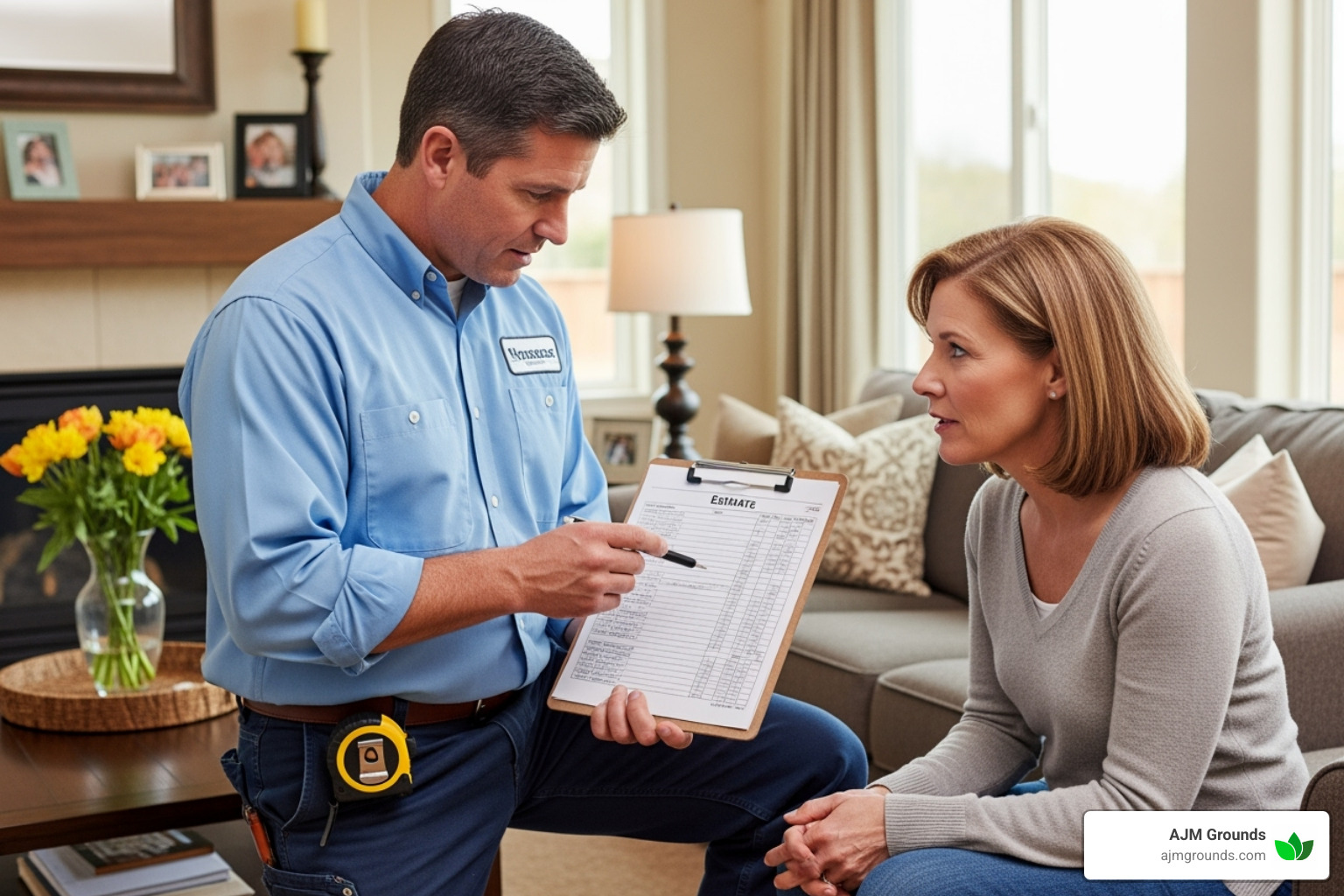
Don’t just look at the bottom line. Compare quotes for a detailed scope of work, material specifications, labor costs, drainage plans, and permit fees. A low bid might skip crucial steps like proper drainage, while a high bid may include premium materials. Understanding these differences is key.
Understanding Cost Factors
Retaining wall costs vary widely. These are average costs based on internet data and not actual costs for AJM Grounds. While national averages range from $1,500 to over $10,000, your project’s cost depends on:
- Materials: A 60-foot, 4-foot high concrete block wall might range from $6,000-$18,000, while natural stone could be $8,000-$24,000.
- Labor: Typically $50-$100 per hour for professional crews.
- Site Conditions: Accessibility, excavation needs, and soil type affect cost.
- Wall Design: Height, length, and complexity directly impact material and labor needs. Taller walls require more engineering.
- Drainage: An essential investment for long-term success.
The national average cost per linear foot is roughly $114-$350, but your project may vary based on its unique requirements. For detailed cost breakdowns, visit our Retaining Wall Construction Cost page.
Step 5: Review Contracts, Permits, and Finalize Your Choice
These final steps protect your investment and ensure a smooth process.
Contract Essentials
A comprehensive contract protects everyone. Ensure it includes:
- A detailed scope of work (materials, dimensions, drainage).
- Total project cost with a breakdown of materials and labor.
- A reasonable payment schedule (avoid large upfront payments).
- Project timeline estimates.
- Warranty details.
- A change order process.
- Insurance and licensing verification.
- A dispute resolution clause.
Permit Requirements
Don’t skip permits. Local codes ensure safety. You may need a permit for walls over 3-4 feet high, depending on your municipality. This may require engineered drawings and fees but ensures peace of mind. Always check with your local building department in Woburn or a surrounding town. A professional Retaining Wall Installer can guide you through this process.
Making Your Final Choice
Trust your research and your instincts. Choose the contractor who demonstrated clear communication, professionalism, and expertise. A good working relationship matters. By following these steps, you’ll confidently select a Retaining Wall Installer who delivers lasting quality and beauty.
After the Hire: Wall Maintenance and Final Thoughts
Congratulations on your new retaining wall! Like any home investment, it will benefit from ongoing attention to ensure it lasts for decades.
Signs an Existing Retaining Wall May Need Repair or Replacement
Even well-built walls can show wear. While designed to last 50-100 years, watch for these warning signs:
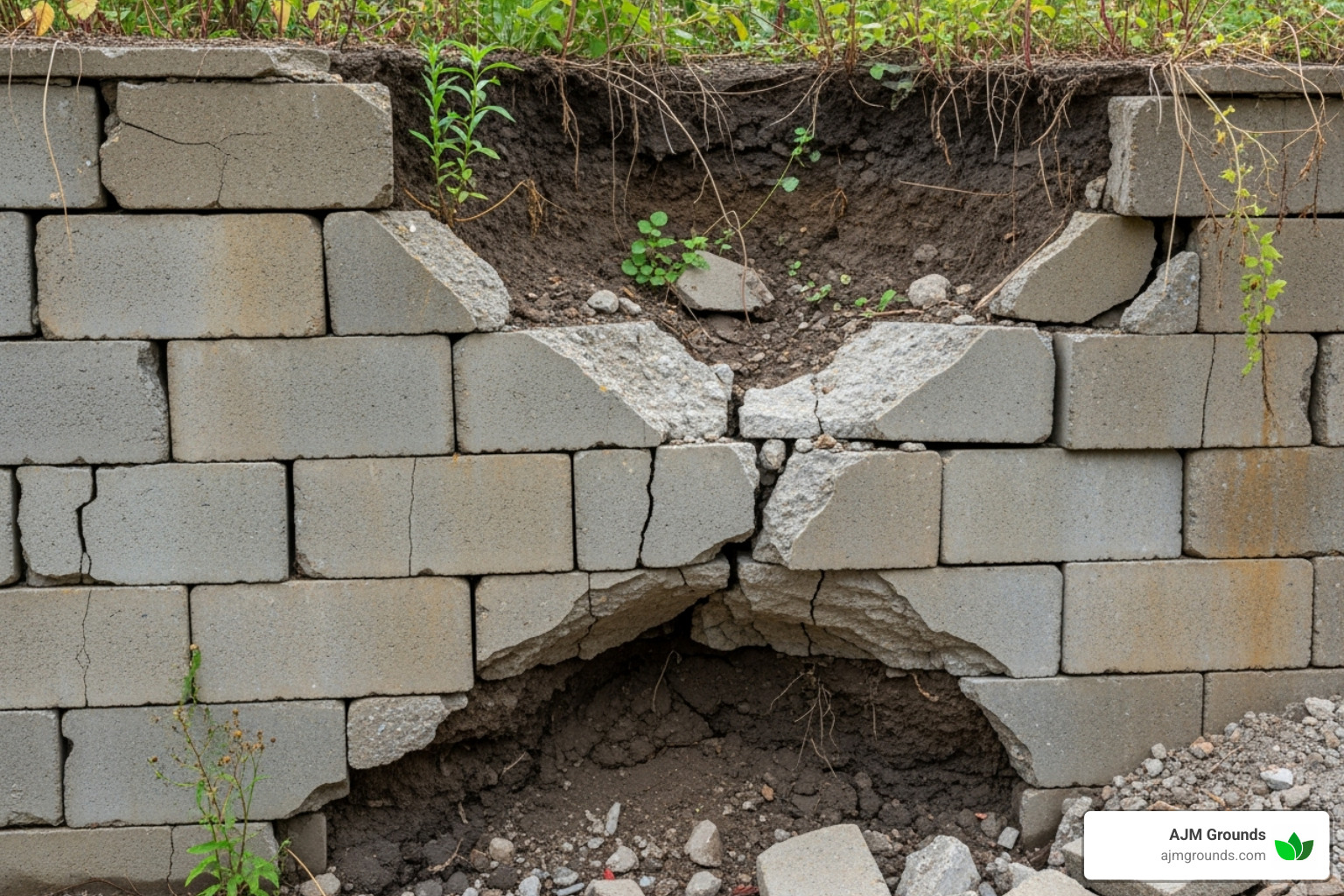
- Cracking: Large, growing, or horizontal cracks signal structural problems.
- Bulging or Leaning: If sections are pushing outward or tilting, the wall is failing against soil pressure. This requires immediate professional help.
- Water Issues: Pooling water at the base or seepage through the wall face indicates drainage failure, a leading cause of collapse.
- Separation or Erosion: Gaps between wall sections or soil washing away from the base can undermine the foundation.
If you spot these issues, contact a professional Retaining Wall Installer immediately. Early detection can prevent a complete collapse and more expensive repairs.
Routine Maintenance for Longevity
A little routine maintenance goes a long way toward protecting your investment.
- Check Drainage: Every few months, ensure weep holes are clear of debris to prevent water pressure buildup.
- Manage Vegetation: Remove weeds or large plants growing in wall joints, as their roots can cause damage.
- Monitor for Erosion: Check the soil at the base and top of the wall. Add soil or ground cover if you notice erosion.
- Regular Inspections: Casually look for new cracks, shifting, or settling when you’re in the yard.
- Manage Water Runoff: Ensure surface water from gutters and grading flows away from the wall, not toward it.
How Retaining Walls Improve Aesthetic Appeal and Property Value
Beyond solving practical problems, retaining walls add significant beauty and value. They create visual interest with varied elevations, enabling multi-tiered gardens and defined outdoor living spaces. A well-designed wall transforms a challenging slope into a functional and beautiful landscape asset, boosting curb appeal and market value.
At AJM Grounds, we take pride in creating retaining walls that are both structurally sound and beautiful. Our attention to detail and personalized service ensure your wall will serve you well for years. We’re proud to serve homeowners and businesses throughout Woburn, MA, and the surrounding communities including Bedford, Billerica, Burlington, Lexington, Reading, Stoneham, Wilmington, and Winchester.
Whether you’re planning a new retaining wall project or need repairs on an existing one, we’re here to help. For expert advice and professional installation, explore our Hardscaping Services or visit our dedicated Retaining Wall Construction page. Let us help you transform your outdoor space.
