

Why Retaining Walls with Seating Are Changing Backyards
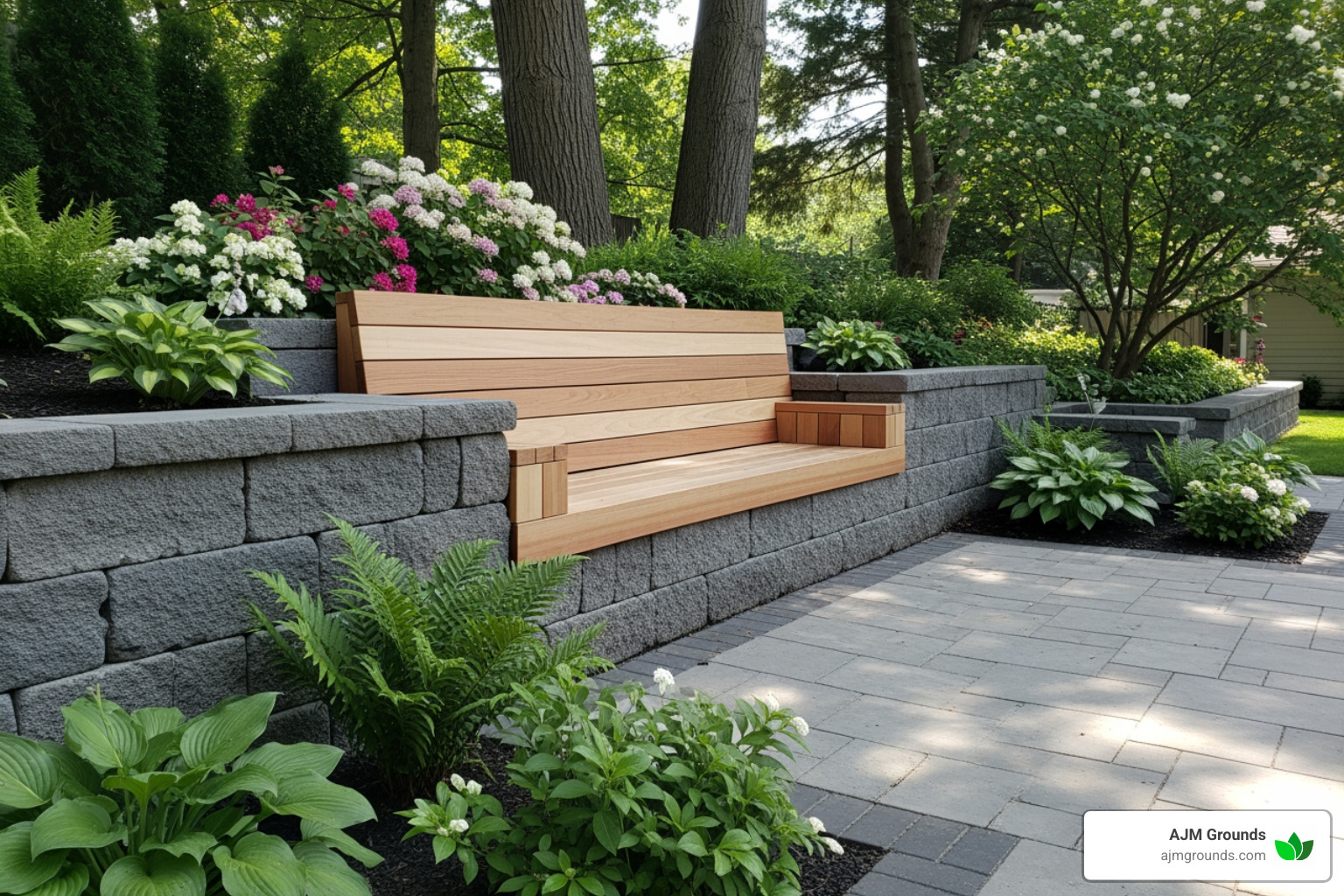
Retaining walls with seating combine structural function with built-in comfort, turning a necessary landscape feature into a multi-purpose outdoor living asset. Here’s what makes them valuable:
- Dual Purpose: Manages soil erosion and provides permanent seating.
- Space Maximization: Eliminates the need for bulky outdoor furniture.
- Standard Dimensions: 18-22 inches tall and 12-18 inches deep for comfort.
- Design Flexibility: Works around fire pits, patios, and gardens.
- Durability: Outlasts traditional furniture exposed to weather.
- Property Value: Improves curb appeal and functional outdoor space.
According to the American Society of Landscape Architects, built-in seating is a top 10 trend in outdoor living, reflecting a shift toward creating permanent, functional outdoor rooms.
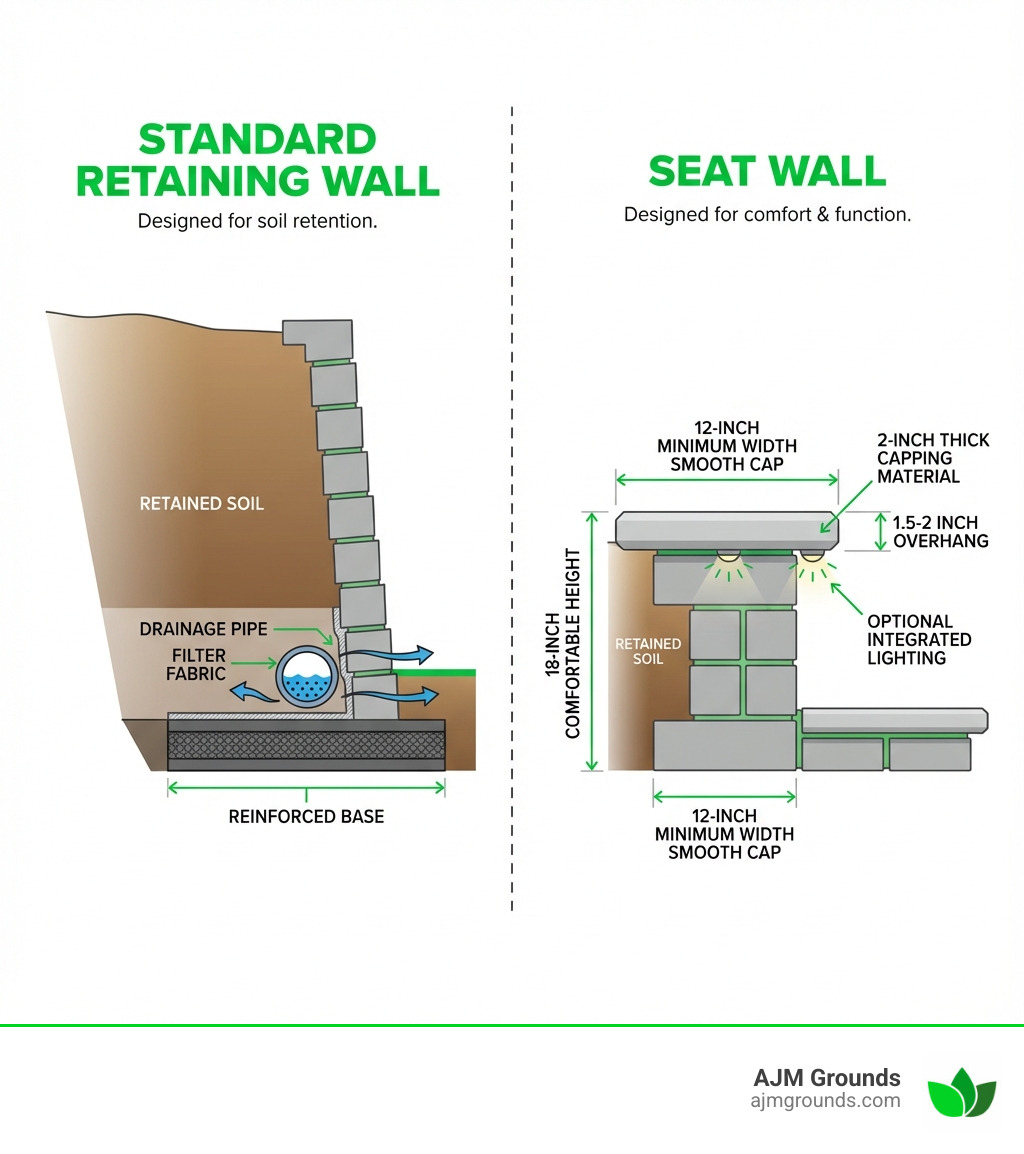
A standard retaining wall just holds back soil. A seat wall is specifically designed at a comfortable sitting height—typically 18 inches—with a smooth, wide cap (minimum 12 inches) that invites people to sit. Many homeowners extend a necessary retaining wall slightly above grade to create year-round seating.
As John Caplis, owner of AJM Grounds LLC, I’ve helped countless homeowners in Woburn, MA transform sloped yards into functional gathering spaces using retaining walls with seating. Our team specializes in designing seat walls that balance structural integrity with comfort, creating outdoor spaces that families actually use.
Retaining walls with seating terms made easy:
Designing and Building Functional Retaining Walls with Seating
At AJM Grounds, we believe your outdoor space should be an extension of your home. Incorporating retaining walls with seating is a brilliant way to achieve this, offering benefits beyond simple aesthetics.
The primary benefits are both practical and aesthetic. They maximize outdoor space by adding function to a structural element, creating a cohesive look. For example, in a sloped Woburn, MA backyard, a retaining wall can level a patio area while its seating ledge becomes an inviting spot to relax. In smaller Lexington, MA gardens, a low wall along a flower bed can double as a bench.
Built-in seating offers year-round use and is far more durable than traditional outdoor furniture. By defining outdoor “rooms,” these structures improve your hardscape landscaping and significantly increase property value, turning a necessity into a beautiful design feature.
The Foundation of Comfort: Sizing and Dimensions
When designing retaining walls with seating, comfort is paramount. We focus on ergonomic dimensions to ensure your built-in seating is enjoyable. The key measurements are:
- Height: The industry standard is 18 to 22 inches tall, allowing most adults to sit and rise with ease. The average is 18 inches but can be adjusted.
- Depth: A minimum of 12 inches is recommended, with 18 inches being optimal for comfort. This ensures enough surface area to sit without feeling perched.
- Width: Plan for 22-24 inches of width per person to prevent crowding.
Our team considers these factors during the landscape design installation process to create functional and comfortable outdoor spaces for clients in Burlington, MA, and surrounding areas.
Choosing the Right Materials and Capping
The materials for your retaining walls with seating affect both aesthetics and durability. Popular wall options include natural stone retaining walls for an organic look or concrete block retaining wall construction for a uniform appearance. Modular blocks are also highly adaptable.
The seating surface itself requires special attention for comfort. A smooth surface is always preferred over rough flagstone or irregular materials, which can be uncomfortable and snag clothing. We prioritize materials that are pleasant to the touch and can withstand the Massachusetts climate.
Capping transforms the wall into a seat. Best practices include:
- Cap Thickness: A minimum of 2 inches for a substantial look and feel.
- Overhang: 1.5 to 2 inches on each side. This adds aesthetic appeal and directs water away from the wall face, preventing staining.
- Visuals: A contrasting color between the cap and wall material can create a striking look.
Key Steps for a Sturdy and Lasting Installation
Building a sturdy seat wall requires careful planning and execution. Our team at AJM Grounds follows proven steps to ensure the stability of your retaining walls with seating.
- Site Preparation: We choose the ideal location and excavate an area wider than the planned wall for a stable foundation.
- Subbase Compaction: The soil in the excavated area is thoroughly compacted to prevent future settling.
- Gravel Base: A 4- to 6-inch compacted gravel base is laid for drainage and support. Learn more about the paver base for retaining wall.
- Leveling the Base: Unlike sloped patios, a seat wall base must be perfectly level for comfortable seating. We use a thin layer of sand to fine-tune the grade.
- Stacking Blocks: The first course of blocks is installed and carefully leveled.
- Masonry Adhesive: Subsequent layers are bonded with high-quality masonry adhesive, with staggered corners for maximum stability. This is crucial for a wall that will bear the weight of people. Our guide on how to install a block retaining wall has more details. For more on seat wall construction, see this resource from LSU AgCenter.
Creative Ways to Integrate Retaining Walls with Seating
The versatility of retaining walls with seating allows for many creative integrations that can transform your landscape.
One popular application is a cozy firepit seating area. A curved seat wall around a fire pit in your Billerica, MA yard provides ample seating and helps reflect heat. An L-shaped wall can complement a square fire pit, defining the space and creating a cozier environment.
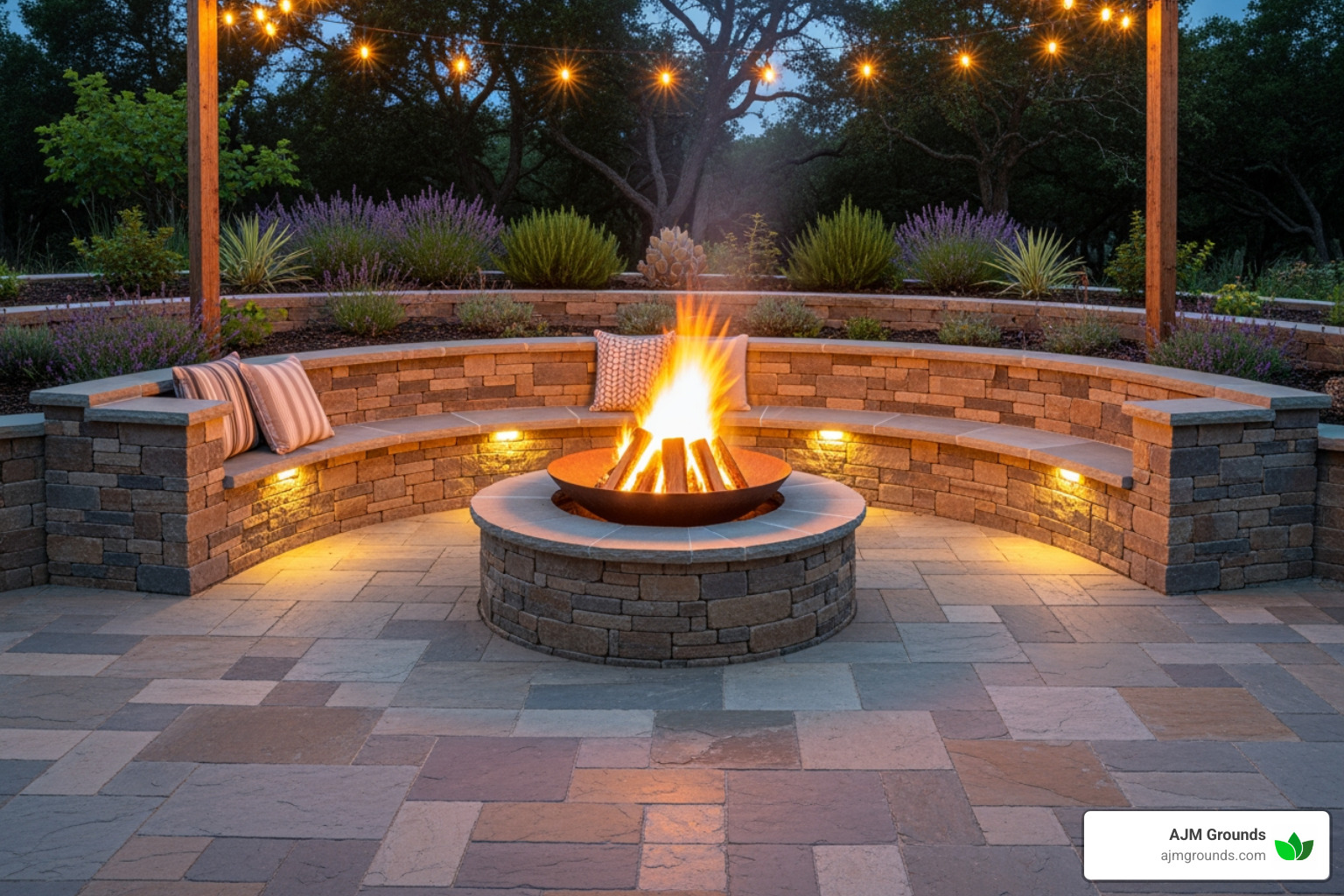
Seat walls are also excellent for defining patios and creating outdoor rooms. Extending a wall 18 to 24 inches above a raised patio provides a bench that also acts as a natural boundary, creating a sense of intimacy. Many of our projects feature a retaining wall with paver patio where the wall and seating are seamless.
In terraced gardens, such as on a sloped yard in Wilmington, MA, a series of low retaining walls can manage grade changes while providing seating at each level. This creates a functional and beautiful tiered garden. Find more ideas on our page about retaining walls for gardens.
On larger properties, seat walls can be built into hillsides for amphitheater-style seating, a durable and appealing alternative to traditional benches for large gatherings.
Illuminating Your Space: Adding Lighting for Ambiance and Safety
Thoughtful hardscape lighting design can transform your retaining walls with seating, adding ambiance and safety for evening enjoyment.
One popular technique is under-cap lighting. Low-voltage LED strip lights installed beneath the cap’s overhang create a soft glow that washes down the wall face, highlighting its texture without harsh glare. This adds a sophisticated, resort-like feel to your Stoneham, MA outdoor space.
Recessed fixtures can also be built into the wall or seat cap. Low-voltage step lights can provide functional down-lighting, while fixtures set into the side of the wall can offer gentle path lighting along the base.
Beyond aesthetics, lighting improves safety by illuminating pathways and steps, preventing trips and falls. We ensure all fixtures use low-wattage bulbs and have proper ventilation to remain cool to the touch. Properly integrated lighting makes your seat wall a welcoming feature long after sunset.
Understanding Safety Requirements for Retaining Walls with Seating
Safety is paramount for retaining walls with seating. Understanding local building codes in areas like Reading, MA, or Winchester, MA, is crucial.
For a raised patio, a seat wall can often serve as a safety barrier instead of a railing, provided it meets height requirements. This acts as fall protection while maintaining a clean aesthetic, a significant advantage over a separate railing. Our page on raised patio construction offers more context.
Structural integrity is also key. A seat wall must be built with a proper foundation and secure block stacking to withstand the vertical weight of multiple people.
We always recommend professional consultation for any significant hardscaping project. Our team of retaining wall builders near me in the Woburn, MA area is well-versed in local regulations. We ensure your seat wall is both beautiful and safe, giving you peace of mind.
The Dual-Duty Advantage: Why Choose Built-in Seating?
The trend of incorporating built-in seating into outdoor spaces is not just a fleeting fad; it’s a practical and aesthetically pleasing solution that offers numerous advantages over traditional outdoor furniture. When you opt for retaining walls with seating, you’re investing in a permanent, functional, and beautiful addition to your home.
Here’s a comparison to highlight the “dual-duty” advantage:
| Feature | Built-in Seat Walls | Traditional Outdoor Furniture |
|---|---|---|
| Durability | Constructed from robust materials like stone or concrete; weather-resistant and long-lasting; minimal wear and tear from elements. | Susceptible to weather damage (sun, rain, snow); requires frequent replacement or protective covers; can degrade over time. |
| Seating Capacity | Accommodates more people in a continuous line; flexible for large gatherings; often provides more linear seating space than individual chairs. | Limited by the number of individual pieces; can feel cramped; less efficient for maximizing seating in a given area. |
| Space Efficiency | Integrates seamlessly into landscape design; serves as both a structural element and seating; ideal for smaller yards or defining zones. | Takes up additional floor space; can feel bulky; requires storage during off-seasons. |
| Aesthetics | Creates a cohesive, integrated, and high-end look; improves architectural design; blends naturally with the landscape. | Can look disjointed if not carefully matched; may appear temporary; can detract from a streamlined aesthetic. |
| Maintenance | Low maintenance; typically only requires occasional cleaning; no need to move or store during inclement weather. | Requires regular cleaning, cushions storage, and potential repairs or replacement due to weathering. |
| Functionality | Dual-purpose: retains soil, defines spaces, and provides seating; can incorporate lighting; acts as a permanent landscape feature. | Primarily serves as seating; lacks structural or landscape-defining functions. |
| Value | Adds significant value to property; considered a permanent hardscape improvement; contributes to a sophisticated outdoor living space. | Generally does not add significant property value; considered a movable asset. |
The advantages of built-in seating are clear. They offer superior weather resistance, accommodate more people efficiently, and create a cohesive design that traditional furniture cannot match. This makes them perfect for entertaining in your Burlington, MA backyard. The approach aligns with the benefits of sustainable landscaping and hardscaping by providing a long-lasting, low-impact solution.
Our AJM Grounds team takes pride in our attention to detail and personalized service. We believe every outdoor space in Woburn, MA, and the surrounding areas deserves to be beautiful and functional. By choosing retaining walls with seating, you’re creating a permanent fixture that improves your outdoor living experience for years to come.
Ready to improve your backyard? Explore our professional landscape retaining walls services.
