

Why Your Patio Needs a Drainage System
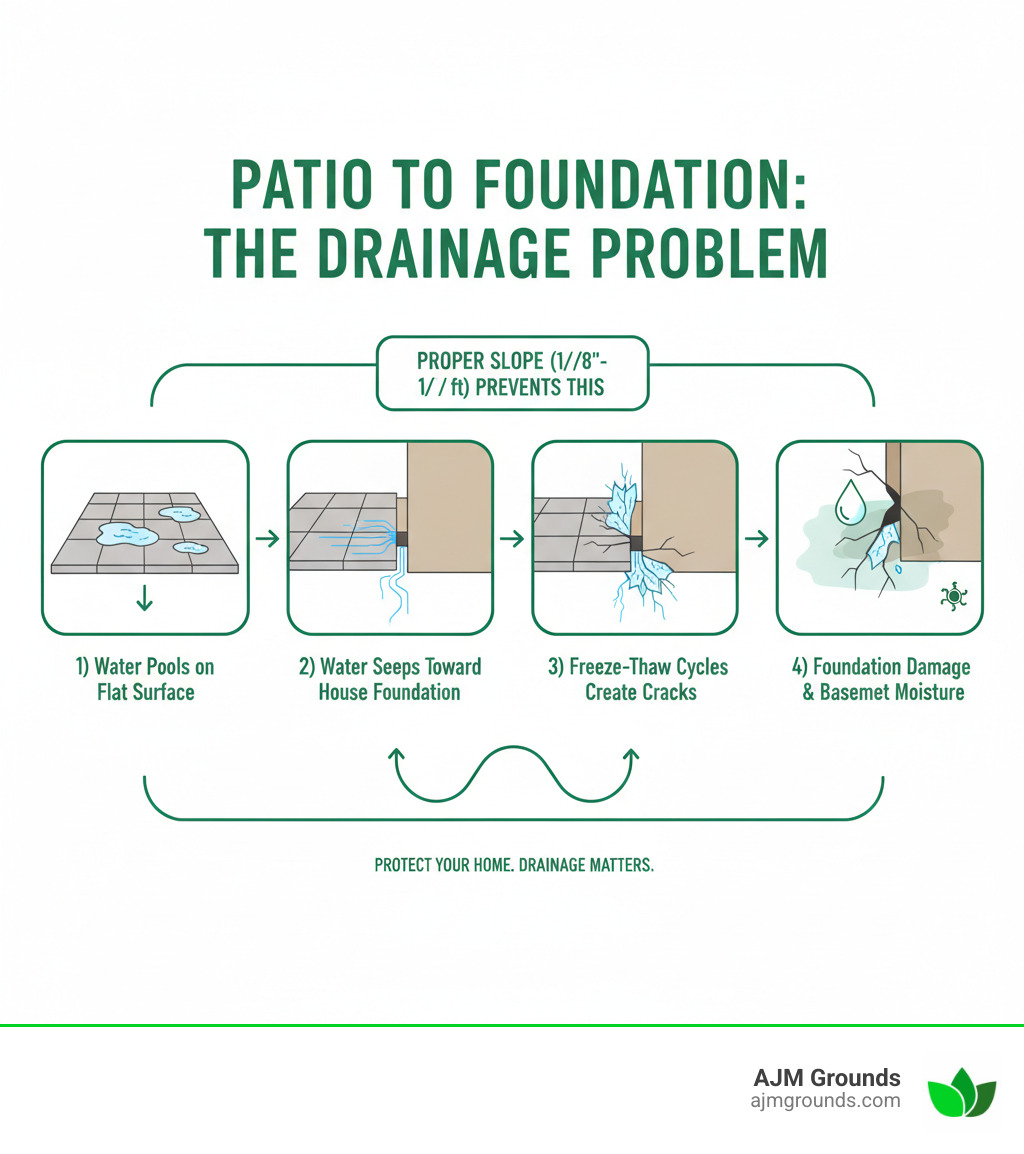
Installing patio drainage is essential for preventing water damage to your outdoor space and home foundation. Without a proper system, water can’t soak through hard surfaces like concrete or pavers, causing it to pool on your patio and run toward your house.
Quick Steps for Installing Patio Drainage:
- Choose your system – French drain, channel drain, or catch basin based on your needs
- Plan the slope – Ensure 1/8 to 1/4 inch per foot away from your house
- Dig the trench – Typically 6 inches deep and 1 to 2 feet wide
- Install drainage pipe – Use 4-inch perforated pipe with holes facing down
- Add gravel and fabric – Line with landscape fabric and fill with gravel
- Test and backfill – Run water through the system before covering
I’m John Caplis, owner of AJM Grounds LLC. I’ve spent years helping homeowners in Woburn and throughout Massachusetts solve drainage problems. Understanding our state’s harsh winters and heavy spring rains has taught me that the right drainage solution makes all the difference between a patio you love and one you avoid.
The Dangers of Poor Patio Drainage
A patio should be an oasis, but when it turns into a pond after every rain, it signals a problem. Ignoring poor drainage can lead to significant issues down the line.
Common Signs and Causes:
- Signs: Look for persistent puddles, water pooling near your foundation, mold or algae growth, slippery surfaces, and eroded or uneven pavers.
- Causes: The most common cause is an improper slope (flat or angled toward the house). Other factors include compacted or clay-heavy soil, non-porous patio materials, and misdirected downspouts dumping water directly onto the patio.
Long-Term Consequences:
Neglecting these signs can be costly. Water pooling near your house is a direct threat to your foundation, especially with Massachusetts’ freeze-thaw cycles that can turn small cracks into major structural damage. It can also crack patio materials, lead to mold in your basement, attract pests like mosquitoes, and reduce your property value. Proper drainage protects your investment and ensures your outdoor space remains usable and safe.
A Complete Guide to Installing Patio Drainage
Now that we understand the “why,” let’s dive into the “how.” Installing patio drainage can transform your outdoor space from a soggy mess into a beautiful, functional area. Here’s what you need to know, from choosing the right system to installation.
Choosing the Right Drainage System
The first step is figuring out which system best fits your situation. Each drainage problem may require a different solution.
- French Drains: A subsurface trench with a perforated pipe and gravel, ideal for collecting groundwater and redirecting runoff away from foundations.
- Seepage Trenches: Similar to French drains, these use gravel and fabric to collect water and let it slowly percolate into the soil.
- Channel Drains (or Linear Drains): Long, narrow grates installed on the patio surface to intercept water before it can pool.
- Slot Drains: A sleeker version of a channel drain with a narrow, less noticeable slot.
- Catch Basins: Grated collection boxes installed at low points to capture water and carry it away through a solid pipe.
- Dry Wells: Underground storage tanks that collect excess water and allow it to slowly seep into the surrounding soil.
- Permeable Pavers: A preventative solution where the patio surface itself allows water to pass through into the ground below.
Here’s a quick comparison of some common options:
| Drainage System | Cost (DIY/Professional Average) * | Complexity (DIY) | Best Use Case |
|---|---|---|---|
| French Drain | $10-$100/linear ft (DIY) / $1,000-$4,000+ (Pro) | Moderate | Subsurface water, diverting runoff from foundations |
| Channel Drain | $20-$80/linear ft (DIY) / $500-$2,500+ (Pro) | Moderate | Intercepting surface sheet flow on patios |
| Permeable Pavers | $5-$15/sq ft (Materials) / $10-$30+/sq ft (Pro) | High | Overall surface drainage, new patio installations |
*These are average costs based on internet data and not actual costs for AJM Grounds. Professional installation costs can vary widely based on project complexity, materials, and local labor rates. A complex project could easily exceed the higher end of these ranges.
Gathering Your Tools and Materials
Once you’ve chosen a system, gather your supplies to avoid interruptions.
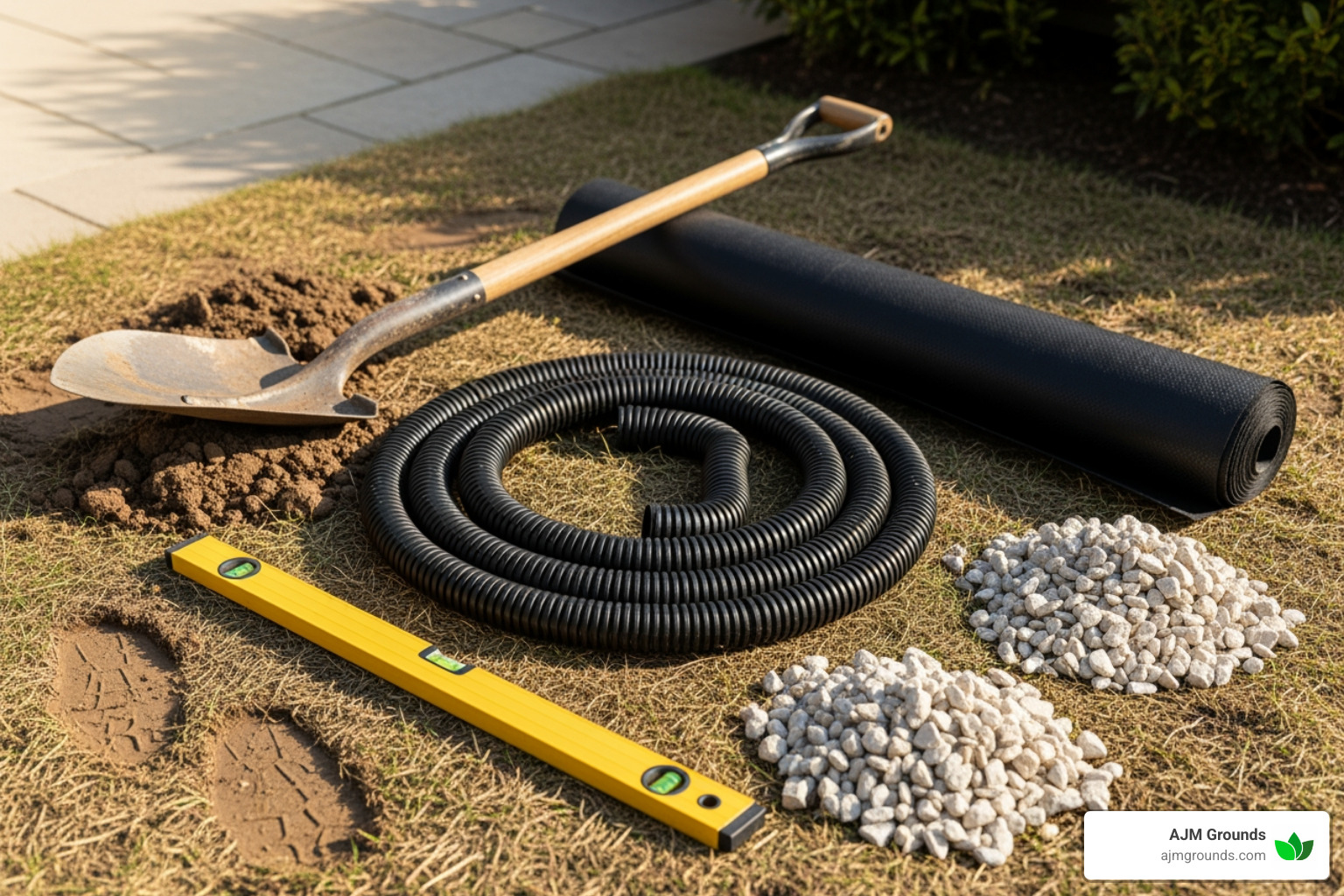
- Tools: Shovels, an iron rake, a wheelbarrow, a long level, a tape measure, string line, and a utility knife.
- Materials: 4-inch perforated pipe, non-woven landscape fabric, 3/4-inch clean gravel, pipe fittings, and materials for downspout redirection like a gutter extension.
Safety First: Call 811 Before You Dig!
Before breaking ground, call 811 (Dig Safe in Massachusetts) to have underground utility lines marked. This free service is crucial for safety and preventing costly damage.
Step-by-Step Guide to Installing a French Drain
A French drain is one of the most reliable solutions for patio water problems.
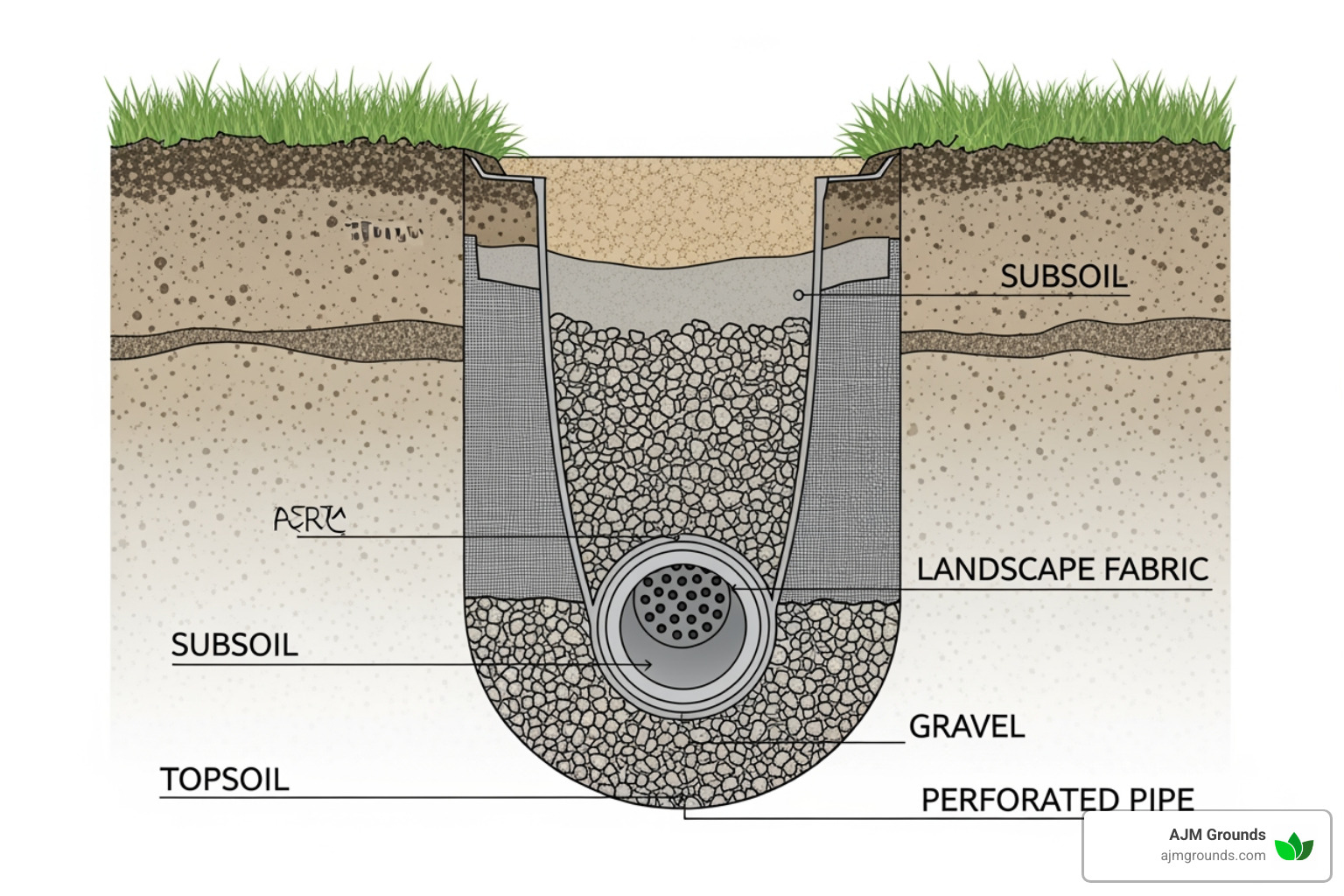
- Plan & Mark the Trench Path: Identify where water pools and mark a path for your trench that leads downhill and away from your foundation.
- Dig the Trench: Dig a trench about 6 inches deep and 12-24 inches wide. Ensure a consistent downward slope of at least 1/8 inch per foot (1/4 inch is better). Use a level to check your slope frequently.
- Line with Fabric & Add Gravel: Line the trench completely with landscape fabric, leaving excess on the sides. Add a 1-2 inch layer of gravel to create a base.
- Lay the Perforated Pipe: Place the 4-inch perforated pipe on the gravel base with the holes facing down. This orientation prevents silt from clogging the pipe.
- Fill with Gravel & Wrap Fabric: Cover the pipe with gravel, filling the trench to within 2-3 inches of the surface. Fold the excess landscape fabric over the top of the gravel to enclose the system.
- Backfill and Finish: Cover the fabric with the remaining soil and replace any sod. You can also use decorative stone for a clean finish.
Key Considerations for Installing Patio Drainage
- Grading and Sloping: Your patio surface should slope away from your house at about 1/4 inch per foot. Correcting an improper slope is the most effective way to prevent water from pooling near your foundation.
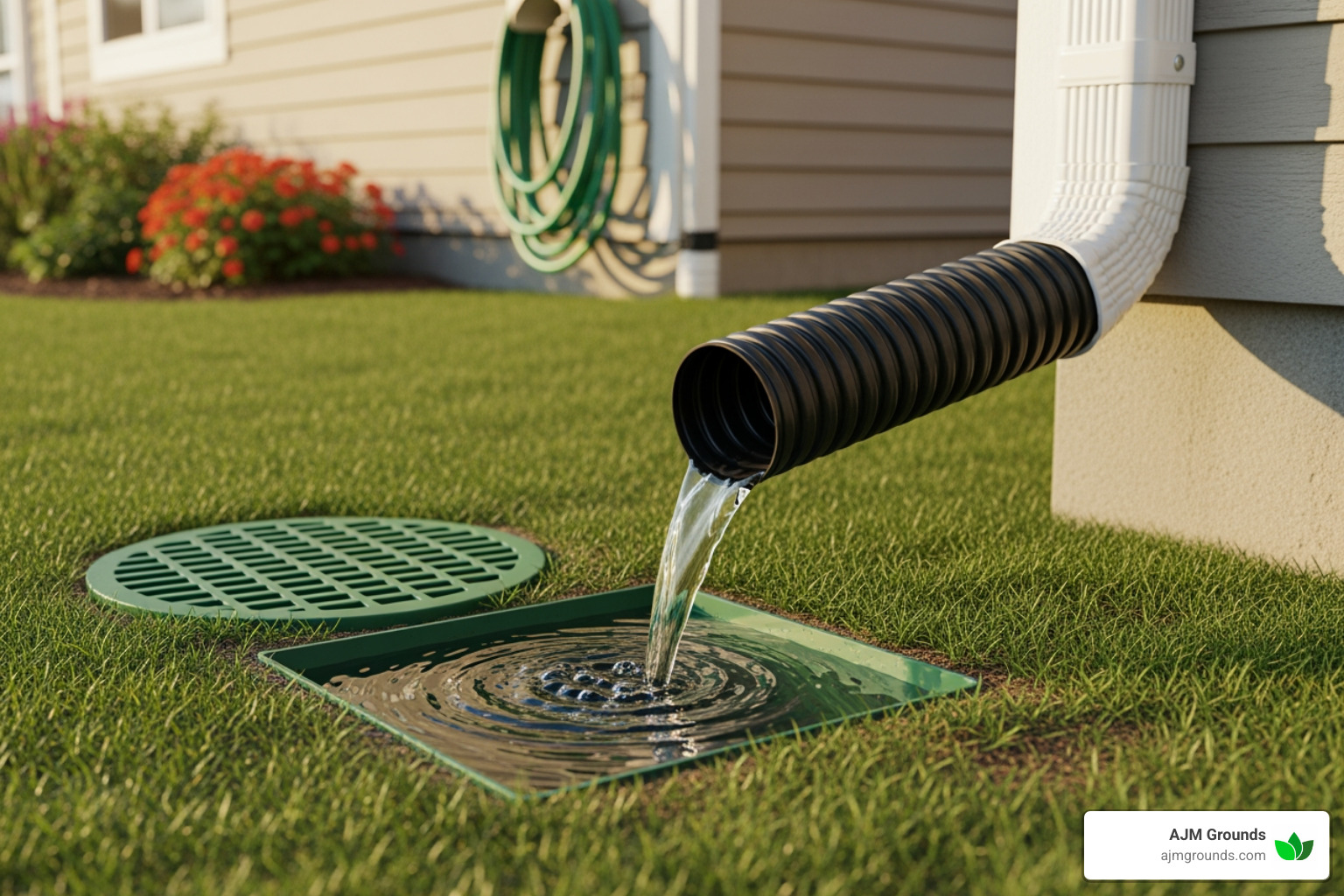
- Downspout Redirection: A single downspout can overwhelm a drainage system. Extend downspouts at least 4 feet from your foundation or connect them directly to a buried pipe that leads to a catch basin or dry well.
- Cold Climate Considerations: In Massachusetts, freeze-thaw cycles can damage drainage systems. Burying pipes deeper and using larger, 3/4-inch clean stone helps prevent water from freezing solid and cracking pipes.
Maintaining Your System & Knowing When to Call a Pro
Installing patio drainage is an investment that requires minor upkeep to ensure it functions for years to come. A little routine maintenance goes a long way in preventing major problems.
Long-Term Maintenance for Your Patio Drainage System
Maintaining your system is simple. A few good habits will keep water flowing smoothly.
- Regular Inspections: After heavy rain, walk around your patio to check for pooling water or signs of erosion. Early detection is key.
- Clean Debris: Leaves and dirt are a drainage system’s worst enemy. Regularly clear the grates on channel drains and catch basins, especially in the fall.
- Clean Gutters: Since downspouts often feed into drainage systems, clogged gutters can cause overflows that bypass your system entirely. Clean them at least twice a year.
- Annual Flush: Use a garden hose to flush the system annually. This helps dislodge any silt or small debris before it can cause a blockage.
When to Hire a Pro for Installing Patio Drainage
While some drainage projects are suitable for DIY, certain situations require professional expertise to protect your home and investment.
You should call a professional for:
- Complex Grading Issues: If your yard slopes toward your house, it requires professional equipment and expertise to re-grade correctly and protect your foundation.
- Persistent Flooding: If DIY solutions haven’t solved the problem, it indicates a more complex issue that needs a professional diagnosis.
- Risks to Your Home’s Foundation: When water issues threaten your foundation, the stakes are too high for trial and error. A pro can design a system to safeguard your home.
- Complex System Design: Integrating multiple components like French drains, catch basins, and dry wells requires hydrological knowledge for an effective, cohesive system.
- Large-Scale Projects: Trenching is hard physical labor. If you lack the time, ability, or equipment, hiring a professional is a wise choice.
The cost of installing patio drainage varies significantly. These are average costs based on internet data and not actual costs for AJM Grounds. A simple DIY project may cost $500 to $2,500 for materials. Professional installations can range from $3,000 to $15,000+, depending on the project’s complexity, the equipment needed, and the scope of labor.
When you choose a local, reputable company like AJM Grounds, you’re investing in peace of mind. We understand the unique challenges of Massachusetts’ soil, heavy rainfall, and harsh winters. Our designs account for these local conditions, ensuring your system is built to last. We have the right equipment to get the job done efficiently and stand by our work to ensure your satisfaction.
Don’t let poor drainage ruin your outdoor space. When the task feels too big, our team at AJM Grounds is here to help homeowners in Bedford, Billerica, Burlington, Lexington, Reading, Stoneham, Wilmington, Winchester, and Woburn, MA.
Contact us for a professional Patio Installation and let us help you achieve a dry, beautiful, and functional outdoor living space.
