

Why Understanding the Importance of Retaining Walls Matters for Your Property
The importance of retaining walls extends far beyond simple aesthetics. These hardscape structures are critical problem-solvers for homeowners dealing with sloped terrain, soil erosion, and drainage challenges. Whether preventing foundation damage or creating usable outdoor space from a hillside, understanding what retaining walls can do for your property is essential.
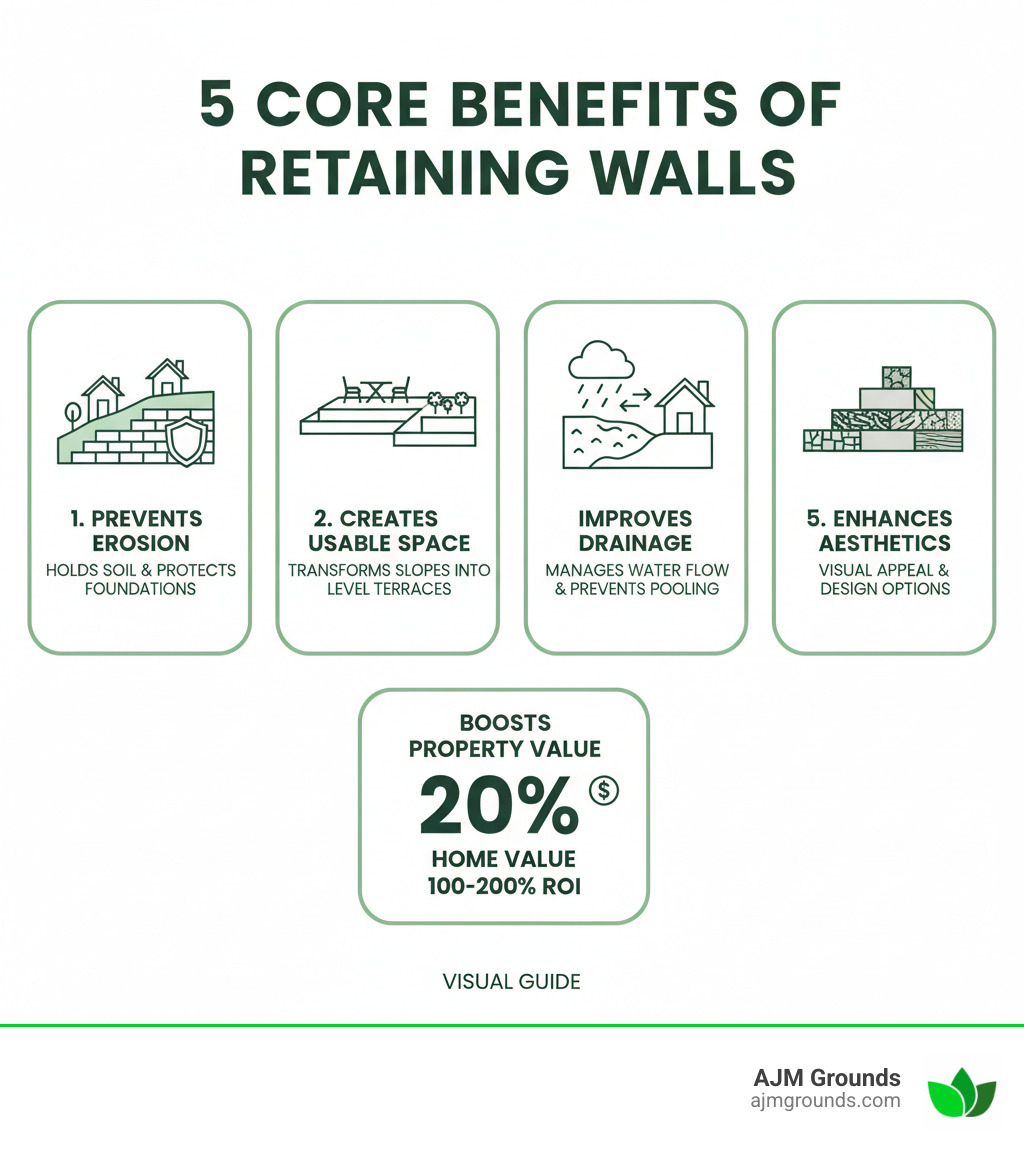
Key Benefits of Retaining Walls:
- Prevents Soil Erosion: Holds soil in place on slopes, protecting your landscape and foundation.
- Creates Usable Space: Transforms steep slopes into level areas for patios, gardens, or play areas.
- Improves Water Management: Controls drainage and prevents water pooling that can damage your property.
- Boosts Property Value: Landscaping investments like retaining walls can add up to 20% to your home’s value with returns of 100-200%.
- Improves Aesthetics: Adds visual interest and definition to your landscape design.
Many New England properties, including those in Woburn, MA, face challenges with uneven terrain and soil stability. A well-designed retaining wall doesn’t just hold back soil—it open ups possibilities for your outdoor space while protecting your home.
Based on general industry data, the cost to install a retaining wall can range from $3,500 to $11,000 (or $40 to $345 per linear foot). These are average costs based on internet data, not actual costs for AJM Grounds. Material choice also affects lifespan: concrete and stone can last 50-100 years, while wood typically lasts up to 20 years.
Important to note: Most municipalities require permits for retaining walls, especially if they exceed 4 feet in height, which often requires a licensed engineer.
As John Caplis, owner of AJM Grounds LLC, I’ve spent years helping Woburn-area homeowners transform challenging yards into beautiful, functional outdoor spaces that our clients enjoy for decades.
Importance of retaining walls definitions:
The Critical Importance of Retaining Walls for Your Landscape
A retaining wall is your landscape’s unsung hero. It’s not just a stack of blocks; it’s an engineered solution that tackles tough challenges like soil erosion and creates beautiful outdoor spaces from a simple hillside. For homeowners in Woburn and across New England, where sloped terrain is common, a well-designed retaining wall protects your investment and transforms your property’s look and feel.
Structural Integrity and Water Management
Heavy New England rain can wash soil down sloped yards, depositing it against your foundation or into the street. The importance of retaining walls becomes clear in these moments. They act as a barrier, holding soil in place and preventing the gradual slide of earth that can undermine your landscape and even your home’s foundation, especially during our region’s freeze-thaw cycles.
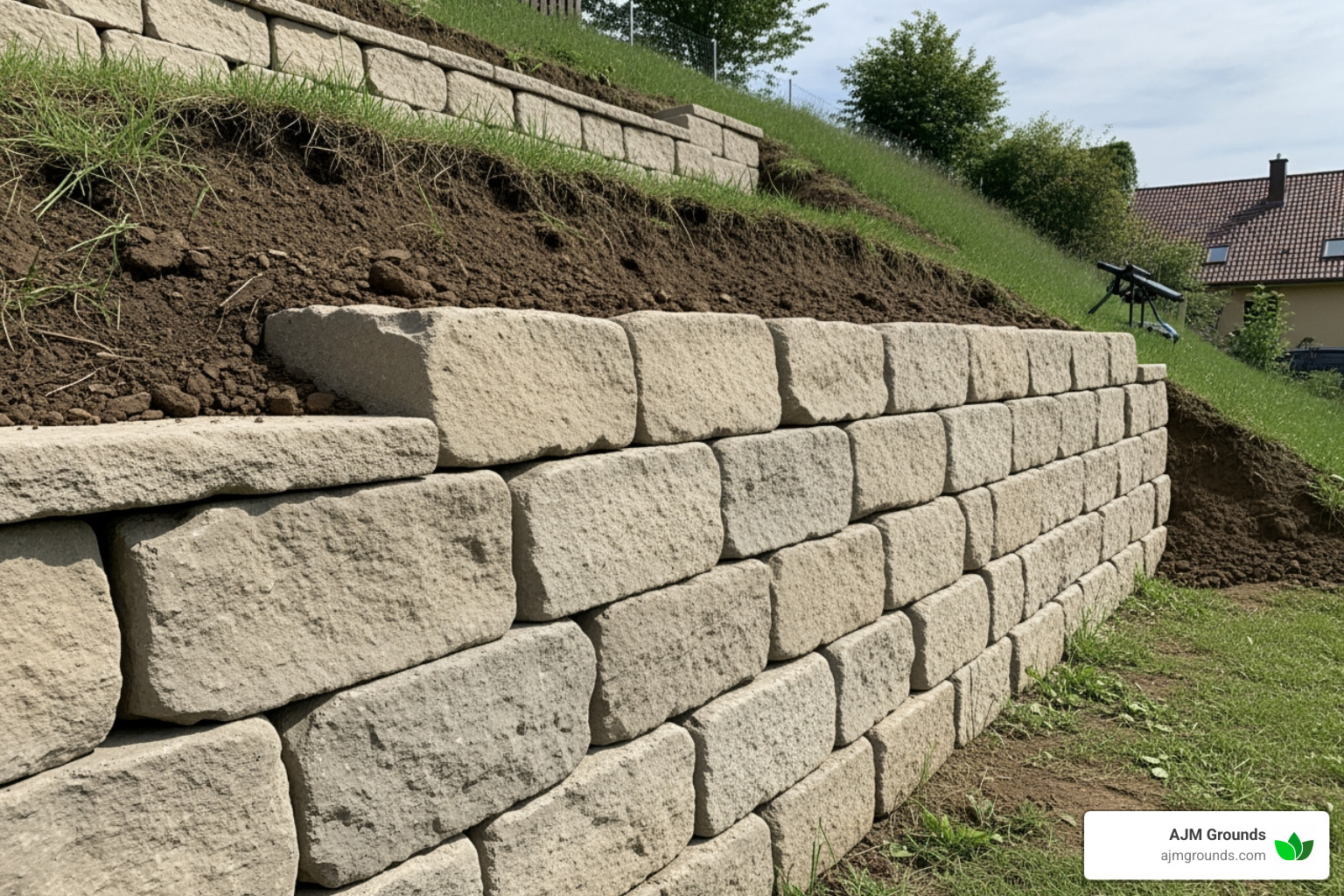
Beyond holding back soil, retaining walls are master water managers. Without proper drainage, water builds up behind a wall, creating immense hydrostatic pressure that can cause it to fail. That’s why professional designs incorporate features like weep holes (small openings to let water escape) and French drains (gravel-filled trenches to redirect water). These elements channel water safely away, keeping the wall strong and your property dry. Proper water management is also key to preventing ground instability issues, as noted by the U.S. Geological Survey.
Creating Usable Outdoor Living Space
Many homeowners in Bedford and Winchester see their sloped yards as wasted potential. This is where the importance of retaining walls as space creators shines. Through terracing, we use multiple walls to carve level areas out of a hillside, turning an unusable slope into functional, beautiful spaces.
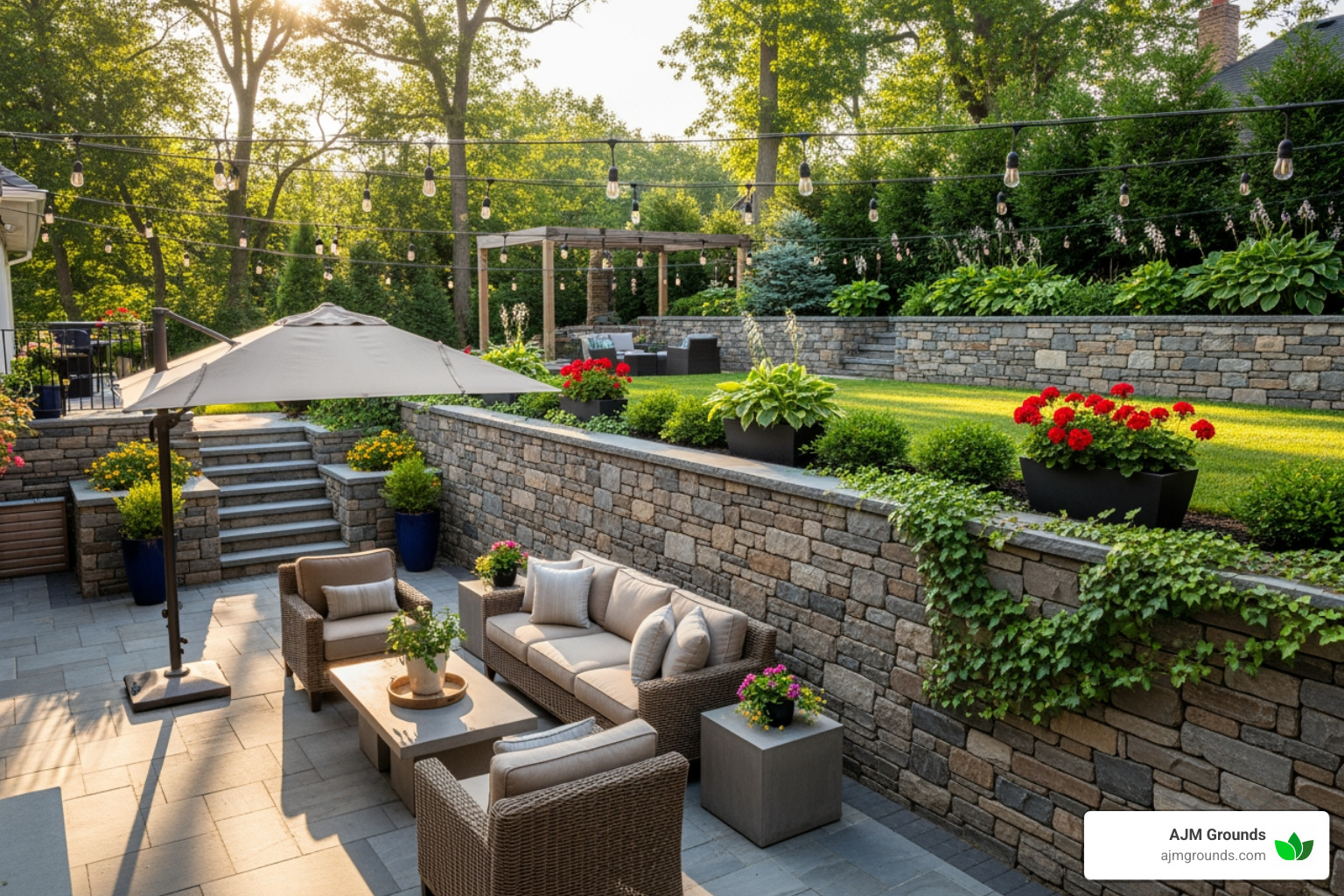
That steep hill can become a series of useful tiers:
- A cozy patio with a fire pit for cool evenings.
- Raised garden beds for growing flowers or vegetables.
- A stable platform for an outdoor kitchen and grill.
- A safe, flat play area for children.
By reclaiming these areas, you’re not just adding square footage—you’re making every part of your property work for you and your family.
Aesthetic Appeal and the Financial Importance of Retaining Walls
A well-designed retaining wall is also a beautiful landscape feature. The design possibilities are nearly endless, from the timeless look of natural stone to the clean lines of modern concrete blocks or the classic warmth of brick. These materials add texture, color, and personality to your outdoor space.
We can also integrate features like built-in lighting for evening ambiance, planters to soften the look with greenery, or even design the wall to double as a seating wall. From a financial perspective, the American Society of Landscape Architects notes that landscaping investments like retaining walls can add up to 20% to your home’s value, with returns of 100 to 200 percent at resale. A retaining wall isn’t just holding back soil—it’s holding real financial value.
Types, Materials, and Key Considerations
Understanding your options is key to making the best choice. The main types of walls include:
- Gravity walls: Rely on their own weight to hold back soil, best for shorter walls (under 3-4 feet).
- Cantilever walls: Use a reinforced concrete base for added stability, suitable for medium-height walls.
- Anchored walls: Use cables anchored into the earth behind the wall for maximum support, ideal for tall or challenging structures.
When it comes to materials, each has its own benefits. Please note, the costs listed below are general estimates based on internet data and are not actual costs for AJM Grounds.
- Poured Concrete: Extremely strong and durable (50-100+ year lifespan). Average material costs are around $30-$90 per square foot.
- Concrete Blocks: A versatile and budget-conscious choice (50-100 year lifespan). Blocks can cost $1-$5 each, with many styles available.
- Brick: Offers a classic, traditional look and can last over 100 years. Material costs run $10-$45 per square foot.
- Natural Stone: Provides a beautiful, one-of-a-kind look with excellent durability (40-100 years). Costs range widely from $20-$100 per square foot.
- Wood: The most affordable option with a natural aesthetic, but has a shorter lifespan (up to 20 years) and requires waterproofing. Costs average $15-$50 per square foot.
The right choice depends on your soil type, the severity of the slope, your budget, and your aesthetic vision. For walls over 4 feet or on complex sites, professional engineering is essential for safety and longevity.
Common Issues and When to Call a Professional
Even well-built walls can have issues. Knowing the warning signs is part of understanding the importance of retaining walls.
Common problems to watch for:
- Improper Drainage: Water pooling near the wall is a major red flag for hydrostatic pressure buildup.
- Bulging or Leaning: A clear sign that the wall is under stress and may be failing.
- Cracking: Large, horizontal, or growing cracks indicate structural problems.
- Poor Footing: Uneven settling or gaps between the wall and soil suggest the foundation is compromised.
While a small, decorative garden wall might be a DIY project, you should always call a professional in these situations:
- The planned wall is over 4 feet tall, as this typically requires permits and engineering.
- You are dealing with steep slopes or complex drainage issues.
- You notice any signs of failure like bulging, leaning, or significant cracking.
- The wall is intended to protect your home’s foundation or other critical structures.
At AJM Grounds, we have extensive experience designing and installing retaining walls across Woburn, Burlington, and Lexington. We understand local soil, codes, and weather, ensuring your wall is not just beautiful but built to last.
Transform Your Landscape with an Expertly Built Retaining Wall
As we’ve seen, the importance of retaining walls is immense. They are a powerful investment, blending structural necessity with functional space creation and aesthetic improvement. A professionally built wall prevents costly erosion, open ups the potential of sloped land, and can significantly boost your home’s value.
While a small garden border might be a DIY project, any wall over four feet high, on a steep slope, or providing major structural support requires professional expertise. This ensures the wall is safe, durable, and built to last for decades—giving you peace of mind, not a future headache.
For homeowners in the Woburn, MA area looking to solve landscape challenges and improve their outdoor space, the team at AJM Grounds is here to help. We provide expert design and installation, crafting retaining walls that are both beautiful and engineered for the demands of our New England climate.
Ready to see the difference a professionally built retaining wall can make? Learn more about our landscape retaining wall services and find how we can help you create the outdoor space you’ve always envisioned.
