

Why Tiling Your Concrete Patio Makes Sense
Installing tile on concrete patio surfaces is a fantastic way to transform a plain slab into a beautiful and highly functional outdoor living space. A properly installed tiled patio not only provides a durable, low-maintenance surface that can last 20-30 years but can also increase your home’s value by 8-10%. With the U.S. outdoor living market growing, this is a smart investment.
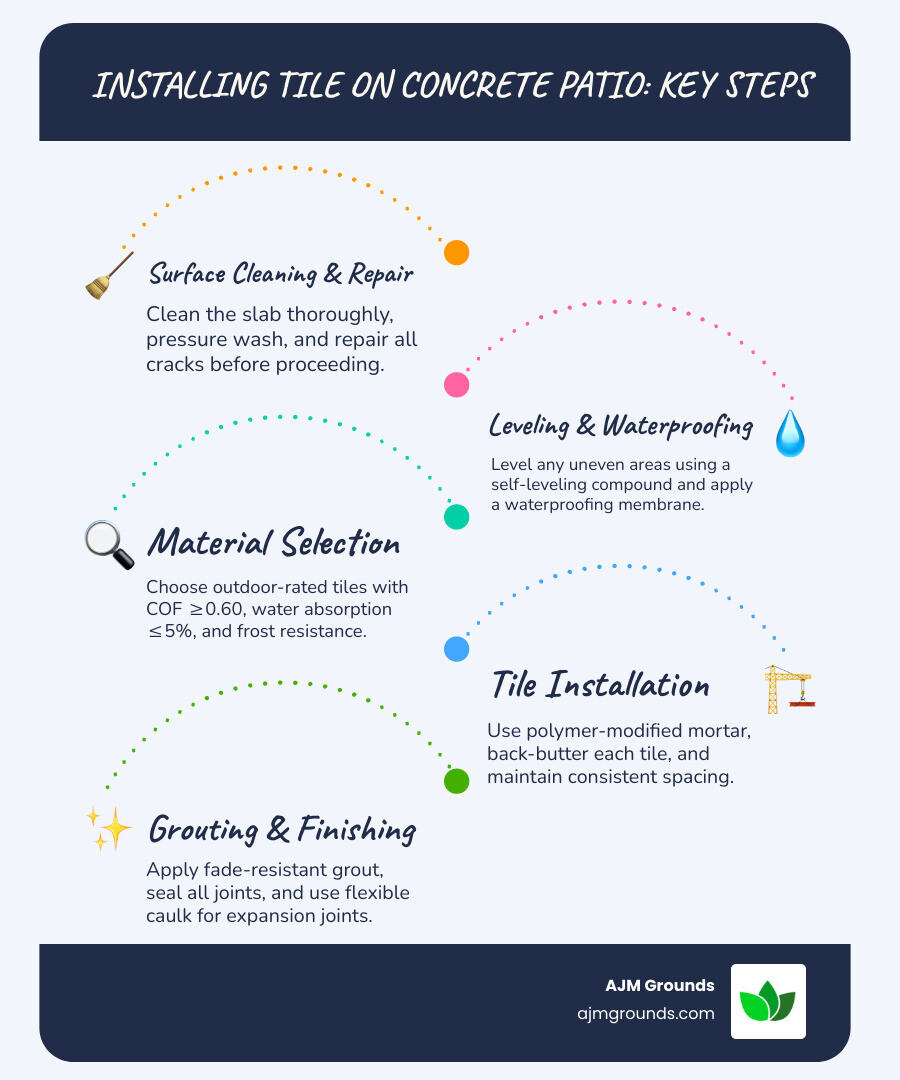
The essential process involves four key stages:
- Prepare the Surface – Clean thoroughly, repair cracks, level uneven areas, and apply a waterproofing membrane.
- Choose the Right Tile – Select outdoor-rated porcelain or stone with proper slip, water, and frost resistance.
- Install with Proper Materials – Use polymer-modified mortar rated for outdoor use and back-butter each tile for maximum adhesion.
- Finish Correctly – Apply fade-resistant grout, seal joints, and use flexible caulk at expansion joints.
Tiling adds more than just beauty; it provides a protective, slip-resistant layer with endless design flexibility. However, success hinges on three critical factors: proper surface preparation, selecting materials rated for outdoor use, and ensuring adequate drainage. Shortcuts in these areas lead to cracking, water damage, and loose tiles—especially in our New England climate.
I’m John Caplis, owner of AJM Grounds LLC. My team specializes in hardscaping throughout Woburn and the surrounding Massachusetts area, creating outdoor spaces that withstand our challenging weather. This guide will help you achieve a stunning, reliable patio.
Handy installing tile on concrete patio terms:
Beyond aesthetics, high-quality outdoor tiles are engineered to withstand harsh conditions like the freeze-thaw cycles common in Massachusetts, extending the life of your concrete slab. They are also easy to clean and resist stains and fading, meaning you spend less time on maintenance and more time enjoying your outdoor oasis.
A Step-by-Step Guide to Installing Tile on Concrete Patio
Breaking down the project of installing tile on concrete patio surfaces into clear, manageable steps makes it a straightforward process. This guide walks you through selecting the right materials to adding the final touches.
Choosing the Right Materials for Durability and Style
Your tile choice impacts your patio’s appearance, longevity, and safety. It’s a decision that balances aesthetics with performance.
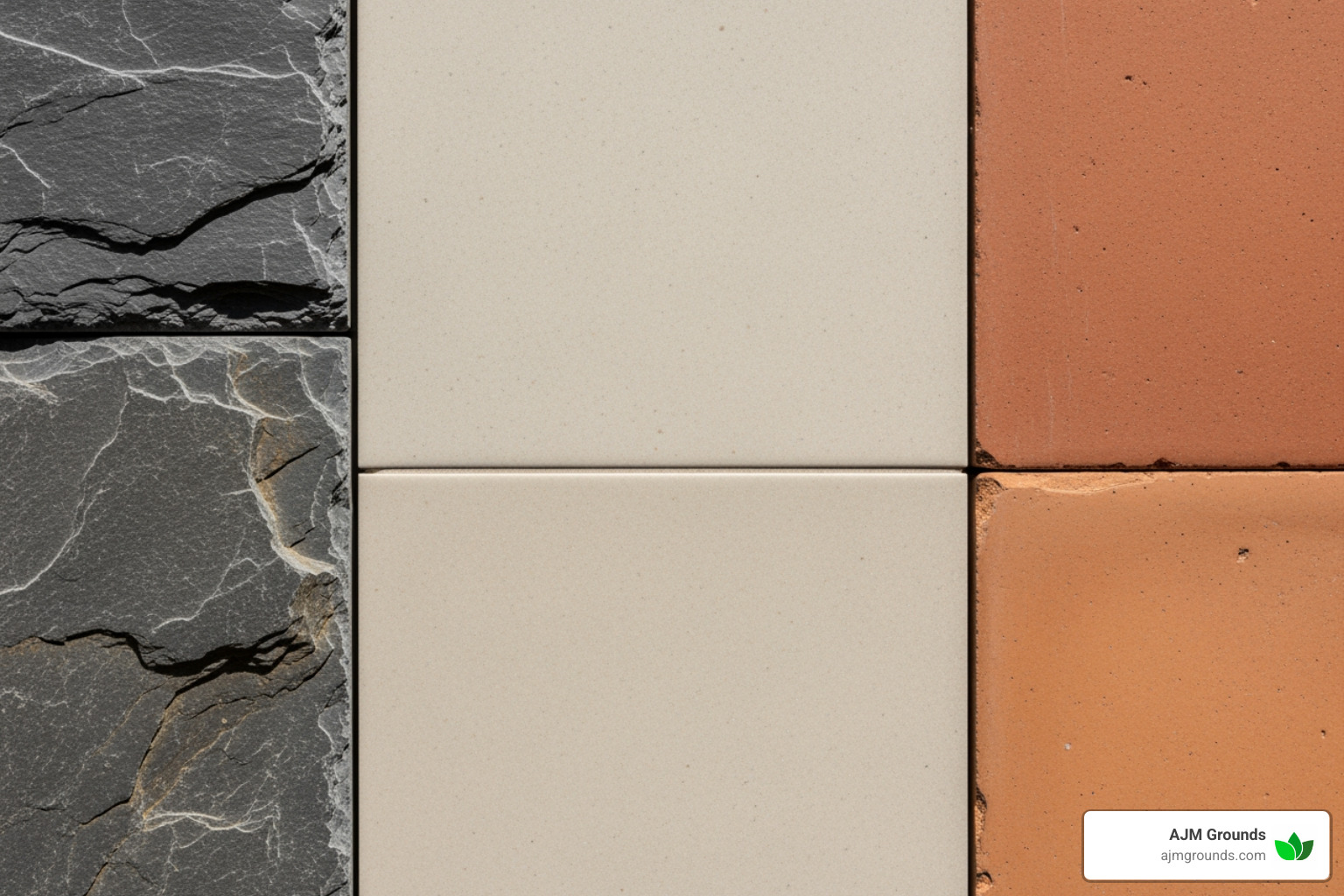
For Massachusetts, porcelain tile is our top recommendation. It’s incredibly dense and absorbs less than 0.5% of water, making it highly resistant to cracking during our brutal freeze-thaw cycles. It’s also very durable, typically with a PEI rating of 3 or higher. Natural stone like granite or slate offers timeless beauty but usually requires regular sealing. Terracotta tiles evoke a Mediterranean feel but are best suited for milder climates without severe freezes.
When installing tile on concrete patio surfaces, look for these non-negotiable performance factors:
- Frost Resistance: The tile must be explicitly rated for freezing conditions.
- Water Absorption: Look for a rate below 0.5% for best performance.
- Slip Resistance: A COF (Coefficient of Friction) rating of 0.60 or higher is essential for safety on wet surfaces.
- PEI Rating: A rating of 3 (moderate traffic) or 4 (heavy traffic) is ideal for patios.
Aesthetically, the options are endless. You can find more Beautiful Patio Design Ideas and more tile inspiration online. Consider patterns like classic herringbone or modern stack bond. Lighter colors can make a small patio feel larger and stay cooler, while darker tones create a cozier atmosphere. Coordinate your choice with your home and hardscape lighting design for a cohesive look.
Essential Surface Preparation for a Lasting Finish
Proper surface preparation is the most critical step. A poor foundation will cause even the best tiles to fail.
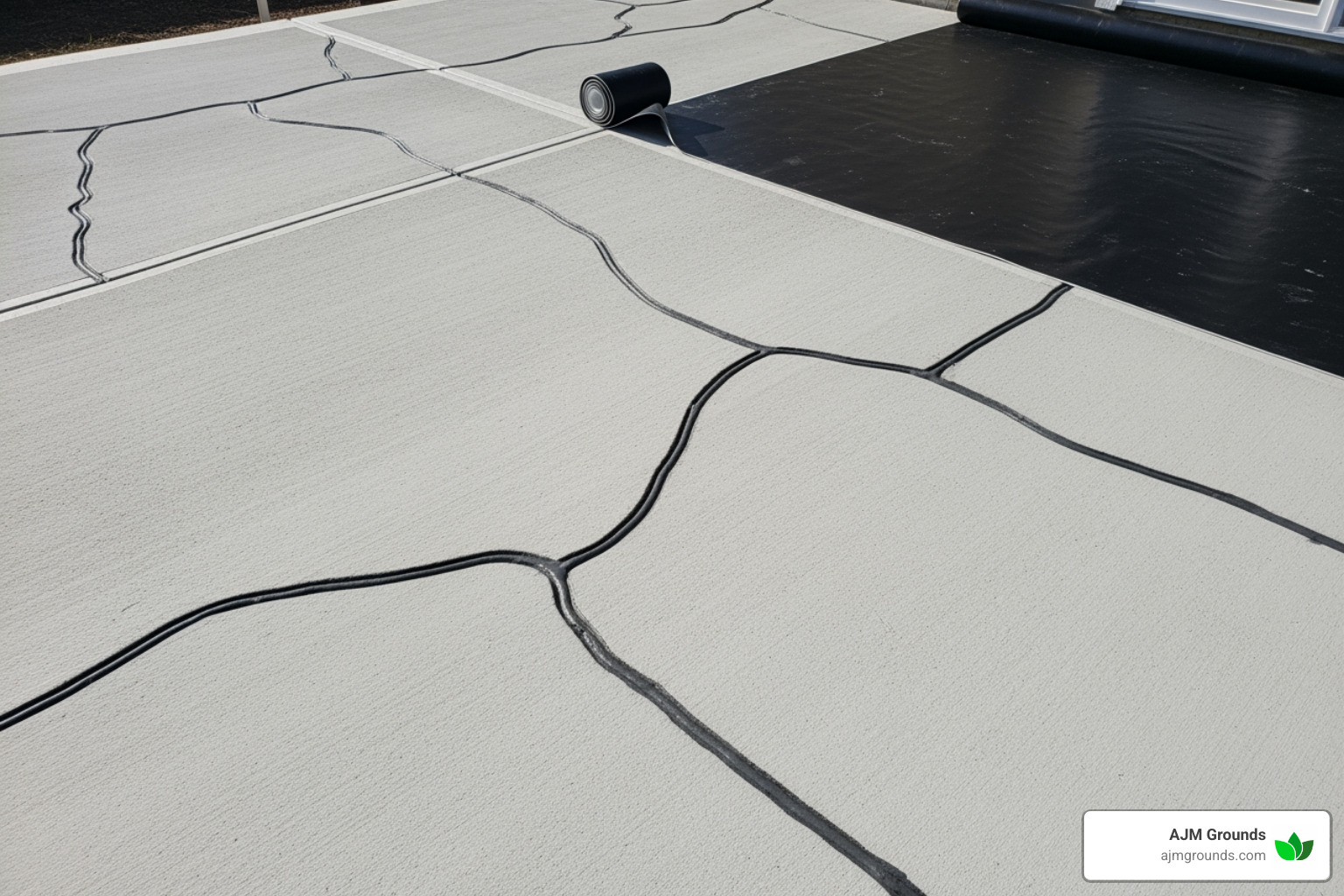
- Clean the Slab: Pressure wash the concrete to remove all dirt, grime, and loose debris. If the surface has old sealers, it must be ground or bead blasted to create a texture for the mortar to grip.
- Repair Cracks: Address all cracks to prevent them from transferring to the tile. For minor cracks, use an isolation membrane. Ensure your tile layout accounts for existing expansion joints in the concrete.
- Level the Surface: Correct any unevenness greater than 1/8 inch over 10 feet using a self-leveling compound to ensure proper drainage and a flat finish.
- Ensure Proper Drainage: The concrete slab must have a minimum slope of 1/8 inch per foot to direct water away from your home’s foundation. If not, you may need landscape drainage solutions.
- Apply a Waterproofing Membrane: In our climate, a waterproofing and crack isolation membrane is essential. It creates a flexible, waterproof barrier that prevents water from seeping into the concrete and absorbs minor substrate movement, protecting your tile from cracks.
The Installation Process for installing tile on concrete patio
With a well-prepped surface, you’re ready to install. This phase requires patience and precision.
- Gather Tools & Supplies: You’ll need your outdoor-rated tiles, polymer-modified thin-set mortar, grout, a wet saw, notched trowel, tile spacers, a rubber mallet, and a level.
- Dry Layout: Before mixing mortar, do a “dry run” by laying out your tiles. This helps you plan cuts and confirm your pattern.
- Mix and Apply Mortar: Mix the thin-set to a peanut butter consistency. Working in small sections, apply a thin layer to the concrete with the flat side of your trowel, then comb it with the notched side to create even ridges.
- Back-Butter Tiles: This is non-negotiable for outdoor installations. Apply a thin, even layer of mortar to the back of each tile before placing it. This ensures 100% coverage, eliminating air pockets where water could freeze and pop tiles loose.
- Set and Level Tiles: Place each tile into the wet mortar with a slight twist. Use spacers for consistent grout lines. Use a level and rubber mallet to ensure a flat, even surface.
- Cut Tiles: Use a wet saw for precise cuts along edges and around obstacles.
This methodical approach is key to professional hardscape construction and a long-lasting patio.
Grouting, Sealing, and Finishing Touches
The final steps protect your work and give it a polished look.
- Apply Grout: After the mortar has cured (24-48 hours), remove the spacers. Use a rubber grout float to press an outdoor-rated, fade-resistant grout into the joints.
- Remove Grout Haze: After about 15-30 minutes, use a damp sponge to gently wipe the excess grout off the tile surface. Rinse your sponge frequently in clean water.
- Cure and Seal: Allow the grout to cure properly, which may involve misting it with water for a few days to prevent it from drying too quickly. Once fully cured, apply a high-quality grout sealer to protect against stains and moisture.
- Fill Expansion Joints: Never fill expansion joints (or gaps where tile meets the house) with rigid grout. Use a flexible, outdoor-rated caulk or sealant to allow for natural movement.
For more tips on long-term care, see our guide on The 5 Most Important Things to Do to Maintain and Care for Your Landscape and Hardscape Over Time.
DIY vs. Professional Installation and Long-Term Care
Now for the big question: should you tackle installing tile on concrete patio surfaces yourself or hire a professional? The answer depends on the project’s complexity and your own experience.
Deciding Between DIY and Hiring a Professional
The DIY approach can save on labor costs and offers the satisfaction of completing the work yourself. It’s a viable option for a small, straightforward patio with concrete that’s already in good condition.
However, outdoor tiling is less forgiving than indoor projects. A single mistake in surface preparation or mortar application can lead to cracked tiles or water damage after the first Massachusetts winter. You’ll also need to rent or buy specialized tools like a wet saw.
| Feature | DIY Installation | Professional Installation |
|---|---|---|
| Cost | Lower material costs, no labor fees | Higher upfront cost, includes labor and specialized tools |
| Time | Can take longer, especially for beginners | Efficient, completed within a set timeframe |
| Skill | Requires careful planning, patience, and attention to detail | Expertise in surface prep, layout, and complex cuts |
| Tools | May require renting specialized equipment (wet saw, compactor) | Professionals own all necessary high-grade tools |
| Quality | Varies based on skill; risk of errors leading to issues | Guaranteed professional finish, often with warranties |
| Complexity | Best for simple, small patios with minor concrete issues | Recommended for large, intricate designs or damaged concrete |
Hiring professional hardscape contractors like our team at AJM Grounds provides peace of mind. We have years of experience navigating New England’s climate, own the right equipment, and can identify potential issues before they become costly disasters. For large patios, complex patterns, or concrete that needs significant repair, professional expertise is invaluable.
We’ve seen many DIY projects go sideways, often costing more to fix than a professional installation from the start. At AJM Grounds, we provide expert hardscaping and patio installation services to homeowners throughout Massachusetts, including Woburn, Lexington, Stoneham, and Winchester. If you’re unsure, a consultation with a local hardscape contractor near me can help you make the right call.
Maintaining Your Tiled Patio and Creating a Cohesive Landscape
A beautiful tiled patio requires simple but consistent care to ensure it lasts for decades.
- Routine Cleaning: Regularly sweep away debris. Wash the patio every few weeks with water and a mild, pH-neutral cleaner. Avoid harsh chemicals.
- Seasonal Care: In the fall, remove wet leaves promptly to prevent staining. Before winter, inspect grout lines for cracks and repair them. Use plastic shovels for snow removal to avoid scratching the tiles.
- Grout Maintenance: Grout is the most vulnerable part of the installation. Check it annually for deterioration and reseal it every one to three years to protect against moisture and stains.
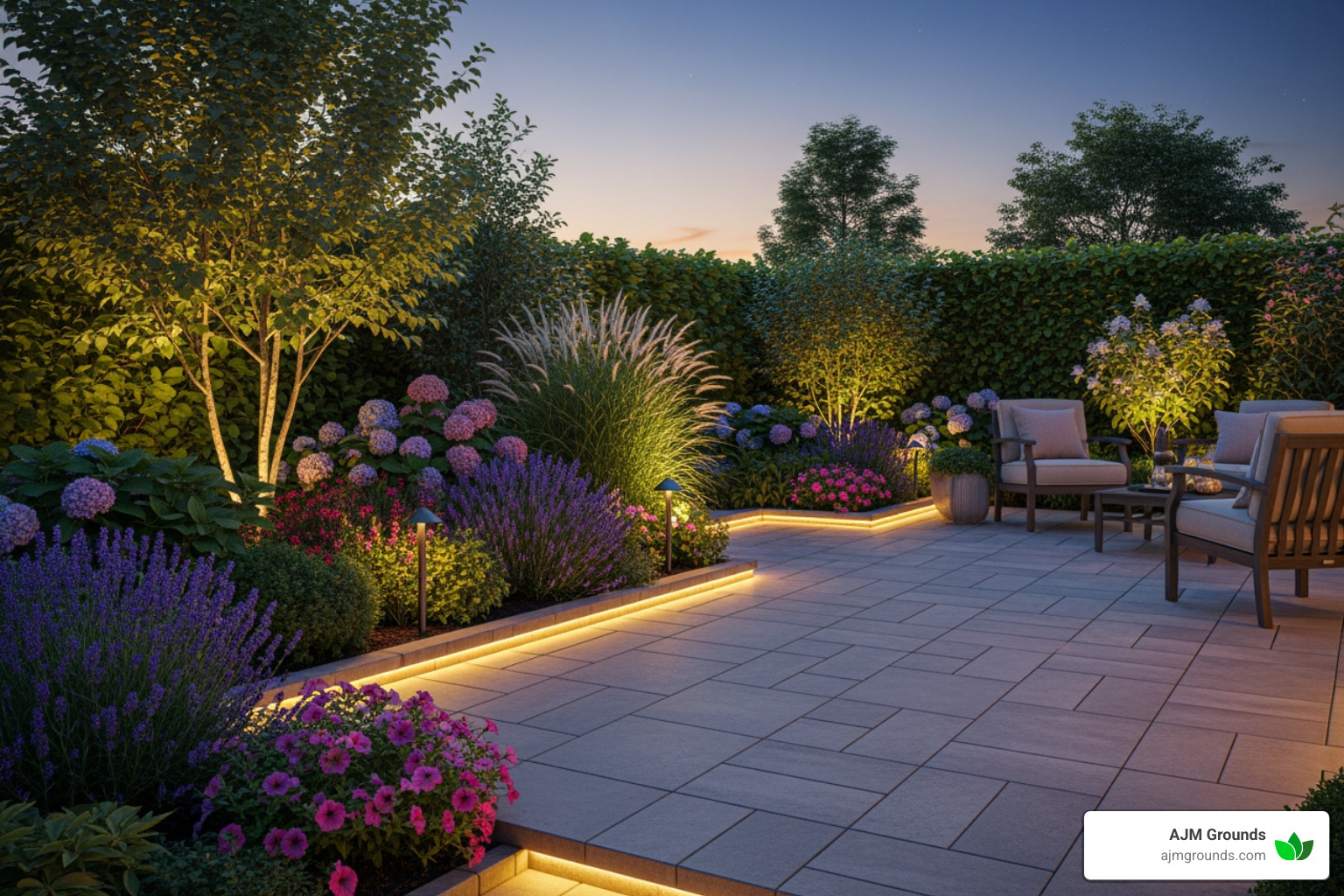
Your patio should also integrate seamlessly with your yard. Coordinate tile colors with existing stone walls or walkways. Soften the patio’s edges with plantings, and use hardscape lighting design to extend its usability into the evening. The right furniture and decor will complete your outdoor room.
At AJM Grounds, we understand that installing tile on concrete patio surfaces is part of creating a complete outdoor living space. We pride ourselves on attention to detail, ensuring your new patio integrates perfectly with your landscape. For a flawless finish you’ll enjoy for years, consider our professional patio installation services. For more maintenance tips, review The 5 Most Important Things to Do to Maintain and Care for Your Landscape and Hardscape Over Time.
