

Why a Concrete Base is the Ultimate Foundation
Installing flagstone on concrete creates the most durable and long-lasting walkway or patio for your home. It’s a permanent landscape feature that stands the test of time.
Quick Answer – The Basic Process:
- Prepare the base – Clean existing concrete or pour a new 4-inch reinforced slab with proper slope (¼” per foot).
- Apply mortar – Spread a ¼ to 1-inch thick mortar bed with 100% coverage under each stone.
- Set the stones – Place flagstones in wet mortar, maintaining ½ to 1-inch joints.
- Grout and seal – Fill joints after 24 hours, then seal after the installation has cured.
Expected Results:
- Lifespan: 30-50+ years
- Minimal maintenance required
- Superior stability in freeze-thaw climates
- Cost: $15-$45+ per square foot for materials (industry averages)
The difference between a flagstone path that fails in a few years and one that lasts for decades is the foundation. Unlike sand-set installations that shift, settle, and grow weeds, flagstone mortared to concrete stays level and clean. One experienced contractor noted: “The stones have not budged in 13 years and I suspect they will still look swell 50 years from now.”
For Massachusetts homeowners, this is critical. Our freeze-thaw cycles destroy improperly installed hardscaping. A mortared flagstone installation on a concrete base eliminates these issues. While the upfront cost is higher, its 30-50 year lifespan offers far greater long-term value than dry-laid alternatives, which may only last 10-15 years. You’re making a permanent investment in your property.
I’m John Caplis, owner of AJM Grounds LLC, and I’ve spent years perfecting the art of installing flagstone on concrete for homeowners throughout Woburn and surrounding Massachusetts communities. I’m here to share what separates a temporary fix from a timeless feature.
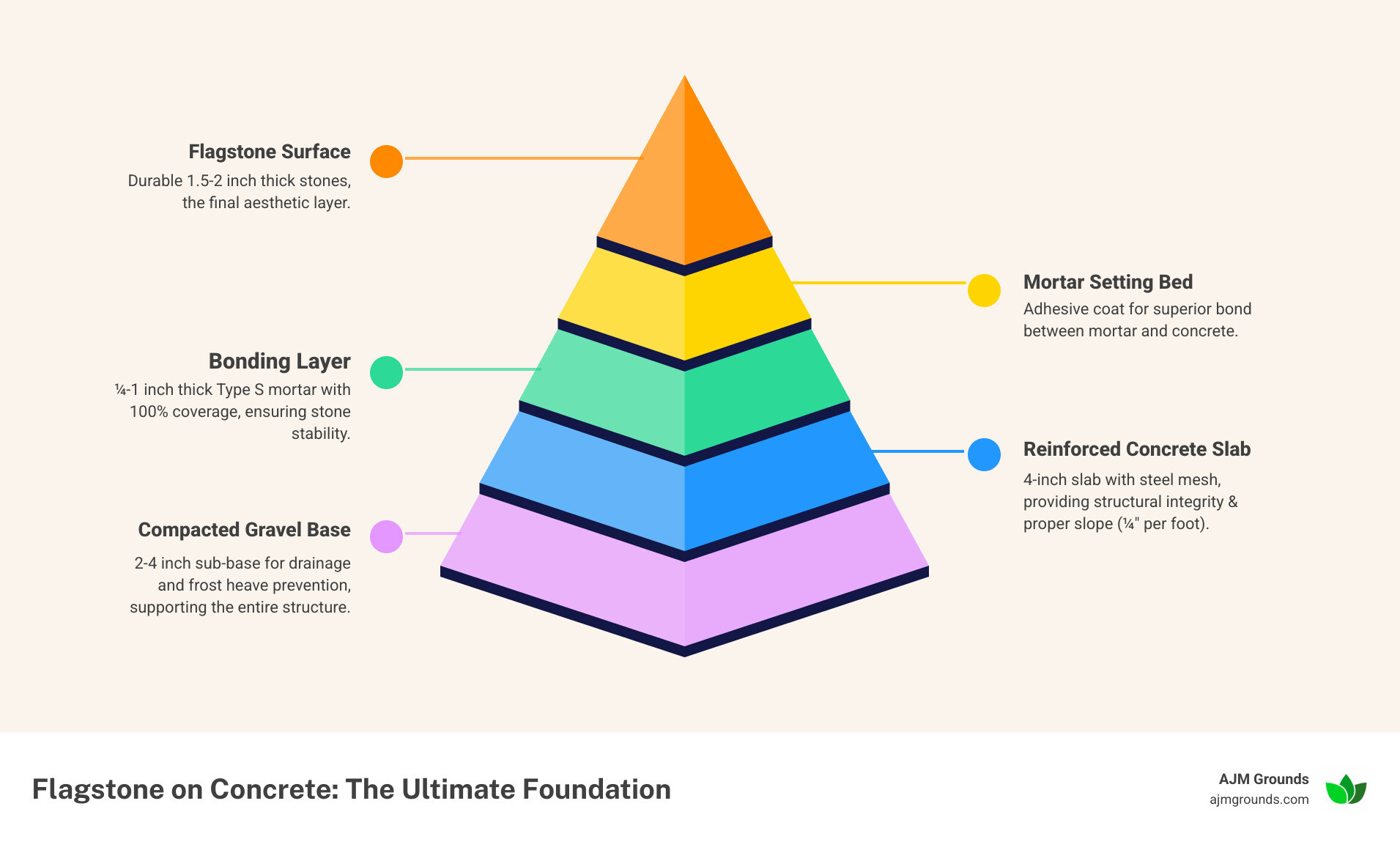
Key terms for installing flagstone on concrete:
The Unbeatable Advantages of a Concrete Base
Installing flagstone on concrete is about building an investment that stands strong for decades. Here’s why it’s the superior choice:
- Superior Durability & Longevity: A concrete base provides an unyielding foundation that allows flagstone patios to last 30-50+ years, far outlasting other methods.
- Stability in Freeze-Thaw Climates: In Massachusetts, a concrete base is essential for preventing the shifting and heaving caused by ground expansion and contraction during winter.
- Minimal Maintenance: Forget annual re-leveling and constant weeding. A mortared installation requires little more than occasional cleaning.
- Prevents Shifting and Settling: The rigid foundation ensures stones won’t shift or develop gaps over time, maintaining a safe and beautiful surface.
- No Weed or Pest Growth: Solid, mortared joints create an impenetrable barrier, preventing weeds and burrowing insects from taking root.
- Clean, Polished Look: Precise, mortared joints create a clean, finished appearance that improves the natural beauty of the stone.
This method is a smart long-term investment for any homeowner looking to improve their outdoor living space with Patio and Walkway Ideas.
Dry-Laid vs. Mortared Flagstone: A Quick Comparison
In our Massachusetts climate, the choice between a dry-laid and a mortared flagstone installation has significant long-term consequences. Dry-laid paths are vulnerable to frost heave, instability, and constant weed growth. A mortared installation on a concrete base solves these problems. The table below breaks down the key differences.
| Feature | Dry-Laid Flagstone (on Sand/Gravel) | Mortared Flagstone (on Concrete Base) |
|---|---|---|
| Material Cost (per sq ft) | $8-$20 | $15-$45 |
| Labor Difficulty | Moderate | High |
| Longevity | 10-15 years | 30-50+ years |
| Maintenance | Annual (re-leveling, weeding) | Minimal (cleaning, occasional sealing) |
| Suitability for MA Climate | Poor (prone to frost heave) | Excellent (stable, durable) |
While dry-laid may seem cheaper upfront, the longevity and low maintenance of a concrete base make it the more cost-effective choice for homeowners in areas like Bedford, Lexington, and Wilmington. For more on other options, see our guide on Dry-Laid Flagstone Walkway.
The Ultimate Guide to Installing Flagstone on Concrete
Planning, Tools, and Budgeting
Proper planning is the key to a successful flagstone project. Understanding the tools, materials, and costs upfront will ensure a smooth process. After years of working in Billerica, Burlington, and Reading, we’ve learned that the best projects start with a solid plan.
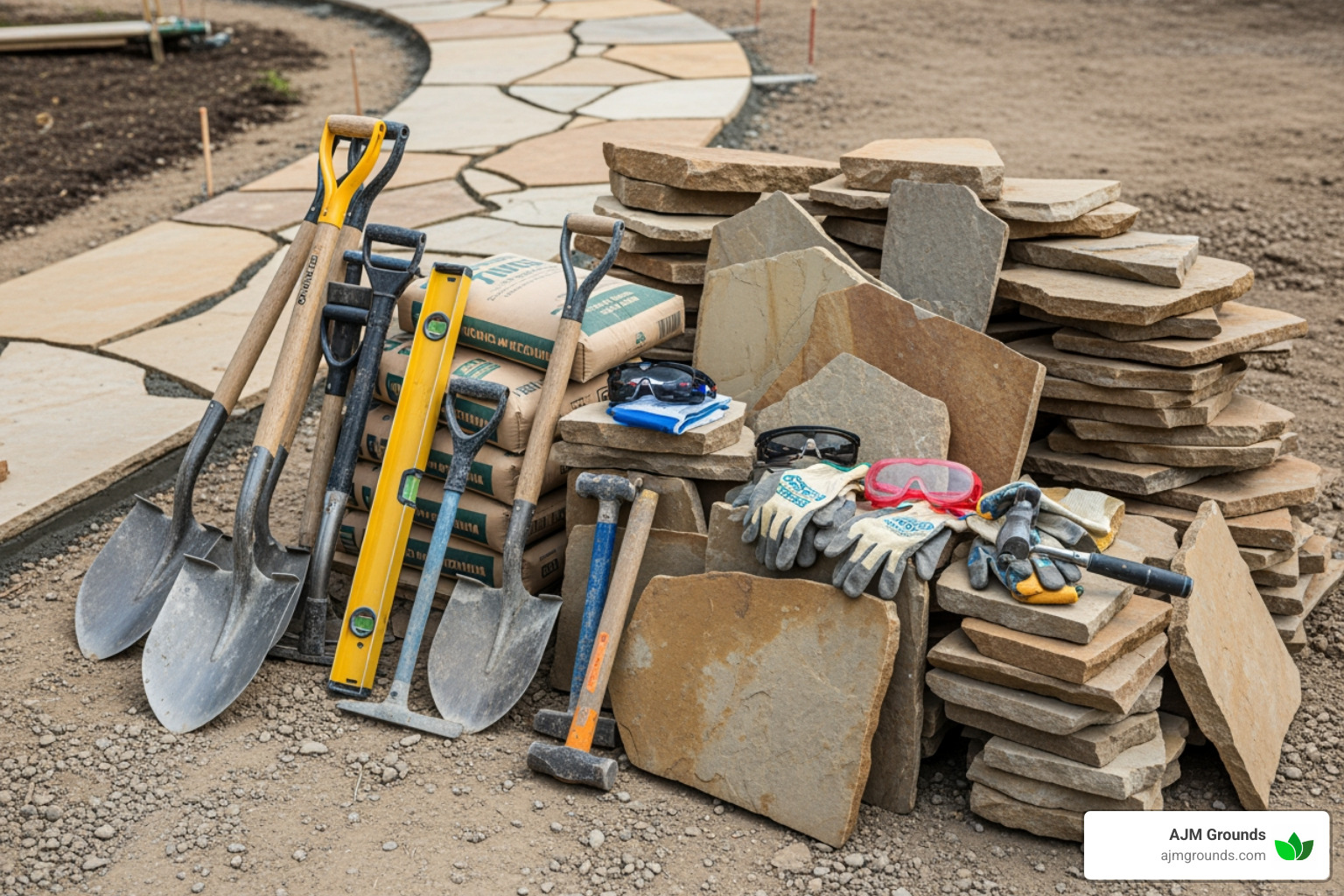
Essential Tools
- Excavation & Base Prep: Shovel, pick maddock, contractor-grade wheelbarrow, and a hand tamper or plate compactor.
- Layout & Leveling: Measuring tape, stakes, string, and a 4-foot stonemason’s level.
- Concrete & Mortar: Formwork (2x4s), concrete mixer, trowels, and a dead blow rubber mallet.
- Cutting & Shaping: An angle grinder with diamond blades, a brick hammer, and a brick chisel.
- Finishing & Cleanup: A grout bag, stainless steel buckets, sponges, and a pressure washer.
- Safety Gear: Gloves, safety glasses, dust masks, and knee pads are non-negotiable.
Required Materials
- Flagstone: Choose stones that are 1.5 to 2 inches thick for durability.
- Base: Crushed stone gravel, a high-strength concrete mix, and steel mesh reinforcement.
- Mortar & Bonding: Type S mortar is ideal. You can also mix 2 parts masonry sand to 1 part Portland cement. A quality bonding agent or adhesive is crucial for adhesion to the concrete base.
- Finishing: A penetrating stone sealer to protect the finished project.
Understanding Thickness and Drainage
Two details are critical for success. First, flagstone thickness: use a 1.5-inch minimum for walkways and 2-inch thick stones for patios and high-traffic areas to prevent cracking. Second, proper drainage: every installation must have a minimum ¼-inch per foot slope to direct water away from your home and prevent freeze-thaw damage.
What Will This Investment Cost?
These are industry average costs based on general internet data, not actual pricing from AJM Grounds. Your project costs will vary. For installing flagstone on concrete, material costs typically range from $15 to $45 per square foot. This includes basic flagstone ($8-$25/sq ft) and supplies ($2-$5/sq ft), but premium stone can be $45/sq ft or more. This compares to $8-$20 per square foot for dry-laid materials, but a concrete base lasts 3-4 times as long.
Labor difficulty is high, and professional installation adds to the cost but ensures a lasting result. If you DIY, budget $50 to $150 daily for tool rentals. The upfront investment is higher, but the longevity and minimal maintenance provide superior long-term value, a point we emphasize in our Walkway Installation guide.
Step 1: Preparing the Concrete Foundation for installing flagstone on concrete
A flawless foundation is the key to a long-lasting installation. Whether using an existing slab or pouring a new one, this step cannot be rushed.

Working with an Existing Slab
If you have a structurally sound concrete slab with only minor cracks (less than ¼-inch wide), you can often build on top of it. First, pressure wash the surface to remove all dirt and debris. Then, roughen the surface with a grinder or hammer and chisel to create a texture that mortar can grip. A smooth surface will not create a permanent bond.
Pouring a New Slab
For new installations or to replace a damaged slab, follow these steps:
- Excavate: Dig down 6 to 8 inches from the desired finished height.
- Add Sub-Base: Install and compact a 2 to 4-inch layer of gravel to ensure stability and drainage.
- Set Formwork: Build a frame using 2x4s or flexible hardboard, ensuring it is set to a ¼-inch per foot slope.
- Add Reinforcement: Place steel mesh in the middle of the slab area, propped up on small stones or supports called “chairs.” This is essential for preventing cracks.
- Pour and Finish: Pour a 4-inch slab of high-strength concrete. Level it with a screed board. Before it fully hardens, apply a bonding adhesive and roughen the surface to ensure the mortar bed will adhere permanently.
Step 2: Laying and Mortaring Your Flagstone for installing flagstone on concrete
This is where your project comes to life. With a solid foundation in place, you can now focus on the art of setting the stone.
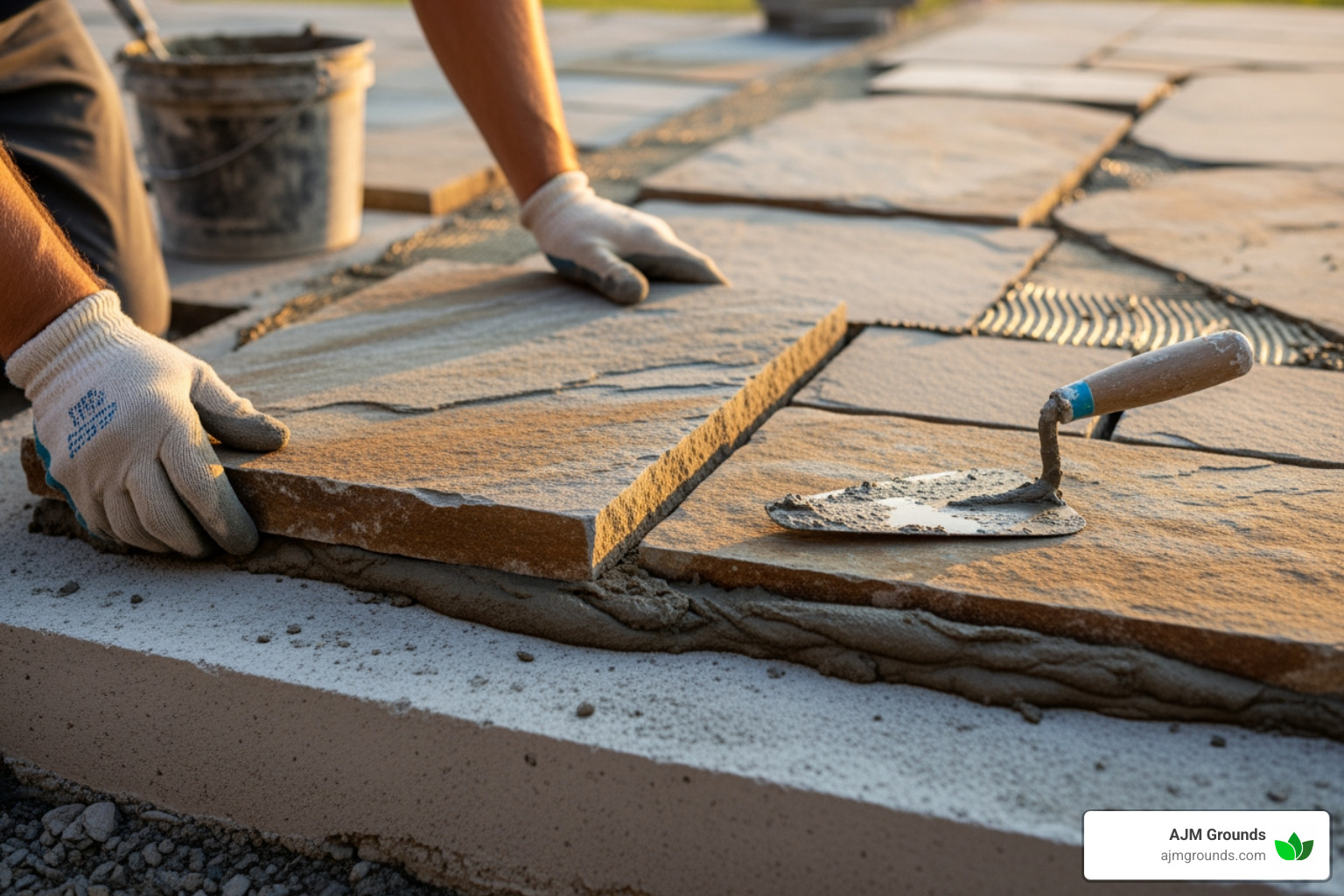
The Dry Run That Saves Headaches
Before mixing any mortar, dry-fit the entire pattern. Lay out all the stones on the concrete base, arranging them like a puzzle. Start with the largest stones and fit smaller pieces around them. This allows you to create a pleasing layout, identify stones that need cutting, and minimize waste.
Mixing and Applying Mortar
Use Type S mortar or a mix of 2 parts masonry sand to 1 part Portland cement. The consistency should be thick, like peanut butter. Work in small sections at a time.
Spread a mortar bed between ¼ inch and 1 inch thick. The most critical part of installing flagstone on concrete is achieving 100% coverage under each stone. This full bed prevents voids where water can collect and freeze, which leads to cracking.
Setting Each Stone with Care
- Prep the Stone: Thoroughly wash the back of each stone to remove dust, which can prevent a strong bond.
- Set the Stone: Press the stone firmly into the mortar bed. Gently tap it with a rubber mallet to settle it, eliminate air pockets, and ensure it is level with adjacent stones.
- Check Joints and Slope: Maintain consistent ½-inch to 1-inch joint widths. Continually use a long level to verify that you are maintaining the crucial ¼-inch per foot drainage slope.
This methodical approach is essential for creating beautiful and stable Custom Stone Patios that will last for decades.
Long-Term Care and Professional Installation
Grouting, Curing, and Maintenance Best Practices
With your flagstone laid, the final steps are to grout, cure, and seal the surface. This ensures your installation remains beautiful and stable for decades.
Grouting and Curing
Use a grout bag to apply a mortar mix (1 part Portland cement to 1 part sand) into the joints. This keeps the stone faces clean. Tool the joints for a smooth, professional finish and wipe away any excess grout immediately with a damp sponge.
After grouting, patience is key. Wait at least 24-48 hours before walking on the surface and a full week before placing heavy furniture. During this curing period, protect the area from rain with plastic sheeting.
Sealing for Longevity
Once the installation has fully cured (typically 28 days), apply a high-quality penetrating sealer. This invisible shield protects against stains and moisture penetration, which is vital in our freeze-thaw climate. Plan to reapply the sealer every 2-3 years to maintain protection.
Simple Ongoing Care
The beauty of installing flagstone on concrete is its low maintenance. Simply sweep off debris and rinse with a garden hose as needed. For tougher stains, use a mild detergent. Unlike dry-laid patios, you won’t have a constant battle with weeds in the joints.
Troubleshooting Common Issues
- Efflorescence: A white, powdery residue may appear as mortar cures. It’s normal and can be removed with a mild muriatic acid solution after 28 days.
- Loose Stones: If a stone becomes loose, it’s likely due to incomplete mortar coverage. Remove the stone, clean both surfaces, and reset it with fresh mortar, ensuring 100% coverage.
- Cracked Grout: Minor cracks can be fixed by removing the damaged grout, cleaning the joint, and repointing it with a matching mortar mix.
With proper installation and simple care, your flagstone patio or walkway will serve you beautifully for 30-50 years or more.
Why Professional Installation Makes the Difference
At AJM Grounds, we have perfected every step of installing flagstone on concrete. Our years of experience serving homeowners in Bedford, Billerica, Burlington, Lexington, Reading, Stoneham, Wilmington, Winchester, and Woburn mean we know how to build hardscapes that withstand the Massachusetts climate.
We don’t cut corners on critical details like sub-base preparation, steel reinforcement, or complete mortar coverage. For more tips on protecting your investment, see our guide on how to maintain your landscape and hardscape.
Ready to transform your outdoor space with craftsmanship that lasts a lifetime? Our expert Patio Installation services combine technical expertise with quality materials. We’re here to help you create the outdoor living area you’ve always dreamed of.
