

Why Understanding Retaining Wall Installation Cost Matters
Understanding the factors that influence retaining wall installation cost is essential before starting your project. Knowing the cost breakdown helps you budget appropriately, whether you’re controlling soil erosion, creating usable space on a slope, or enhancing your property’s curb appeal.
Quick Cost Overview:
- National average: $3,500 – $10,000 for most projects
- Cost per square foot: $20 – $90 (materials and labor)
- Cost per linear foot: $40 – $345 depending on height and materials
- Small projects: Starting around $1,200
- Large, complex projects: Can exceed $54,000
Note: These are average costs based on national data and do not represent actual pricing from AJM Grounds.
Retaining walls serve two primary purposes: controlling erosion and creating functional outdoor spaces. They hold shifting soil in place and can transform sloped, unusable areas into level spaces for gardens or patios. The wide price range reflects variables like material choice and site complexity. A simple timber wall on level ground costs far less than a curved stone wall requiring extensive excavation and drainage.
As John Caplis, owner of AJM Grounds LLC, I’ve helped many Woburn homeowners steer retaining wall installation cost decisions. My experience shows that understanding these cost factors upfront leads to better project outcomes and fewer surprises.
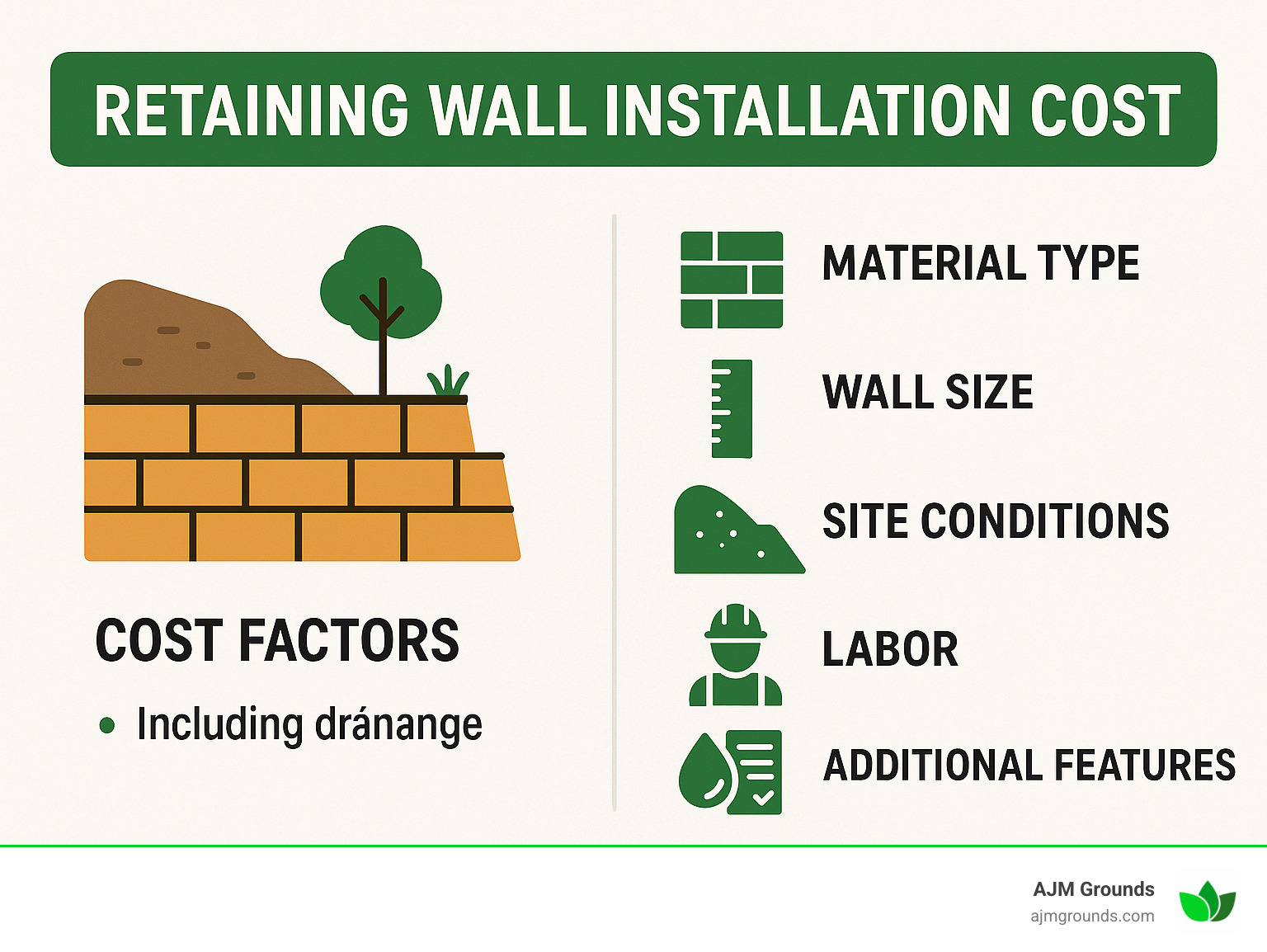
Basic retaining wall installation cost glossary:
- concrete retaining wall installation
- how to install a block retaining wall
- retaining wall builders near me
Understanding the Average Retaining Wall Installation Cost
When planning a retaining wall, understanding what drives the retaining wall installation cost helps you make smart decisions. Several key factors determine your final price.
Important note: All prices mentioned are national averages based on industry data and do not represent actual quotes from AJM Grounds. Your actual costs may vary.
How Size and Complexity Drive the Price
The size and design complexity of your retaining wall set the baseline for your project budget.
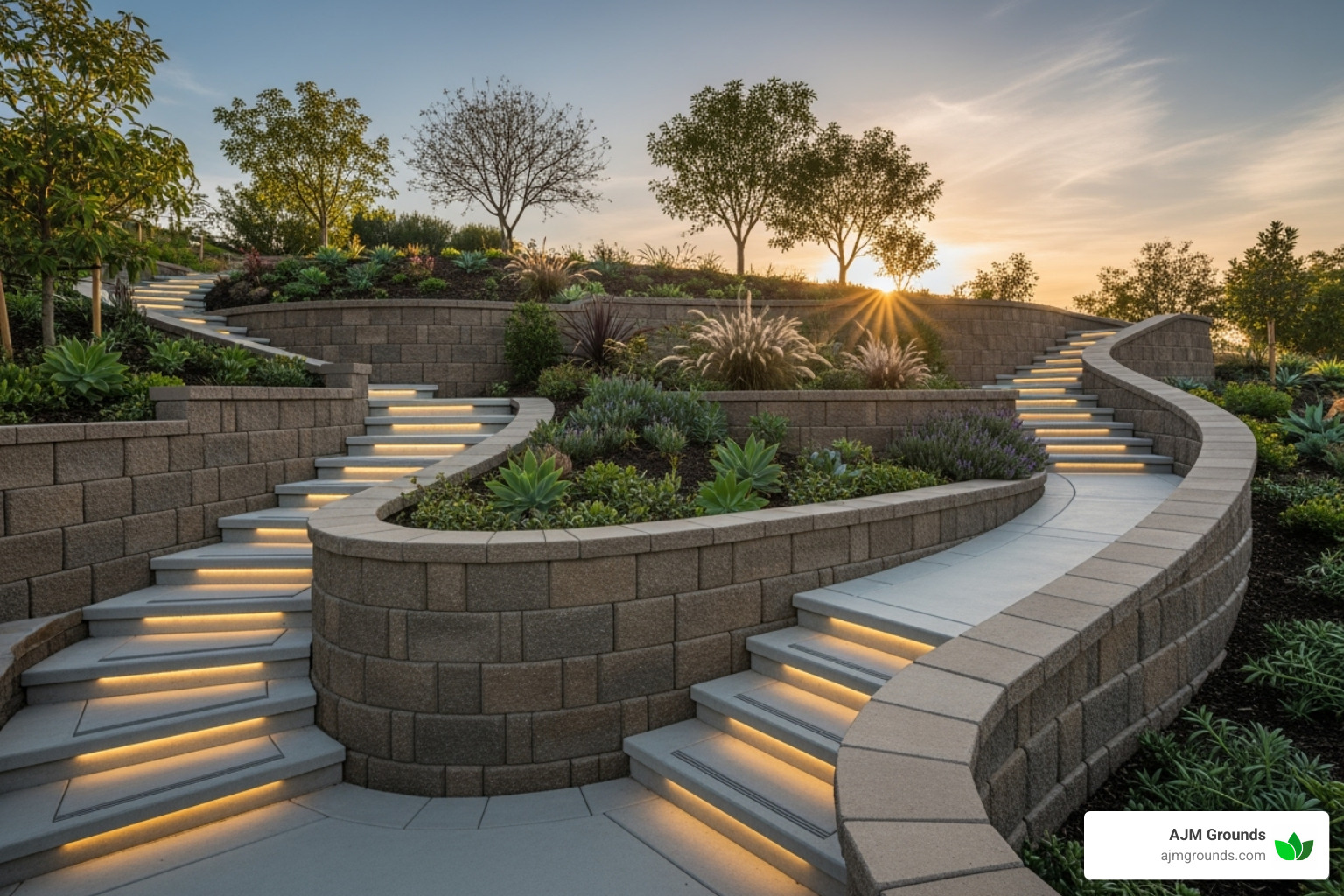
Wall height and length are the biggest cost drivers. Most contractors price retaining walls per square foot of wall face or per linear foot of length. The typical cost per square foot is $20 to $90, with a national average around $33. When priced per linear foot, expect $40 to $345, depending on the wall’s height.
Here’s how height affects your retaining wall installation cost per linear foot:
- 4-foot tall walls: $80 to $200
- 6-foot tall walls: $120 to $300
- 10-foot tall walls: $200 to $500
- 20-foot tall walls: $400 to $1,000
A 50-foot long, 4-foot high wall might cost between $4,000 and $10,000, depending on materials.
Straight versus curved walls also impact the price. Straight walls are quicker to build, while curved walls require more precision, custom cuts, and skilled labor, increasing the cost.
Terraced walls are an alternative for steep slopes, creating a series of shorter, stepped walls. This approach can be more visually appealing and structurally sound than a single tall wall. While there is more total linear footage, terraced systems can sometimes be more cost-effective than the engineering required for very tall single walls. For challenging slopes, exploring Retaining Walls for Slopes can provide more options.
Site Preparation and Accessibility Factors
Proper site preparation is a significant portion of the total retaining wall installation cost.
Excavation for the wall’s foundation and drainage system typically costs $50 to $200 per cubic yard of soil removed. Grading and leveling ensure the wall sits on stable ground, running about $0.40 to $2.00 per square foot for basic leveling, with extensive grading starting around $500.
Soil type is a major factor. Clay soil may need extra stabilization, while rocky soil increases excavation time and effort. In areas like Woburn, we encounter everything from sandy loam to New England granite, each presenting unique challenges.
Site accessibility can dramatically impact costs. If equipment cannot easily reach the work area, labor costs will be higher. Difficult access can add 30% or more to the final bill.
Demolishing an old wall adds to the cost, typically running $10 to $30 per square foot for removal, plus $125 to $400 per cubic yard for debris hauling.
Labor Costs: The Human Element
The skill of your installation crew is a crucial investment. Quality retaining wall construction requires expertise in engineering, drainage, and material handling.
Average labor costs range from $10 to $40 per square foot, or about $50 to $150 per hour. Some contractors price labor at $50 to $200 per linear foot, covering all work from excavation to cleanup.
Regional price differences affect labor rates. In the Greater Boston area, including our service areas of Bedford, Billerica, and Burlington, labor costs tend to be higher than the national average.
Skill level matters, especially for walls over a few feet high. Proper installation requires understanding soil mechanics, drainage, and structural principles. Hiring experienced professionals, such as those certified by the Mason Contractors Association, can prevent costly failures. Cutting corners on labor often leads to expensive repairs later.
How Materials Impact Retaining Wall Installation Cost
Your choice of material is a primary factor in the retaining wall installation cost. The material affects not only the upfront price but also the wall’s lifespan and future maintenance needs.
Comparing Common Retaining Wall Materials
This table compares the most popular retaining wall materials. These are national averages based on industry data, not actual quotes from AJM Grounds.
| Material | Average Cost/Sq. Ft. | Lifespan | Maintenance Level |
|---|---|---|---|
| Wood | $10 – $40 | 10 – 40 years | Moderate |
| Interlocking Blocks | $15 – $55 | 50 – 100 years | Low |
| Poured Concrete | $20 – $60 | 50 – 100 years | Low |
| Natural Stone | $10 – $90 | 50 – 200+ years | Low |
Timber and Wood Retaining Walls
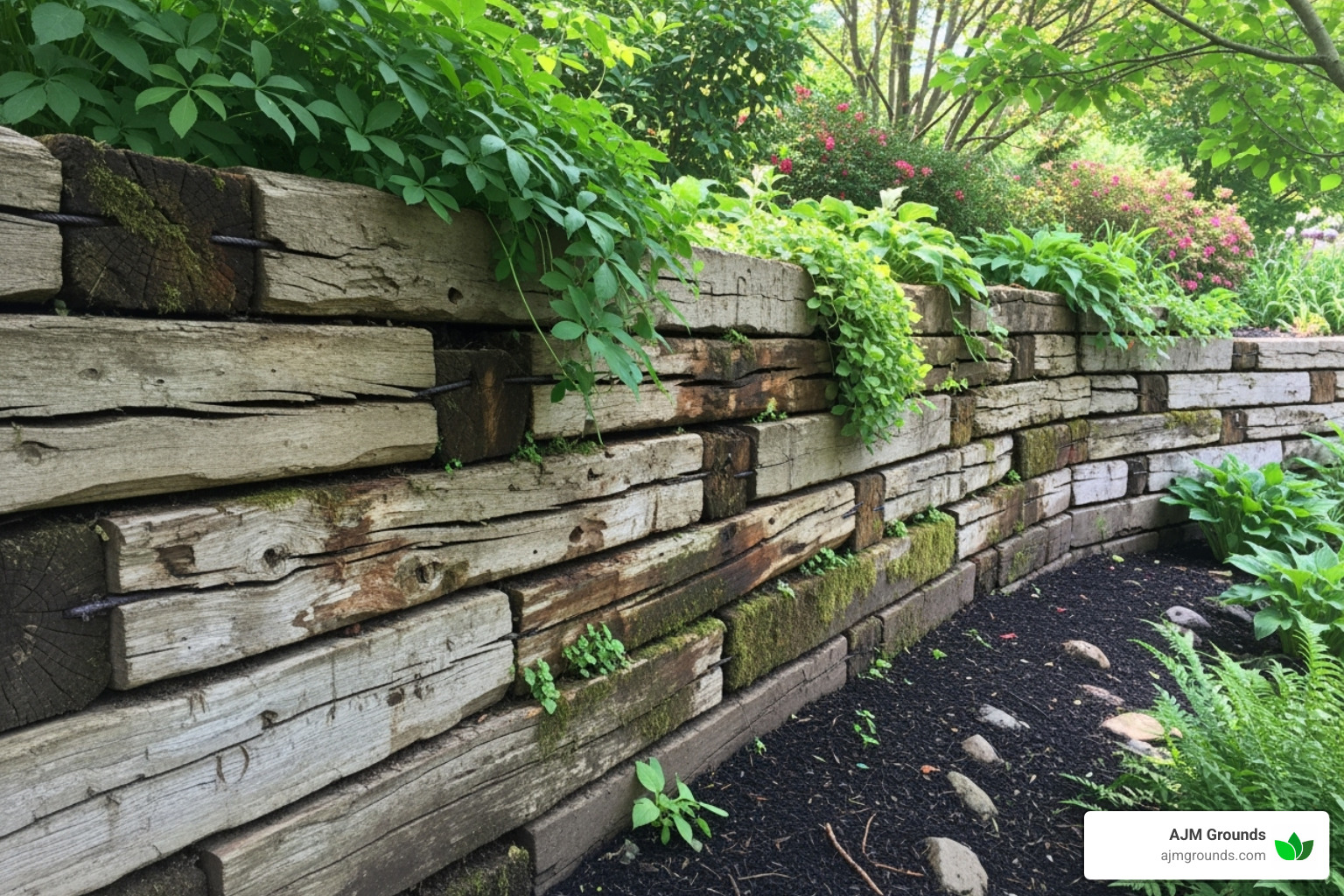
Wood retaining walls offer a natural, rustic feel. Pressure-treated lumber is the standard, providing protection against the elements at a reasonable price. The retaining wall installation cost for timber typically ranges from $10 to $40 per square foot, making it a budget-friendly option. A 140-square-foot wall might cost between $1,400 and $5,600, with complex projects reaching up to $16,000.
Most timber walls last 10 to 40 years. They are vulnerable to rot, decay, and insect damage, but proper maintenance extends their life. The organic look of wood blends well in garden settings and is perfect for projects like Retaining Walls for Gardens.
Concrete and Block Retaining Walls
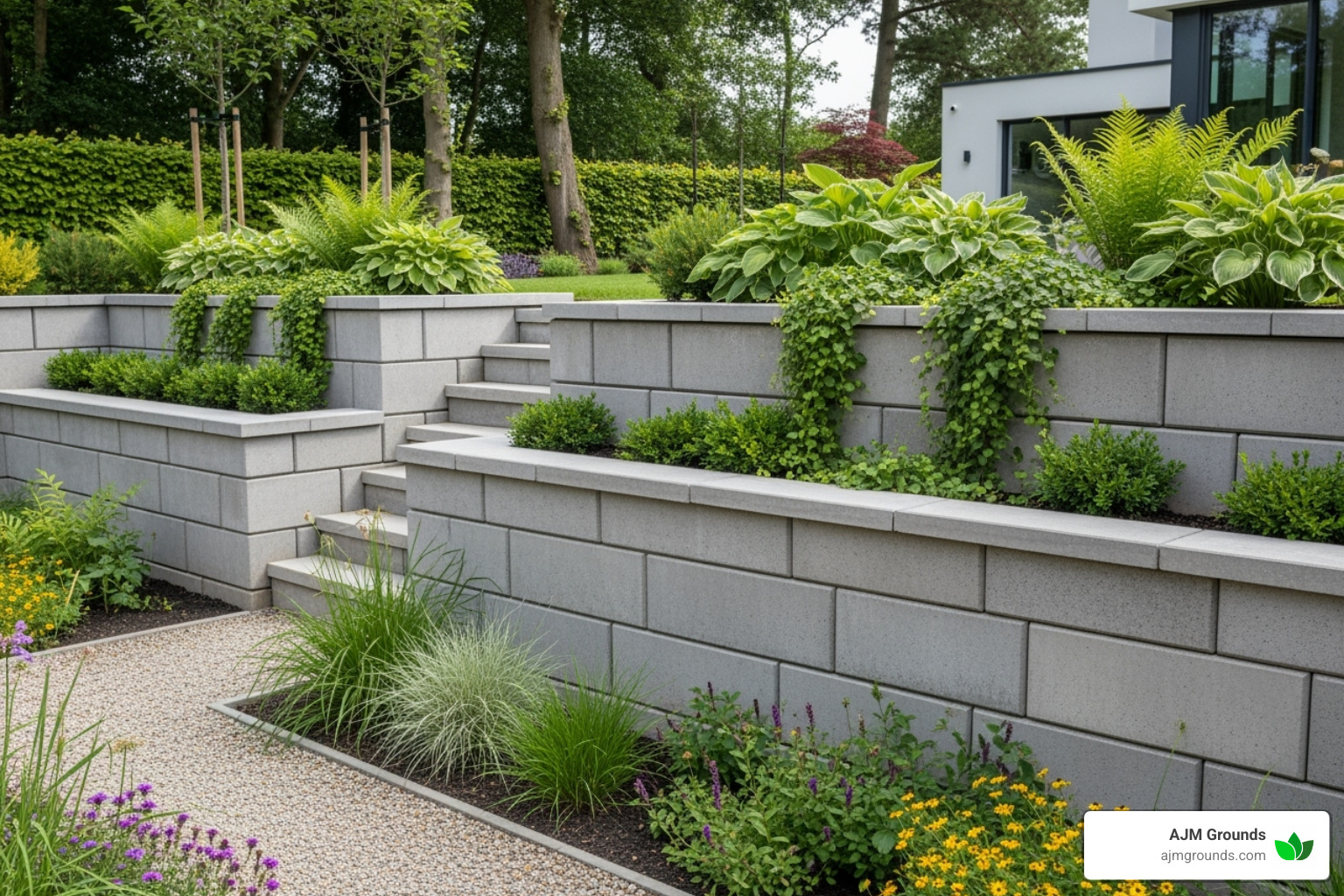
Concrete and block walls offer an excellent balance of affordability and longevity. Interlocking blocks are modular units that fit together without mortar, allowing for faster installation. They come in a wide variety of shapes, sizes, and colors, with costs from $15 to $55 per square foot.
Poured concrete walls, reinforced with steel rebar, offer maximum strength and can last up to 100 years. At $20 to $60 per square foot, they are a durable long-term investment, especially for larger projects. Concrete options won’t rot or attract pests and offer great design flexibility. For more information, see our pages on Concrete Retaining Wall Installation and Block Retaining Wall Design.
Natural Stone Retaining Walls
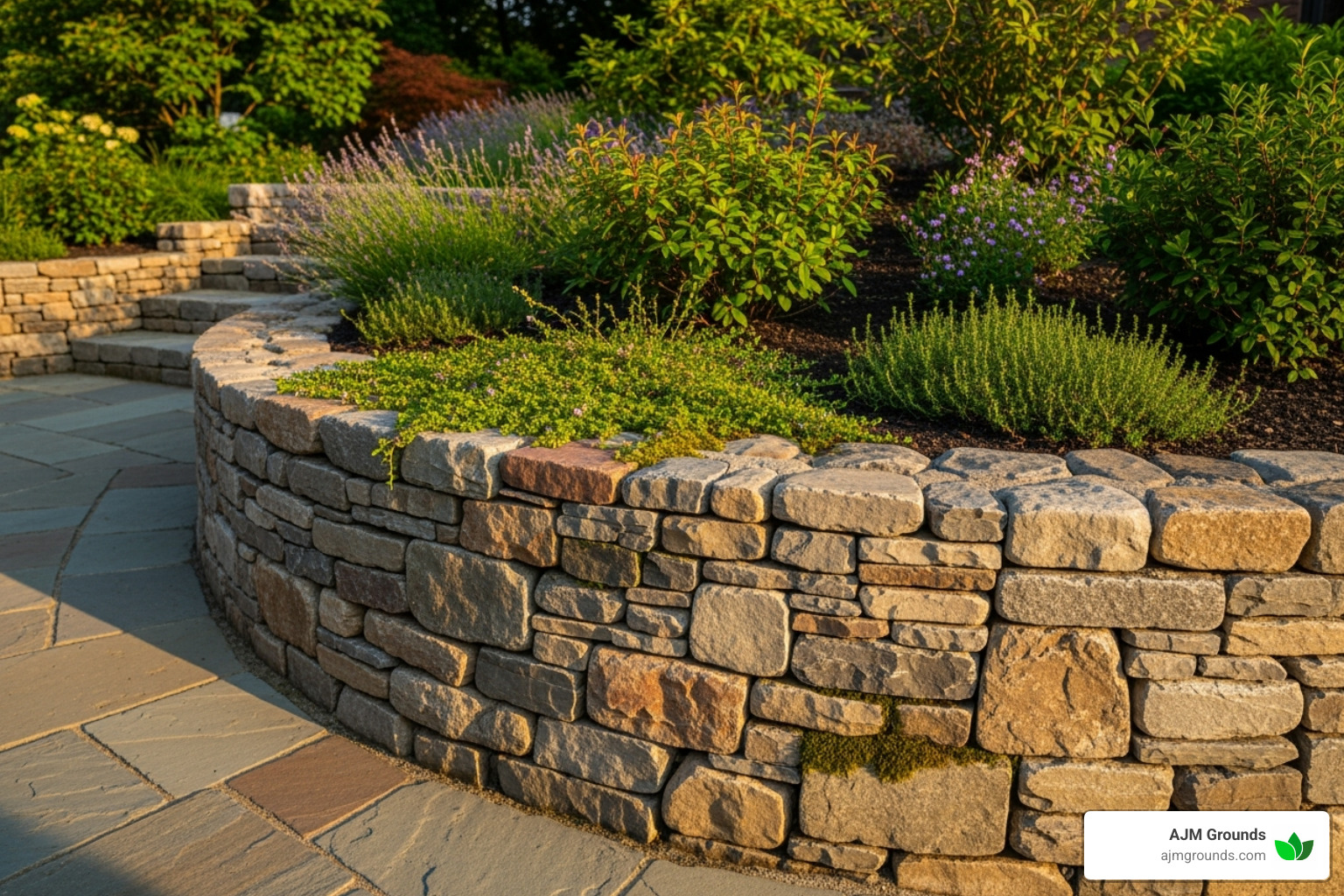
Natural stone provides a unique, high-end aesthetic and is built to last for generations. Boulder walls create a rugged look, typically costing $25 to $50 per square foot. Dry-stack and mortared stone walls rely on skilled masonry to fit stones together, creating a timeless appearance.
The retaining wall installation cost for natural stone ranges from $10 to $90 per square foot, depending on the stone type and installation complexity. A typical project might run $8,000 to $12,000. The investment pays off in longevity, as these walls can last over 200 years with minimal maintenance.
Each stone has a unique character, adding significant value and beauty to your property. They are not just functional structures but pieces of landscape art. Learn more about our Natural Stone Retaining Walls expertise.
Beyond the Basics: Additional Costs and Considerations
A retaining wall project involves more than just materials and labor. These additional factors are critical for a wall that is structurally sound and long-lasting.
Drainage, Waterproofing, and Reinforcement
Proper drainage is the most critical element for a retaining wall’s longevity. Without it, hydrostatic pressure (the force of water-saturated soil) can build up and cause the wall to bow, crack, or fail. A functional drainage system is not optional.
- Gravel backfill placed behind the wall allows water to drain freely.
- Perforated pipes (weeping tiles) at the base of the wall collect and direct water away. Weep holes in the wall’s face provide additional outlets.
- Filter fabric separates the gravel from the surrounding soil, preventing clogs.
Fixing drainage issues on an existing wall is expensive, with excavation costing $60 to $180 per linear foot. Waterproofing membranes add another layer of protection for $2 to $10 per square foot, preventing moisture from degrading the wall material itself.
For walls over 3-4 feet high, reinforcement is essential. Geogrid fabric is a synthetic mesh laid in layers during backfilling, tying the wall into the soil behind it to create an integrated system. For poured concrete walls, steel rebar provides the necessary tensile strength to prevent cracking, adding $1.50 to $4.50 per square foot. A well-built wall is designed to manage water and pressure. For more on the engineering, Wikipedia offers a good overview of What is a retaining wall?.
Permits, Surveys, and Engineering Fees
Navigating local regulations is a crucial step with its own costs. We advise clients in Woburn, MA, and surrounding towns to check with their local building department early in the process.
Permits are typically required for walls over 3-4 feet high, though some towns require them for shorter walls. Ignoring this can lead to fines or forced removal. Permit costs generally range from $40 to $450.
Land surveys ($200 – $1,200) may be needed for projects near property lines. For taller or more complex walls, a structural engineer is often required. An engineer’s design ensures the wall can safely withstand site-specific pressures. Fees for consultations or plans can range from $350 to over $1,500, but this investment prevents catastrophic failures.
DIY vs. Professional Retaining Wall Installation Cost
While a DIY approach can seem cheaper, retaining wall construction is deceptively complex. We’ve seen many DIY attempts end up costing more in repairs than professional installation would have initially.
For DIY installation, you’ll pay for materials ($4-$20/sq. ft.) and tool rental (around $157). This compares to professional installation at $20-$90 per square foot for materials and labor.
However, the risks of improper installation are high. Critical steps like base preparation, drainage, and backfilling require expertise. Common DIY failures include:
- Tilting or leaning walls
- Cracking and buckling under pressure
- Separation of wall sections
- Drainage failure leading to collapse
Professional installation offers significant advantages. The AJM Grounds team has over 50 years of combined experience. We bring efficiency with the right equipment, ensure structural integrity by understanding local soil and load requirements, handle permit compliance, and provide a warranty for your peace of mind. The higher upfront retaining wall installation cost is an investment in durability, safety, and long-term property value. Our guide on Installing a Block Retaining Wall shows the complexity involved.
Frequently Asked Questions about Retaining Wall Costs
How much value does a retaining wall add to a property?
A well-built retaining wall is a smart investment that can significantly increase property value.
- Improved Curb Appeal: A beautiful wall transforms slopes into attractive landscape features, boosting your home’s street appeal.
- Increased Usable Space: Walls can turn a steep, unusable slope into a level patio, garden, or play area, adding valuable outdoor living space.
- Erosion Prevention: A wall protects your home’s foundation and driveway from costly damage caused by soil erosion and water runoff.
- High ROI: Landscaping projects with retaining walls can increase property value by up to 15%. The return on investment often ranges from 100% to 200%, and homes with attractive hardscaping tend to sell faster.
What is the cheapest type of retaining wall to build?
While some materials have a lower upfront cost, it’s important to consider long-term value.
- Budget-Friendly Materials: Vinyl ($10-$35/sq. ft.) and gabion walls (wire cages with rocks, $10-$40/sq. ft.) are among the most affordable. Treated wood ($10-$40/sq. ft.) and basic cinder blocks ($15-$50/sq. ft.) are also popular budget choices, though blocks may require a finishing veneer.
- Cost vs. Longevity: Cheaper materials often have a shorter lifespan. A wood wall might need replacement in 15-20 years, while a concrete or stone wall can last for over 50 years. The lowest initial retaining wall installation cost may not be the most cost-effective solution over time.
How long do different retaining walls last?
The lifespan of a retaining wall depends heavily on the material and the quality of the installation.
- Wood: 10 to 40 years. Lifespan is affected by wood type, climate, and maintenance. Vulnerable to rot and insects.
- Concrete and Block: 50 to 100 years. Highly durable and resistant to rot, insects, and weather with minimal maintenance.
- Natural Stone: 50 to 200+ years. The most durable option, capable of lasting for generations with proper construction.
The Importance of Installation: The material is only half the story. A wall’s longevity is determined by the quality of its installation. A proper foundation, adequate drainage, and correct backfilling techniques are essential. A general rule is to bury one-third of the wall’s height for stability. Professional installation is key to protecting your investment and ensuring your wall stands the test of time.
Get an Accurate Estimate for Your Retaining Wall Project
While national averages for retaining wall installation cost provide a baseline, every property is unique. Local factors like soil conditions, the grade of your slope, and your specific design vision will determine the final price.
After nearly two decades serving homeowners in Woburn, MA, and surrounding areas, I’ve learned that no two projects are alike. The difference between a straightforward job and a complex one can be significant. Easy access and stable soil can keep costs down, while challenging sites with poor drainage often require more advanced solutions.
Local factors that impact your costs include:
- Soil conditions: The rocky or clay-heavy soils common in New England can affect excavation and drainage needs.
- Municipal requirements: Permit processes and building codes vary by town, from Reading to Stoneham or Burlington.
- Seasonal considerations: The timing of your project can influence scheduling and pricing.
At AJM Grounds, we believe in transparency. Our estimates are based on a thorough assessment of your property’s soil, drainage, and access, as well as your design goals. This approach ensures there are no surprises—just a beautiful, durable retaining wall that improves your property for years to come.
We proudly serve homeowners throughout Woburn and the surrounding communities of Bedford, Billerica, Burlington, Lexington, Reading, Stoneham, Wilmington, and Winchester. Our local expertise allows us to steer regional challenges effectively.
Ready to transform your landscape? Let’s discuss your project and budget.
Retaining Wall Builders Near Me
