

Reclaim Your Weekends with a Smarter Yard
Why Choose Low Maintenance Hardscape for Your Yard?
Picture this: Saturday morning coffee on a stone patio instead of a lawn-mower soundtrack. Low maintenance hardscape makes that scene normal, not rare.
Environmental gains come first. Replacing just 25 % of turf with gravel or stone can save up to 38,000 gallons of water each year. With no fertilizers or pesticides, local waterways stay cleaner, and eliminating weekly gas-powered mowing shrinks your carbon footprint. Permeable hardscape also improves drainage and limits storm-water runoff—crucial in Massachusetts’ freeze-thaw climate.
Functionally, hardscape turns a yard into a series of outdoor rooms. Patios, walkways, and seating walls stay usable year-round, whether for summer cookouts or winter fire-pit gatherings. Homeowners from Bedford to Woburn gain defined zones for dining, play, and relaxation that never become muddy or overgrown.
The financial case is equally strong. Studies show landscaping ROI can reach 150%, and completed projects throughout Lexington, Reading, and Stoneham consistently boost curb appeal and resale value.
AJM Grounds focuses on sustainability, selecting materials that withstand New England weather with minimal upkeep. The outcome is simple: less mowing, less watering, fewer chemicals—and more time to enjoy your space.
1. Patios and Walkways: The Foundation of Outdoor Living
When homeowners ask me what makes the biggest impact in creating a low maintenance hardscape, I always point to patios and walkways. These aren’t just decorative features – they’re the workhorses that transform your outdoor space from a maintenance burden into a place you actually want to spend time.
Think about it: that area right outside your back door where the grass always seems to die? Or those worn patches where everyone naturally walks to the garden? These are perfect spots for patios as lawn replacement. Instead of fighting nature and constantly reseeding, you create beautiful, functional spaces that work with your family’s habits.
Walkways serve as the traffic directors of your landscape. They guide foot traffic exactly where you want it to go, preventing those unsightly worn paths through your lawn. More importantly, they reduce soil compaction – that hard-packed earth that kills grass and creates drainage problems. I’ve seen countless yards transformed simply by adding a few well-placed walkways.
The beauty of patios and hardscapes lies in their ability to create distinct zones for dining and lounging. Your patio becomes an outdoor room where you can actually set up furniture without worrying about sinking into soft ground or dealing with muddy conditions after rain.
From a maintenance perspective, the difference is night and day. While your neighbors are out mowing every weekend, you’re enjoying your morning coffee on a patio that requires nothing more than occasional sweeping. No watering, no fertilizing, no battling weeds – just pure enjoyment of your outdoor space.
We’ve installed hardscape features throughout Wilmington, Winchester, and Woburn, and I consistently see how these elements become the most-used parts of people’s yards. For design inspiration, check out our patio and walkway ideas to see how different approaches can transform your space.
Top Materials for a Low Maintenance Hardscape Patio
Choosing the right materials can make or break your low maintenance hardscape project. After years of working with Massachusetts’ challenging climate – those brutal freeze-thaw cycles, heavy rains, and occasional drought – I’ve learned which materials truly deliver on their low-maintenance promise.
Pavers are often my go-to recommendation for families wanting durability without breaking the bank. Concrete pavers offer incredible variety in colors and styles, plus they handle our weather beautifully. They’re also forgiving – if one gets damaged, you can replace just that piece instead of redoing an entire area.
The secret to keeping pavers truly low-maintenance? Polymeric sand. This specialized sand hardens when wet, filling the joints between pavers and preventing weed growth. It’s like having a built-in weed barrier that actually works.
Natural stone takes things to the next level. I’ll be honest – it costs more upfront, but the long-term benefits are remarkable. Our guide on the advantages of hardscaping with natural stone explains why this investment pays off over time.
Flagstone creates those beautiful, organic patterns that make your patio look like it’s been there forever. Bluestone offers a more formal appearance with consistent coloring that works perfectly for contemporary designs. Both materials get better with age, developing a natural patina that adds character.
For DIY enthusiasts, laying a flagstone path can be a rewarding weekend project, though larger patios benefit from professional installation to ensure proper drainage and frost protection.
Here’s how the main materials compare for Massachusetts homeowners:
| Material | Initial Cost | Maintenance | Durability | Climate Suitability |
|---|---|---|---|---|
| Concrete Pavers | Low-Medium | Low | High | Excellent |
| Natural Stone | Medium-High | Very Low | Very High | Excellent |
| Poured Concrete | Low | Medium | Medium | Good |
The key insight I share with every client: the best low maintenance hardscape material is the one that’s installed correctly. Even premium natural stone will fail without proper base preparation, and even basic concrete pavers will last decades when installed with attention to drainage and frost protection.
2. Smart Ground Covers: Beyond the Grass

Swapping turf for smart ground covers is one of the fastest ways to cut weekend chores. Gravel gardens, rock mulch, and next-generation artificial turf create attractive, permeable surfaces that demand little routine care.
Gravel is especially versatile. Pea gravel feels comfortable underfoot, decomposed granite compacts into a firm path, and river rock boosts drainage on wet sites. Each option acts as a neutral backdrop that highlights architecture and plantings while allowing rain to soak naturally into the soil.
Artificial turf has evolved well beyond old “Astroturf.” Today’s products look realistic and remove watering, mowing, and fertilizing from your to-do list. Industry data (average internet figures, not AJM Grounds pricing) places installation between $7 – 18 per square foot.
Water savings are substantial. Research from the Guidelines for Estimating Landscaping Water Use shows that replacing only 25 % of a 10,500-square-foot lawn with gravel can save up to 38,000 gallons annually—a real benefit during Massachusetts dry spells.
Dealing with Weeds and Upkeep
No outdoor surface is genuinely zero-maintenance, yet these choices require a fraction of turf’s effort. Landscape fabric under gravel, polymeric sand in paver joints, occasional sweeping, and spot-weeding keep areas tidy. Expect about one-tenth the time commitment compared to a traditional lawn.
3. Structural Elements: Adding Function and Style
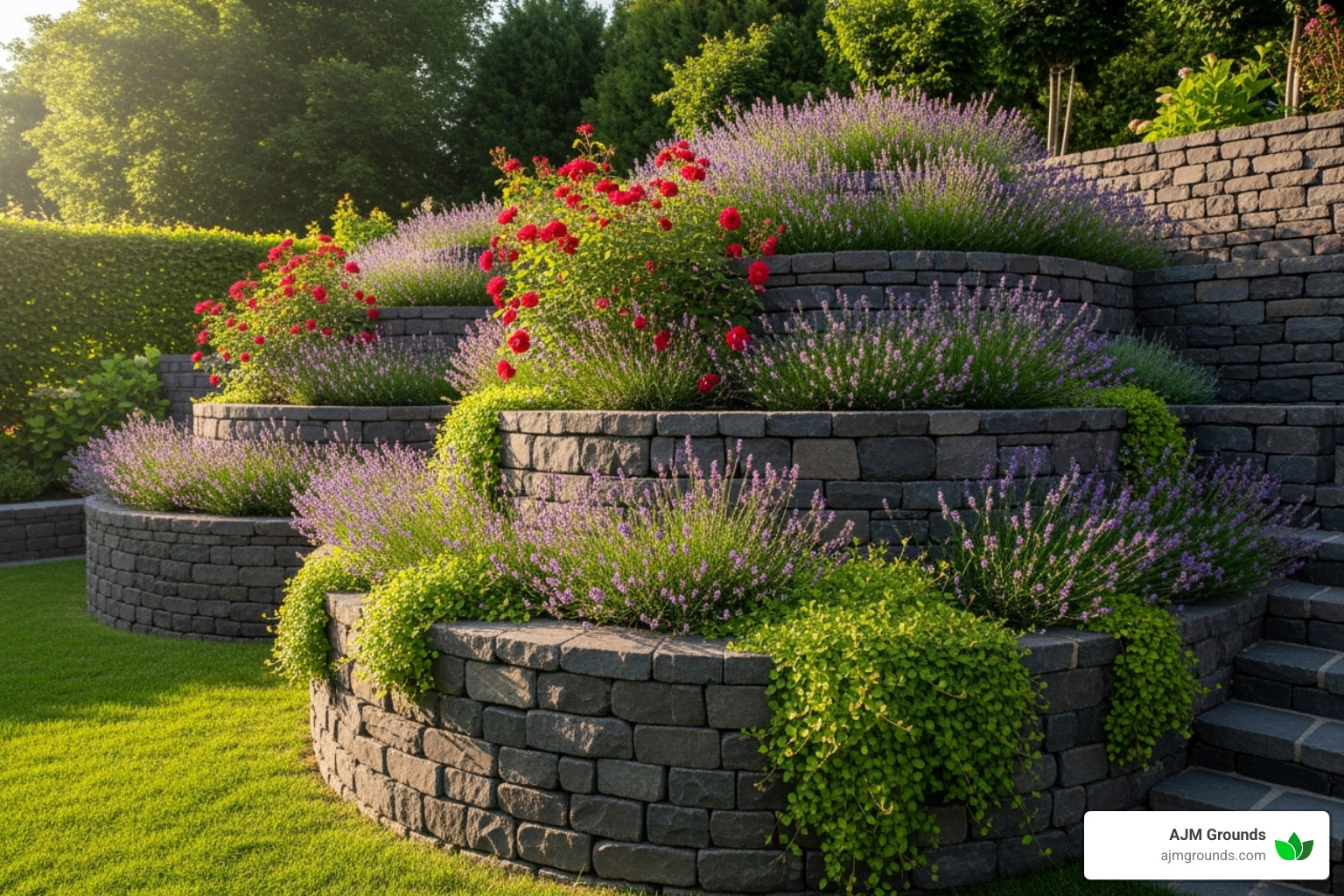
Here’s where low maintenance hardscape gets really exciting. Structural elements transform your outdoor space from a simple patio into a sophisticated living area that works as hard as your indoor rooms.
Retaining walls are the workhorses of landscape design, and they’re perfect for Massachusetts properties with challenging slopes. Our retaining walls for gardens don’t just hold back soil – they create opportunities. That steep hillside where nothing grows well? Transform it into terraced garden beds that are actually manageable. Need a level area for your kids to play? A retaining wall can carve out flat space from the most challenging terrain.
The beauty of retaining walls goes beyond function. They add vertical interest to flat landscapes, create natural seating areas, and improve drainage conditions. Plus, a well-built stone or block retaining wall requires virtually no maintenance once it’s installed – just the occasional cleaning.
Nothing says “outdoor living” quite like a fire pit. Our firepit installation service creates that magical gathering spot where families naturally congregate. There’s something about fire that draws people together, extending your outdoor season well into Massachusetts’ crisp fall evenings.
Fire features are surprisingly low-maintenance. Unlike a wood deck that needs annual staining or a lawn that demands weekly attention, a stone fire pit requires little more than occasional cleaning and ash removal. It’s the kind of feature that adds significant property value while actually reducing your overall landscape maintenance burden.
Outdoor kitchens and pergolas take the concept even further. Why limit cooking to your indoor kitchen when you can create a fully functional outdoor cooking space? Modern outdoor kitchens can include everything from simple grills to full cooking stations with storage and prep areas.
Composite decking deserves special mention for Massachusetts homeowners. While traditional wood decking requires annual staining and regular maintenance, quality composite materials look great year after year with just occasional cleaning. Yes, the initial investment is higher than wood, but the long-term savings in time and maintenance costs make it worthwhile.
The key to successful structural elements is thinking about durability from the start. Natural stone and quality composite materials might cost more initially, but they provide decades of service with minimal upkeep. As landscape professionals know, these materials can last 50 years or more with proper installation.
For smaller DIY projects, our guide on how to install a block retaining wall provides detailed instructions. However, larger structural elements typically require professional installation to ensure proper foundation work, drainage, and compliance with local building codes.
The magic happens when you combine different structural elements. A stone patio flows into composite decking, which connects to a pergola-covered dining area, all anchored by beautiful retaining walls that create planting beds. Each element reduces maintenance while adding function and beauty to your outdoor space.
4. Balancing Hardscape with Low-Effort Plants
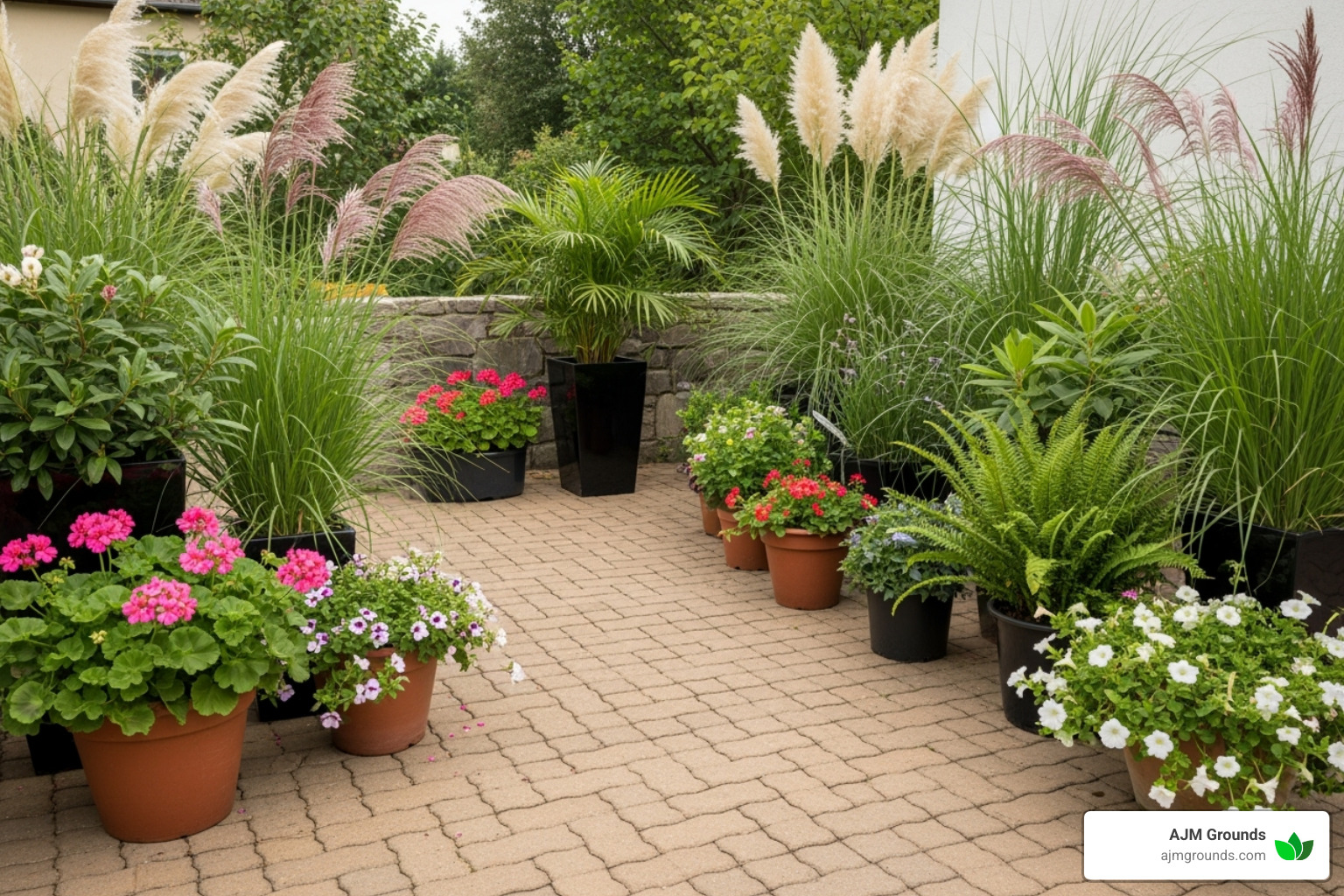
Even the most beautiful low maintenance hardscape can feel cold and unwelcoming without the softening touch of plants. The secret isn’t avoiding plants altogether – it’s choosing the right ones and placing them strategically to create warmth and natural beauty while keeping maintenance to a minimum.
I’ve seen too many hardscape projects that look like parking lots because homeowners were afraid to add any plants. The trick is understanding the landscape vs hardscape balance. You want enough greenery to make your space feel alive and inviting, but not so much that you’re back to weekend yard work.
Container gardening offers the perfect solution for hardscaped areas. Containers give you complete control over soil conditions, drainage, and plant placement. You can move them around as seasons change, swap out plants when you want a fresh look, and eliminate most weeding since the growing space is contained. Plus, containers work beautifully on patios, decks, and alongside walkways.
For permanent plantings, focus on drought-tolerant plants that thrive with minimal water once established. Succulents are practically foolproof – they store water in their leaves and actually prefer being left alone. Ornamental grasses add texture and movement to hardscaped areas while requiring almost no care beyond an annual spring trim. Native plants are already adapted to Massachusetts conditions, so they’ll handle our weather extremes without constant attention.
The key to successful plant integration is strategic placement. Use plants to soften the hard edges where pavers meet planting beds, create natural privacy screens with taller specimens, and add seasonal interest with plants that offer multi-season appeal. Think of plants as the finishing touches that make your hardscape feel like a complete outdoor room rather than just a construction project.
Designing Your Low Maintenance Hardscape with Plants
Creating a beautiful plant-and-hardscape combination starts with understanding what thrives in your specific conditions. Massachusetts falls within USDA Hardiness Zones 5a through 7a, depending on your exact location, so choose plants rated for your zone to ensure they’ll survive our winters.
The smartest approach is grouping plants by their needs rather than just their appearance. Plants that need full sun should go together, shade-lovers in another area, and drought-tolerant specimens grouped where they won’t get overwatered. This makes care much simpler because you’re not trying to meet different watering and maintenance needs in the same space.
Five excellent low-maintenance plants for Massachusetts include hostas for shaded areas with their attractive foliage and minimal care requirements, sedum as a succulent groundcover that’s drought-tolerant and provides beautiful fall color, coneflower (Echinacea) as a native wildflower that attracts pollinators, ornamental grasses for year-round interest, and catmint for its fragrant, long-blooming, deer-resistant qualities.
Mulching strategy plays a crucial role in plant success. A 2-4 inch layer of mulch in planted areas suppresses weeds, retains moisture to reduce watering needs, regulates soil temperature, and creates that neat, finished appearance that makes everything look professionally maintained.
Look for self-cleaning plants that drop spent blooms naturally, eliminating the need for deadheading. Knockout roses provide continuous blooms and disease resistance, while catmint offers a long flowering period with minimal care. Ornamental grasses develop attractive seed heads that look good all winter, requiring just one annual spring cutting.
The goal is creating a landscape that looks intentional and well-cared-for while requiring minimal ongoing effort. When you balance your low maintenance hardscape with the right plants in the right places, you get the best of both worlds – natural beauty and weekend freedom.
Frequently Asked Questions about Low Maintenance Hardscape
How much does low maintenance hardscape cost?
The investment in low maintenance hardscape is one of those “good news, bad news” situations. The bad news? You’ll need to invest upfront. The good news? You’ll likely save money over time while getting your weekends back.
Initial Investment Ranges:
Based on internet research data (note: these are average costs and not actual AJM Grounds pricing), you can expect to pay:
- Gravel surfaces: $2-15 per square foot
- Concrete pavers: $8-25 per square foot
- Natural stone: $15-75 per square foot
- Artificial turf: $7-54 per square foot
The wide range reflects different quality levels, project complexity, and regional variations. A simple gravel path will cost far less than an elaborate natural stone patio with intricate patterns.
The Long-term Picture:
Here’s where low maintenance hardscape starts looking really attractive. Consider what you’re eliminating: weekly mowing, regular watering, fertilizer applications, weed control, and equipment maintenance. The typical homeowner saves up to 38,000 gallons of water annually by replacing just 25% of their lawn with hardscape.
Add in the costs of lawn equipment, fuel, fertilizers, and your valuable time, and the math becomes compelling. Industry studies show landscaping improvements can deliver ROI up to 150%, making this more than just a convenience upgrade.
Budget-Friendly Approaches:
Not everyone needs to transform their entire yard at once. Gravel remains the most affordable option at around $5 per square foot installed, offering immediate maintenance reduction. Concrete pavers provide excellent durability without the premium cost of natural stone.
Many homeowners opt for phased installation – starting with high-use areas like patios, then gradually expanding to walkways and other spaces. This spreads costs while delivering immediate benefits.
DIY vs. Professional Installation:
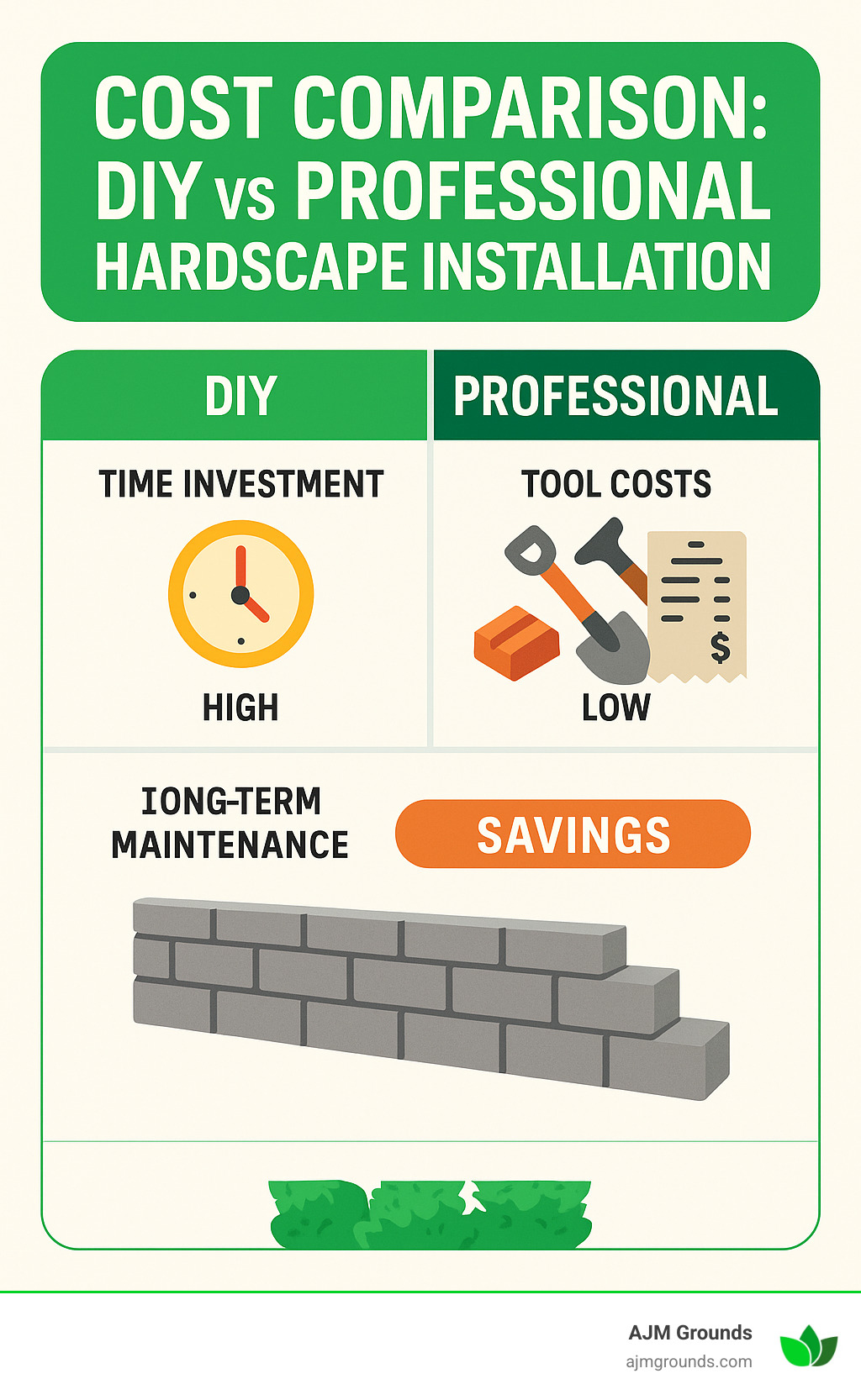
Simple projects like gravel paths can be DIY-friendly, potentially saving 40-60% on labor costs. However, complex installations requiring proper drainage, base preparation, and structural work benefit significantly from professional expertise. Poor installation can lead to costly repairs that eliminate any initial savings.
Is hardscaping bad for the environment?
This question comes up frequently, and it’s a fair concern. The short answer is that well-designed low maintenance hardscape can actually be more environmentally friendly than traditional lawns – but the details matter.
Environmental Benefits:
Traditional lawns are surprisingly resource-intensive. They require regular watering, fertilizers, pesticides, and weekly mowing with gas-powered equipment. Eliminating these needs through hardscape reduces water consumption, eliminates chemical runoff, and cuts emissions from lawn equipment.
Permeable vs. non-permeable surfaces make a huge difference. Gravel, permeable pavers, and natural stone with proper joint spacing allow rainwater to infiltrate naturally, reducing stormwater runoff that can overwhelm municipal systems.
Potential Environmental Concerns:
The main concerns involve heat island effect from dark surfaces and habitat loss for plants and wildlife. Non-permeable surfaces can also increase stormwater runoff if not properly designed.
Sustainable Solutions:
The key is thoughtful design. Choose permeable materials whenever possible, source materials locally to reduce transportation impacts, and integrate plants to provide cooling and habitat. Light-colored materials reduce heat absorption, while strategic shading from pergolas or trees helps moderate temperatures.
Using recycled materials like crushed concrete or reclaimed stone further reduces environmental impact. The goal is creating a system that works with natural processes rather than against them.
When you eliminate the need for fertilizers, pesticides, and weekly mowing, most low maintenance hardscape installations have a smaller environmental footprint than chemical-intensive lawn maintenance. It’s about making smart choices that benefit both you and the environment.
Can I install a hardscape myself?
I love ambitious homeowners, but let’s be realistic about what makes sense for DIY installation. The answer depends on project complexity, your skill level, and honestly, how much you enjoy physical labor.
DIY-Friendly Projects:
Simple gravel paths are absolutely doable for most homeowners. Basic excavation, landscape fabric installation, and gravel placement require more sweat than specialized skills. Small patio areas using pavers or flagstone can also work well for DIY installation, especially if you’re comfortable with measuring, leveling, and basic construction techniques.
Container gardens require no excavation and offer immediate results with minimal risk. Basic edging to define garden beds is another manageable project that can make a big visual impact.
When to Call Professionals:
Large patios requiring extensive excavation, proper base preparation, and complex drainage solutions benefit from professional installation. Retaining walls involve structural considerations and often require permits – not the place to learn through trial and error.
Fire features involve gas lines, safety considerations, and building codes that require professional expertise. Any project requiring drainage systems or dealing with grading issues typically needs professional assessment.
Critical Success Factors:
The difference between success and expensive do-overs usually comes down to proper base preparation. Inadequate excavation and compaction lead to settling, uneven surfaces, and premature failure. Drainage is equally crucial – water problems can destroy even properly installed materials.
For those interested in DIY projects, our guide on how to install a block retaining wall provides detailed instructions for smaller installations.
Professional Benefits:
Professional installation ensures proper execution with appropriate tools and techniques. Most professionals offer warranty coverage for both materials and labor, providing peace of mind. The efficiency of experienced crews often means faster completion with less disruption to your daily life.
Perhaps most importantly, professionals bring problem-solving experience to handle unexpected issues that inevitably arise during installation. Sometimes the investment in professional installation pays for itself through proper execution and long-term durability.
Create Your Perfect Outdoor Oasis
Imagine stepping into your backyard on a Saturday morning, coffee in hand, and instead of groaning at the sight of overgrown grass and endless weekend chores, you’re greeted by a beautiful, low maintenance hardscape that’s ready for you to simply enjoy. This isn’t just a dream – it’s what we help homeowners achieve every day.
The change from high-maintenance lawn to thoughtfully designed hardscape represents true freedom from yard work. No more weekly mowing schedules that dictate your weekends. No more dragging hoses around to keep grass alive during dry spells. No more battling weeds that seem to multiply overnight. Instead, you get a beautiful, functional space that works for your lifestyle rather than against it.
The numbers tell a compelling story. Homeowners typically save up to 38,000 gallons of water annually while eliminating the need for chemical fertilizers and pesticides. But the real magic happens in those reclaimed weekend hours – time you can spend with family, entertaining friends, or simply relaxing in your outdoor oasis.
At AJM Grounds, we’ve watched countless families throughout Bedford, Billerica, Burlington, Lexington, Reading, Stoneham, Wilmington, Winchester, and Woburn find this change. Each project starts with understanding how you actually want to use your outdoor space. Do you dream of hosting dinner parties on a stone patio? Would a gravel garden with sculptural plants better suit your style? Maybe retaining walls could turn that problematic slope into terraced garden beds?
Our attention to detail and personalized service means we don’t just install hardscape – we create outdoor rooms that reflect your personality and meet your specific needs. We understand that proper base preparation isn’t glamorous, but it’s what separates hardscape that looks great for decades from projects that fail after a few seasons.
The beauty of professional installation lies in getting it right the first time. When drainage is properly designed, materials are correctly selected for Massachusetts’ climate, and installation follows best practices, your low maintenance hardscape becomes a true investment in your property’s value and your quality of life.
Whether you’re ready to start with a simple gravel path or planning a complete backyard change, we bring years of local experience to every project. We know how materials perform through our freeze-thaw cycles, which designs work best for different soil conditions, and how to create spaces that feel both beautiful and effortlessly maintained.
Ready to explore how low maintenance hardscape can transform your outdoor space? Let’s discuss your vision and create a plan that delivers both immediate enjoyment and long-term value. For a consultation on your next project, explore our Hardscaping Services to find how we can help you create the perfect outdoor oasis that fits your lifestyle and budget.
