

Transform Your Landscape with a Sturdy Retaining Wall
Paver retaining wall installation is a rewarding DIY project that turns sloped yards into functional outdoor spaces while preventing soil erosion. Here’s what you need to know to get started:
Essential Steps for Paver Retaining Wall Installation:
- Call 811 to locate underground utilities before digging
- Dig a trench 6+ inches deep plus half the height of your first block
- Add and compact 6 inches of paver base material
- Level the first course – this is the most critical step
- Stack blocks in a running bond pattern, staggering joints
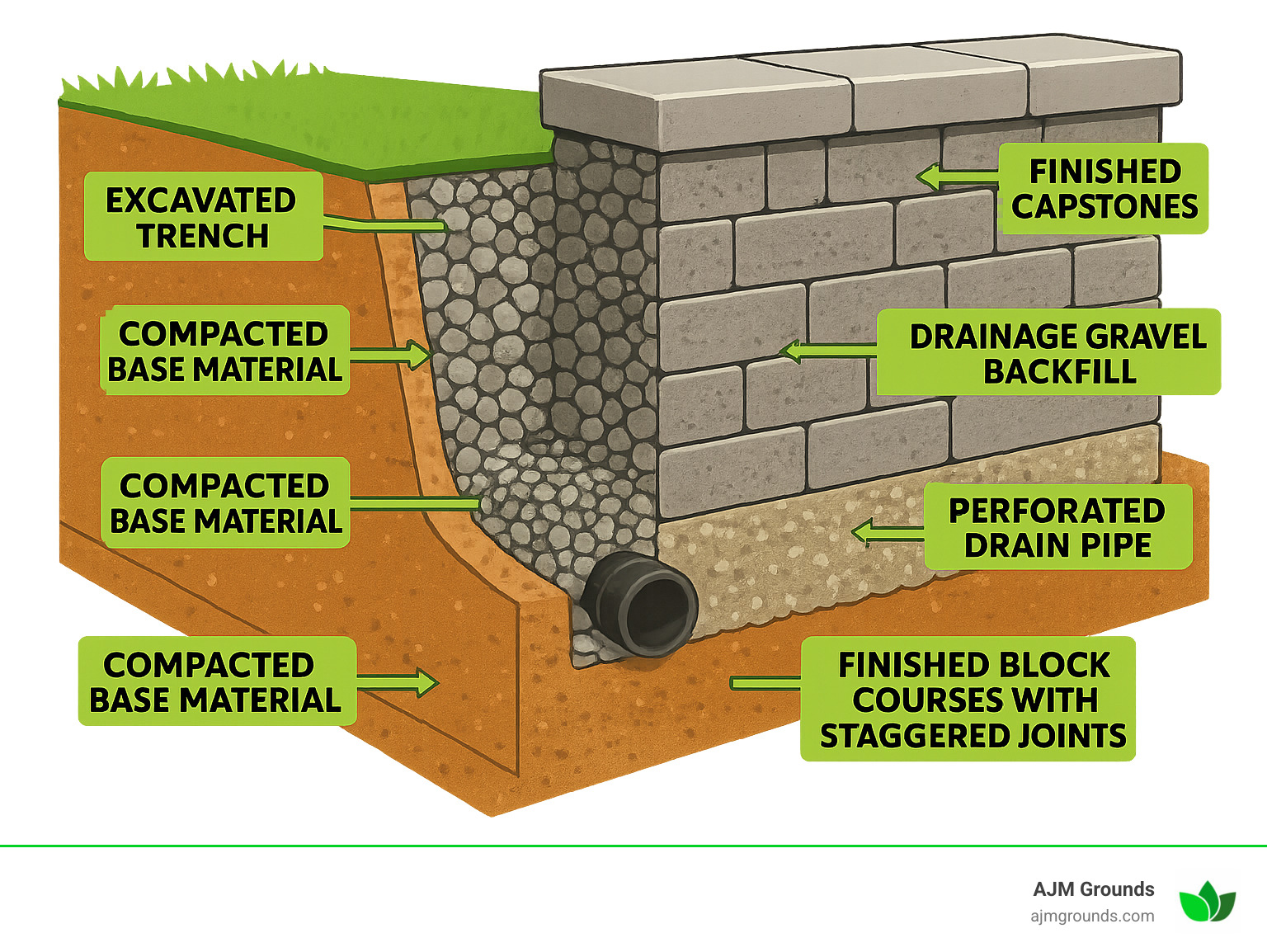
- Install drainage with perforated pipe and gravel backfill
- Add capstones with construction adhesive for a finished look
A well-built retaining wall creates level ground for patios, prevents erosion, and adds significant curb appeal. Most DIY retaining walls under 4 feet high are gravity walls, where the weight and backward lean of the blocks provide structural strength.
Success hinges on proper foundation preparation and adequate drainage. As experts say, “water is the #1 failure for retaining walls,” making drainage critical for long-term stability.
I’m John Caplis, owner of AJM Grounds LLC. With years of experience helping homeowners in Woburn, Massachusetts, I’ve learned that proper preparation is the key to a paver retaining wall installation that lasts for decades.
Paver retaining wall installation helpful reading:
Phase 1: Gearing Up for Success – Planning and Preparation
A successful paver retaining wall installation starts with planning. This phase prevents frustration, delays, and costly mistakes like hitting a utility line or violating local codes. Proper preparation makes the project enjoyable. With materials, permits, and a clear plan, you can focus on the build. For more inspiration on incorporating walls into your overall landscape design, check out The Art of Hardscaping: Incorporating Stone and Pavers into Your Massachusetts Landscape.

Before You Dig: Essential Checks and Permits
The golden rule: always call 811 before you dig. This free service locates underground utilities. Hitting a gas line is dangerous and expensive. The utility companies will mark your yard with flags and paint, creating a roadmap for safe digging.
While waiting for utility marking, research local building codes and permit requirements. Most areas allow DIY walls under 3-4 feet without permits, but regulations vary by town, so always check. What’s allowed in Woburn might differ from rules in Winchester or Lexington.
If you have a Homeowners Association (HOA), check their guidelines. Getting approval early prevents issues later. HOAs may have specific rules on materials or colors.
Choosing the Right Blocks for Your Wall
For a paver retaining wall installation, interlocking concrete blocks are the best choice for DIYers. They are more forgiving than loose stone or plain concrete blocks.
Modern retaining wall blocks are engineered for success. Gravity walls, which use weight and a backward lean to resist soil pressure, are ideal for DIY projects under 4 feet high.
- Lipped blocks are popular for their automatic setback, which improves stability. They lock together, making stacking easy.
- Pin systems offer extra security by connecting courses with pins.
- Vertical block systems stack straight up but may need extra engineering for taller walls. They are best for shorter, decorative walls.
Pro tip: buy 10% more blocks than you calculate. This covers cracks, cutting mistakes, or measurement errors and saves a trip to the supply yard mid-project.
For detailed guidance on selecting the perfect blocks, explore our guide on Block Retaining Wall Design.
Assembling Your Toolkit and Materials
Having the right tools ready is crucial for a smooth paver retaining wall installation.
- Digging & Compaction Tools: Round and square point shovels, a rake, and a hand tamper. A vibrating plate compactor (rentable) is better for larger jobs.
- Measuring & Leveling Tools: A 4-foot level, torpedo level, tape measure, mason’s line, and stakes are critical to keep your wall straight and true.
- Safety & Cutting Tools: Safety glasses and work gloves are non-negotiable. For cutting blocks, you’ll need a masonry chisel and hammer or a circular saw with a masonry blade.
Your materials list should focus on foundation and drainage:
- Paver base (crushed stone) for the foundation.
- Drainage gravel to prevent water buildup.
- Landscape fabric to keep the drainage system from clogging.
- Perforated drain pipe as insurance against water damage.
- Construction adhesive to secure capstones.
For comprehensive installation guidelines, you can learn more about wall systems from industry experts. Investing in quality tools and materials pays off in the long-term performance of your wall.
Phase 2: The Ultimate Guide to Paver Retaining Wall Installation
Now it’s time to build. The success of your paver retaining wall installation hinges on the foundation. A solid, level base is essential to prevent your wall from leaning or failing. Each step builds on the last, so don’t cut corners if you want a long-lasting wall.
Step 1: Excavating the Trench and Preparing the Base
Start by marking the wall’s path with stakes and a mason’s line. For curves, a garden hose can help you visualize the layout before digging.
The trench dimensions are critical. Dig it deep enough to bury at least half the height of your first block plus an additional 6 inches for the paver base. For an 8-inch block, that’s a 10-inch deep trench. The width should be about twice the block’s width to give you room to work. Remove all roots, rocks, and debris from the trench, as they can create weak spots.
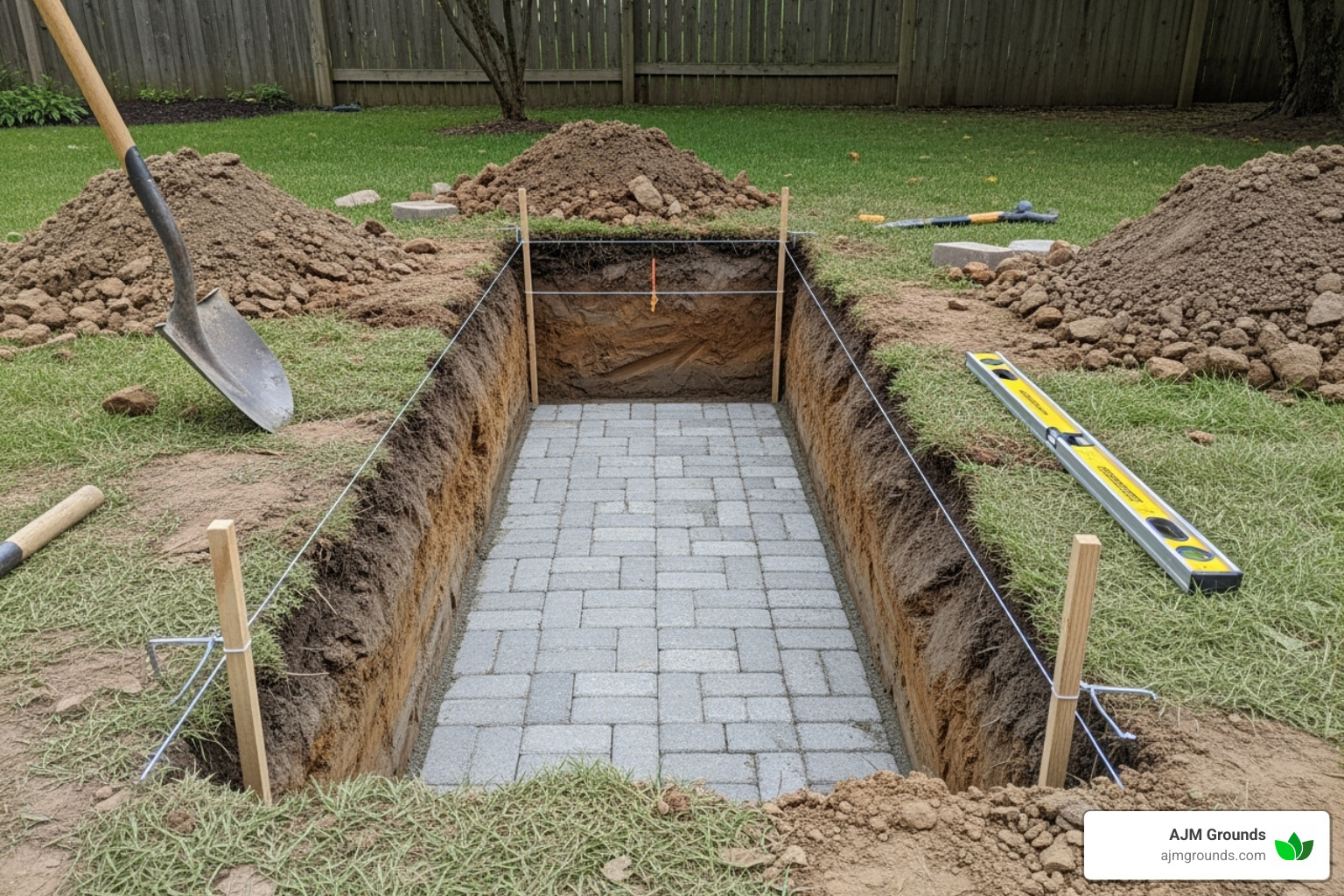
After digging, compact the soil at the bottom of the trench with a hand tamper until it’s rock-solid to prevent settlement. Next, add 6 inches of paver base in 2-3 inch layers, compacting each layer thoroughly. This creates a dense, stable foundation.
Step 2: Laying a Perfectly Level First Course
This is the most critical step. The first course of your paver retaining wall installation must be perfect, or every subsequent row will be difficult.
Start at the lowest point. Place the first block and use a level to check it in all directions. Use a rubber mallet or adjust the base material to make it perfectly level. As you place each block, check for level across adjacent blocks.
Pro tip: remove the rear lip from the first-course blocks with a hammer and chisel so they sit flat on the base. Time spent perfecting the first course saves hours of frustration later and ensures a professional result.
Step 3: Stacking, Backfilling, and Ensuring Proper Drainage
Once the first course is level, stacking is easier. Use a running bond pattern, where each block bridges the joint below it, for strength. You’ll need to cut half blocks for alternate rows. Most blocks have a built-in setback or “batter,” a backward lean that adds strength.
Don’t forget drainage—it’s a common DIY mistake. Water is the #1 enemy of retaining walls.
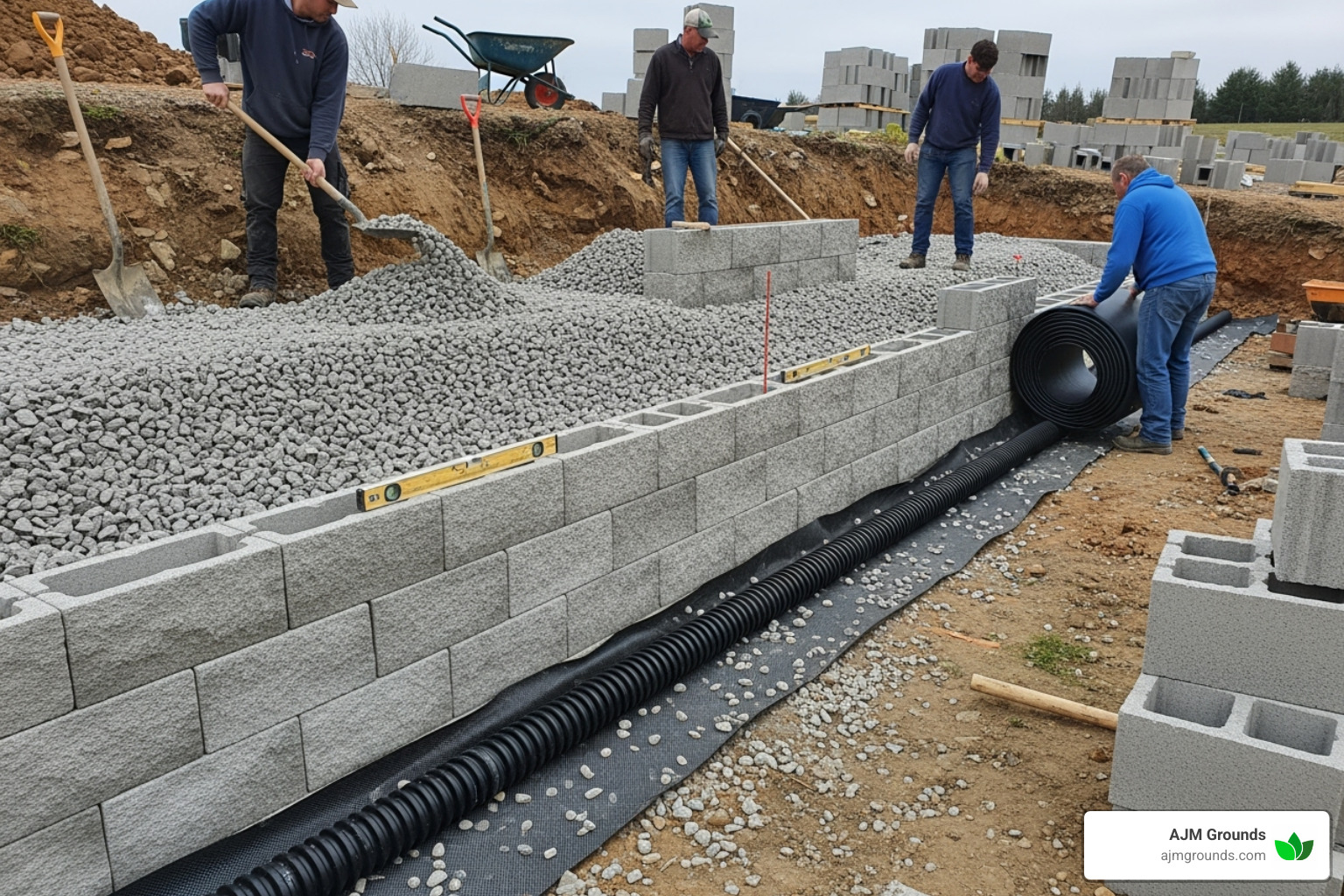
Create a 12-inch wide drainage zone behind the wall filled with clean gravel. First, line the area with landscape fabric to prevent the system from clogging with soil. For walls over 2 feet or in rainy areas, install a perforated drain pipe behind the first course. Slope it about 1 inch for every 4 feet to direct water away from the wall.
Backfill with drainage gravel in layers as you build each course, tamping as you go. Don’t stack more than 18 inches of wall before backfilling to maintain stability. This systematic approach is what makes a paver retaining wall installation last for decades.
Phase 3: Advanced Techniques and Finishing Your Wall
Now, let’s add the professional touches that make your paver retaining wall installation special. This phase covers advanced techniques and finishing details.
How to Handle Slopes and Steps in Your Paver Retaining Wall Installation
Building on a slope is manageable. The key is to create level tiers instead of following the slope, which would create an unstable, crooked wall.
Create level tiers by stepping up the base course, like a staircase foundation. Start at the lowest point, make that section level, then step up. The trench depth will vary, but each tier’s base must be level. This approach creates a professional look and ensures structural integrity, as each section has its own solid, compacted foundation.
For excellent visual guidance, check out this guide that offers great visuals on stepping up a wall base.
Cutting Blocks for Curves and Corners
Nearly every paver retaining wall installation requires cutting blocks for curves, corners, or the final fit. Clean cuts are key to a professional result.
For simple cuts, use a masonry chisel and hammer. Mark the line, score it with the chisel, and a few firm hammer strikes should create a clean break. For precision cuts on curves or corners, a circular saw with a masonry blade is faster and more accurate.
Safety is critical when cutting masonry. Always wear safety glasses, work gloves, and a respirator mask to protect from harmful dust. Hearing protection is also recommended.
How to Finish Your Paver Retaining Wall Installation with Capstones
Capstones complete your paver retaining wall installation, providing a polished look and protecting the top course.
Before placing capstones, thoroughly clean the top of the last course. Debris will prevent the adhesive from sticking properly. Apply a bead of construction adhesive to the top course, then carefully position the capstones, ensuring they are level and aligned.
Create a 1 to 1½-inch overhang with the capstones. This adds visual depth and helps protect the wall from rain.
Finally, complete the backfill. Fold the landscape fabric over the gravel, then add topsoil behind the wall, sloping it away at a 2-5% grade to prevent water from pooling. With the capstones in place, your paver retaining wall installation is ready to serve your landscape for decades.
Frequently Asked Questions about Building Retaining Walls
Here are answers to common questions about paver retaining wall installation, based on our experience helping homeowners in the Woburn area.
How high can I build a DIY retaining wall?
This is a critical question. For DIY paver retaining wall installation, we recommend keeping walls under 3-4 feet high. These gravity walls use their weight to hold back soil and are perfect for garden beds or managing gentle slopes.
Walls over 4 feet, or those supporting heavy loads like a driveway, require professional engineering. They face immense pressure, and an improper build is dangerous. When in doubt, call a professional. It’s much cheaper than rebuilding a collapsed wall.
What is the most common mistake in retaining wall installation?
The most common mistakes are poor foundation preparation and inadequate drainage. These cause most wall failures.
A poor foundation—not digging deep enough or failing to compact the base in layers—will cause the wall to settle, lean, and fail. But inadequate drainage is the real wall killer. Water buildup creates hydrostatic pressure, which causes walls to bulge, crack, and collapse. Proper drainage with gravel, fabric, and a drain pipe is not optional; it’s insurance for your wall’s success.
How do I integrate a paver patio with my new retaining wall?
Integrating a paver patio with a retaining wall creates a beautiful, functional space. The key is the installation sequence.
Build your retaining wall first. Once it’s complete and settled, you can prepare the patio base. Patio prep is similar to the wall: excavation and a compacted base. The key is to slope the patio 1-2% away from the wall for drainage.
Cut pavers to fit against the wall. For curves, it’s often easiest to lay pavers past the wall line and then cut them in place with a masonry saw. The result is a seamless integration. For more detailed guidance, check out our insights on Retaining Wall with Paver Patio.
While these guidelines cover most situations, don’t hesitate to consult with professionals when you’re unsure. A quick conversation can prevent costly mistakes.
Conclusion: Enjoy Your New and Improved Landscape
Completing your paver retaining wall installation is a proud moment. You’ve transformed a challenging slope into a functional, beautiful space that will serve your family for years to come.
The benefits are numerous: level ground for patios or gardens, crucial erosion control, easier gardening with raised garden beds, and added aesthetic appeal that can boost property value. The satisfaction of a major DIY project is immense. You’ve gained skills, saved money, and created something lasting.
However, not every paver retaining wall installation is suitable for DIY. Walls over 4 feet, on steep slopes, with complex drainage, or supporting heavy loads require professional expertise.
That’s where we come in. At AJM Grounds, we’ve been helping homeowners throughout Woburn, Bedford, Billerica, Burlington, Lexington, Reading, Stoneham, Wilmington, Winchester, and surrounding Massachusetts communities create stunning outdoor spaces. Our team handles everything from permits and engineering to the final details that ensure a great result.
We know your time is valuable. If a project is too big to tackle alone, our attention to detail and personalized service will ensure your project exceeds expectations without the stress of DIY.
A well-built wall is an investment in your property’s future. Be proud of what you’ve accomplished, and don’t hesitate to reach out when your next project calls for professional expertise.
For professional retaining wall construction, contact our experts today!
