

Why a Solid Foundation Makes All the Difference
The Unsung Hero: What is Paver Base and Why is it Crucial?
When we talk about paver base for retaining wall projects, we’re referring to a specific type of aggregate that forms the critical foundation. Think of it as the “unsung hero” of your hardscaping project. It does so much vital work beneath the surface, quietly ensuring your wall stands strong and true for years to come.
What is Paver Base?
At its heart, paver base is a special kind of aggregate, usually made up of crushed stones of various sizes, including fine stone dust. Unlike simple gravel, which might just roll around, paver base is designed to compact incredibly tightly. This creates a rock-solid, uniform layer that’s essential for any sturdy retaining wall.
So, why is this foundation so crucial? Well, it serves several key functions:
- Stability and Load Distribution: Imagine your retaining wall holding back tons of soil and pressure. The paver base for retaining wall construction acts like a super-strong cushion, evenly spreading all that weight across the natural soil beneath. This prevents your wall from settling unevenly and keeps it perfectly straight and level.
- Perfect Leveling: Getting the first course of your retaining wall blocks absolutely flat is paramount. If that first row isn’t level, your whole wall will be off-kilter! The paver base provides that perfectly smooth, level surface, making sure your entire project starts on the right foot.
- Frost Heave Prevention: Here in Massachusetts, we know a thing or two about fluctuating temperatures. When water in the soil freezes, it expands, pushing up anything in its way – a phenomenon known as frost heave. A properly installed paver base for retaining wall minimizes water retention right beneath your wall. This significantly reduces the risk of frost heave damage, keeping your wall looking great through every winter.
- Water Drainage: While we’ll discuss the dedicated drainage aggregate behind the wall later, the paver base itself helps with overall water management. It allows water to pass through, preventing the ground directly under your wall from becoming waterlogged.
- Long-term Durability: All these benefits add up to one thing: exceptional longevity for your retaining wall. A well-prepared base means less shifting, less settling, and fewer cracks. This saves you from costly repairs down the line, giving you peace of mind that your hard work will last.
You can learn more about the general concept of paver base on Wikipedia’s What is Paver Base? page, and see how crucial foundations are for beautiful landscapes like those found in Retaining Walls for Gardens.
Is a base always necessary?
This is a common question, and like many things in landscaping, the simple answer is, “it depends!” However, for any retaining wall that is actually retaining soil or supporting a significant load, our answer is a resounding YES.
If you’re building a structural retaining wall – one designed to hold back soil, prevent erosion, create a terraced landscape, or support a patio or driveway – then a robust paver base for retaining wall is absolutely non-negotiable. Skipping this vital step will almost certainly lead to problems like leaning, bulging, or even outright failure over time. Trust us, fixing a failed wall is far more expensive and time-consuming than building it right the first time!
Now, for very small, non-structural landscape edging (think a single course of blocks outlining a flower bed that’s only a few inches high, against a flat surface), some DIYers might choose to skip a full base. But even these small walls can shift and sink over time, especially if the softer topsoil isn’t removed. Here at AJM Grounds, we always recommend at least a compacted trench and a thin layer of base for any block installation. Proper preparation always leads to longer durability and stability, even for the little projects.
The type of soil you have and your local climate also heavily influence the necessity and depth of your base. Clay soil retains water, while sandy soil drains easily. In areas with significant frost heave (like our New England winters), a deeper, well-draining base is even more critical to protect your investment.
Choosing the Right Material for Your Paver Base for a Retaining Wall
Not all aggregates are created equal when it comes to constructing a paver base for retaining wall. Choosing the right material is key to achieving that rock-solid foundation we’ve been talking about.
Our go-to for a reliable paver base is crushed stone with fines, also known as dense-grade aggregate. You might hear this material called “crusher run,” “Item 4,” or “2A gravel.” These materials contain a mix of stone sizes, from larger pieces (like 3/4-inch) down to fine stone dust. This variety is crucial because it allows the material to interlock and compact extremely tightly, creating a stable, load-bearing layer that prevents movement once compacted. The “fines” (those dust particles) are essential here, as they fill the tiny voids between larger stones, allowing for superior compaction. This is why you’ll often hear about “dense-graded aggregates” for bases – they achieve maximum density when compacted.
Now, let’s talk about materials to avoid:
- Pea Gravel or Rounded River Rock: While these look lovely in decorative applications, their rounded shape prevents them from locking together when compacted. Instead, they behave more like ball bearings, allowing for movement and instability in your base. These are fine for drainage aggregate or decorative purposes, but definitely not for a structural base.
- Sand as a Structural Base: Fine sand alone is simply not suitable as a primary structural base for a retaining wall. It doesn’t compact with the same stability as crushed stone and can easily wash out over time, leading to wall failure. However, a thin layer of coarse sand (about 1/2 inch) can be used on top of a compacted crushed stone base for final leveling before you lay your first course of blocks. We’ll cover this more in the installation steps!
You can find various types of paver base materials at local suppliers or large home improvement stores like The Home Depot. Just be sure to specify that you need a compactible, dense-grade aggregate specifically for a retaining wall foundation.
How to Install Paver Base for a Retaining Wall
Alright, here’s the streamlined version of what really matters when you install a paver base for retaining wall projects. Follow these core steps and you’ll have a rock-solid foundation without drowning in details.
Step 1: Dig & Prep the Trench
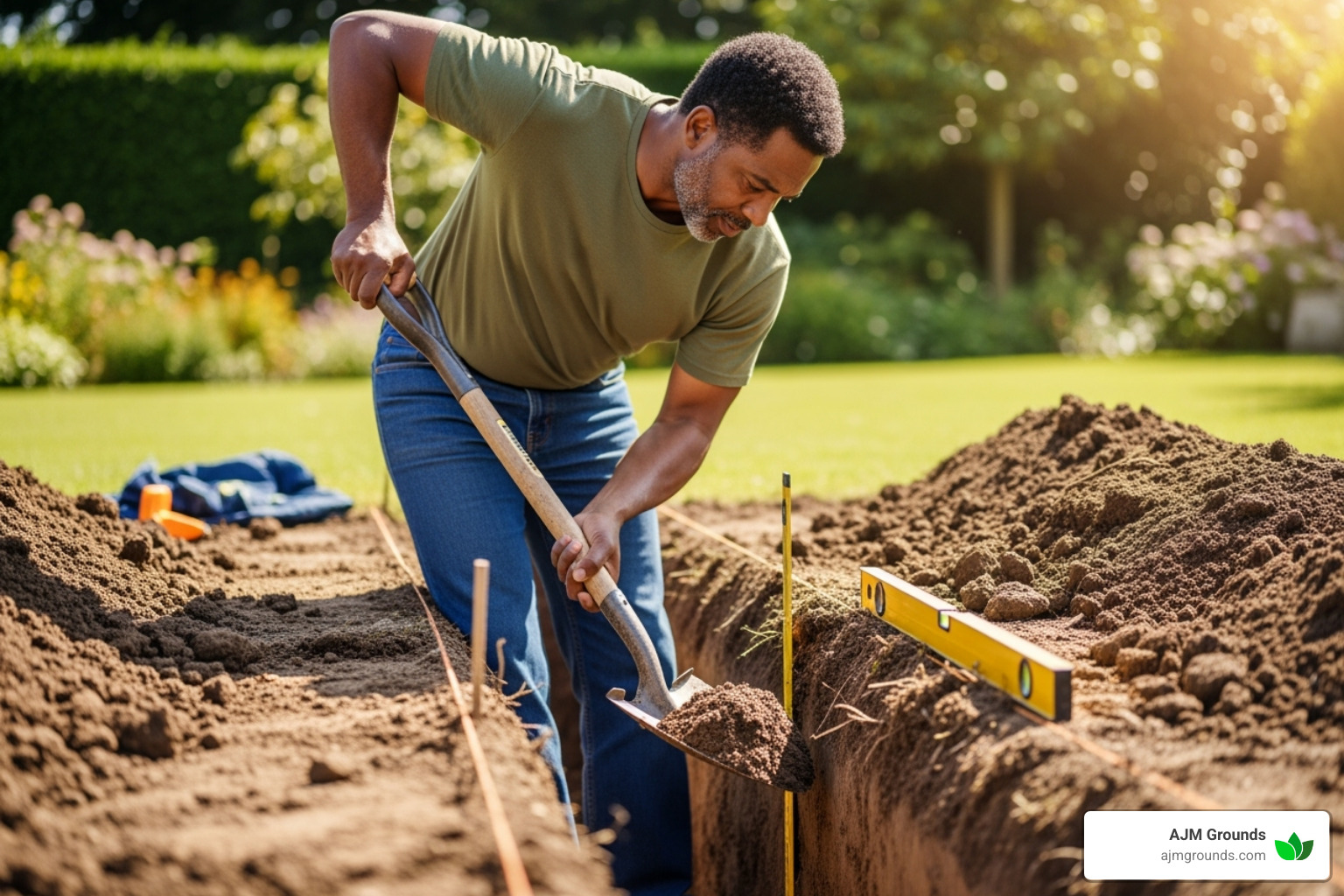
- Mark the wall line with string and stakes.
- Determine trench size: depth = half the height of the first block + base thickness; width ≈ 2× block width for tool clearance.
- Excavate past topsoil to firm native soil, then level the bottom using a straight 2×4 and a long level.
- Compact the subgrade with a hand tamper or plate compactor so nothing settles later.
Step 2: Calculate Base Thickness
• For walls up to about 2–3 ft, plan on a 4–6 in compacted base.
• Taller walls or poor soils may need 8–12 in.
• Add 20 % extra loose material to account for compaction (e.g., 4 in finished ≈ 4.8 in loose).
Quick math example: 20 ft wall × 1.5 ft trench width × 0.5 ft desired depth = 15 cu ft. Add 20 % → 18 cu ft of loose base.
Step 3: Place, Level & Compact
- Spread base in 2-inch “lifts.” This thin layering gives you maximum density.
- Compact each lift thoroughly. Rent a plate compactor for anything larger than a small garden wall.
- Keep checking with a long level; tap down high spots with a rubber mallet. Your goal is a surface that’s flat, smooth, and dead-level before the first block goes down.
That’s it—no fluff, just the essentials you need for a foundation that won’t fail.
Not All Gravel is the Same: Base vs. Drainage vs. Backfill
Many retaining walls fail because builders treat every stone the same. In reality, your wall needs three different aggregates, each with a job it alone can do.
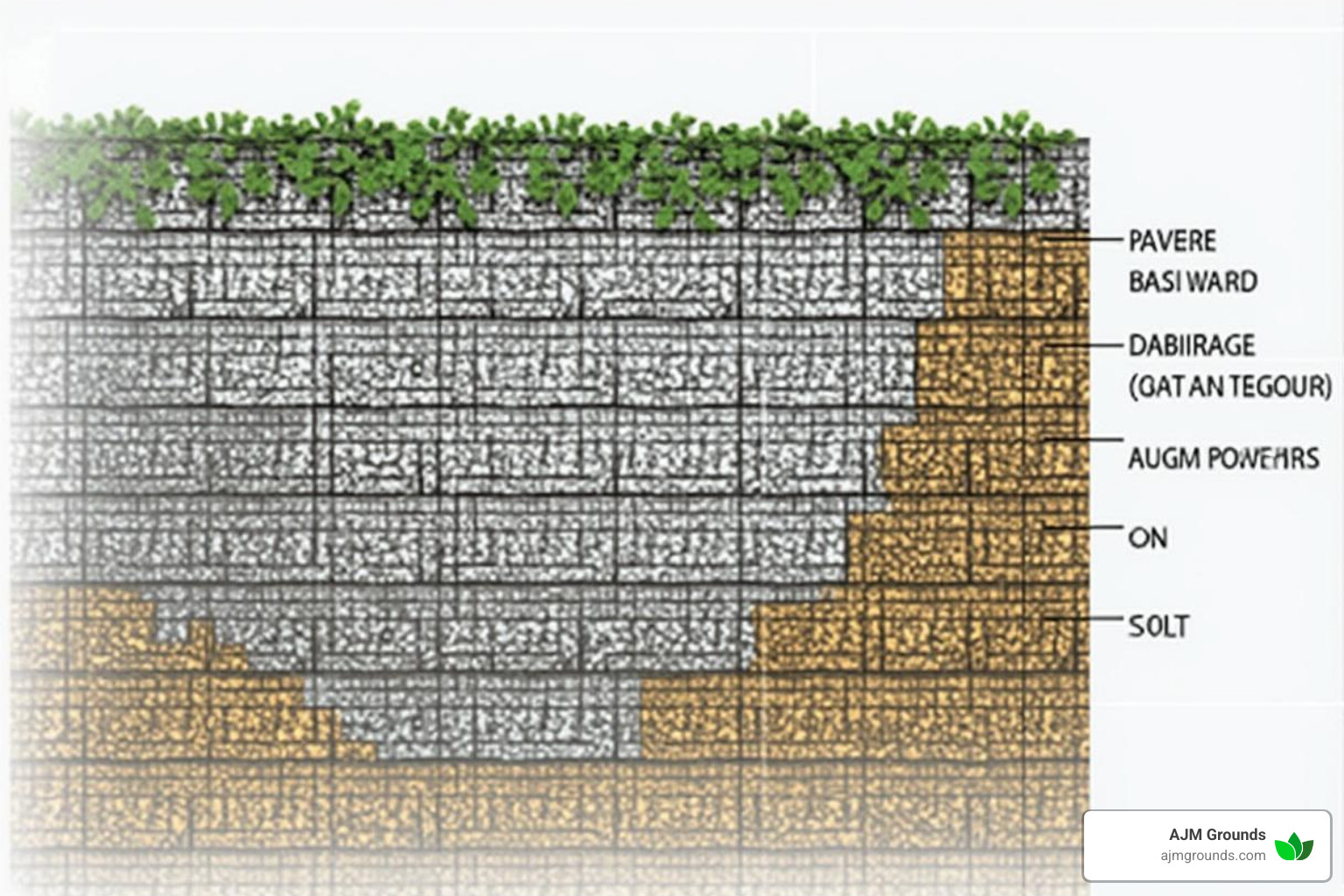
1. Foundation: Paver Base
Sits directly under the first course. Use dense-grade aggregate with fines (crusher run, Item 4) that locks tight when compacted and spreads weight evenly.
2. Drainage Zone
Directly behind the blocks. Use clean, washed stone with zero fines (¾-in or 1-in). Its only task is to move water quickly to a perforated pipe and away from the wall. Paver-base material here would clog and trap moisture—exactly what you don’t want.
3. Backfill
Fills the rest of the excavation. Native soil (minus roots and debris) or granular fill is fine. Place it in thin lifts and compact to avoid later settling.
Remember: correct stone in the correct place is cheaper than rebuilding a wall.
The High Cost of Cutting Corners: What Happens Without a Proper Base?
We understand the temptation to rush a project or save a few dollars when you’re eager to see your vision come to life. However, when it comes to the paver base for retaining wall construction, cutting corners isn’t a shortcut to success – it’s an investment in failure. The consequences of skipping this crucial step, or installing it improperly, are often far more severe and costly to fix than doing it right the first time. Trust us, we’ve seen it all!
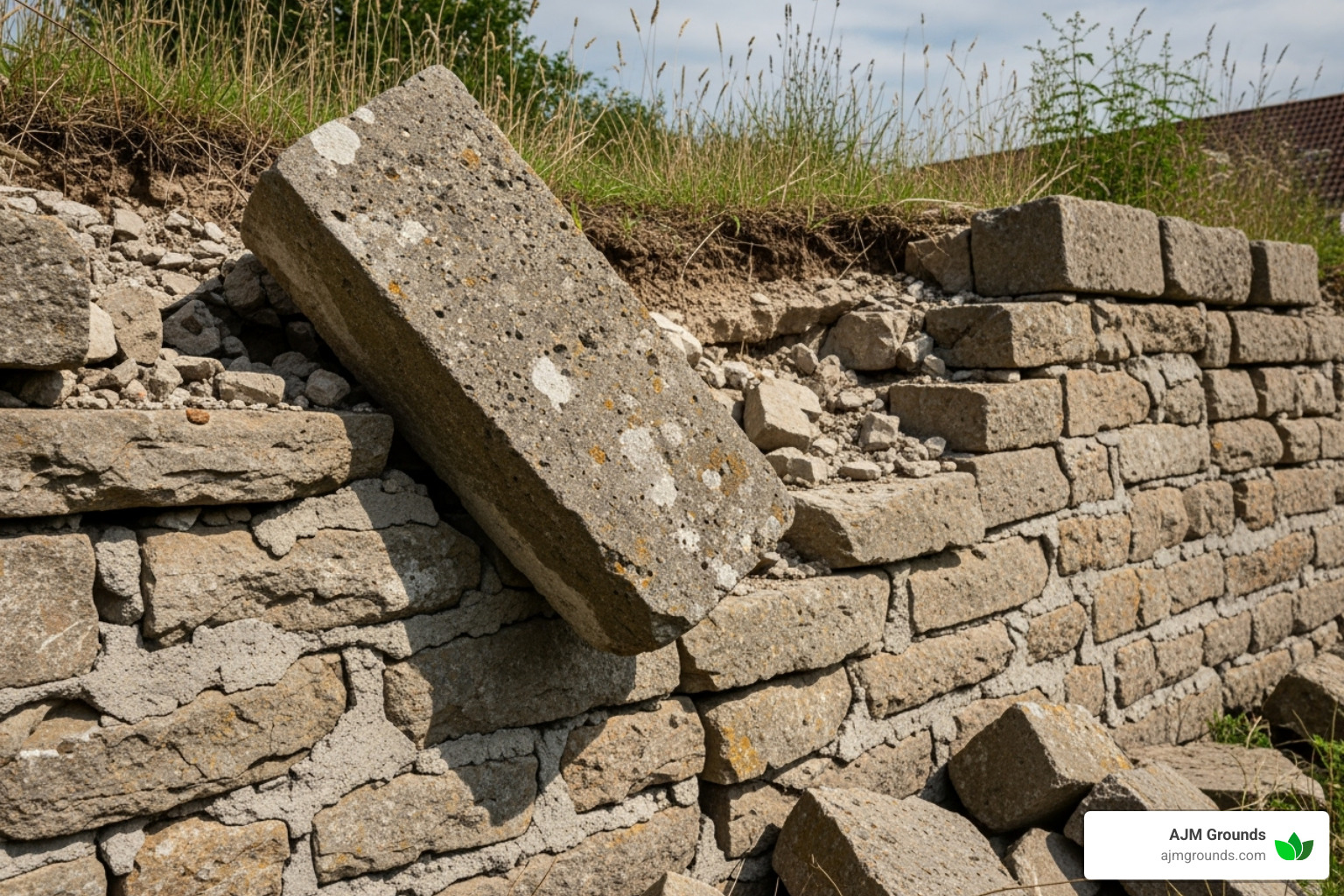
So, what exactly can go wrong? Without a stable, compacted foundation, your beautiful retaining wall can quickly turn into an unsightly mess. You’ll likely see your wall start leaning forward or bulging outwards under the pressure of the soil it’s supposed to hold back. Individual blocks will shift and become uneven, creating unsightly gaps and compromising the wall’s integrity and aesthetic appeal. What was once a straight, proud structure becomes a wavy, wobbly liability.
Beyond the visible issues, an improper base spells trouble for water management. Poor drainage can lead to significant water damage and erosion behind and beneath your wall. When water accumulates, it adds immense pressure, pushing against the wall and washing away the very soil it rests upon. In our New England climate, this trapped water is a prime culprit for devastating frost heave. When water freezes, it expands, pushing blocks out of alignment, cracking them, or even causing the entire wall to collapse.
The biggest sting? Costly repairs. Fixing a failing retaining wall is almost always a much bigger, more complex, and significantly more expensive undertaking than the original installation. It often means tearing down the entire wall, re-excavating, bringing in proper materials, and starting from square one. We’ve personally seen local walls that have completely fallen over because of inadequate paver base for retaining wall installation and poor backfill choices. The frustration and disruption of a failed project can easily outweigh any perceived initial savings.
And let’s not forget about safety hazards. A failing retaining wall isn’t just an eyesore; it’s a real danger. A collapsing wall can injure people, damage nearby property, or allow large amounts of soil to slide onto lower areas. When considering a project like a retaining wall with paver patio, a solid base is not just about aesthetics, it’s about structural soundness and safety.
At AJM Grounds, our philosophy is simple: “Do it right, do it once.” Investing the time and effort into a proper paver base for retaining wall construction is the best insurance policy you can get. It ensures the longevity, stability, and safety of your landscaping project, giving you peace of mind and a wall that stands strong for decades.
Tools and Materials for the Job
Gather everything up-front so you’re not making emergency runs to the store mid-project.
Essential Tools
- Shovel & wheelbarrow for digging and hauling.
- Tape measure, string line, and stakes for layout.
- 4-ft or 6-ft level (plus a torpedo level for individual blocks).
- Hand tamper for small jobs, plate compactor rental for anything sizable.
- Rubber mallet for minor adjustments.
- Safety glasses & gloves (add respirator if cutting block).
Key Materials
- Retaining wall blocks in your chosen style.
- Paver base aggregate (dense-grade with fines).
- Drainage stone (clean, washed #57 or similar).
- Optional: perforated drain pipe & geotextile fabric.
- Construction adhesive for capstones.
Have these ready and your installation will go far smoother—no surprise delays, no missing pieces.
Frequently Asked Questions about Paver Base
We hear a lot of questions about paver base, and we’re always happy to clear up any confusion. Here are some of the most common ones:
How much does paver base cost?
The cost of paver base for retaining wall projects can vary significantly based on several factors, including the type of material, your supplier, whether you buy in bags or bulk, and your geographic location.
Based on internet data, a 0.5 cubic foot bag of paver base can range from $5 to over $24. Buying in bulk (by the ton or cubic yard) from a local landscape supply yard is usually more cost-effective for larger projects. For example, a ton of paver base might range from $30 to $80 or more, not including delivery. Always remember these are average costs and not actual prices for AJM Grounds, which may vary.
Can I use sand instead of paver base for a retaining wall?
No, absolutely not! This is a critical mistake that can lead to wall failure. Sand alone is not a suitable structural base for a retaining wall. It does not compact with the same stability as crushed stone with fines, and it’s highly susceptible to washing out over time due to water movement, which will cause your wall to settle unevenly, shift, or even collapse.
While a very thin layer (about 1/2 inch) of coarse sand can be used on top of a properly compacted paver base for final leveling before you lay your first course of blocks, it is a leveling agent, not a structural foundation. Don’t rely on sand to hold your wall up!
How deep should the trench be for a retaining wall?
The general rule of thumb for trench depth is to bury at least half the height of your first course of blocks, plus the depth of your compacted paver base for retaining wall.
For example:
- If you’re using a standard 8-inch tall retaining wall block and planning for a 4-inch compacted paver base, your trench should be at least 8 inches deep (4 inches for the buried block portion + 4 inches for the base).
- If your wall is particularly tall or will experience significant load, you might bury more of the first block or use a deeper base, increasing the overall trench depth.
Always ensure the trench bottom is level and compacted before adding your paver base.
Build a Wall That Lasts a Lifetime
Your retaining wall is a real investment, so give it the rock-solid start it deserves. A properly installed paver base for retaining wall construction is the single most important factor in long-term stability. Skip it, and you’re almost guaranteed expensive repairs later.
If you love DIY projects, the steps above will keep you on the right track. Prefer professional peace of mind? AJM Grounds is ready to help homeowners and businesses throughout Woburn and nearby communities like Bedford, Billerica, Burlington, Lexington, Reading, Stoneham, Wilmington, and Winchester, MA.
Contact us today to schedule a consultation for your next retaining wall construction project—let’s build something that stands the test of time.
