

Finding Quality Retaining Wall Builders in Your Area
If you’re looking for retaining wall builders near me, here’s a quick guide to finding the best professionals:
- Check licensing and insurance – Verify contractors have proper credentials
- Review portfolios and past work – Look for similar projects to yours
- Get multiple detailed quotes – Compare at least 3 estimates
- Read customer reviews – Focus on comments about reliability and quality
- Verify expertise with your wall type – Different walls require different skills
Retaining walls serve three crucial purposes: they prevent soil erosion, create usable flat spaces on sloped properties, and improve your landscape’s visual appeal. With proper design and construction, a quality retaining wall can last anywhere from 20 to 200 years depending on materials used and construction methods.
The cost to build a retaining wall typically ranges from $20 to $150 per square foot, with factors like wall height, materials, and site conditions affecting the final price. Most homeowners spend between $2,000 and $15,000 for a professionally installed retaining wall.
I’m John Caplis, owner of AJM Grounds LLC, and I’ve helped countless homeowners in Woburn, Massachusetts find reliable retaining wall builders near me who deliver quality workmanship at fair prices. My experience has taught me that the right contractor makes all the difference between a wall that lasts generations and one that fails prematurely.
Retaining wall builders near me terms at a glance:
– backyard retaining wall ideas
– retaining walls ideas
Retaining Wall Essentials: Purpose, Types & Materials
There’s something truly transformative about a well-built retaining wall. Far more than just decorative elements, these hardscape heroes work tirelessly to hold back soil, prevent erosion, and turn challenging slopes into usable outdoor spaces. I’ve seen how the right wall can completely reimagine a property’s potential.
Here at AJM Grounds, we’ve installed countless retaining walls throughout Bedford, Billerica, Burlington, and neighboring Massachusetts communities. Each project tells a story of reclaimed space and improved beauty – turning problematic hillsides into gorgeous, functional areas for families to enjoy.
Common Types Explained
When chatting with homeowners about their retaining wall needs, I often explain that different walls serve different purposes. The “right” wall for you depends on your specific property challenges:
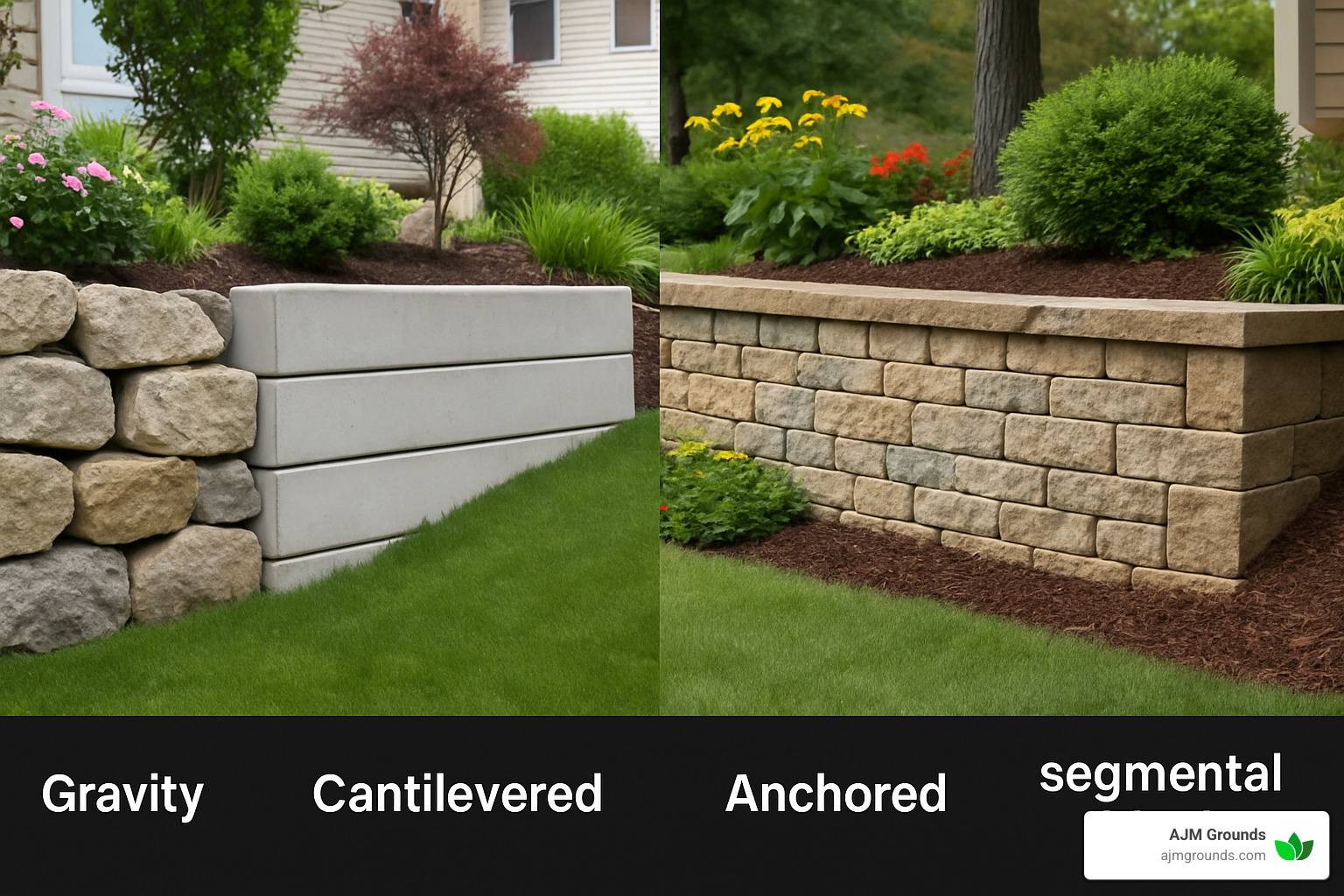
Gravity walls are the workhorses of the retaining wall world. These sturdy structures rely simply on their own weight to hold back soil. Built from hefty materials like natural stone or concrete blocks, they’re perfect for shorter heights (typically up to 3-4 feet) and work beautifully in residential settings with gentle to moderate slopes.
Cantilever walls are the clever engineers of the bunch. Using an inverted T-shape design with reinforced concrete, these walls actually use physics to their advantage. The base extends under the retained soil, using that weight for added stability. They can reach impressive heights (up to 16 feet!) while taking up minimal space – ideal for tight spots where every inch counts.
Modular block walls are probably what most people picture when thinking about retaining walls. These interlocking concrete blocks come with built-in lips that automatically create the proper setback as you build. They’re wonderfully versatile for both straight runs and graceful curves, making them a popular choice for homeowners wanting both function and style.
Eco-friendly gabion walls offer a more natural approach. These wire mesh cages filled with stones allow water to flow through while keeping soil firmly in place. They create a rustic, textural look that blends beautifully with natural landscapes and are particularly effective in areas with heavy water runoff.
When searching for retaining wall builders near me, finding contractors with experience in your specific wall type makes all the difference between a wall that lasts generations and one that disappoints. At AJM Grounds, we carefully assess your unique site conditions before recommending the most appropriate solution.
Material Pros & Cons
The materials you select for your retaining wall do much more than determine its appearance – they directly impact durability, maintenance needs, and your budget. Here’s a friendly breakdown of what to expect:
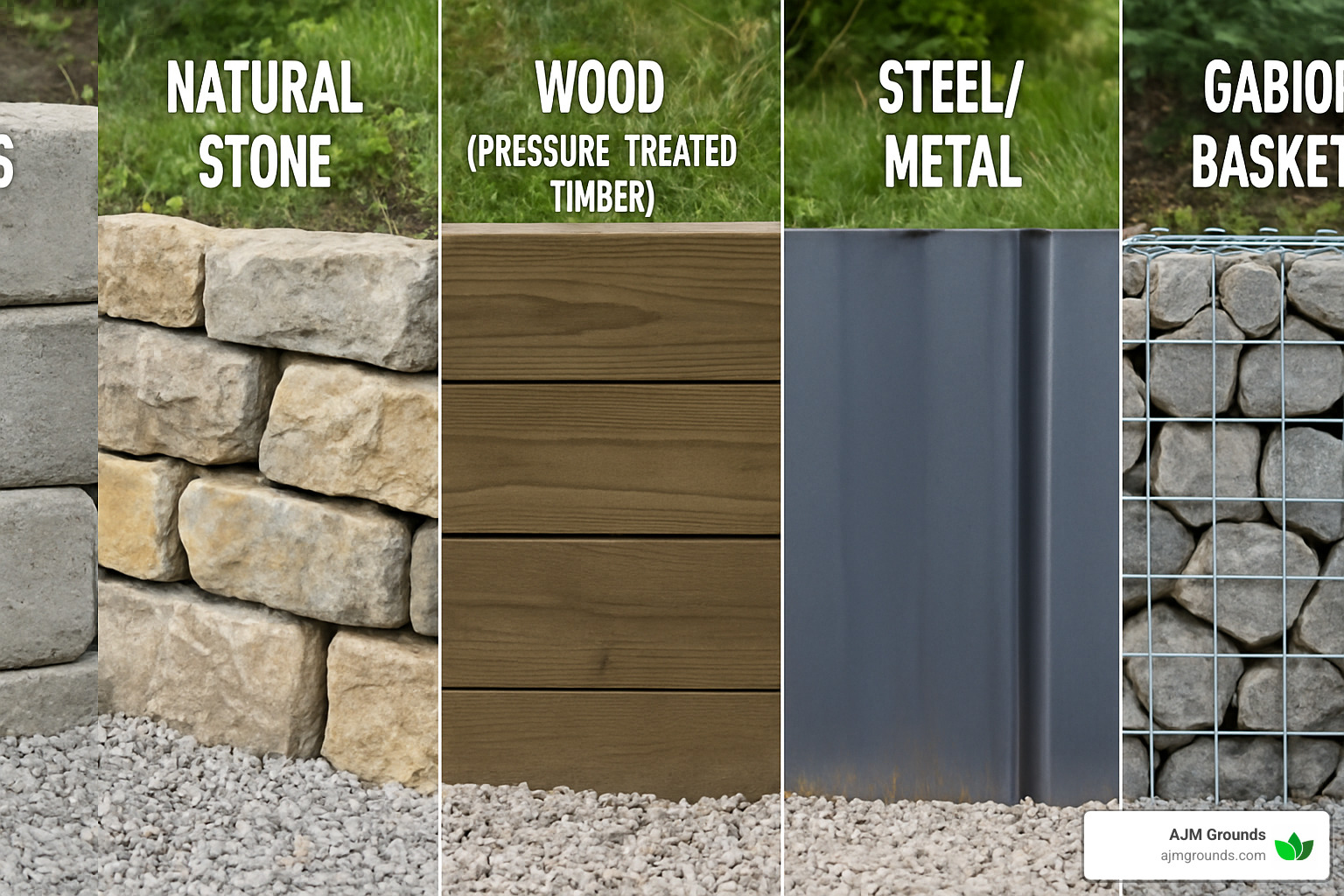
Concrete Block offers clean lines and consistency that many homeowners love. These blocks come in various colors and textures, are relatively affordable, and can last 50+ years with proper installation. On the flip side, they can sometimes look a bit too manufactured for natural settings, and colors may fade over time.
Natural Stone brings timeless beauty that’s hard to beat. These walls can truly last generations (50-200 years!) and significantly boost property value. The downside? They require skilled masons for proper installation and come with a higher price tag. But as many of our Winchester clients tell us years later – they’re absolutely worth the investment. Learn more about these stunning options on our Natural Stone Retaining Walls page.
Wood (Pressure-Treated Timber) creates a warm, natural look that complements many New England homes beautifully. It’s more budget-friendly ($10-$40 per square foot based on internet averages) and more DIY-friendly than other options. The trade-off is a shorter lifespan (10-20 years) and regular maintenance to prevent rot and insect damage.
Steel/Metal options provide incredible strength with a slim profile – perfect for tight spaces where every inch matters. When properly coated, they’re extremely durable, though they do bring a more industrial aesthetic that may not suit every property. They’re also on the higher end cost-wise (internet averages suggest up to $150 per square foot for complex designs).
Gabion (Stone-Filled Wire Baskets) offer excellent drainage and an eco-friendly approach that many environmentally conscious homeowners appreciate. They flex slightly with ground movement and create interesting textural elements. However, they require careful stone selection and have limited height capabilities.
I always remind our clients in Woburn, Lexington, and surrounding areas to consider the complete picture – not just upfront costs. A modest additional investment in quality materials often translates to significantly lower maintenance headaches and decades of additional service life.
For a deeper dive into landscape retaining wall options, visit our Landscape Retaining Wall page, or explore how retaining walls can beautifully complement your outdoor living space on our Retaining Wall with Paver Patio page.
What Will It Cost? Average Prices & Key Factors
Let’s talk money – the part everyone wants to know about! When planning your retaining wall project, understanding potential costs helps you set a realistic budget. Based on internet research (not AJM Grounds specific pricing), retaining walls typically range between $10 and $150 per square foot installed. Why such a wide range? Well, retaining walls are like fingerprints – no two projects are exactly alike.

Your wall’s final price tag depends on several key factors that can dramatically shift costs up or down:
Wall Height and Length make a huge difference. A modest 3-foot wall is a completely different beast than an 8-foot behemoth. Taller walls require deeper foundations, more materials, and often engineering expertise. That basic 4-foot tall wall might run $20-$30 per square foot, while walls exceeding 6 feet can jump to $45-$150 per square foot.
Material Choice plays perhaps the biggest role in your budget. Think of it like buying a car – there’s a big difference between basic and luxury models:
– Wood retaining walls feel warm and natural at $10-$40 per square foot
– Concrete block walls offer reliability at $20-$60 per square foot
– Natural stone walls provide timeless beauty at $30-$90 per square foot
– Premium designs with special features can reach up to $150 per square foot
Site Conditions can make or break your budget. That steep, hard-to-reach backyard might require specialized equipment or extra labor hours. And if your soil resembles soup after a rainstorm, you’ll need additional foundation work to prevent future problems.
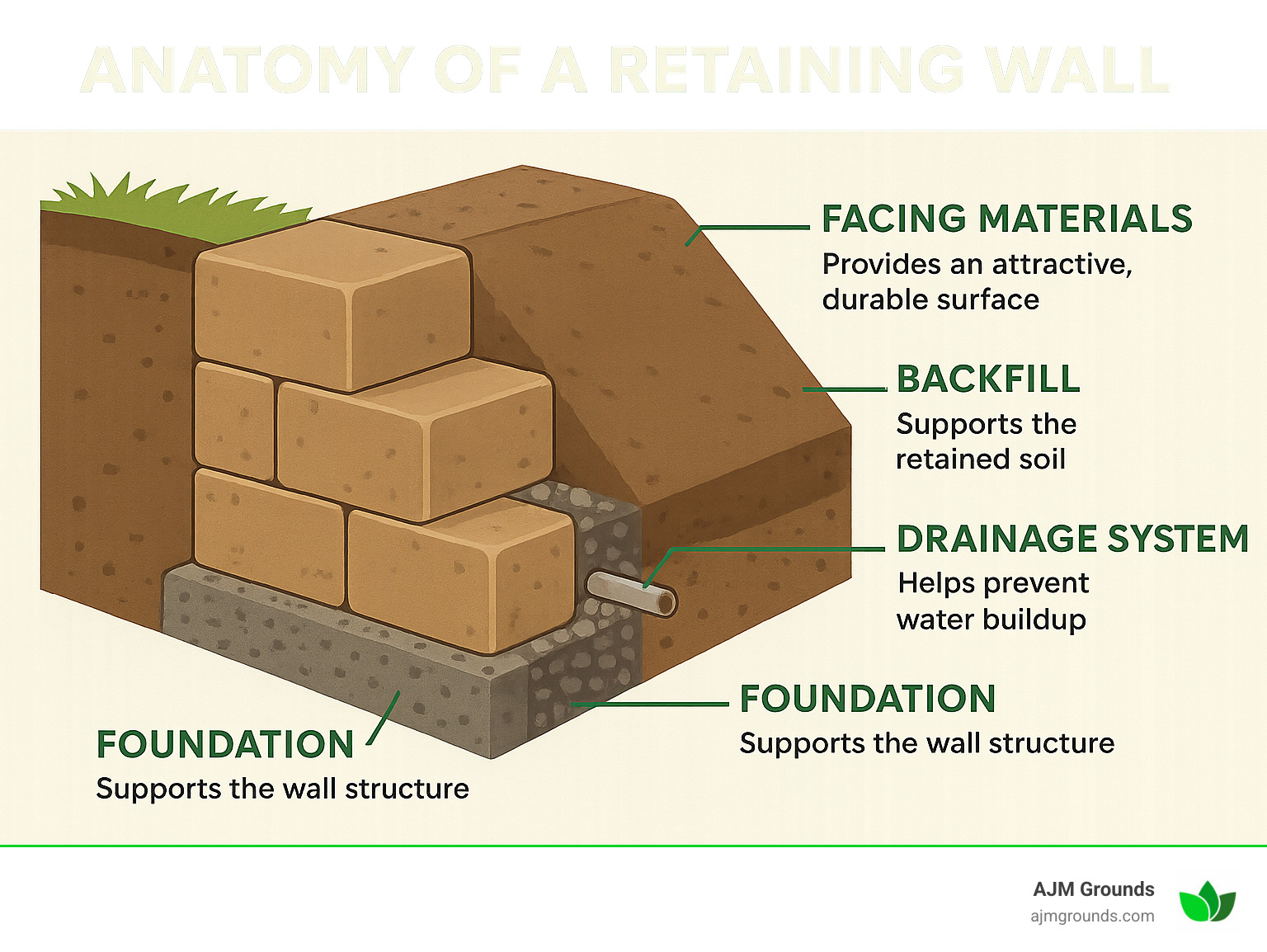
Drainage Systems might seem like an optional extra, but trust me – they’re absolutely essential. Proper drainage prevents the number one cause of wall failure: water pressure. French drains, weep holes, and gravel backfill add to your upfront costs but save thousands in potential repairs down the road.
Labor Rates in Massachusetts typically run between $25-$50 per person per hour for professional landscaping crews. For a standard two-person team, that’s $50-$100 hourly for installation labor alone.
Permits and Engineering enter the picture for walls over 4 feet tall in most municipalities. These professional services can add $500-$1,500 to your project, but they ensure your wall is safe and built to code.
For a typical residential project in our area – say a 30-foot long, 4-foot high wall – internet averages suggest budgeting between $6,000 and $18,000 depending on your material choices and site specifics.
Looking to combine your retaining wall with other hardscape elements? Check out our Retaining Wall with Paver Patio page for some beautiful inspiration. For more research on concrete pricing trends, this scientific research on concrete pricing provides helpful context.
Hidden Budget Busters
When I meet with homeowners in Woburn and surrounding towns, I often find they’ve forgotten to account for these common “budget busters” that can sneak up on your wallet:
Demolition and Removal costs add up quickly if you’re replacing an existing wall. Tearing down old structures and hauling away debris can add $500-$2,000 to your project total.
Soil Import/Export is often overlooked until excavation begins. Depending on your site, you might need several truckloads of fill brought in or removed, running $150-$400 per load.
Utility Conflicts can cause expensive delays and rework. That’s why at AJM Grounds, we always recommend having utilities marked before breaking ground – it’s a free service that can save thousands.
Premium Finishes like decorative caps, integrated lighting, or built-in planters dramatically improve your wall’s appearance but can increase your total investment by 15-30%.
Change Orders – those mid-project modifications – almost always come with premium pricing. Having a clear, detailed plan from the start helps avoid these costly adjustments.
When searching for retaining wall builders near me, look for contractors who provide comprehensive estimates addressing these potential extras. The best builders help you see the complete financial picture before work begins, not halfway through your project.
Hiring Retaining Wall Builders Near Me
When it comes to finding quality retaining wall builders near me, a little homework goes a long way. After all, your retaining wall isn’t just a pretty addition to your landscape—it’s a structural investment that affects your property’s safety, functionality, and value for decades to come.
Before signing on the dotted line with any contractor, take time to verify these crucial qualifications:
Licensing matters more than you might think. Here in Massachusetts, legitimate retaining wall builders should at minimum have a Home Improvement Contractor (HIC) registration. For larger or more complex walls, additional professional licenses may be required—don’t be shy about asking to see them!
Insurance protects both you and the workers on your property. Any reputable builder will carry both liability insurance and workers’ compensation coverage. Request certificates that specifically name you as an additional insured for your project—this extra step provides important protection.
Warranties speak volumes about a contractor’s confidence in their work. Look for companies offering at least a 1-year workmanship warranty, though some quality-focused businesses like ours extend structural guarantees beyond that.
Written estimates should be your non-negotiable standard. Professional quotes break down materials, labor costs, project timeline, and payment schedule in clear detail. If a contractor seems reluctant to put everything in writing, consider it a serious red flag.
Customer reviews tell the real story. Check Google, Angi, and HomeAdvisor, but look for patterns rather than fixating on any single review. A consistent track record speaks volumes about what you can expect.
Project timelines need clear definition from the start. Professional retaining wall builders near me will establish realistic expectations about start dates, completion milestones, and how weather delays or other complications will be handled.
For a deeper dive into our construction approach, visit our Retaining Wall Construction page.
Top Tips for Interviewing Retaining Wall Builders Near Me
The interview process reveals much about a contractor’s expertise and professionalism. Here’s how to separate the true craftsmen from the rest:
Ask to review their portfolio of similar projects. Photos are good, but nothing beats seeing their work in person. A confident builder will happily arrange for you to visit past installations so you can inspect the quality firsthand.
Pay attention to their drainage knowledge. When I talk with potential clients, I always emphasize drainage as the make-or-break factor in wall longevity. Quality builders should voluntarily discuss geotextile fabric, proper gravel backfill, and drainage pipe placement—if you have to prompt these conversations, proceed with caution.
Inquire about soil testing approaches. Professional wall builders evaluate soil conditions before finalizing any quote. They should explain how different soil types affect wall design and what methods they’ll use to ensure proper foundation and stability.
Always request local references from your community. Speaking with neighbors who’ve had similar work done provides invaluable insight into a company’s reliability, job site cleanliness, communication style, and—perhaps most importantly—whether the final invoice matched the estimate.
At AJM Grounds, we welcome these questions and encourage potential clients to connect with our past customers throughout Woburn, Reading, Stoneham, and our entire service area.
Why Local Retaining Wall Builders Near Me Beat National Franchises
While those big national chains might have flashy commercials, there’s something special about working with a local builder that no franchise can match:
Permit expertise becomes invaluable when navigating municipal requirements. Local builders have established relationships with building inspectors and intimately understand permitting processes in specific towns like Bedford, Billerica, and Burlington. This local knowledge often means smoother approvals and fewer headaches.
Faster response times come naturally to local companies. When you call with questions or concerns, you’re likely speaking directly with decision-makers rather than call centers. This responsiveness extends from your initial consultation through any warranty issues that might arise years later.
Community trust drives local businesses in a way that national chains can’t replicate. We see our clients at the grocery store, our kids’ sports games, and community events. This accountability creates a powerful incentive to deliver exceptional quality and service with every project.
Cost efficiency often favors local contractors. Without national marketing budgets, corporate overhead, and franchise fees, local builders can frequently deliver superior value while maintaining higher quality standards.
Must-Ask Questions Before Signing
Before you commit to any retaining wall builder, make sure you’re crystal clear on these critical points:
Scope clarity prevents misunderstandings and disappointments. Your contract should define all aspects of the project in detail—materials, dimensions, drainage provisions, and finish details. If something seems vague, get it clarified in writing before proceeding.
Payment schedule should be tied to project milestones rather than calendar dates. This protects you if weather or other factors cause delays. As a rule of thumb, never pay more than 30% upfront, and reserve at least 10% for final payment after you’re completely satisfied.
Change order policy deserves special attention. Even the best-planned projects sometimes require adjustments. Understanding how changes will be handled and priced before they arise prevents unpleasant surprises.
Cleanup provisions might seem minor until you’re left with a mess. Confirm exactly what site cleanup includes and verify it’s covered in your contract price.
Maintenance guidance is valuable for long-term wall performance. Professional retaining wall builders near me should provide clear instructions for maintaining your investment over the years, including what to watch for and how to address minor issues before they become major problems.
At AJM Grounds, we believe in building relationships as solid as our retaining walls. We’re committed to clear communication, transparent pricing, and exceptional craftsmanship on every project we undertake in Woburn and throughout our Massachusetts service area.
Building, Maintaining & Upgrading Your Wall
Understanding how retaining walls are constructed not only helps you evaluate your contractor’s work but also empowers you to maintain your investment properly for years to come.
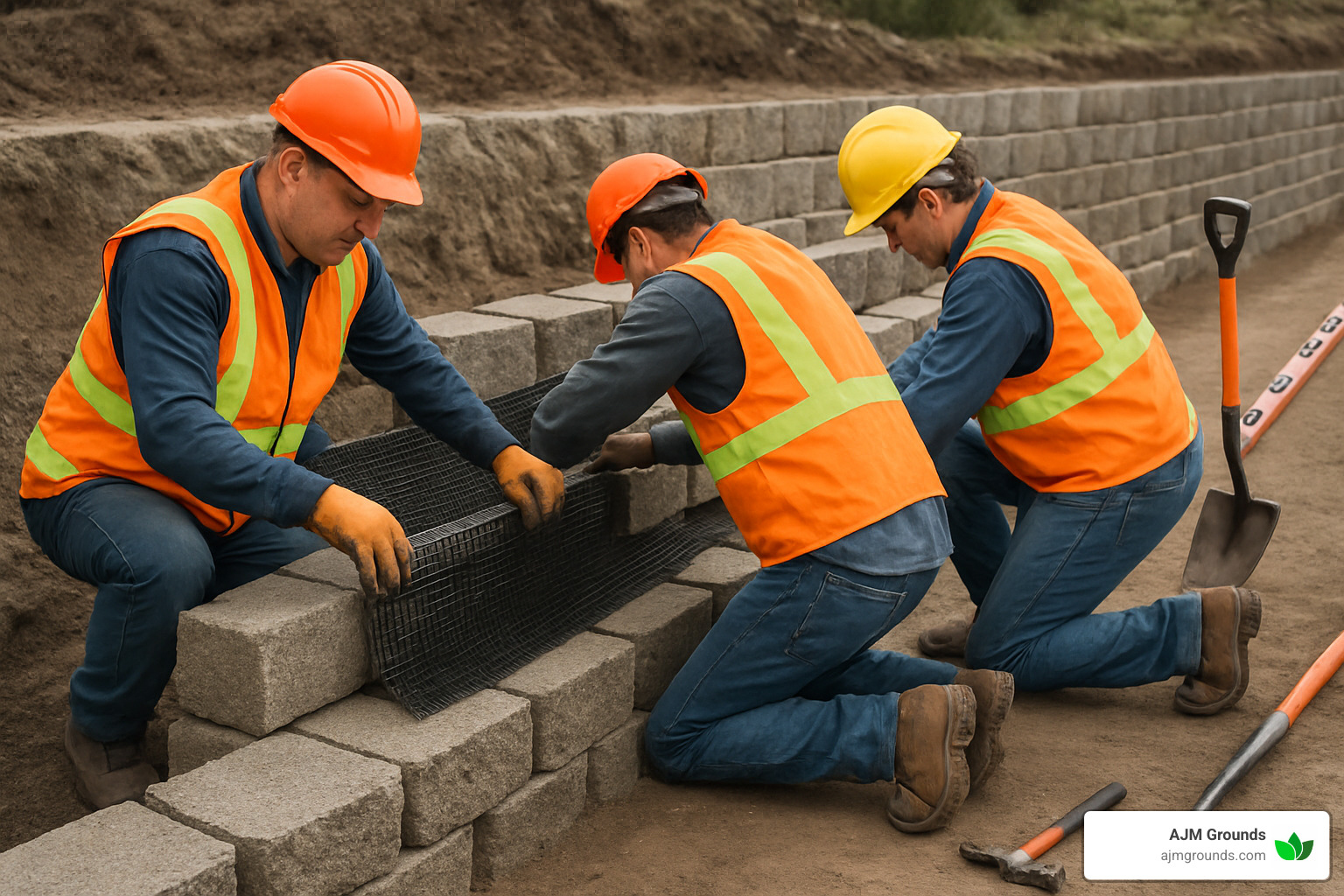
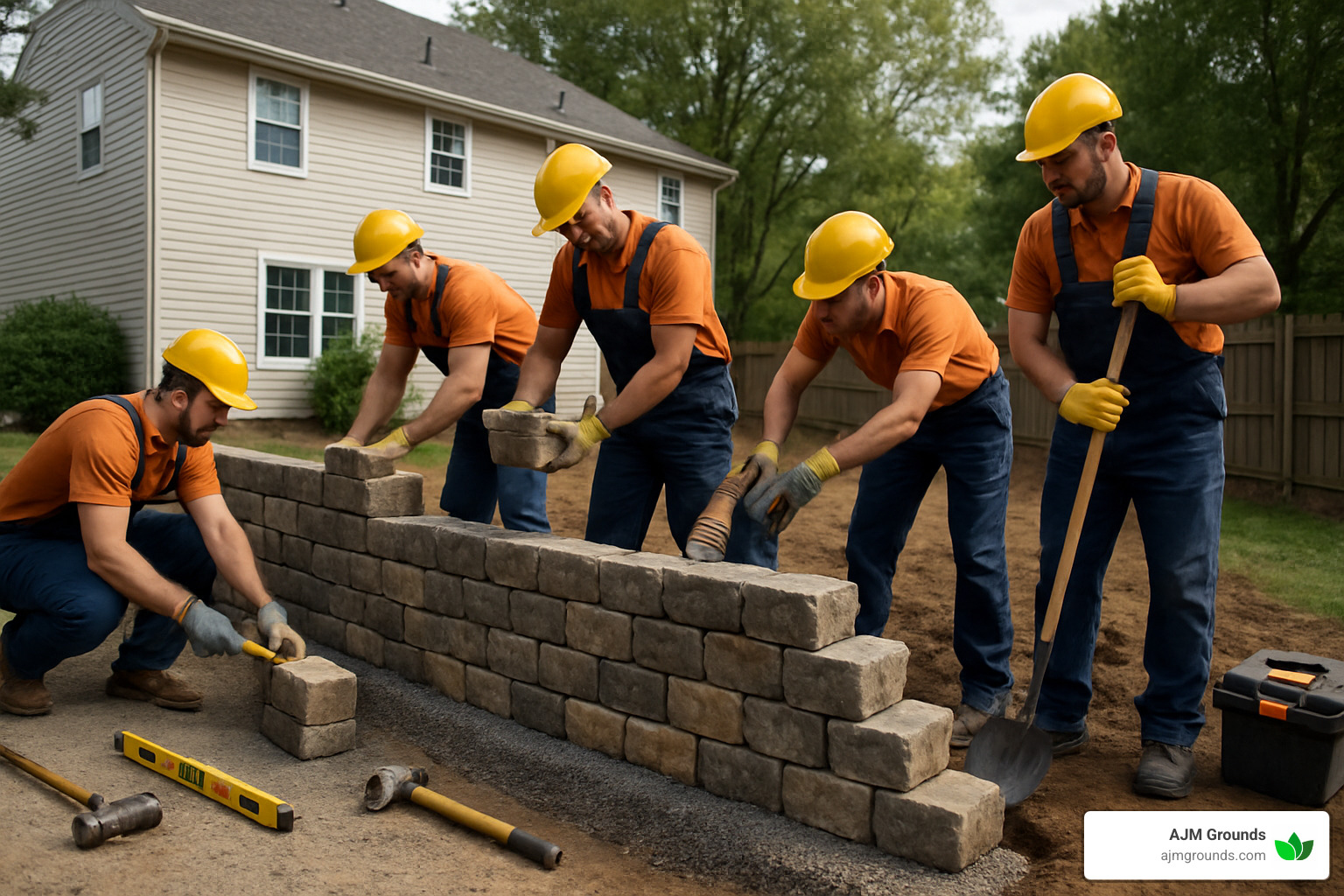
When you’re working with professional retaining wall builders near me like our team at AJM Grounds, you’ll see a methodical approach to construction that ensures longevity. We start with a thorough site survey and planning phase, carefully measuring and marking the wall location while checking for utilities and planning proper drainage solutions. This groundwork is crucial—skip it, and you’re practically inviting future problems!
The real work begins with excavation, digging a trench for the foundation that’s typically 6 inches deep plus an additional inch for each foot of wall height. This might seem excessive, but this foundation depth is what keeps your wall standing strong through harsh New England winters. Next comes base preparation, where we create a level, stable foundation using compacted gravel—think of this as the wall’s bedrock.
For walls exceeding 3-4 feet in height, we incorporate geogrid reinforcement, a synthetic mesh that extends into the soil behind the wall. This might be invisible once your wall is complete, but it’s absolutely essential for stability. It’s like the hidden support beams in your home—you don’t see them, but you’d certainly notice if they weren’t there!
The visible part of your wall comes next, as we carefully install each block or stone according to your design plan, ensuring proper alignment and leveling. Behind the scenes, we’re simultaneously installing a robust drainage system with perforated pipe wrapped in filter fabric to direct water away from your wall. Proper drainage isn’t just important—it’s everything when it comes to wall longevity in our freeze-thaw climate.
Finally, we complete the backfilling process, filling the area behind the wall with gravel and compacting it in layers to provide both drainage and support. This methodical approach is why walls we build stand the test of time.
For properties with challenging terrain, check out our Retaining Walls for Slopes page to see our specialized approaches for steep sites.
DIY Maintenance Checklist
Even the most expertly built retaining wall needs some TLC to reach its maximum lifespan. Think of your wall maintenance like dental checkups—a little prevention goes a long way.
Start with an annual inspection each spring after the ground thaws. Look closely for any signs of movement, cracking, or bulging, especially after our notorious Massachusetts freeze-thaw cycles have done their work. Pay special attention to your wall’s drainage outlets—those weep holes and pipes need to stay clear of debris to function properly.
The soil at the top of your wall should maintain a proper grade, sloping away to direct surface water elsewhere. It’s a simple thing to check, but many homeowners overlook this until water damage has already begun.
If you’ve chosen a timber retaining wall, remember to apply a water-repellent sealer every 2-3 years. It’s like sunscreen for your wall—a little application prevents a lot of damage. For block walls, take time to reset any loose blocks promptly before small issues cascade into structural problems.
Be mindful about vegetation management near your wall. While those flowering plants might look lovely cascading over your retaining wall, large roots can cause serious damage over time. Keep trees and substantial shrubs at least 3 feet from the wall structure to prevent root pressure.
When to Repair vs Replace
Knowing whether your wall needs a simple fix or a complete overhaul can save you significant money and prevent property damage. It’s all about recognizing the warning signs early.
Minor issues like isolated cracking or chipping of individual blocks, slight settling that hasn’t compromised structural integrity, or cosmetic concerns like staining can typically be addressed with targeted repairs. Think of these as the wall equivalent of a small dent in your car—annoying but not catastrophic.
However, there are clear signals that replacement may be necessary. If your wall is leaning more than 2 degrees from vertical, showing multiple bulges in what was once a straight wall, or displaying significant cracking through multiple sections, these are serious red flags. Similarly, failed drainage causing soil erosion behind the wall, extensive rotting in wooden walls, or a wall age exceeding 20 years (particularly for timber walls) often indicates the end of your wall’s useful life.
The cost-benefit analysis is important here. Sometimes repairs might seem cheaper initially, but they’re just a temporary fix for a wall that’s fundamentally compromised. In such cases, replacement offers better long-term value.
For expert assessment of your existing wall’s condition, our team at AJM Grounds provides thorough evaluations. Learn more about our approach to fixing problematic walls on our Retaining Wall Repairs page.
A well-built and properly maintained retaining wall isn’t just functional—it’s an investment in your property’s value and your landscape’s beauty for years to come.
Frequently Asked Questions about Retaining Walls
How Tall Can I Build Without an Engineer?
The famous “4-foot rule” applies in most Massachusetts communities, but there’s more to it than meets the eye. This measurement includes the entire wall height from the bottom of the foundation to the top cap—not just what you see above ground.
When your wall exceeds 4 feet, the requirements typically expand to include:
- Professional engineering drawings with an official stamp
- Building permits from your town’s building department
- Potentially soil testing to ensure proper design parameters
Even if you’re planning a shorter wall, don’t skip professional guidance. At AJM Grounds, we’ve seen many “simple” projects become complicated due to soil conditions or drainage issues. We’re happy to assess your property and advise whether engineering makes sense for your specific situation—sometimes it’s worth the investment even when not required by code.
Do I Need a Permit in My City?
Permit requirements vary throughout Massachusetts communities, and knowing your local rules saves headaches down the road. Here’s what we’ve learned working throughout the region:
In Bedford, Woburn, Reading, Stoneham, and Wilmington, permits are generally required when walls exceed 4 feet. Meanwhile, Billerica, Lexington, and Winchester set their threshold slightly lower at 3 feet. Burlington follows the 4-foot standard but has specific requirements for walls near property lines.
Even permit-free walls must comply with setback requirements and other zoning regulations. A quick call to your local building department can prevent costly mistakes—or we can handle this research as part of our service when you work with AJM Grounds.
How Long Will Stone or Block Walls Last?
A properly built retaining wall is truly an investment in your property’s future. With quality materials and construction, you can expect impressive longevity:
Natural stone walls can stand proud for 50 to 200 years when built with proper drainage and foundation work. These walls often outlast the builders who created them!
Concrete block walls typically serve 50 to 100 years before needing significant attention, especially those built with modern interlocking systems.
Timber walls have a shorter lifespan of 10 to 20 years, with pressure-treated varieties lasting longer in our New England climate.
Gabion walls (those wire baskets filled with stone) generally last 50 to 100 years, though the wire mesh might need replacement before the stone contents.
The secret to longevity isn’t just material choice—it’s proper installation. Cutting corners on drainage, foundation preparation, or backfill material can reduce your wall’s lifespan by decades. At AJM Grounds, we build walls to withstand Massachusetts’ challenging freeze-thaw cycles, using construction methods that have proven themselves over time.
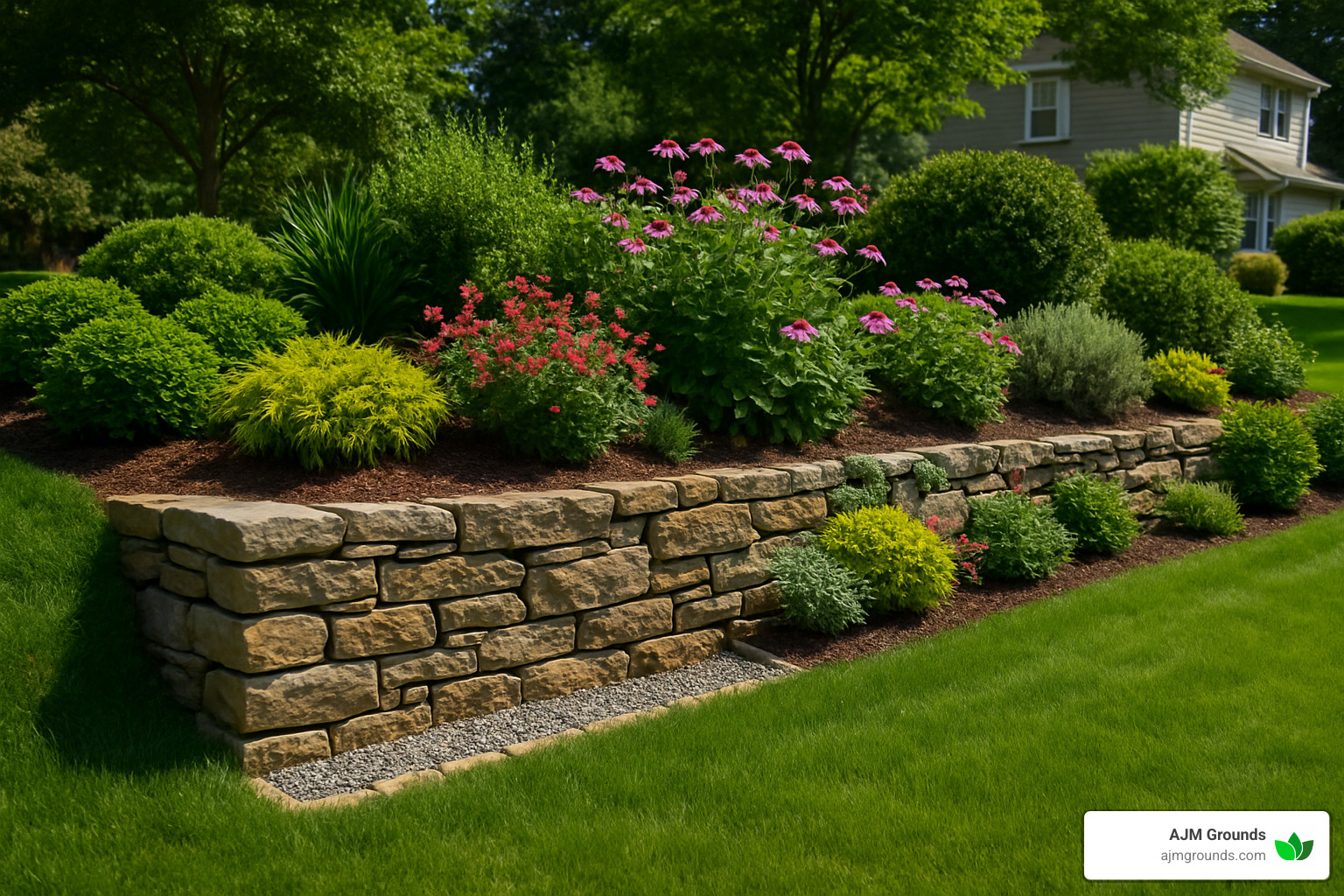
When you’re looking for retaining wall builders near me who understand the importance of longevity, proper drainage installation is perhaps the single most important factor affecting how long your wall will last. Without it, even the most beautiful wall will fail prematurely—something we’ve unfortunately seen when called to repair others’ work.
Conclusion
When searching for retaining wall builders near me, you’re not just looking for someone to stack stones or blocks—you’re seeking a partner who can transform your property while solving drainage and erosion challenges. The journey to finding the right professional doesn’t have to feel like climbing a mountain itself.
At AJM Grounds, we believe retaining walls should be both functional masterpieces and eye-catching landscape features. Our approach combines careful engineering with artistic vision, creating walls that not only stand strong for decades but also improve your property’s beauty and value.
What makes our retaining wall projects special is our attention to the small things—the perfect cap stone selection, the precise angle of your wall face, and drainage systems that work silently behind the scenes for years to come. We take pride in our personalized designs that reflect your home’s character and your personal style preferences.
For homeowners throughout Woburn, Bedford, Billerica, Burlington, Lexington, Reading, Stoneham, Wilmington, and Winchester, we offer comprehensive retaining wall services that handle every aspect of your project. From securing permits and creating detailed designs to selecting the perfect materials and ensuring proper installation, our detail-driven approach ensures nothing falls through the cracks.
Whether you’re dealing with a challenging slope that’s making your yard unusable, need to create terraced garden beds, or simply want to add visual interest to your landscape, our experienced team can guide you through the options that make sense for your property and budget.
Ready to transform your outdoor space with a beautiful, long-lasting retaining wall? We’d love to visit your property, understand your vision, and provide a free, no-obligation quote custom to your specific needs. Our transparent process ensures you’ll know exactly what to expect before we begin work.
For more details about our approach to building exceptional retaining walls, visit our Retaining Wall Construction page or give us a call today. We’re looking forward to helping you create an outdoor space that you’ll enjoy for generations to come—and that will have your neighbors asking for your retaining wall builders near me recommendation!
