

Creating a Natural Stone Path for Your Home
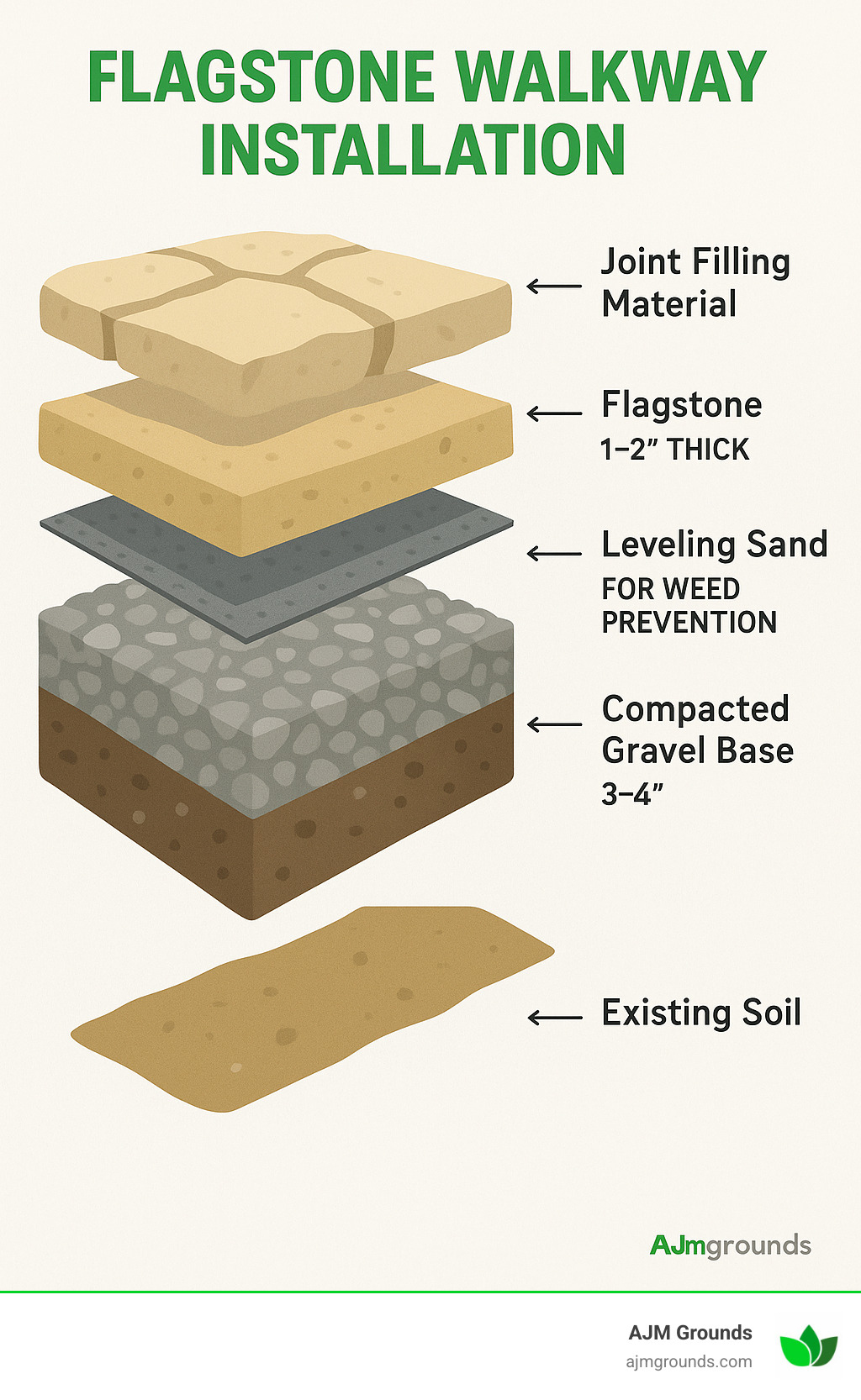
Flagstone walkway installation is a landscape improvement that combines durability with natural beauty to create functional pathways around your property. For homeowners looking to install their own flagstone walkway, here’s a quick overview of the process:
- Planning: Design your path shape and measure the area
- Excavation: Dig 6-7 inches deep
- Base preparation: Add 3-4 inches of crushed stone and compact
- Weed prevention: Lay landscape fabric
- Bedding: Spread 1-2 inches of sand or stone dust
- Stone placement: Position flagstones with 1-3 inch gaps
- Finishing: Fill joints with gravel, polymeric sand, or plants
A flagstone walkway adds immediate curb appeal while providing a practical solution for navigating your outdoor spaces. Unlike poured concrete or manufactured pavers, flagstone creates a one-of-a-kind pathway that harmonizes with the natural environment.
The beauty of flagstone lies in its versatility. Whether you’re creating a formal entrance path with tightly fitted stones or a casual garden walkway with plantings between steps, the natural variations in color, texture, and shape ensure your project will be uniquely yours.
I’m John Caplis, owner of AJM Grounds LLC, and I’ve overseen dozens of flagstone walkway installation projects throughout Woburn and surrounding Massachusetts communities, changing ordinary paths into stunning landscape features that last for decades.
Flagstone walkway installation definitions:
– installing a garden path
– patio installation company
– brick sidewalk repair near me
Why Choose a Flagstone Walkway?
There’s something timelessly appealing about a flagstone walkway winding through your yard. When our clients in Bedford, Billerica, Burlington and neighboring Massachusetts towns ask about walkway options, flagstone is often our top recommendation – and for good reasons that go far beyond just looks.
The natural beauty of flagstone creates an immediate visual impact that manufactured materials simply can’t match. Each stone carries its own unique pattern, texture, and subtle color variations, telling a geological story that becomes part of your landscape’s character. This natural variation creates pathways with personality and charm that actually improve with age.
But flagstone walkway installation isn’t just about appearances. These paths offer remarkable durability that can last generations when properly installed. As landscape professional Roger Haywood notes: “If the flagstone is an ancillary sitting area or walkway that does not receive much traffic, we will consider installing the flagstone with plant material or gravel in the joints.” This flexibility lets us tailor your installation to match your specific needs and traffic patterns.
Safety matters too, especially in our New England climate. Flagstone provides excellent slip resistance even when wet from rain or snow. The natural texture creates reliable traction underfoot – something particularly valuable for families with children or older adults.
For environmentally-conscious homeowners, flagstone offers significant eco-friendly benefits. When installed with permeable joints (spaces between stones), these walkways allow rainwater to naturally seep into the ground rather than creating runoff. This helps recharge groundwater supplies and reduces erosion problems that often come with impermeable surfaces.
Looking at property value, a professionally installed flagstone walkway consistently ranks among the most valuable outdoor improvements you can make. Real estate professionals confirm that quality hardscaping creates that crucial positive first impression that can significantly impact buyer interest and sale prices.
Here in Massachusetts, where freeze-thaw cycles can wreak havoc on hardscaping, properly installed flagstone performs admirably. The density of natural stone combined with correct base preparation ensures your walkway stands up to our harsh winters without the cracking and heaving common to poured concrete.
Maintenance requirements? Minimal. Unlike wood that rots, concrete that cracks, or pavers that shift, flagstone remains stable and attractive with just basic care. An annual cleaning and occasional joint refilling is typically all that’s needed to keep your walkway looking its best year after year.
Those characteristic gaps between stones serve an ecological purpose too. They create mini-habitats for beneficial insects and allow small native plants to establish, contributing to a more biodiverse landscape that supports local wildlife.
Flagstone Types & Their Best Uses
Choosing the right stone makes all the difference in your walkway’s appearance and performance. Here in Massachusetts, we work with several flagstone varieties, each bringing unique characteristics to your project:
Bluestone remains a New England favorite, and for good reason. This Pennsylvania-quarried sandstone offers a distinctive blue-gray color that beautifully complements our regional architecture. Extremely durable and versatile, bluestone can be cut with precise edges for formal installations or left natural for a more rustic look – making it perfect for high-traffic pathways.
Sandstone brings warm earth tones ranging from soft buff to rich rust colors that create an inviting pathway. Its excellent durability and natural appearance make it particularly effective in garden settings where you want the walkway to harmonize with the surrounding landscape.
Limestone offers a consistent texture and lighter coloration that creates a clean, formal appearance. While beautiful, it’s slightly softer than other options, making it better suited for moderate-traffic areas in our Massachusetts climate where freeze-thaw cycles can be challenging.
Slate splits into thin, flat pieces with a distinctive layered appearance that creates dramatic visual interest. Available in deep charcoals, greens, and purples, slate’s naturally textured surface provides excellent traction, even in wet conditions – a significant advantage during our rainy New England springs and falls.
Quartzite might be the most durable option of all, with exceptional resistance to scratching and freeze-thaw damage. As one stone supplier told us, “Quartzite’s natural sparkle and superior resistance to fading and staining makes it excellent for high-traffic areas.” This makes it ideal for main entrance walkways that see daily use and need to withstand our Massachusetts winters.
Thickness matters significantly when selecting flagstone. For walkways that will see regular foot traffic, we recommend stones that are 1 to 2 inches thick. Thinner stones risk cracking under pressure, while thicker stones require more excavation and material without providing proportional benefits.
We always encourage our clients in Woburn, Winchester and surrounding areas to consider locally sourced stone when possible. Beyond reducing environmental impact from transportation, regional stone typically complements local architecture more naturally and often better withstands our specific climate conditions.
Pros & Cons at a Glance
Before committing to flagstone walkway installation, it’s important to understand both the advantages and potential challenges:
The benefits of flagstone are substantial – best natural beauty, exceptional durability often exceeding 50 years, excellent slip resistance, and environmentally friendly permeable options. Flagstone increases property value, requires minimal maintenance, offers versatile design possibilities, and can be installed in countless patterns and layouts to suit your specific aesthetic.
The challenges are worth considering too. Flagstone typically has a higher initial cost compared to alternatives, and installation is more labor-intensive than some options. The potentially uneven surface may challenge furniture placement, and without mortar, flagstone paths can be difficult for wheelchair access. Professional installation is recommended for best results, and you may need occasional joint refilling or stone releveling over time.
When comparing flagstone to other popular walkway materials, consider these key differences:
| Feature | Flagstone | Concrete Pavers | Poured Concrete |
|---|---|---|---|
| Initial Cost | $15-$45/sq ft* | $10-$20/sq ft* | $6-$18/sq ft* |
| Lifespan | 50+ years | 25-50 years | 25-30 years |
| Repair Ease | Individual stones replaceable | Individual pavers replaceable | Requires section replacement |
| DIY Friendly | Moderate difficulty | Moderately easy | Difficult |
| Aesthetic | Natural, unique | Uniform, many design options | Plain unless stamped/stained |
| Maintenance | Minimal | Low-moderate | Low |
| Freeze-Thaw Performance | Excellent when properly installed | Good | Prone to cracking |
*Average costs based on internet data, not actual costs for AJM Grounds. Actual prices may vary significantly based on material quality, site conditions, and design complexity.
As one delighted homeowner told us after completing their flagstone path: “I can’t even express how much we love it. I’m surprised at how much more the new flagstone path stood out compared to the old red pavers.”
Planning, Design & Budget Prep
The secret to a successful flagstone walkway installation starts long before the first stone is set. At AJM Grounds, we’ve learned that thoughtful planning creates the most beautiful, functional, and long-lasting results.
Take a moment to consider what your walkway needs to accomplish. Will it welcome guests to your front door? Provide a meandering path through your garden? Or connect your patio to other outdoor spaces? Your answer shapes everything that follows.
For comfortable walking, we typically recommend paths at least 3 feet wide. This gives people plenty of room without feeling cramped. If you’d like friends or family to walk side-by-side, consider going wider—4 to 5 feet creates a much more sociable space. Main entrance walkways often benefit from being even wider (5+ feet) to create that welcoming first impression.
The shape of your path sets the mood of your outdoor space. Straight paths feel formal and purposeful, creating clean sightlines and simpler construction. Curved paths, on the other hand, invite exploration and create a more relaxed feeling. As one of our clients once said, “The gentle curves in our new flagstone path make our garden feel twice as large—there’s a sense of findy around each bend.”
Your stone arrangement also influences the overall feel. Random patterns with irregularly shaped stones create a natural, rustic look that works beautifully in informal gardens. Modular patterns using uniform stones create a more structured, formal appearance that complements traditional architecture. Either can be stunning when properly executed.
For properties with slopes, incorporating steps requires careful planning. Building codes typically require outdoor risers of 6-7 inches and treads deep enough for a comfortable stride. We recommend flagstone treads at least 2 inches thick to prevent cracking under foot traffic.
Proper drainage isn’t just a good idea—it’s essential for longevity in our Massachusetts climate. Plan for a gentle slope of about 1/8 inch per foot, directing water away from your home’s foundation. In areas with existing drainage challenges, we might suggest a slightly crowned walkway (higher in the middle) to encourage water to flow off both sides.
Safety first: Before any digging begins, always check for underground utilities by calling Dig Safe at 811 at least 72 hours before your project starts. This free service marks underground lines to prevent dangerous accidents. Also check with your local building department about permit requirements, especially if your walkway connects to public sidewalks or involves significant grading.
For budgeting purposes, based on internet data (not actual AJM Grounds pricing), DIY flagstone walkway materials typically cost between $6-$12 per square foot. Professional installation ranges from $15-$45 per square foot, depending on stone quality, site conditions, and design complexity. Always plan to purchase about 10% more stone than your calculated square footage to account for cuts and to allow you to select the most attractive pieces.
For more comprehensive guidance on integrating your walkway with your overall landscape design, visit our hardscape design page.
Flagstone Walkway Installation Layout Tips
Once your design is finalized on paper, it’s time to bring it to life in your yard. This visualization step helps catch potential issues before excavation begins.
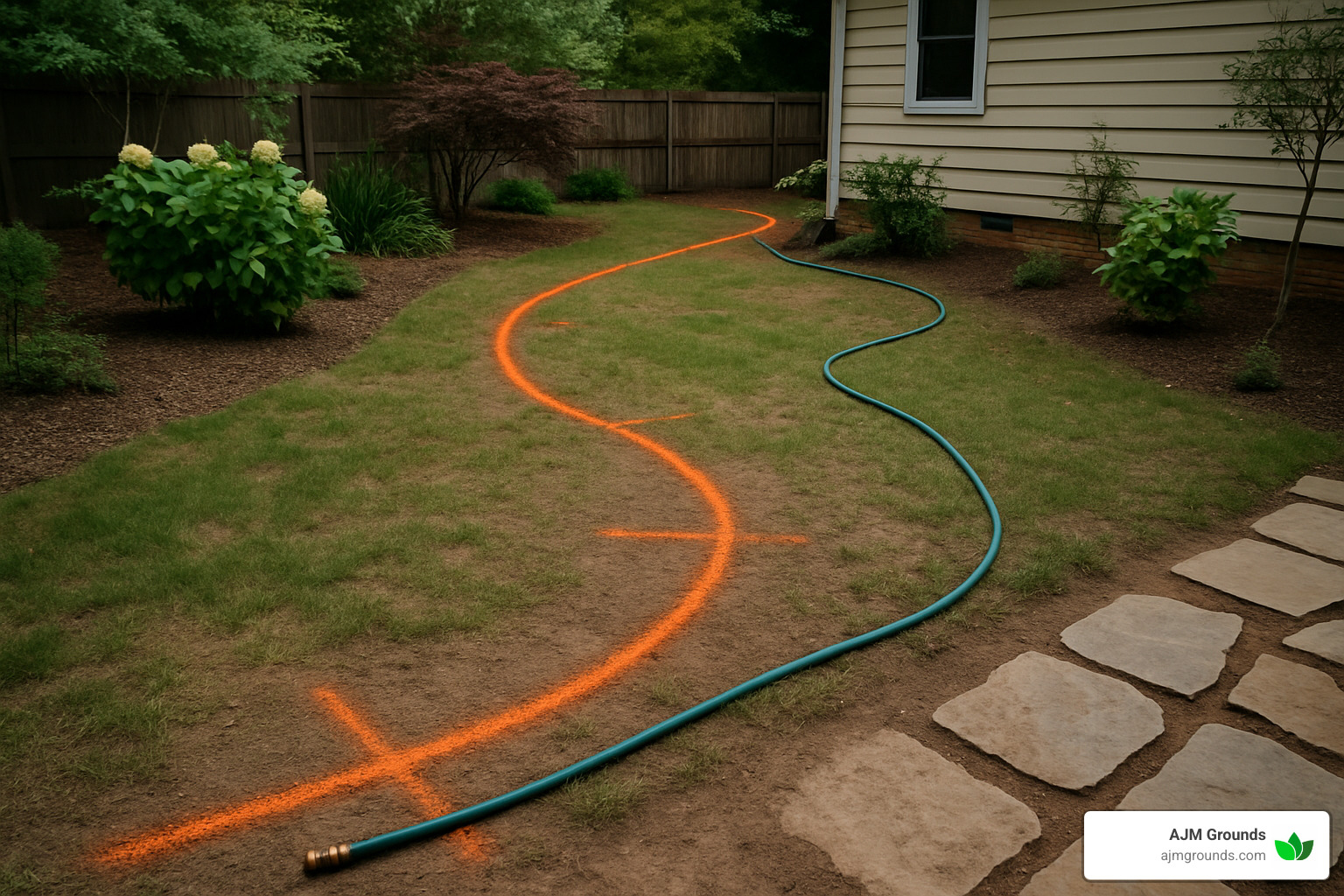
For curved pathways, grab a garden hose—this flexible tool lets you experiment with different sweeping lines until you find the perfect flow. For straight paths, stretch string between stakes to ensure perfect alignment. After you’re satisfied with the layout, mark the edges with bright landscape spray paint to create a clear excavation guide.
The right edging makes a tremendous difference in both appearance and durability. Steel edging provides a clean, nearly invisible border that firmly contains your base materials. As one homeowner told us, “The steel edging disappeared into the landscape, but kept everything perfectly in place through three harsh winters.” Vinyl offers a budget-friendly alternative, while natural stone or brick edging creates a more defined border that becomes part of the design itself.
Consider integrating lighting during your planning phase. Well-placed path lights improve safety after dark while highlighting the beautiful texture of your flagstones. Low-voltage systems offer the most reliable illumination, though solar options provide a wire-free alternative.
For a more natural look, consider incorporating planting pockets—widened areas where the path accommodates ornamental grasses, perennials, or small shrubs. These green touches soften the hardscape and create visual interest throughout the seasons.
If you’re creating a stepping stone path rather than a continuous walkway, pay special attention to spacing. Stones should be placed at comfortable walking distances—typically 24 to 30 inches from center to center for adults with average stride length.
For more guidance on stepping stone installation, visit our guide on Installing a Stepping Stone Walkway.
Drainage & Frost-Heave Mitigation
Here in New England, proper drainage isn’t just a nice feature—it’s essential for preventing frost heave that can destroy even the most beautiful walkway. Our freeze-thaw cycles demand careful attention to these details.
Start with thorough soil compaction to create a solid foundation. Before adding any base materials, the native soil should be firmly tamped to eliminate soft spots that could settle later. For larger areas, we use a plate compactor; for smaller projects, a hand tamper works well.
Shape your walkway with a slight crown—making the center marginally higher than the edges—to encourage water to drain away from the middle. This subtle slope, often just 1/4 inch higher in the center for a 3-foot path, prevents water pooling that leads to winter ice formation.
Geotextile fabric (landscape fabric) is your secret weapon against both drainage issues and structural problems. Laid between the compacted soil and gravel base, it prevents materials from mixing while allowing water to pass through. As one contractor noted, “Always overlap fabric sections by 4–5 inches and secure with stakes—this small detail prevents future headaches from weeds and shifting materials.”
The base layer typically consists of 4 inches of 3/4-inch crushed stone (not rounded gravel, which can shift). This material provides excellent drainage while creating a stable foundation. For best results, install and compact this layer in 2-inch lifts rather than all at once—this extra step significantly improves stability.
For particularly challenging drainage areas, we might recommend incorporating a French drain alongside or beneath the walkway. This system uses a perforated pipe surrounded by gravel to direct water away from your path to a suitable outlet point.
Massachusetts falls primarily within USDA Hardiness Zones 5-7, experiencing significant freezing temperatures. In these conditions, a properly constructed base is your best defense against frost heave. The crushed stone base allows water to drain away before freezing and expanding, while the depth of the base (below the frost line when possible) further reduces heaving risk.
For more detailed information on proper drainage techniques, the research on permeable pavements offers valuable insights into how water moves through different hardscape systems.
Flagstone Walkway Installation: Tools, Materials & Methods
There’s something deeply satisfying about gathering the right tools before starting a project. When it comes to flagstone walkway installation, having everything you need at hand makes the difference between a smooth weekend project and multiple frustrating trips to the hardware store.
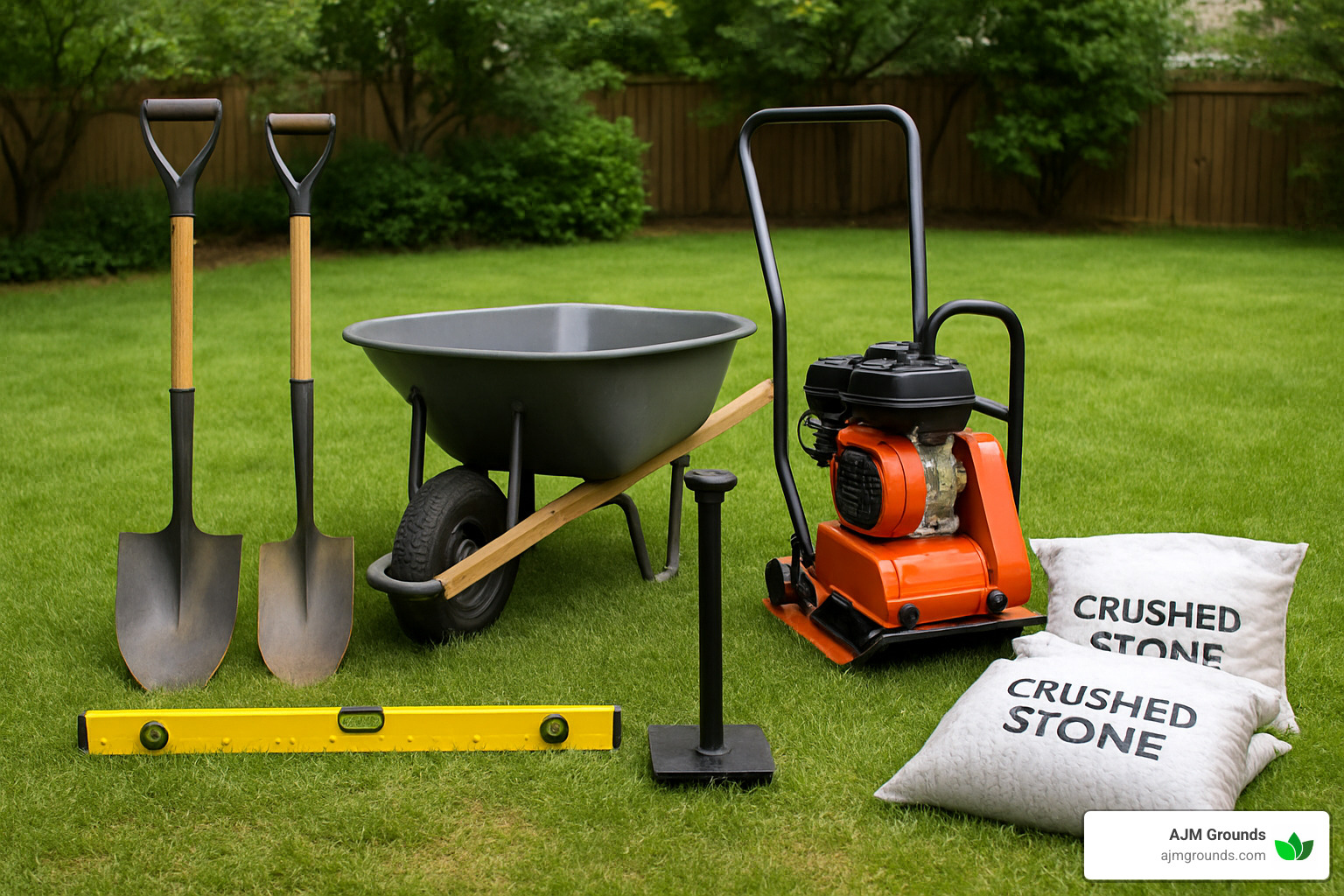
When I’m preparing for a flagstone installation at a client’s home in Woburn or surrounding areas, my truck arrives loaded with the essentials. You’ll need basic digging tools like a sturdy shovel and spade for the excavation work, and a reliable wheelbarrow to move materials around your property without breaking your back. A plate compactor (which you can rent locally) or hand tamper is crucial for creating that solid foundation that prevents future settling.
For precision work, bring a 4-foot level to check grades and ensure stones sit perfectly, along with a rubber mallet for gentle adjustments without damaging the stone. Simple items like string line, stakes, and a tape measure help maintain accurate dimensions, while a garden hose or spray paint makes marking curved pathways a breeze.
Don’t forget safety gear – proper gloves, eye protection, dust masks (especially when cutting stone), and sturdy footwear protect you throughout the project. Your back will thank you for remembering proper lifting technique too!
If your design requires cutting stones (which often happens for a truly custom fit), you’ll need either a hammer and masonry chisel for basic shaping, or for more precise cuts, a circular saw with a diamond blade. The latter requires additional safety precautions, including water for dust suppression and appropriate protective equipment.
As for materials, beyond the flagstone itself (remember to order about 10% extra to account for cuts and selection), you’ll need ¾-inch crushed stone for your base layer, typically 4 inches deep when compacted. A layer of coarse bedding sand or stone dust (1-2 inches) helps you achieve that perfect level setting bed. Quality landscape fabric prevents weeds while allowing drainage, and your choice of edge restraint (whether steel, plastic, or natural stone) keeps everything neatly contained for years to come.
The finishing touch comes from your joint filling material – polymeric sand has become increasingly popular for its stability, though traditional sand, small decorative gravel, or even low-growing plants between stones all create distinctive looks. Some homeowners also choose to apply a sealant for additional protection against staining and weather, though this remains optional and depends on your specific stone type.
With your toolkit and materials assembled, it’s time to decide between the two main installation methods: dry-laid (more forgiving and DIY-friendly) or mortared (more permanent but technically demanding). Let’s explore both approaches.
Dry-Laid Flagstone Walkway Installation
The dry-laid method is my go-to recommendation for most flagstone walkway installation projects in Massachusetts. It’s particularly well-suited to our freeze-thaw climate, as it allows for slight seasonal movement without cracking. The process begins with proper excavation – the foundation of a lasting walkway.
Start by digging out your pathway to a depth of 6-8 inches, depending on your stone thickness. I know this seems excessive (and yes, it’s a workout), but skimping on base depth is the most common mistake I see in failed walkways. Remove all organic material completely, as roots and topsoil will decompose and create settling issues. Extend your excavation about 6 inches beyond your planned walkway edges to accommodate proper edging installation.
Next comes soil compaction – arguably the most underappreciated step in the process. Using your plate compactor or hand tamper, thoroughly compact the exposed subsoil until it feels firm underfoot. This creates the solid foundation that prevents future settling. For clay soils that tend to retain moisture, incorporate a slight slope (1-2%) away from any structures to promote drainage.
While some DIYers skip edging, I strongly recommend installing edge restraints before adding base material. This contains your crushed stone and prevents spreading over time, which can lead to edge stones tilting or shifting. Secure metal or plastic edging with stakes every 8-12 inches, following the manufacturer’s specific instructions.
Now it’s time for that crucial weed barrier. Roll out quality landscape fabric over your compacted soil, overlapping seams by at least 4-5 inches. This layer prevents weeds while still allowing water to drain properly. Extend the fabric up the sides of your excavation to fully separate soil from your base materials and prevent contamination that can compromise drainage.
The base material comes next – add 3-4 inches of ¾-inch crushed stone in 2-inch layers, compacting each layer thoroughly before adding the next. I can’t emphasize enough how important proper compaction is here. The final surface should be relatively level but maintain a slight slope for drainage.
Once your base is solid, spread a 1-inch layer of coarse sand or stone dust as your bedding layer. This allows you to precisely level each flagstone. In our Massachusetts installations, we often prefer limestone screenings or granite dust for this layer as they compact well and provide additional stability.
Now for the fun part – laying the stones! Begin from a fixed edge (like your home’s foundation) or from the center working outward. Space stones 1-3 inches apart for a natural appearance. For random patterns, vary the sizes and shapes while maintaining consistent joint spacing for a balanced look.
Take your time placing each stone. Check for level and adjust by adding or removing bedding material beneath. A gentle tap with a rubber mallet sets each stone firmly. Each stone should be stable without rocking when stepped on – the “wobble test” is crucial for safety and durability.
Step back frequently to assess your pattern. This bird’s-eye perspective helps you make adjustments while the stones are still easily moved. Aim for a balanced look with pleasing joint lines and consistent spacing that feels intentional rather than haphazard.
With all stones placed and stable, fill the joints with your chosen material. Polymeric sand has become increasingly popular because it hardens when misted with water, reducing weed growth and deterring ants. Sweep the material into the joints until completely filled, then remove excess from the stone surfaces with a clean, dry broom. If using polymeric sand, follow the manufacturer’s instructions for wetting, which typically involves a light misting to activate the binding agents without washing out the material.
For more information on the dry-lay method, visit our page on Dry Lay Flagstone.
Mortared Flagstone Walkway Installation
For more formal applications or when absolutely level surfaces are required, a mortared flagstone walkway provides a permanent, solid surface. I’ll be honest – this method is more technically demanding and typically best left to professionals like our team at AJM Grounds, but understanding the process helps you make informed decisions.
After completing the initial excavation, you’ll need to form and pour a 4-inch reinforced concrete slab as your base. This should include proper slope for drainage (1/8 inch per foot) and expansion joints every 8-10 feet to prevent cracking. Allow the concrete to cure completely according to manufacturer’s specifications before proceeding – rushing this step invites future problems.
Proper stone preparation is essential for strong adhesion. Pressure wash your flagstones to ensure they’re free of dust and debris, then allow them to dry completely before setting. Even small amounts of moisture or dust can prevent proper bonding.
Working in manageable sections (only areas you can complete within 20-30 minutes), mix mortar according to manufacturer’s instructions and apply a 1-inch layer to your concrete base. Press each stone firmly into this mortar bed, giving it a slight twist to ensure good adhesion. Use spacers to maintain consistent joint width, typically 1/2 to 1 inch for mortared installations. Check each stone carefully for level and proper height.
After allowing the mortar to set (usually 24-48 hours), mix grout and fill the joints using a grout bag or trowel. For a more natural look, consider adding color to the grout to complement your flagstone. Tool the joints when partially set for a finished appearance that sheds water effectively.
Once the grout has fully cured, clean any residue from the stone surfaces and apply a high-quality stone sealer to protect both the flagstone and grout from moisture, staining, and freeze-thaw damage. This final step is particularly important in our Massachusetts climate.
While mortared installations require more skill and expense, they offer best durability and a formal appearance that suits many architectural styles. The trade-off is less flexibility in freeze-thaw environments, where the rigid structure requires properly installed expansion joints to prevent cracking.
Adding Steps, Stoops & Edging
Integrating steps or stoops into your flagstone walkway installation adds both functionality and visual interest, especially on the sloped properties that are so common throughout Massachusetts.
For step construction, we typically use one of two methods:
The concrete block foundation approach begins with proper base preparation, followed by building a foundation using concrete masonry units (CMU blocks). We fill the interior with compacted crushed stone for drainage and stability, then cap with flagstone treads at least 2 inches thick for durability.
Alternatively, the poured concrete foundation method creates forms and pours a reinforced concrete base for each step. After allowing the concrete to cure fully, we apply a mortar bed and set flagstone treads, finishing with grouted joints between stones.
While the block method is typically more economical, the poured concrete approach offers superior strength for high-traffic areas. Both methods can create beautiful results when properly executed.
Regardless of which approach you choose, all steps must comply with building codes. In Massachusetts, outdoor steps typically require consistent riser heights between 6-7 inches, minimum tread depth of 11 inches, maximum variation between risers of 3/8 inch, and handrails for stairs with more than three risers. These specifications ensure safety and comfortable use.
Stoops – those small landing areas – create natural transition points between different levels and provide space to pause before entering a home. They follow the same construction principles as steps but with a larger flat surface area, often becoming mini-patios that improve entryways.
The finishing touch for any walkway comes from proper edging, which contains your base materials and creates a clean visual boundary. Steel edging provides a nearly invisible, contemporary look with excellent structural support. Stone edging using smaller stones or cut pieces of flagstone creates a cohesive, natural border. Brick edging adds a traditional touch with clear color contrast, while poured concrete edging offers a seamless, durable option.
For more detailed information on stone walkway construction techniques, including steps and edging options, visit our page on Installing Stone Walkway.
Post-Installation Care, Costs & Common Mistakes
After the satisfaction of completing your flagstone walkway installation, proper maintenance becomes your next focus. With the right care, your natural stone path will remain a beautiful and functional element of your landscape for decades to come.
Give your newly installed walkway a chance to settle properly before heavy use. For dry-laid installations, wait at least 24-48 hours before regular traffic. If you’ve chosen a mortared installation, patience is even more important—follow curing guidelines that typically recommend only light foot traffic for the first week to allow proper hardening.
Weed control is perhaps the most visible ongoing maintenance task. Even with landscape fabric in place, Mother Nature finds a way, and occasional weeds may appear in the joints between stones. Simply remove them by hand when they’re small, or use an environmentally friendly herbicide if they’ve gotten established. Regular attention prevents them from becoming a bigger problem.
The joint material between your flagstones may require occasional replenishment, especially after the winter season or heavy rains. Take a walk around your pathway each spring and look for areas where the joint filling has washed away. Refilling with the same material used during installation keeps your walkway looking fresh and prevents stones from shifting.
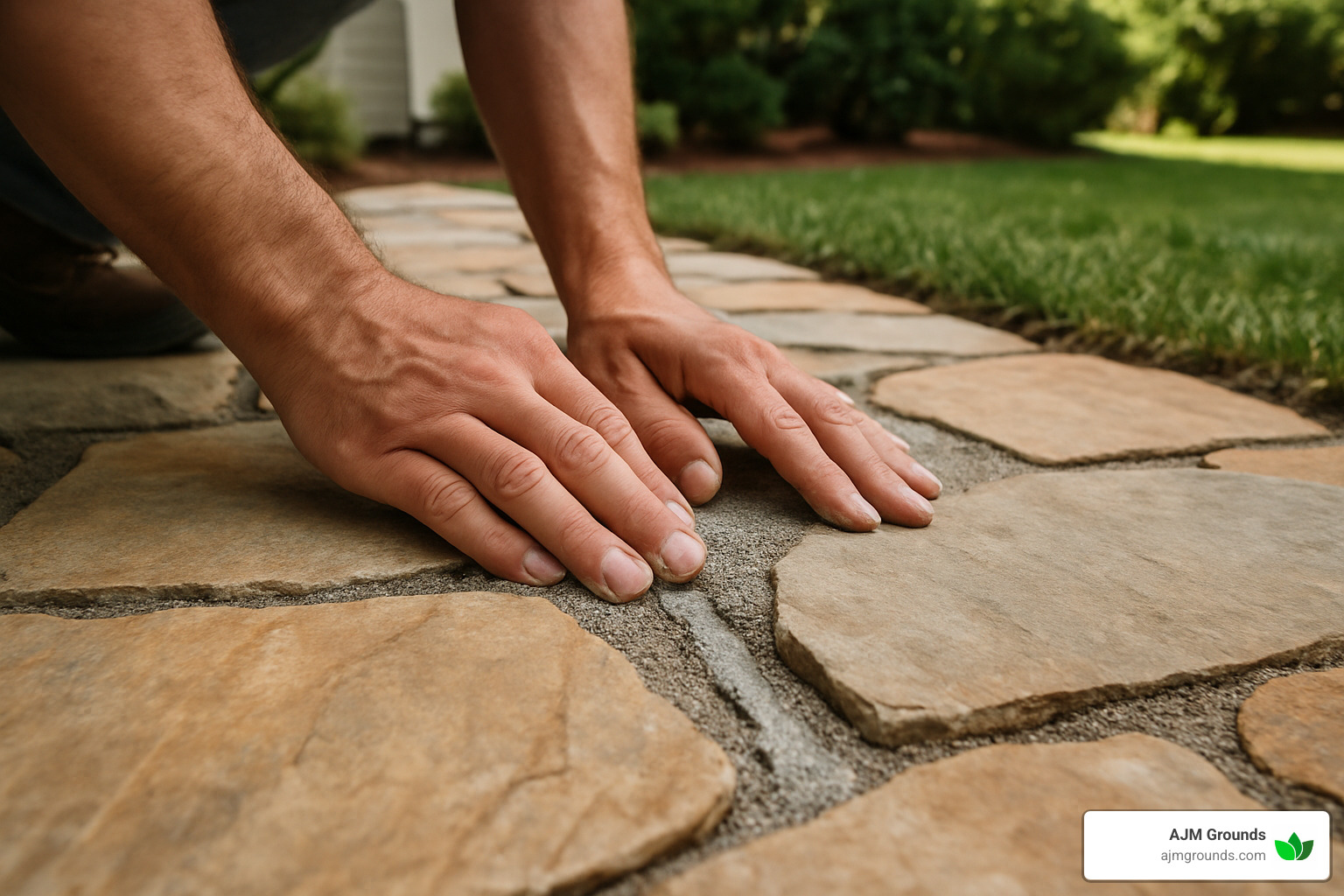
It’s completely normal for some stones to settle slightly during the first year. When you notice a stone that’s no longer level with its neighbors, don’t worry—this is an easy fix. Simply lift the stone, add a bit more bedding material underneath, and reset it to maintain that smooth, even surface that makes your walkway both attractive and safe.
An annual gentle cleaning keeps your flagstone looking its best. A garden hose with a spray nozzle is often sufficient for regular maintenance. For deeper cleaning, a pressure washer on its lowest setting works well—just be careful to avoid high-pressure settings that could damage the stone or wash out your joint material.
Winter care requires special attention in our Massachusetts climate. Avoid using de-icing salts, which can cause significant damage to both the stone and your surrounding landscape. Instead, use sand for traction or look for calcium magnesium acetate (CMA), which is much friendlier to stone surfaces while still helping with ice management.
The question of whether to seal flagstone walkways sparks ongoing debate among landscaping professionals. In our New England climate, I generally recommend considering the specific stone type you’ve used. Sandstone and limestone are more porous and benefit from sealing to prevent staining and reduce water absorption. Slate and bluestone are naturally more resistant, making sealing optional, though it can improve their natural colors. For any mortared installation, sealing helps protect the grout joints from moisture penetration that could lead to cracking during freeze-thaw cycles.
If you do choose to seal your walkway, plan on reapplication every 2-3 years, depending on the product used and how much direct sunlight and traffic your path receives.
When it comes to long-term costs, flagstone walkways are remarkably economical. Based on internet data (not actual AJM Grounds pricing), annual maintenance costs average less than $0.50 per square foot, making flagstone one of the most cost-effective hardscape options over time. This typically covers occasional joint refilling and perhaps a professional cleaning every few years.
Having installed countless flagstone walkways throughout Woburn and surrounding Massachusetts communities, I’ve seen several common mistakes that homeowners and even some contractors make:
Insufficient base preparation tops the list of costly errors. Digging only a few inches deep might save time initially, but it virtually guarantees problems with frost heave and settling. As one contractor noted in our research, “Dig at least six to seven inches to avoid frost heave and root interference.”
Inadequate compaction of base materials leads to uneven settling. Each layer must be thoroughly compacted before adding the next. “Compact base stone in multiple lifts (e.g., 2″ layers),” advised one expert—advice we follow religiously at AJM Grounds.
Improper drainage slope causes water to pool on or under your walkway, leading to erosion, accelerated settling, and dangerous ice formation in winter. Even a slight slope of 1/8″ per foot makes a significant difference in water management.
Skipping landscape fabric might save a few dollars upfront but costs much more in the long run. This relatively inexpensive layer prevents weeds and keeps your base materials separate from the soil, dramatically extending your walkway’s lifespan.
Choosing stones too thin for walkway applications is a common mistake. Flagstones less than 1 inch thick are prone to cracking under regular foot traffic. For pathways, stones 1.5-2 inches thick provide the durability needed for years of use.
Using the wrong joint filler for our climate leads to ongoing maintenance headaches. Regular sand quickly washes out in New England’s weather, while polymeric sand creates a more stable, weed-resistant joint that stands up to our freeze-thaw cycles.
Ignoring stone selection specific to your application can lead to premature deterioration. Not all flagstone is created equal, and choosing stone appropriate for your climate and intended use is crucial for longevity.
For more information about professional walkway installation and maintenance, visit our Walkway Installation page, where we share more insights from our years of experience creating beautiful, lasting stone pathways throughout Massachusetts.
Frequently Asked Questions about Flagstone Walkway Installation
How deep should I dig for a flagstone walkway base?
Here in Massachusetts, where winter frost can be particularly harsh, proper excavation depth is crucial for a lasting walkway. For most flagstone walkway installation projects we complete in Woburn and surrounding towns, we recommend digging 6-7 inches deep.
This isn’t arbitrary – this depth serves a specific purpose in our climate. It allows room for 3-4 inches of compacted crushed stone base, an inch of bedding sand or stone dust, and 1-2 inches for the flagstone itself. This careful layering creates a system that drains properly and resists frost heave.
I’ve seen many DIY projects fail simply because the homeowner didn’t dig deep enough. As one contractor I consulted with during my research put it, “Excavate at least six to seven inches to avoid frost heave and root interference.” In particularly problematic areas with poor drainage or severe frost conditions, you might even need to go 8-10 inches deep. The extra work upfront saves countless headaches later.
Is landscape fabric really necessary under flagstone?
When clients ask me this question, I always respond with an emphatic yes! While it might seem like an extra expense or step you could skip, landscape fabric is truly essential for several important reasons.
First, it’s your best defense against weeds. The fabric blocks sunlight from reaching weed seeds in the soil beneath your walkway, dramatically reducing maintenance. Second, it maintains the separation between your crushed stone base and the subsoil. Without this barrier, these materials gradually mix over time, compromising drainage and potentially leading to settling or heaving.
I’ve repaired enough walkways to see the difference firsthand. Paths installed without fabric often need significant repairs within just a few years, while those with properly installed fabric maintain their integrity much longer. As one experienced installer told me, “Filter fabric outperforms plastic sheeting as a weed barrier in stone walkways.”
For best results in our Massachusetts climate, invest in heavy-duty, permeable landscape fabric specifically designed for hardscaping applications. The lightweight garden variety simply won’t hold up under a stone walkway. Make sure to overlap seams by at least 4-5 inches and extend the fabric up the sides of your excavation for complete protection.
Can I install a flagstone walkway in a New England freeze-thaw climate?
I get this question frequently from homeowners worried about our harsh Massachusetts winters. The good news is that flagstone walkways can not only survive but thrive in our challenging New England climate – when installed correctly.
The key is choosing the right installation method. For most homes in Woburn, Winchester, and surrounding areas, I strongly recommend the dry-laid method rather than mortared installation. As one expert I consulted explained, “Dry-lay flagstone in freeze-thaw zones to allow movement.” This flexibility is crucial – it allows the stones to shift slightly with ground movement without cracking.
Several other factors help ensure your walkway stands up to our winters. Proper base depth provides essential drainage to prevent water pooling and freezing beneath stones. Joint material selection matters too – we’ve found polymeric sand holds up significantly better to freeze-thaw cycles than regular sand. One contractor I spoke with emphasized, “Use polymeric sand to stabilize joints.”
Stone selection plays a role as well. Some flagstone varieties simply handle freezing better than others. Bluestone and quartzite have proven particularly well-suited to New England conditions in my experience. Finally, thoughtful drainage planning ensures water moves away from and through your walkway, preventing ice formation that could damage your beautiful new path.
The proof of flagstone’s durability in our climate surrounds us – just look at the historic stone paths throughout New England that have endured for centuries with minimal maintenance. With proper installation, your flagstone walkway can become a lasting part of your landscape that only gets more beautiful with age.
Conclusion
A flagstone walkway installation transforms your outdoor space into something truly special. It’s not just a path through your yard—it’s a lasting investment that improves your property’s beauty, functionality, and value. There’s something timeless about natural stone that concrete pavers and other manufactured materials simply can’t replicate.
When I walk a well-designed flagstone path, whether it’s meandering through a lush garden in Winchester, creating a stately entrance in Lexington, or connecting outdoor living spaces in Burlington, I’m always struck by how it lifts the entire property. The natural variations in color and texture create a unique character that ages gracefully over time.
As we’ve explored throughout this guide, successful installation hinges on thorough planning, quality materials, and careful attention to technical details—especially important in our challenging Massachusetts freeze-thaw cycles. The extra effort pays off with a walkway that will serve your family for generations rather than just a few seasons.
For the hands-on homeowner, installing your own flagstone walkway can be an immensely satisfying weekend project. The dry-laid method we’ve outlined is definitely approachable if you have basic landscaping experience and access to the right tools. You’ll save considerably on labor costs while having complete creative control over the final look. That said, be prepared for some serious physical work, especially during excavation and base preparation—this isn’t a light DIY undertaking!
If you’d rather enjoy professional results without the backache, our team at AJM Grounds brings years of experience installing beautiful flagstone walkways throughout Woburn and surrounding communities. We’ve developed techniques specifically suited to New England conditions that ensure not just stunning aesthetics but also the structural integrity to withstand our region’s harsh seasonal changes.
I remember one client in Bedford who called us after we completed their curved flagstone entrance path. “Every time I walk up to my front door now,” she told me, “I feel like I’m coming home to something special. The walkway has completely changed how visitors experience our house—it finally has the entrance it deserves.”
Whether you decide to tackle this project yourself or partner with professionals, I hope this guide has given you valuable insights into creating a flagstone walkway that will improve your outdoor living space for decades to come.
For more information about professional walkway installation services custom to your specific property and needs, visit our walkway installation page or contact us at AJM Grounds for a personalized consultation. We’d be happy to help you bring your vision to life with the attention to detail that’s become our hallmark throughout Woburn, Bedford, Billerica, Burlington, Lexington, Reading, Stoneham, Wilmington, and Winchester.
