

Transform Your Outdoor Space with a Fire Pit
Building a backyard fire pit is an affordable project that can transform your outdoor living space with warmth, ambiance, and a natural gathering spot for family and friends. Here’s what you need to know:
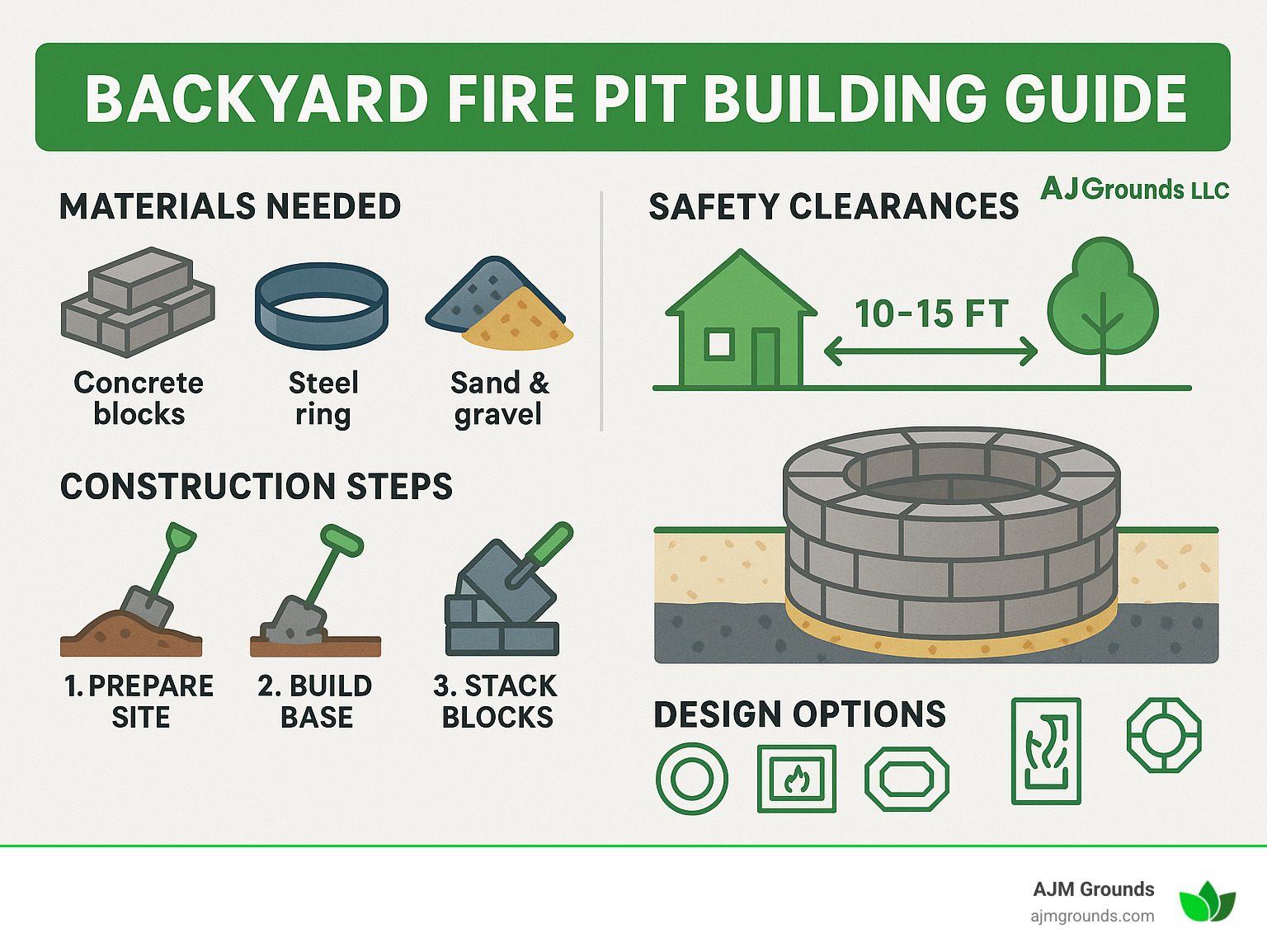
Quick Guide to Building a Backyard Fire Pit:
1. Check local codes – Maintain at least 10-15 feet from structures
2. Select materials – Fire-rated bricks or concrete blocks with a steel liner
3. Prepare site – Excavate 7-8 inches, add 2 inches of sand
4. Build base – Add 5 inches of crushed gravel, compact thoroughly
5. Stack walls – Place blocks in layers, staggering joints for stability
6. Finish – Add lava rock inside, create seating area around the pit
A DIY fire pit typically costs between $300-$600 compared to professional installation at $1,400+, making it one of the most cost-effective backyard upgrades with an impressive 78% return on investment.
The perfect fire pit creates a cozy outdoor retreat that extends your living space and the usability of your yard throughout multiple seasons. Whether you’re looking for a simple weekend project or a more elaborate outdoor feature, there’s a fire pit design to match your style and budget.
I’m John Caplis, owner of AJM Grounds LLC, and I’ve helped countless homeowners transform their outdoor spaces with custom fire pit installations, giving me expertise in building a backyard fire pit solutions that blend functionality with aesthetic appeal.
Relevant articles related to building a backyard fire pit:
– custom built outdoor fireplaces
– Fire pit landscape design
– Fire pit landscaping ideas
Why Add a Fire Pit? Top Benefits
There’s something almost magical about gathering around flickering flames under the open sky. It’s no surprise that fire pits have become one of our most requested landscape features across Woburn, MA and neighboring towns like Lexington, Burlington, and Winchester.
A thoughtfully designed fire pit does far more than just warm chilly evenings—it creates a natural centerpiece for your outdoor living space that family and friends are drawn to throughout most of the year. Even in our Massachusetts climate, a good fire pit extends your outdoor season by several months, from early spring straight through to late fall.
“We’ve watched homeowners completely transform how they use their yards after building a backyard fire pit,” I often tell clients at AJM Grounds. “One family in Lexington mentioned they’ve enjoyed their backyard more in the three months since installing their fire pit than during the entire three years before.”
Beyond the immediate joy they bring, fire pits make solid financial sense too. Recent market data shows outdoor fire features typically recoup around 78% of their cost when you sell your home—making them one of the smartest investments for outdoor improvements.
Warmth, Light & Social Magic
The atmosphere created around a fire pit encourages a kind of connection that’s becoming increasingly rare in our digital world. There’s something about the dancing flames that invites conversation, storytelling, and genuine togetherness.
“Before our fire pit, everyone would disappear into different rooms after dinner,” a Reading, MA client shared with me recently. “Since building a backyard fire pit, we find ourselves naturally gathering outside most evenings—phones down, faces lit by firelight, just enjoying each other’s company.”
The benefits go beyond the social aspect. That gentle, radiating warmth makes cool evenings comfortable. The ambient lighting creates a cozy atmosphere that no patio light can match. And there’s nothing quite like watching children experience the timeless joy of roasting marshmallows for s’mores, creating traditions your family will remember for decades.
What makes fire pits special is how they engage all your senses—the crackling sounds, the woodsy scent, the visual dance of flames, and that perfect radiant heat that somehow feels different from indoor warmth. It’s an experience that modern technology simply can’t replicate.
Boost Outdoor ROI
From a dollars-and-cents perspective, building a backyard fire pit stands out as one of the smartest investments for your outdoor space. While professional custom fire pit installations typically range from $1,400 to $6,000 (based on internet data, not AJM pricing), a well-executed DIY version can be completed for between $300 and $900.
This combination of reasonable cost and high desirability explains that impressive 78% average return on investment. Few home improvements—indoor or outdoor—offer such favorable financial returns while providing years of enjoyment.
Real estate professionals throughout Bedford, Billerica, and Burlington consistently tell us that homes featuring fire pits tend to sell more quickly and often command better prices than similar properties without them. They’re particularly appealing to younger homebuyers who prioritize outdoor living and entertaining spaces.
“When preparing homes for the market in Winchester or Lexington,” explains a realtor we partner with, “I often suggest adding a simple fire pit if the yard allows. It’s a relatively modest investment that photographs beautifully in listings and creates an immediate emotional connection during showings.”
Planning & Safety Essentials
Before grabbing your shovel and heading to the hardware store, proper planning and safety considerations are essential when building a backyard fire pit. Taking time for this preparatory work will save you headaches, ensure your fire pit is safe, and help you avoid potential code violations.
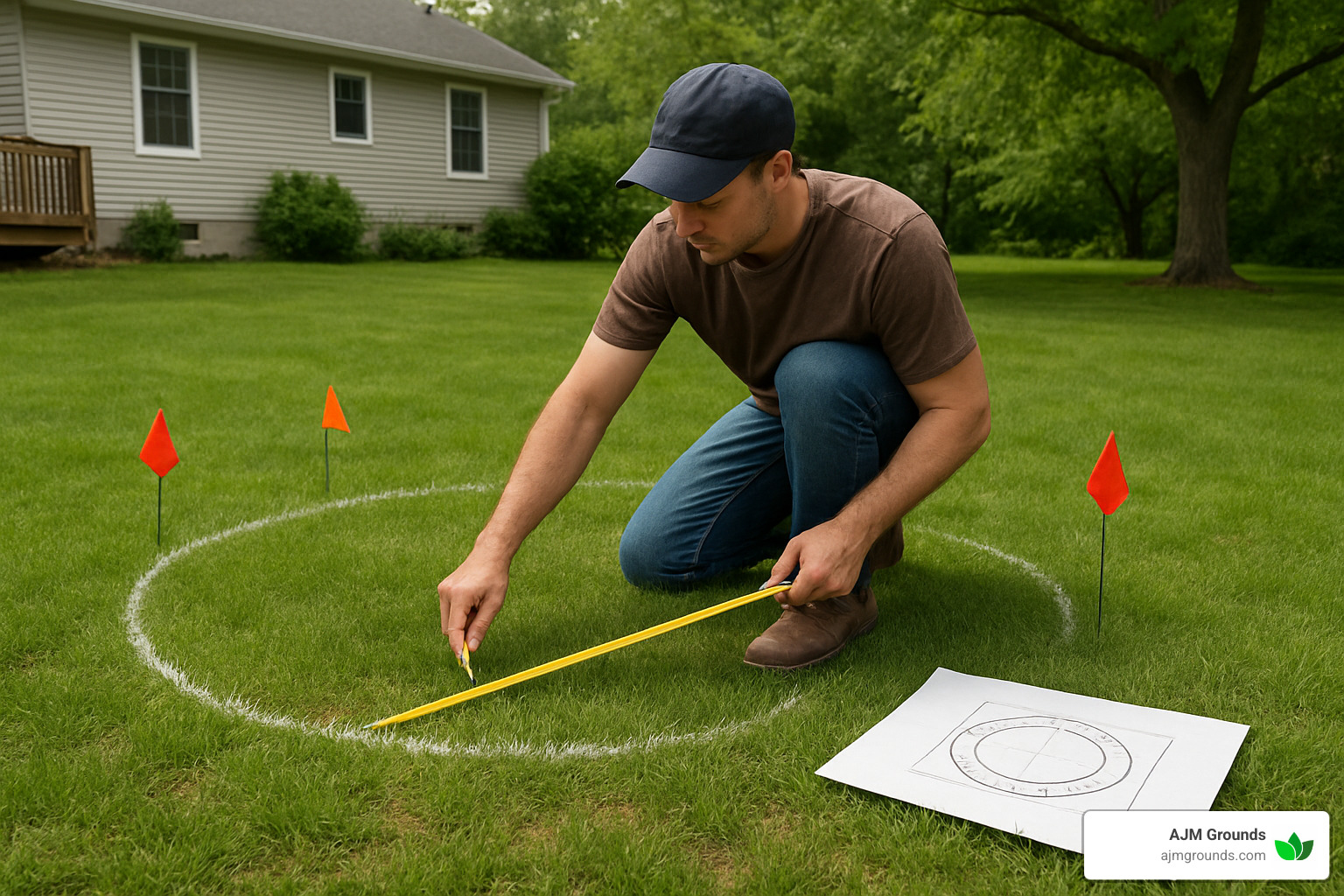
Safety must be your primary concern. Fire pits, while wonderful, introduce an open flame to your property. Most local codes require a minimum of 10-15 feet clearance from structures, though many safety experts recommend at least 20 feet whenever possible.
“We always advise clients to check with their local fire department before finalizing a location,” says our team at AJM Grounds. “Requirements can vary significantly between communities like Stoneham versus Wilmington, so it’s worth making a quick call.”
A useful tool many don’t know about is the National Water and Climate Center’s Wind Rose tool, which helps you analyze prevailing wind patterns in your area. This can help you position your fire pit to minimize smoke blowing toward your home or neighbors’ properties.
Don’t forget to have a fire extinguisher nearby whenever you use your pit, and always call 811 before you dig to locate any underground utilities. This free service could save you from a dangerous and expensive mistake!
Picking the Perfect Spot
The ideal location for your fire pit balances safety, convenience, and aesthetics. When selecting your spot, consider drainage first – water pooling in your fire pit will create a muddy mess and damage your materials over time. A slight slope or liftd position works best.
Prevailing breezes are your friend when building a backyard fire pit. A gentle breeze can help direct smoke away from seating areas, but strong winds can be dangerous. Use the Wind Rose tool to understand typical wind patterns in your yard throughout the seasons.
Tree clearance is non-negotiable – not just for fire safety, but also to prevent leaf litter from constantly filling your pit. We recommend at least 15 feet of clearance from any tree canopy, with special attention to any low-hanging branches.
“One of our clients in Burlington initially wanted their fire pit under a beautiful maple tree for shade,” recalls our team. “We had to explain that the heat could damage the tree and falling leaves would be a fire hazard. We found them an alternative spot with evening shade that worked perfectly.”
Consider privacy when placing your fire pit too. Nothing ruins a cozy evening like feeling exposed to neighbors or street traffic. Strategic placement can create an intimate setting while maintaining necessary safety clearances.
Your fire pit will likely become a central gathering area, so think about the flow between your home, the fire pit, and other outdoor living spaces. Ideally, you want convenient access to your kitchen or outdoor grill for food and beverages.
Understanding Local Regulations
Navigating local regulations is a crucial step that too many DIYers skip when building a backyard fire pit. Each municipality has its own set of rules regarding outdoor fires, and ignoring them can lead to fines or forced removal.
In Massachusetts communities like Woburn, Reading, and Stoneham, you’ll need to investigate building permits first. Some towns require permits for permanent fire features, while others distinguish between permanent structures and portable fire pits.
Be aware of seasonal burn bans, especially during dry summer months. Massachusetts can implement temporary restrictions that prohibit all open flames, regardless of how well-designed your fire pit is. Having a plan for these periods will prevent disappointment.
Wood smoke limits are becoming more common in residential areas. Some communities restrict wood burning entirely, meaning you might need to consider a gas-powered alternative if you live in certain neighborhoods.
“We had a client in Winchester who built a beautiful fire pit, only to have their HOA demand its removal because they hadn’t received pre-approval,” shares our team. “Always check your HOA covenants first if you live in a managed community.”
Another often-overlooked consideration is notifying your insurance company. While a fire pit typically won’t increase your premiums significantly, failing to disclose it could potentially affect coverage if an incident occurs. A quick call to your agent provides peace of mind.
For more detailed information about building codes and regulations specific to outdoor fire pits in our service area, check out our guide on what to know about building an outdoor fire pit.
Tools & Materials Checklist
Building a backyard fire pit isn’t just about the vision—it’s about having the right tools and materials to bring that vision to life. As we’ve learned from installing hundreds of fire pits across Woburn, Lexington, and nearby towns, being prepared makes all the difference between a smooth weekend project and a frustrating experience.
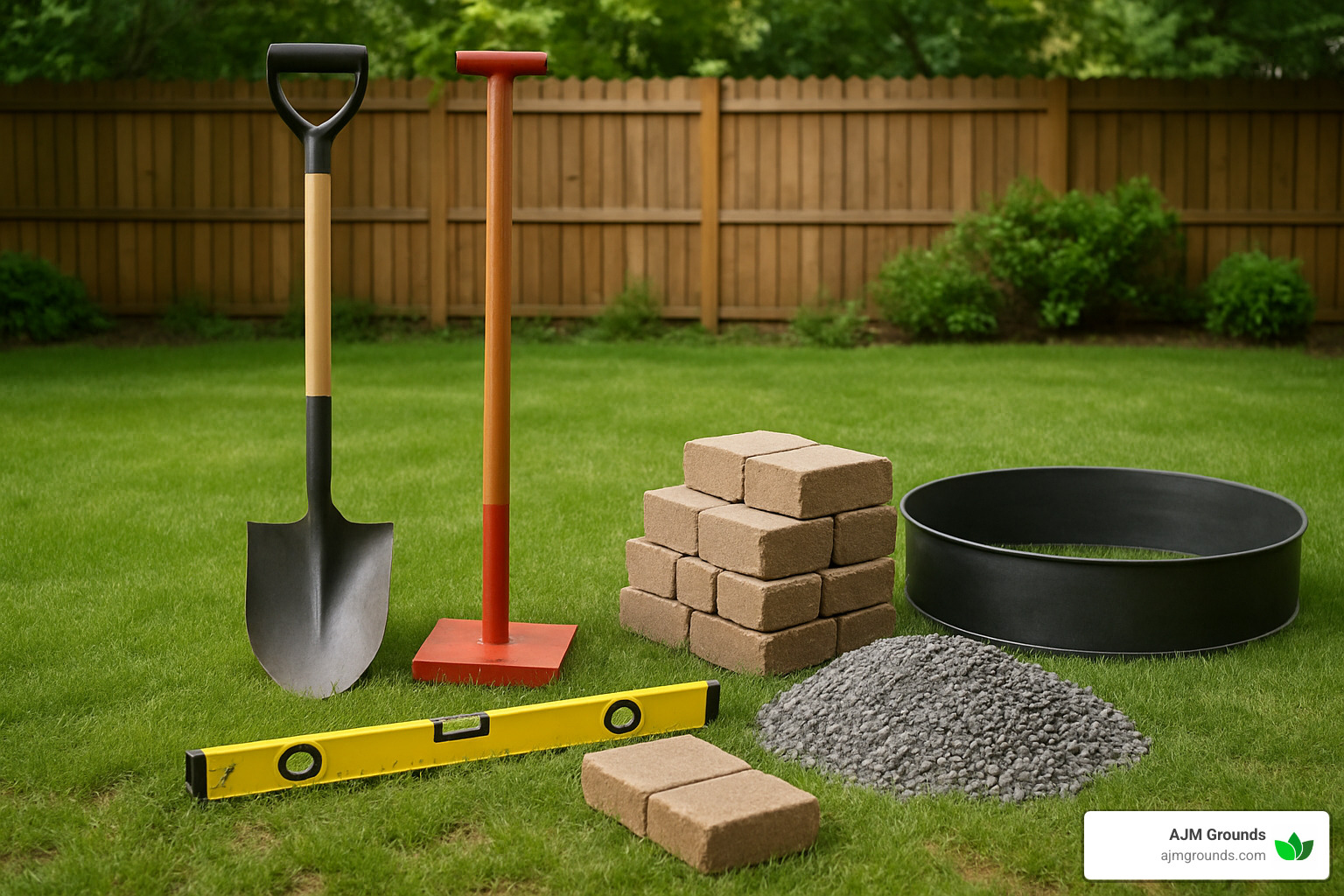
Before you head to the hardware store, take a moment to gather what you’ll need. You’ll want a good square-point shovel for digging and a hand tamper to firmly compact your base materials. A 4-foot level is essential—there’s nothing worse than finishing your fire pit only to find it’s tilting to one side! Don’t forget a tape measure, garden hose (or spray paint) for marking your layout, and a sturdy wheelbarrow to save your back when moving materials.
For adjusting those blocks into perfect position, a rubber mallet is your best friend. You’ll also need a caulk gun for applying adhesive, and please don’t skip the safety gear—good gloves, eye protection, and a dust mask will keep you comfortable and safe. For larger projects, consider renting a plate compactor to ensure your base is rock-solid.
“I always tell my first-time DIYers to invest in a good level,” shares our team at AJM Grounds. “It might seem like a small thing, but when you’re eight blocks high and find you’ve been building at an angle, you’ll thank me for the advice!”
Safe, Heat-Proof Materials
Not everything that looks nice in your yard can withstand the intense heat of a fire. Using the wrong materials can lead to dangerous situations—nobody wants exploding rocks sending shrapnel across their backyard barbecue!
For the inner ring where flames will make direct contact, stick with fire clay brick (firebrick), refractory concrete, fire-rated concrete blocks, or a steel fire ring liner. These materials are specifically designed to withstand high temperatures without degrading.
The outer structure has more flexibility—concrete pavers or blocks, certain natural stones like granite or slate, manufactured stone veneer, or traditional brick all work beautifully. Just remember that whatever you choose needs to complement your home’s exterior while standing up to the elements.
For the base and bottom of your pit, crushed angular gravel (not rounded) provides excellent drainage while remaining stable under heat. Top it with lava rock or fire glass for an attractive finish that also helps distribute heat.
“We had a client in Wilmington who initially planned to use beautiful river rocks they’d collected for their fire pit,” recalls our team. “We had to explain that those rocks can trap moisture and potentially explode when heated. Safety has to come first.”
Materials to absolutely avoid include river rocks, pea gravel or other rounded stones, regular concrete, lightweight concrete blocks, and anything flammable like railroad ties or wood. These materials can crack, spall (when pieces break off), or even create dangerous situations.
A steel fire ring insert is worth every penny—it distributes heat evenly, protects your masonry from direct flame, and significantly extends your fire pit’s lifespan. For most backyard applications, we recommend a 36-inch galvanized fire pit ring.
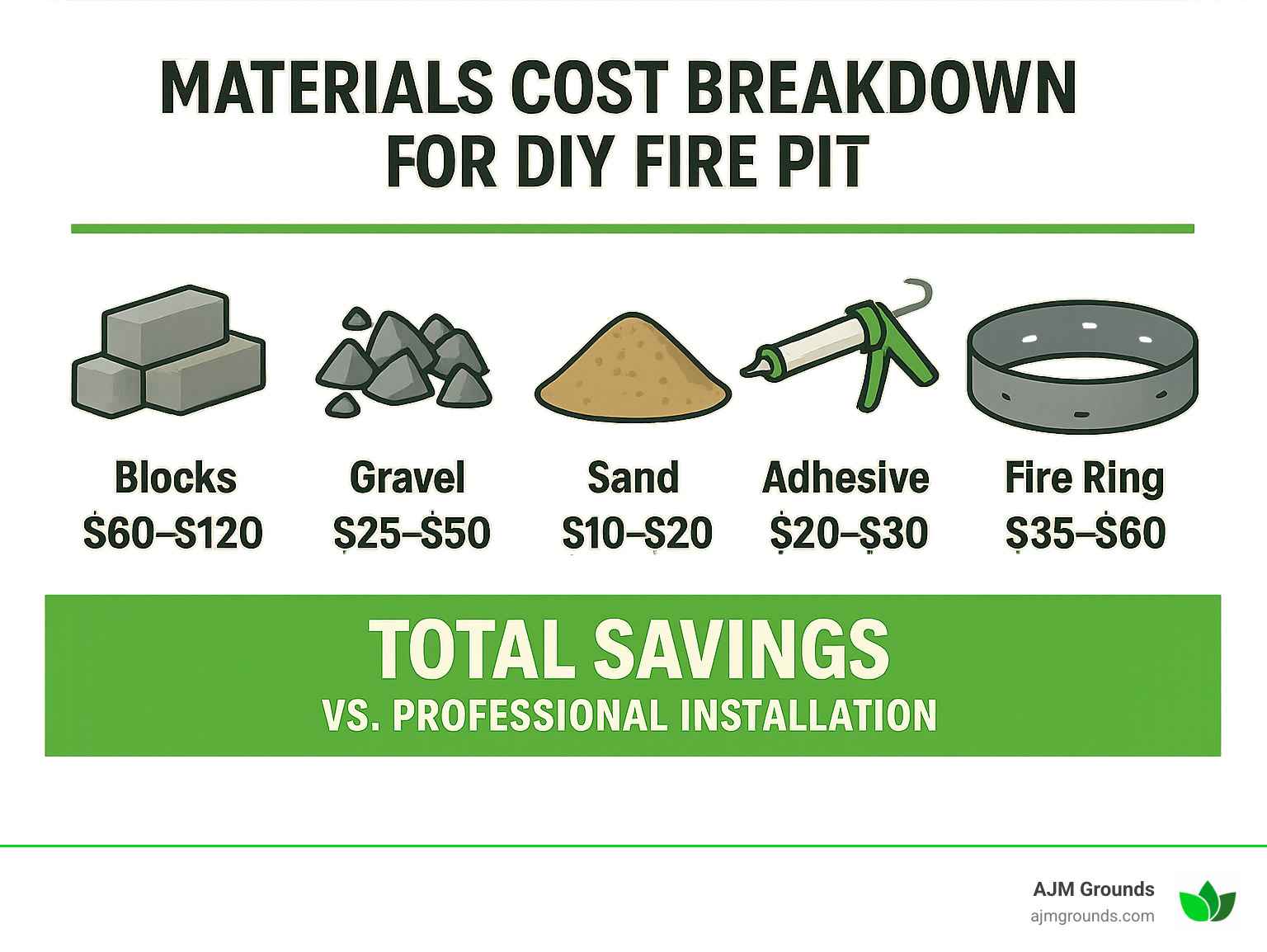
For a typical 3-foot interior diameter fire pit with walls 12-14 inches high, you’ll need approximately 48-60 standard-sized concrete blocks, 6-7 cubic feet of crushed gravel, 2-3 cubic feet of paver sand, 3-4 tubes of construction adhesive, and about 5 cubic feet of lava rock. Having these materials delivered can save you multiple trips to the store—and your back will thank you!
Investing in quality materials upfront might cost a bit more, but it means your fire pit will provide years of enjoyment instead of becoming next summer’s rebuild project. As we like to tell our clients in Bedford and Burlington, “Build it once, build it right.”
Comparing Fire Pit Types
When building a backyard fire pit, the style you choose can dramatically impact both the look of your outdoor space and how you’ll use it. After installing hundreds of fire pits across Woburn, Lexington, and surrounding towns, we’ve gained some insights into what works best for different homes and families.
| Feature | In-Ground Fire Pit | Above-Ground Fire Pit | Modern Style | Rustic Style | Wood-Burning | Gas-Powered |
|---|---|---|---|---|---|---|
| Cost | $200-$600 DIY | $300-$900 DIY | $400-$1,200 DIY | $250-$750 DIY | $300-$600 DIY | $900-$2,700 DIY |
| Installation Difficulty | Moderate (more digging) | Easier (less excavation) | Moderate | Easy to Moderate | Easy | Complex (gas lines) |
| Appearance | Subtle, flush with ground | Prominent focal point | Clean lines, minimalist | Natural, organic look | Traditional | Contemporary |
| Safety | Slightly higher trip risk | More visible, better containment | Varies | Varies | Requires spark screen | No sparks, adjustable |
| Maintenance | More leaf/debris collection | Easier to clean | Minimal | Moderate | Ash removal needed | Annual inspection |
| Best For | Flat, open spaces | Sloped yards, visual impact | Modern homes, clean aesthetic | Traditional homes, natural settings | Authentic experience, cooking | Convenience, smoke concerns |
“The best fire pit is the one you’ll actually use,” as we often tell our clients in Bedford and Burlington. A gorgeous gas-powered modern pit might look stunning, but if your family dreams of roasting marshmallows and telling stories around a crackling fire, you might be better served by a traditional wood-burning option.
In-ground fire pits offer a subtle, campfire-like feel that blends seamlessly with your landscape. They’re particularly popular in Reading and Stoneham, where many homeowners prefer a naturalistic look. The downside? They can be easier to trip over and tend to collect more debris between uses.
Above-ground designs create a more visible focal point and often provide better seating opportunities around their perimeter. We’ve installed dozens across Winchester and Wilmington, especially in yards where homeowners entertain frequently.
“We were torn between rustic and modern styles,” shared one of our Lexington clients. “AJM helped us create a hybrid design with clean lines but natural stone that perfectly complements our 1920s Colonial with updated interiors.”
The wood versus gas decision often comes down to three factors: experience, convenience, and regulations. Wood-burning pits deliver that authentic campfire experience—the crackling sounds, the dancing flames, the smoky scent—that many find irreplaceable. They’re also significantly less expensive to build.
Gas-powered options, while pricier upfront, offer instant on/off convenience with no cleanup. They’re increasingly popular in tighter neighborhoods like parts of Woburn where smoke concerns might cause tension with neighbors. Some HOAs and municipalities also have restrictions that allow gas but limit or prohibit wood burning.
For families with young children or those who love to cook outdoors, we often recommend wood-burning pits with removable cooking grates. One Burlington family tells us they use theirs for everything from s’mores to cast-iron stews throughout three seasons.
The trend we’re seeing most recently? Flexible hybrid designs that can accommodate both wood and gas, giving homeowners the best of both worlds as their needs and preferences change over time.
Step-by-Step Guide to Building a Backyard Fire Pit
Now that you’ve planned your location and gathered your materials, it’s time to start building a backyard fire pit. This step-by-step guide walks you through the process we use for our installations across Woburn, Reading, and surrounding communities.
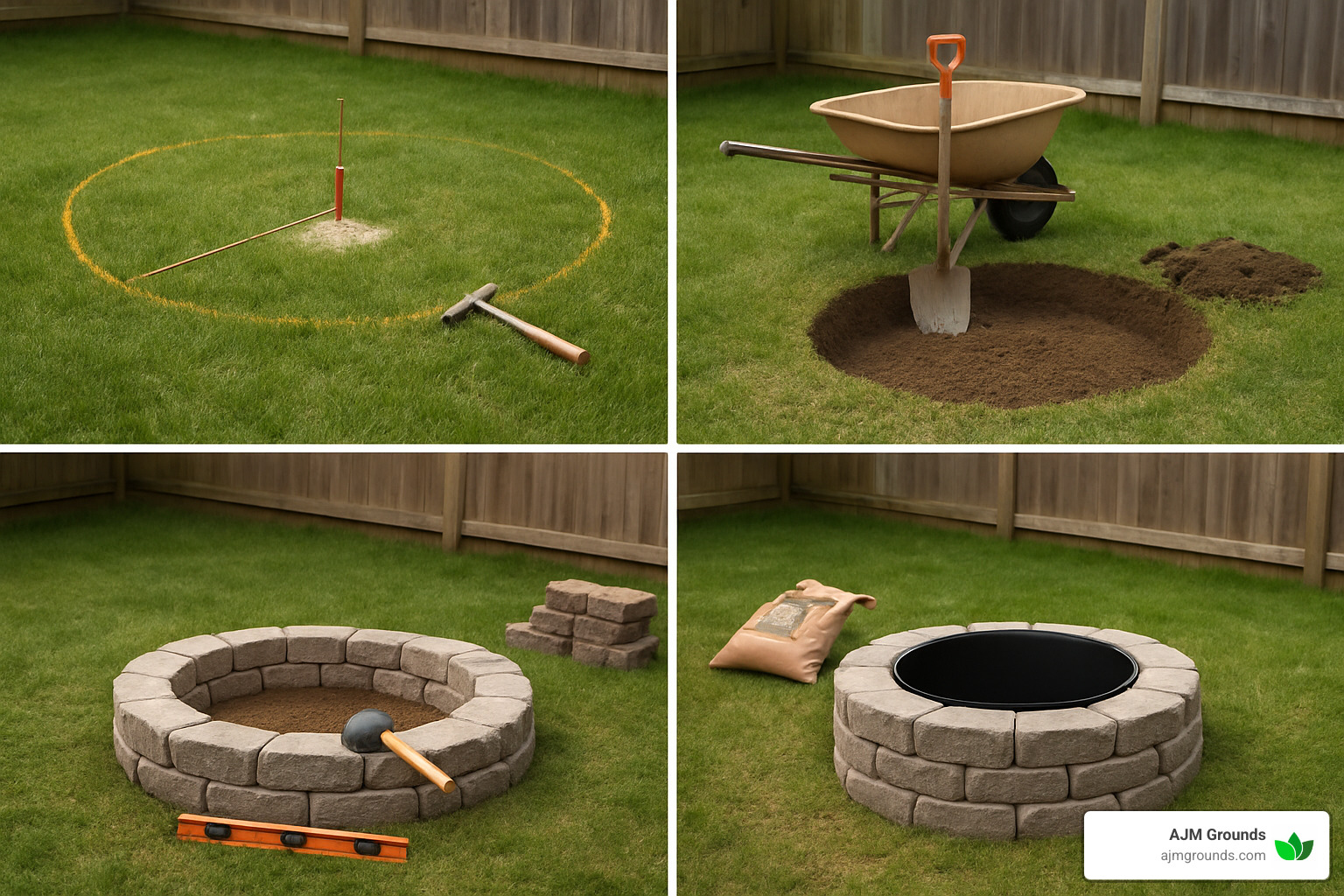
For more information about our professional fire pit installation services, visit our Firepit Installation page.
Step 1 – Site Marking & Layout for Building a Backyard Fire Pit
Proper layout is the foundation of a beautiful fire pit. Think of it as drawing the perfect circle before painting a masterpiece—it sets the stage for everything that follows.
Start by identifying the ideal center point for your fire pit. Once you’ve got that spot marked, grab a stake and hammer it firmly into the ground. Tie a piece of string to the stake and measure out your desired radius—typically 18-22 inches for a comfortable inner circle. Most of our clients in Lexington and Winchester prefer an inner diameter of 36-44 inches, which provides ample room for a good fire while keeping the footprint manageable.
With your string measured to the right length, walk slowly around the stake while holding the string taut, marking your perfect circle with spray paint or a garden hose. This old-school stake-and-string method is still the most reliable way to create a truly round fire pit.
“I remember a client in Reading who tried to eyeball their circle,” laughs our team member Mike. “Let’s just say geometry won that round. Taking ten minutes with the string method would have saved them hours of frustration later.”
Don’t forget to mark your outer wall perimeter too. Simply add your wall thickness (usually 8-12 inches) to your radius measurement and create a second circle. If you’re going for a square or rectangular design instead, use the diagonal measurement method to ensure your corners are perfectly square.
Step 2 – Ground Prep When Building a Backyard Fire Pit
Roll up your sleeves—it’s time to dig! Start by removing all grass and organic material within your marked area. This isn’t just about aesthetics; organic material will decompose over time, creating unstable pockets beneath your fire pit.
Excavate to a depth of 7-8 inches below grade. In Massachusetts, where freeze-thaw cycles are a reality, this depth ensures your fire pit will have a stable foundation year-round. Once you’ve reached your target depth, grab a long, straight board and your level to check that the soil base is even.
“The most common mistake we see with DIY fire pits around Burlington and Bedford is rushing through the ground prep,” notes our team at AJM Grounds. “A wobbly foundation means a wobbly fire pit—and that’s something you’ll notice every time you use it.”
Take your time compacting the soil thoroughly with a hand tamper or plate compactor. Think of this as the hidden craftsmanship that separates professional-quality work from rushed weekend projects. Once your soil is properly compacted, add a 2-inch layer of sand as a base. This sand layer helps with both drainage and creating a perfectly level surface for your first course of blocks.
Step 3 – Create a Stable Base
With your excavation complete, it’s time to build up a proper base that will support your fire pit for years to come.
Add crushed gravel in thin, manageable layers of about 2 inches each. The key here is patience—compact each layer thoroughly before adding the next. This gradual building approach prevents future settling and shifting that could crack your beautiful fire pit down the road.
Continue adding and compacting until you have approximately 5 inches of solid, crushed gravel. As you work, check frequently with your level to ensure you’re maintaining an even surface. For optimal drainage, create a slight crown in the center—about ¼-inch higher than the edges.
“In Woburn and surrounding areas, our soils and climate make drainage especially important,” explains our team. “We often add a central drainage hole in fire pits we build. Water collecting in your pit can freeze and expand in winter, potentially damaging your carefully built walls.”
The angular edges of crushed gravel lock together when compacted, creating a stable base that resists shifting. This interlocking quality is why we specifically recommend crushed gravel rather than rounded stones like pea gravel, which can shift over time like marbles in a bag.
Step 4 – Stack & Secure the Walls
Now comes the visible part of your fire pit—the part your friends will admire while enjoying those evening gatherings.
Begin by laying the first course of blocks directly on your compacted gravel base. Place them side by side, following your marked circle. This first course is critical—take your time to ensure each block is level both side-to-side and front-to-back, adjusting with small amounts of base material as needed.
Position your steel fire ring in the center. This not only provides a guide for building but will protect your masonry from direct heat once your fire pit is in use. Complete your first course around this ring, checking one final time that everything is perfectly level.
When beginning your second course, the magic word is staggering. Position each block so it spans the joint between two blocks below it—just like laying bricks in a wall. This creates a structurally sound interlocking pattern that distributes weight and prevents weak points.
“A little construction adhesive goes a long way,” shares our team member John. “We apply it between each course to create a solid, unified structure. It’s an extra step that many DIYers skip, but it makes a significant difference in longevity.”
Continue building upward to your desired height, typically 12-14 inches for most backyard fire pits. If you want a more finished look, cap the top with special capstones that provide both visual appeal and a comfortable place to prop your feet while enjoying the fire.
Step 5 – Finish the Bottom & First Burn
You’re in the home stretch! Now it’s time to finish the interior and prepare for your first cozy fire.
Add a 3-4 inch layer of lava rock inside the pit. This specialized material serves dual purposes—it provides excellent drainage while also protecting the base from the intense heat of your fires. The porous nature of lava rock makes it ideal for this application.
Patience is crucial at this stage. Allow the construction adhesive to cure fully, usually about 48 hours, before lighting your first fire. When you do start that inaugural burn, think small—a modest flame will help gradually heat and cure the materials.
“Think of your first fire like breaking in a new cast iron pan,” suggests our team. “Start with a small fire for about 30 minutes, then gradually work up to larger fires over your first few uses. This curing process helps prevent cracking and ensures your fire pit will last for years.”
Consider adding a metal spark screen, especially if your property in Winchester or Stoneham has nearby trees or wooden structures. These screens contain flying embers while still allowing you to enjoy the warmth and ambiance of your fire.
As a finishing touch, many of our clients create a transition zone of decorative gravel or pavers extending 2-3 feet around the fire pit. This not only looks attractive but provides a safe, non-flammable perimeter that defines your fire pit area within the larger landscape.
Design Upgrades & Seating Ideas
Once you’ve mastered the basics of building a backyard fire pit, consider enhancing your outdoor space with thoughtful design elements and comfortable seating. The right additions can transform a simple fire pit into a complete outdoor room.

Budget-Friendly Customizations
You don’t need to break the bank to personalize your fire pit and make it uniquely yours. Many of our Woburn and Lexington clients have created stunning customizations on modest budgets.
Colored concrete pavers can instantly lift your fire pit’s appearance by complementing your home’s exterior. We recently helped a Burlington family select pavers that matched their front walkway, creating a cohesive look throughout their property.
Reclaimed brick adds character and sustainability to your project—just be sure it’s fire-rated. “One of our clients in Winchester collected antique bricks from local salvage yards,” shares our team. “They created a beautiful herringbone pattern for their fire pit surround that told a story and cost almost nothing but time.”
Decorative capstones create a finished edge that’s not only attractive but functional—perfect for setting down drinks or small plates during gatherings. The smooth, flat surface transforms your pit’s edge into useful space.
For evening ambiance, consider adding inset lighting between blocks. Low-voltage LED options are energy-efficient and create a magical glow that complements the fire’s natural light. One Reading homeowner incorporated blue LEDs that mimicked the look of gas flames, creating a stunning dual-light effect.
If you’re feeling artistic, mosaic tile accents on non-heat-exposed surfaces can add a pop of color and personality. Just remember to keep these decorative elements away from areas that will experience direct heat.
For more inspiration on integrating your fire pit into your overall landscape design, check out our Fire Pit Landscaping Ideas guide.
Creating a Comfy Lounge Zone
The perfect fire pit experience isn’t just about the flames—it’s about creating a comfortable space where people want to linger and connect. The seating area deserves as much thought as the pit itself.
Most of our Massachusetts clients find that defining a seating perimeter approximately 7-10 feet from the fire edge creates the ideal distance for warmth without overheating. For a complete conversation circle, a 12-foot radius from center works beautifully, giving everyone space to stretch out while maintaining intimacy.
The right surface beneath your seating makes a huge difference in both appearance and functionality. Crushed stone or pea gravel offers an affordable, drainage-friendly option with a satisfying crunch underfoot. For a more formal look, concrete pavers or flagstone create a stable, level surface. Decomposed granite strikes a nice balance—natural appearance with good stability when properly installed.
“We recommend maintaining a consistent 36-inch walkway width around seating for easy movement,” advises our team at AJM Grounds. “This allows people to circulate without disturbing those who are seated.”
Adirondack chairs remain the classic choice for fire pit seating, with their comfortable reclined design and wide armrests perfect for balancing a drink or plate. Quality weather-resistant versions range from $100-300 each, making them a reasonable investment for most homeowners.
For clients seeking permanence, built-in stone benches create an integrated look that withstands New England weather year after year. While materials typically cost $500-1,500 depending on size and stone type, these seating options never need to be stored and can include hidden storage compartments for fire tools and accessories.
Families with limited space in communities like Lexington and Winchester often benefit from movable seating that can be reconfigured based on the number of guests or stored when not in use. Lightweight, weather-resistant Adirondack chairs offer that perfect balance of comfort, durability, and flexibility.
Don’t forget the finishing touches that make a space truly inviting. Side tables provide convenient spots for drinks and snacks. Outdoor pillows and throws add comfort and color, especially on cooler Massachusetts evenings. String lights strung overhead create a magical canopy that complements the fire’s glow. And strategically placed planters can define your fire pit area while adding natural beauty with seasonal plantings.
One Woburn family we worked with surrounded their fire pit with a mix of built-in stone benches and movable chairs, allowing them to accommodate intimate family gatherings or larger neighborhood parties with equal comfort. They added colorful Adirondack chairs that could be moved closer on chilly nights or farther back during summer evenings—versatility that made their fire pit usable year-round.
Maintenance & Safe Enjoyment Tips
Your beautiful backyard fire pit deserves proper care to remain safe and inviting for years to come. After putting in the effort of building a backyard fire pit, a little maintenance goes a long way toward preserving your investment and ensuring countless evenings of enjoyment.
“The most common mistake we see is neglect,” shares our team at AJM Grounds. “People spend weekends creating this wonderful gathering spot, then forget the simple maintenance that keeps it functional and attractive.”
Regular care doesn’t need to be time-consuming. After each use, once ashes have completely cooled (we recommend waiting at least 24 hours), remove them with a metal scoop into a metal bucket—never plastic! Many of our gardening clients in Woburn and Reading actually repurpose these ashes in their compost piles, as they’re rich in potassium and other nutrients.
Seasonal inspections make a world of difference, especially in New England where our freeze-thaw cycles can be tough on masonry. Look for crumbling mortar between blocks, check for spalling (that flaky deterioration) on fire-exposed surfaces, and address small issues before winter turns them into major springtime headaches.
Don’t forget about your fire ring! A quick pass with a wire brush to remove rust spots keeps it looking great, and applying high-heat paint when needed extends its life significantly. Some of our more proactive clients in Lexington apply a rust-resistant coating before first use—a small step that pays dividends in longevity.
Drainage matters more than most people realize. Make sure drain holes remain unblocked and check that the surrounding ground still slopes gently away from your pit. In Massachusetts, poor drainage can lead to cracking when water freezes and expands.
Off-Season Care
Winter in New England demands special attention for outdoor features. Investing in a quality weather-resistant cover designed specifically for fire pits makes a noticeable difference in longevity. “Just make sure your cover allows for some ventilation,” advises our team, “as trapped moisture can actually cause more damage than exposure.”
Those beautiful Adirondack chairs or rustic benches deserve protection too. Either store them in a shed or garage, or at minimum, cover them thoroughly and lift wooden furniture off the ground with blocks to prevent moisture wicking.
The fall is actually the perfect time to prepare for spring. Before the first snow flies, give your fire pit a thorough cleaning, apply sealant to masonry if recommended for your specific materials, and cover drain holes with a fine mesh to prevent them from clogging with debris over winter.
“Some of our most dedicated clients in Burlington and Stoneham actually use their fire pits year-round,” notes our team with admiration. “There’s something magical about gathering around a fire while snowflakes gently fall.” If you’re among these hardy souls, keep snow cleared from both the pit and surrounding area, and always allow the pit to cool completely before covering.
Smart Fire Practices
Safety always comes first when enjoying your fire pit. The wood you choose matters significantly—seasoned hardwoods like oak, maple, and hickory burn cleanest and hottest. Avoid burning pressure-treated lumber, painted wood, or household trash, all of which can release harmful chemicals.
Always keep safety equipment nearby and ready. A connected garden hose, a fire extinguisher rated specifically for wood fires, and a fire blanket for emergencies provide peace of mind. Quality fire blankets are available on Amazon from brands like Hot Headz and other manufacturers.
Responsible burning practices protect both your property and your neighbors. Start fires small and build gradually rather than creating a bonfire right away. Never use gasoline or other accelerants—the risk simply isn’t worth it. Keep fires to a manageable size, never leave them unattended (even “for just a minute”), and fully extinguish before heading inside.
Weather awareness is another crucial aspect of fire pit safety. Avoid burning during high winds when embers can travel surprisingly far, check for burn bans during dry periods (especially important in late summer), and consider wind direction to minimize smoke blowing toward your home or neighbors’ properties.
“The most important safety feature isn’t built into the fire pit—it’s the person tending the fire,” emphasizes our team. Many families in Winchester and Lexington actually create decorative “Fire Pit Rules” signs that serve as both a practical reminder and a charming addition to their outdoor space.
With proper maintenance and safe practices, the backyard fire pit you’ve invested in building will provide warmth, light, and countless memories for many years to come—truly one of the best investments you can make in your outdoor living space.
Frequently Asked Questions about Backyard Fire Pits
How much does a DIY fire pit cost?
When building a backyard fire pit yourself, you’ll typically spend between $300 and $600, which is significantly less than professional installation. According to internet data (not AJM Grounds pricing), professional installations generally range from $1,400 to $2,000 or more depending on complexity and materials.
“The beauty of DIY fire pits is the cost flexibility,” our team often tells clients in Woburn and surrounding towns. “We’ve seen incredible fire pits built for under $400 using concrete blocks and simple designs, while others might invest $600 or more for natural stone and custom features.”
Your budget will primarily depend on your material choices. Concrete pavers cost a fraction of what natural stone does, but many homeowners in Lexington and Winchester feel the authentic look of stone justifies the higher price tag. Remember to factor in additional costs like site preparation, tools you might need to rent, and finishing touches like seating and accessories.
The good news? Even the most basic fire pit adds tremendous value to your outdoor living space, and spending more doesn’t always mean enjoying it more. Some of our clients’ favorite memories happen around simple, modestly-priced fire pits that took just a weekend to build.
What do I put in the bottom of the pit?
The bottom of your fire pit needs proper layering to ensure safety, drainage, and longevity. We recommend a three-layer approach that has worked beautifully for our Massachusetts clients.
Start with a 2-inch layer of sand at the very bottom. This creates a level foundation and provides initial drainage away from the center of the pit. On top of the sand, add 3-4 inches of crushed gravel or lava rock. The angular edges of crushed gravel lock together for stability, while both materials allow water to drain through effectively.
“Whatever you do,” cautions our team at AJM Grounds, “never use regular river rocks or pea gravel inside your fire pit. These rounded stones can trap moisture that turns to steam when heated, potentially causing the rocks to crack or even explode.”
For the top layer, lava rock is our most popular recommendation. It’s lightweight, exceptionally heat-resistant, and has a natural appearance that complements any fire pit design. If you’re going for a more modern look, fire glass offers beautiful light reflection, though at a premium price. For traditionalists who plan to cook over their fire, a layer of firebrick creates a stable, flat cooking surface.
How far from my house should the pit be?
Safety should be your primary concern when deciding where to place your fire pit. Most local building codes require a minimum of 10-15 feet clearance from any structures, though our team at AJM Grounds typically recommends at least 20 feet whenever your property allows it.
“In communities like Reading and Stoneham, we’ve found that local fire departments prefer seeing at least 15-20 feet between a fire pit and the nearest structure,” notes our team. “But regulations vary by town, so always check with your local building department or fire department before finalizing your location.”
Beyond the minimum safety requirements, consider practical factors like prevailing wind direction (you don’t want smoke constantly blowing toward your house), visibility from inside your home for monitoring, and convenient access to a water source for safety.
Overhead clearance matters too – maintain at least 15 feet of vertical space from any tree branches, overhangs, or utility lines. And don’t forget property lines – most towns require fire features to be at least 10 feet from neighboring properties.
These distances aren’t just about meeting code requirements – having adequate space around your fire pit creates a more comfortable experience for everyone, allowing people to move around freely and adjust their distance from the heat as needed.
Conclusion
Building a backyard fire pit transforms your outdoor space in a way few other projects can. There’s something deeply satisfying about creating a gathering spot that brings family and friends together around dancing flames. With reasonable costs, manageable complexity, and incredible impact, it’s easy to see why fire pits have become one of our most requested landscape features across Woburn, Lexington, Winchester, and surrounding communities.

The journey from planning to enjoying your first fireside evening creates a special connection to your outdoor space. Whether you’ve opted for a simple ring of fire-rated blocks or a more elaborate natural stone design, the fundamentals we’ve covered will help ensure your fire pit remains safe, beautiful, and functional for years to come.
“I love watching clients’ faces when they first light their new fire pit,” shares John from our AJM Grounds team. “There’s a special pride that comes from sitting around a fire you built with your own hands. It’s not just about the warmth or ambiance—it’s about creating something meaningful for your home.”
Many homeowners tell us their fire pit quickly becomes the heart of their outdoor living space. Summer evenings with s’mores, fall gatherings with hot cider, and even winter nights bundled in blankets – your fire pit extends your outdoor season and creates memories that last far longer than the flames.
Of course, building a backyard fire pit isn’t the right choice for everyone. If you appreciate the benefits but prefer professional installation, our team at AJM Grounds specializes in custom fire pit design and construction throughout Woburn, Bedford, Billerica, Burlington, Lexington, Reading, Stoneham, Wilmington, and Winchester. We handle everything from navigating permit requirements to selecting the perfect materials, ensuring a seamless process and professional results.
For more information about our custom fire pit services, visit More info about custom outdoor fire pits.
Whether you build it yourself or bring in professionals, your backyard fire pit creates a natural gathering spot that extends your living space and fosters connection throughout the year. There’s something primal and deeply satisfying about gathering around an open flame under the stars – a bit of wilderness magic right in your own backyard that never loses its charm.
As the sun sets and the flames rise, your fire pit becomes more than just a landscape feature. It becomes a place where stories are shared, laughter echoes, and everyday stresses melt away in the warm glow. And isn’t that what makes a house truly feel like home?
