

Retaining walls for gardens offer an exceptional way to lift both the aesthetics and functionality of outdoor spaces. These structures not only beautify landscapes by creating stunning visual features but also play a crucial role in erosion control. Retaining walls for gardens help manage the natural shifting of soil, preventing the erosion that can spoil your carefully nurtured plants and disrupt your garden’s design.
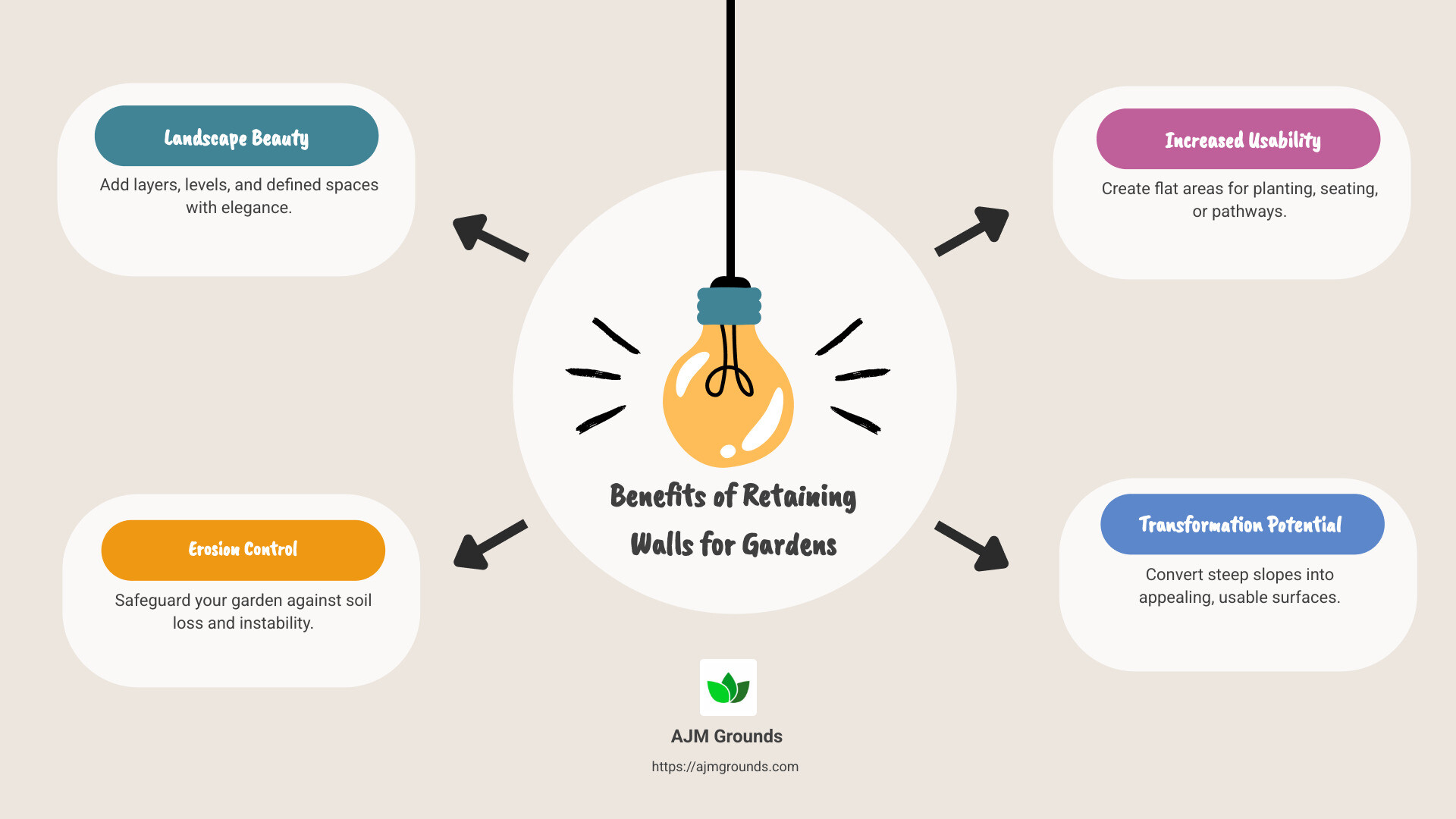
- Landscape Beauty: Add layers, levels, and defined spaces with elegance.
- Erosion Control: Safeguard your garden against soil loss and instability.
- Increased Usability: Create flat areas for planting, seating, or pathways.
By incorporating retaining walls for gardens, you can transform steep slopes into appealing, usable surfaces. From raised garden beds to charming terraces, they serve as the backbone of a well-designed exterior space.
My name is John Caplis, an outdoor space change expert and the proud owner of AJM Grounds LLC. With experience in creating retaining walls for gardens, I specialize in turning complex landscaping ideas into simple, practical, and visually appealing solutions for homeowners looking to improve their property’s value and charm.
Benefits of Retaining Walls for Gardens
Retaining walls for gardens are not just about holding back soil; they transform your outdoor space in multiple ways.
Improved Usability
One of the most significant benefits of retaining walls for gardens is the increased usability of your landscape. By converting steep slopes into flat, manageable surfaces, you gain more functional space. Imagine turning an unusable hill into a patio, play area, or even a lush lawn. This change not only makes your garden more practical but also adds to the enjoyment of your outdoor living area.
Raised Garden Beds
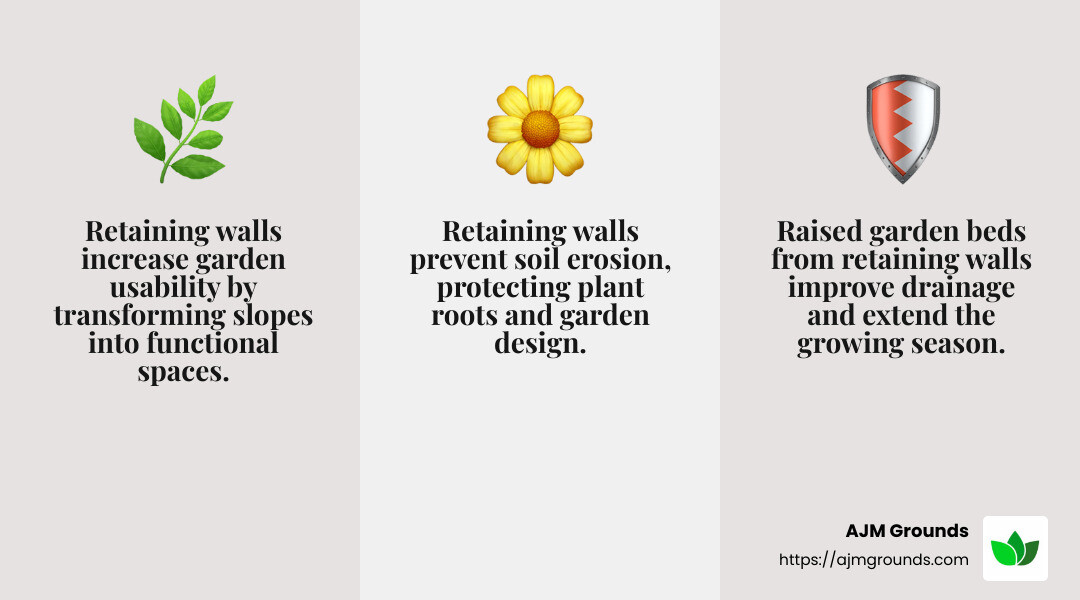
Retaining walls can double as raised garden beds, offering a perfect solution for those who want to garden without the back-breaking work of bending over. Raised beds provide better drainage, prevent soil compaction, and allow for a longer growing season. Plus, they add an attractive, structured look to your garden. Picture a series of raised beds filled with colorful flowers or fresh vegetables, all neatly organized and easy to reach.
Soil Erosion Prevention
Soil erosion can be a gardener’s worst enemy. It washes away nutrients and destabilizes plants. Retaining walls for gardens act as a barrier to prevent this loss. By keeping the soil in place, these walls protect your plants and maintain the integrity of your garden design. Properly installed retaining walls also help manage water runoff, reducing the risk of flooding and soil erosion during heavy rains.
Aesthetic Appeal
Beyond functionality, retaining walls add a visual dimension to your garden. They create distinct levels and sections, enhancing the overall landscape design. Whether you choose natural stone for a timeless look or sleek concrete for a modern vibe, retaining walls can be customized to match your style.
Retaining walls for gardens are a smart investment in both beauty and practicality. They offer a versatile solution to common landscaping challenges, ensuring your garden remains a stunning and stable space for years to come.
Types of Retaining Walls
When it comes to retaining walls for gardens, there are several types to choose from, each with its own unique benefits and aesthetic appeal. Let’s explore some popular options:
Gabion Basket
Gabion baskets are wire containers filled with rocks or other materials. They offer a rugged, natural look and are excellent for erosion control. These walls are sturdy and can handle a lot of weight, making them perfect for areas with heavy soil pressure. Plus, they allow water to drain easily, preventing water buildup behind the wall.
Hollow Block Stepoc
Hollow block stepoc walls are a versatile and cost-effective choice for retaining walls for gardens. These blocks are lightweight and easy to handle, which makes them a great option for DIY projects. They can be reinforced with steel for added strength, making them suitable for taller walls. The hollow design also allows for drainage, reducing the risk of water damage.
Concrete Blocks
Concrete blocks are a durable and popular choice for retaining walls. They are available in a variety of shapes and sizes, including interlocking blocks that make installation easier. Concrete walls can be built to any height and are excellent for creating clean, modern lines in your garden design. They are also low-maintenance and long-lasting.
Wood
Wooden retaining walls offer a warm, natural look that blends well with garden settings. While wood is an inexpensive option, it has a shorter lifespan compared to stone or concrete. Using pressure-treated wood and a preservative can extend its durability. However, be cautious with planting too close to the wall, as chemicals in treated wood can harm plants.
Bricks
Brick retaining walls provide a classic and timeless appearance. They are strong and stable, with the ability to withstand various weather conditions. Bricks can be arranged in different patterns to add texture and interest to your garden. While they may require a bit more skill to install, the result is a beautiful and enduring structure.
Natural Stones
Natural stone walls are perfect for those seeking a more organic and rustic look. Stones like granite, sandstone, and limestone offer unique textures and colors that improve any garden landscape. These walls are highly durable and can be built to any height. They also allow for natural drainage, which is beneficial for maintaining the health of your garden.
Each type of retaining wall material brings its own set of advantages, so consider your garden’s specific needs and your personal style when making a choice. Whether you want a modern concrete look or a traditional stone finish, there’s a retaining wall option that will perfectly complement your outdoor space.
How to Build a Retaining Wall
Building a retaining wall for your garden can be a fun and rewarding DIY project. With a bit of planning and the right materials, you can create a beautiful and functional feature in your outdoor space. Here’s a simple guide to get you started.
Using Interlocking Blocks
Interlocking concrete blocks are a popular choice for retaining walls for gardens. They are easy to work with and provide a strong, stable structure. These blocks fit together like puzzle pieces, making them ideal for DIY projects.
Step-by-Step Instructions:
- Plan Your Wall: Determine the location and size of your wall. Measure carefully and mark the layout with stakes and string.
- Dig a Trench: Use a trenching shovel to dig a trench where your wall will sit. The trench should be deep enough to bury at least half the height of your first course of blocks, plus 3 inches of paver base. This is typically 4 to 8 inches deep.
- Prepare the Base: Pour a layer of paver base into the trench and compact it with a hand tamper. This creates a stable foundation for your wall. Use a level to ensure it’s even.
- Lay the First Course: Start laying your blocks at the lowest point of the trench. Ensure each block is level before moving to the next. Use a rubber mallet to tap them into place if needed.
- Add Drainage: If your garden is prone to heavy rain, consider installing a drainage pipe behind the wall. This step prevents water buildup, which can weaken the structure.
- Build Up the Wall: Continue adding courses of blocks. Stagger the joints for added strength. If your blocks have flanges, you may need to remove them for the first course to sit level.
- Backfill: As you build, backfill the space behind the wall with gravel. This helps with drainage and stability.
- Finish with Caps: Once your wall reaches the desired height, add capstones to give it a polished look. Secure them with construction adhesive for added stability.
Tools and Materials Needed
To build a retaining wall, you’ll need some basic tools and materials:
- Retaining wall blocks
- Paver base and gravel
- Rubber mallet
- Trenching shovel
- Hand tamper
- Level (4 or 6 foot)
- Masonry chisel and hammer
- Measuring tape
- Line level and grade stakes
Building a retaining wall can transform your garden into a more usable and visually appealing space. With the right approach and materials, your DIY project will not only save you money but also improve your landscape’s functionality and aesthetics.
Next, let’s explore some creative design ideas for incorporating retaining walls into your garden.
Retaining Walls for Gardens: Design Ideas
Retaining walls aren’t just practical—they can also be a key design element in your garden. Here are some creative ways to use retaining walls to transform your outdoor space:
Raised Beds
Raised garden beds are a fantastic way to use retaining walls. By building up the soil, you create a defined space for planting. This is perfect for growing vegetables, flowers, or even small shrubs. Raised beds make gardening easier on your back and allow for better soil drainage.
Terraces
If your garden is on a slope, terracing is a great solution. By creating multiple levels with retaining walls, you can turn an unusable hillside into a series of flat, garden-ready spaces. Each terrace can have its own theme or plant variety, adding visual interest and maximizing your planting area.
Patio Definition
Define your patio area with a low retaining wall. This not only sets the space apart but can also double as seating. Consider using natural stone or concrete blocks for a clean, modern look. Adding built-in planters to the wall can bring greenery right to your patio’s edge.
Driveway Borders
Use retaining walls to create neat driveway borders. A well-placed wall can guide the eye and improve the curb appeal of your home. Choose materials that complement your house’s exterior for a cohesive look. Plus, these walls can help prevent soil and mulch from spilling onto your driveway.
Water Features
Incorporate a water feature into your retaining wall for a soothing garden element. A small waterfall or pond can be built into the wall, adding sound and movement to your landscape. This creates a natural focal point and can attract birds and other wildlife to your garden.
By thinking creatively, you can use retaining walls for gardens to improve both the beauty and functionality of your outdoor space. Whether you’re looking to manage a slope, create a cozy patio, or simply add some structure to your garden, retaining walls offer a versatile solution.
In the next section, we’ll answer some frequently asked questions about retaining walls to help you get started on your project.
Frequently Asked Questions about Retaining Walls for Gardens
What is the cheapest retaining wall to build?
When it comes to affordability, gabion baskets and hollow block stepoc walls are popular choices. Gabion baskets are essentially wire cages filled with rocks or other materials. They are inexpensive and have a rugged, natural look. Plus, they offer excellent drainage, which helps prevent soil erosion.
Hollow block stepoc walls are another cost-effective option. These blocks are designed to be filled with concrete, providing strength without the need for complex construction. They’re easy to stack and ideal for DIY projects, making them a budget-friendly choice.
What is the best material for a DIY retaining wall?
For DIY enthusiasts, concrete blocks and interlocking blocks are the go-to materials. Concrete blocks are durable and can be stacked easily to create sturdy walls. They come in various sizes and finishes, allowing for customization to match your garden’s style.
Interlocking blocks are even more user-friendly. They have a lip or groove system that makes them easy to align and secure. This feature simplifies the construction process and ensures stability, even for taller walls. Both options provide a solid foundation for your retaining walls for gardens.
How deep should a footing be for a retaining wall?
The footing is crucial for the stability of your retaining wall. Generally, the depth should be about 4 to 6 inches. This provides a strong base to support the weight of the wall and the soil behind it. The width of the footing should be approximately twice the width of the block you are using. This ensures that the wall has a solid foundation to prevent shifting or settling over time.
By understanding these key elements, you can make informed decisions about building retaining walls for gardens that are both cost-effective and durable.
Next, we will explore how AJM Grounds can help you bring your landscaping vision to life with personalized service and expertise.
Conclusion
At AJM Grounds, we believe that every landscape is unique and deserves a personalized touch. Our expertise in landscaping and hardscaping allows us to transform your outdoor space with retaining walls for gardens that are both functional and beautiful.
We understand the importance of attention to detail. Whether you’re looking to prevent soil erosion or create stunning raised garden beds, our team is dedicated to delivering solutions that meet your specific needs. Our commitment to quality ensures that every retaining wall we build is structurally sound and aesthetically pleasing.
Our services extend across a range of locations, including Woburn, MA, and surrounding areas such as Bedford, Billerica, and Lexington. We pride ourselves on offering custom services that cater to both residential and commercial clients, ensuring that each project reflects the client’s vision and improves their outdoor space.
If you’re considering a retaining wall for your garden, let us help you bring your ideas to life. With our landscaping expertise and dedication to personalized service, we can create a space that not only meets your needs but also lifts the beauty and functionality of your property.
Ready to transform your garden with a retaining wall? Explore our landscape retaining wall services and find how we can assist you in achieving your dream landscape.
